
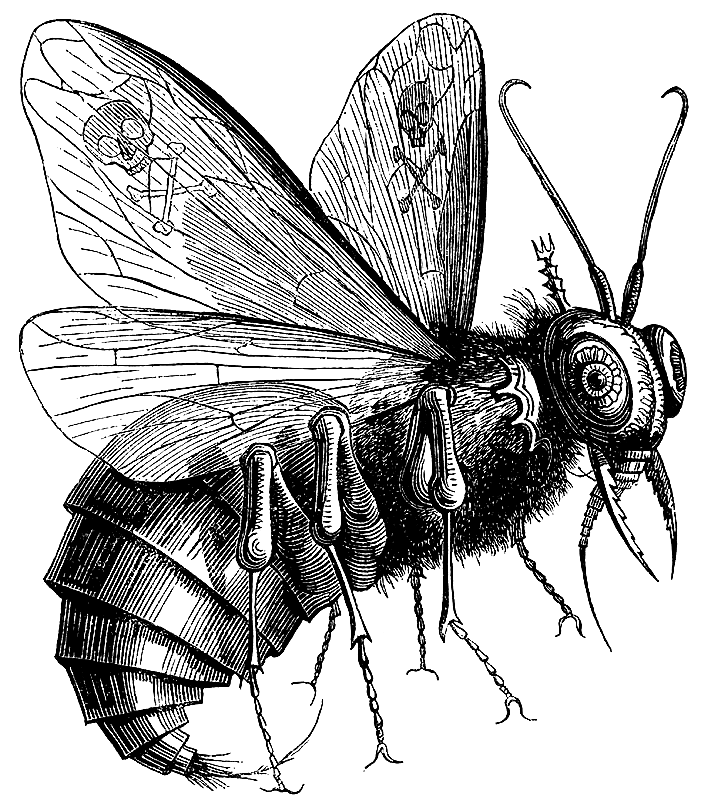
Bees from Beelzebub
Beelzebub, mentioned in 2 Kings, was a prince of demons worshiped by the Philistines, whose most famous warrior was Goliath killed in battle with a slingshot to the head by the Jewish boy David. The Philistines probably occupied an area of modern Palestine.
In 1714 the Dutch writer Bernard Mandeville (1670-1733) published in English his infamous book The Fable of the Bees (alternate title Private Vices, Public Benefits). The main premise of his book, that vice is a positive good in society, startled his contemporaries and evoked condemnation from many directions. Mandeville argued that an idle member of the upper class spends wastefully on tailors, cooks, wine cellars, travels, and prostitutes; but the result of all this spending on himself is that he gives employment to others who provide him with goods and services. Vice, therefore, is really economic virtue and should not be condemned as such. As he put it, “Pride and Vanity have built more Hospitals than all the Virtues together.”
Mandeville compares the human race to one vast beehive: “They that examine into the Nature of Man … may observe, that what renders him a Sociable Animal, consists not in his desire of Company, Good-nature, Pity, Affability, and other Graces of a fair Outside; but that his vilest and most hateful Qualities are the most necessary Accomplishments to fit him for the largest, and, according to the World, the happiest and most flourishing Societies.”
This way of thinking reminds us of a certain biblical warning: “Woe to those who call evil good and good evil, who put darkness for light and light for darkness, who put bitter for sweet and sweet for bitter.” (Isaiah 5:20)
Believing himself to be a thoughtful philosopher, all Mandeville proved was that he had a criminal mind well honed to justify the worst of crimes. Mandeville argues spuriously that the murderer and the thief actually contribute to society because they give employment to policemen and lawyers. War is good because it gives rise to new technologies and stimulates the economy. Low wages are good because they make a man work harder to survive and improve his lot. Prostitutes serve society by giving employment to the physicians who must combat the diseases they spread. Widespread ignorance is good because it gives employment to teachers. Promiscuity is good because it give employment to the abortionist. Obesity and drunkenness are good because they stimulate employment of dietitians and counselors. Sin itself is a good because its rapid spread galvanizes the oratorical powers of the man in the pulpit.
Has there ever been a more outrageous piece of sophistry?
We do not get from Mandeville any sense that vice in itself is inherently wrong. There is in him no inkling of the need to chastise evil doers. Indeed, from Mandeville we get the same sense that the poet John Milton gave to Satan in Paradise Lost when he made him say, “Evil, be thou my good!” One wonders how well a society could function if more and more people adopted his philosophy. How many more lives would have to be ruined before the world would see that there is no consolation to be found in evildoing? How many more social ills would become so pervasive that few people of good will would be found left to address them?
Samuel Johnson, a contemporary of Mandeville, said in Boswell’s Life of Johnson: “Mandeville puts the case of a man who gets drunk at an ale-house; and says it is a public benefit, because so much money is got by it to the public. But it must be considered, that all the good gained by this, through the gradation of alehouse-keeper, brewer, malster, and farmer, is overbalanced by the evil caused to the man and his family by his getting drunk. This is the way to try what is vicious, by ascertaining whether more evil than good is produced by it upon the whole, which is the case in all vice…. I read Mandeville … years ago. He did not puzzle me. He opened my views into real life very much. No; it is clear that the happiness of society depends on virtue.”
This of course is not the view of the man committed to evil. “Evil, be thou my good” is his motto, as it was Satan’s before him.
Many in prison have come to learn the hard way what Mandeville neglected to mention in his book. Bees sting, and sometimes even kill. Wisdom commands avoiding their nest just as the honey of sin draws us near.

Remembering Father Alphonse de Valk
(Today marks the sixth anniversary of the death of Father Alphonse de Valk, C.S.B., a faithful, courageous and indefatigable Basilian priest, pro-life-and-family apostle, and the founder of Catholic Insight magazine. Here is what we wrote those on his entering into eternity five years ago, as we continue to remember him in our prayers and thoughts)[…]Continue reading→

Divine Mercy Sunday – An Echo of Every Mass
Reach out your hand and put it in my side. Do not doubt but believe’… ‘My Lord and my God!’ (Jn. 20:18)). Today is Divine Mercy Sunday, and as we celebrate the end of the Easter Octave, we contemplate the wounded side of our Saviour, the Church’s source of life. On Good Friday in the[…]Continue reading→

Saint Stanislaus of Szczepanów
We celebrate Saint Stanislaus today (+ April 11, 1079), in light of this Easter Octave, a bishop and martyr who accepted the episcopacy only at the direct order of Pope Alexander II. He proved a wise and courageous leader of his flock, put to death by his own king, Boleslaus, for rebuking the monarch’s ‘immoral[…]Continue reading→

First Holy Communion: Sermon from May 16, 1943
Here is a sermon from the good old days by +Rev. Msgr. Vincent Nicholas Foy (August 14, 1915 – March 13, 2017), from 1943. Readers may recall that Pope Saint Pius X, by the decree Quam Singulari in 1910, lowered the customary age of reception of Holy Communion – after the rigours of the plague[…]Continue reading→

In the Glorious Light of Easter, Alleluia!
Set your minds on things that are above, not on things that are on earth, for you have died, and your life is hidden with Christ in God. When Christ who is your life is revealed, then you also will be revealed with him in glory (Col. 3:3-4). The Resurrection of Our Lord and Saviour[…]Continue reading→

An Ancient Homily for Holy Saturday
The time between Good Friday and Easter Sunday is one of waiting, in silence, as the world wonders – anticipates – what will happen, after the death of Christ. We re-live this time each year in the anamnesis of our liturgy, and in turn look forward to the glorious re-creation of all things at the[…]Continue reading→

Europe’s Long Descent
(As we meditate on this day on Christ’s burial, and His descent into hell, it is fitting to ponder here with contributor Peter Marcus how the world seems to be heading there as well. The difference is that, although God cannot ‘redeem’ hell, nor those therein, He can and did redeem the world. There is[…]Continue reading→
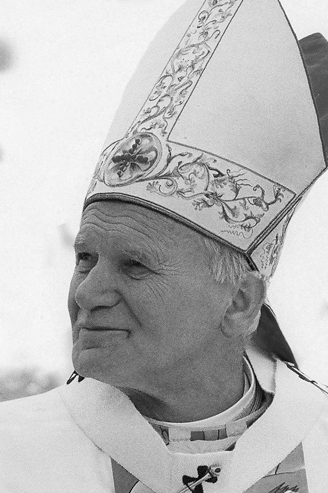
Pope Saint John Paul II’s First Good Friday Homily
ADDRESS OF HIS HOLINESS JOHN PAUL II AT THE CONCLUSION OF THE STATIONS OF THE CROSS AT THE COLOSSEUM Good Friday, 13 April 1979 When we make the Way of the Cross from one station to the next, in spirit we are always at the spot wherethis journey had its “historical” place: where it[…]Continue reading→
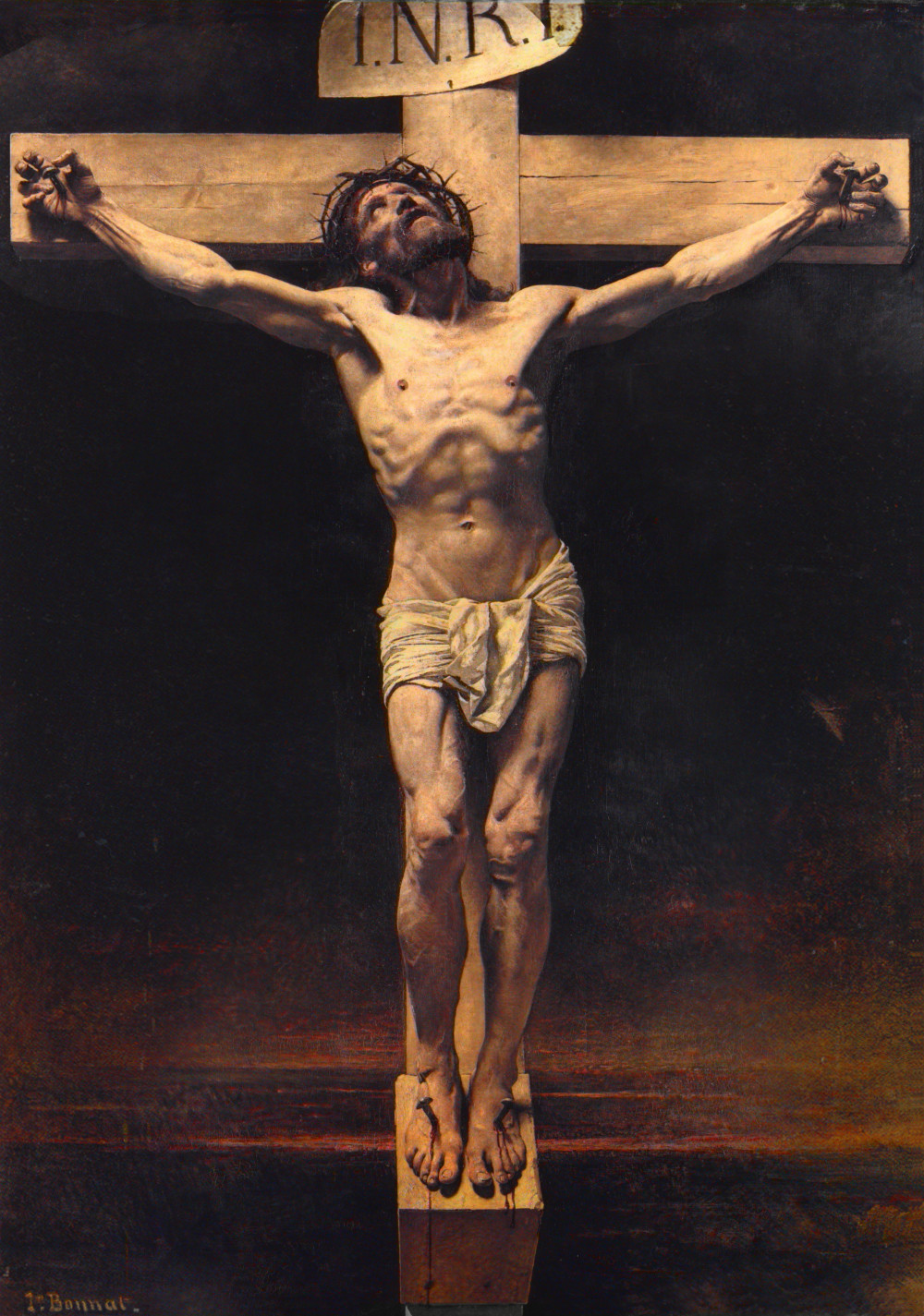
A Meditation for Good Friday: How To Undo the Effects of Sin?
Cardinal Newman, now Saint John Henry Newman, was a towering figure of nineteenth-century Catholicism who is almost universally admired. I say “almost” because not everyone likes him. I knew a priest once, Arthur Caulkins, who has become disenchanted with Newman. As an undergraduate Arthur had been enamoured of Newman, and this interest continued when he[…]Continue reading→
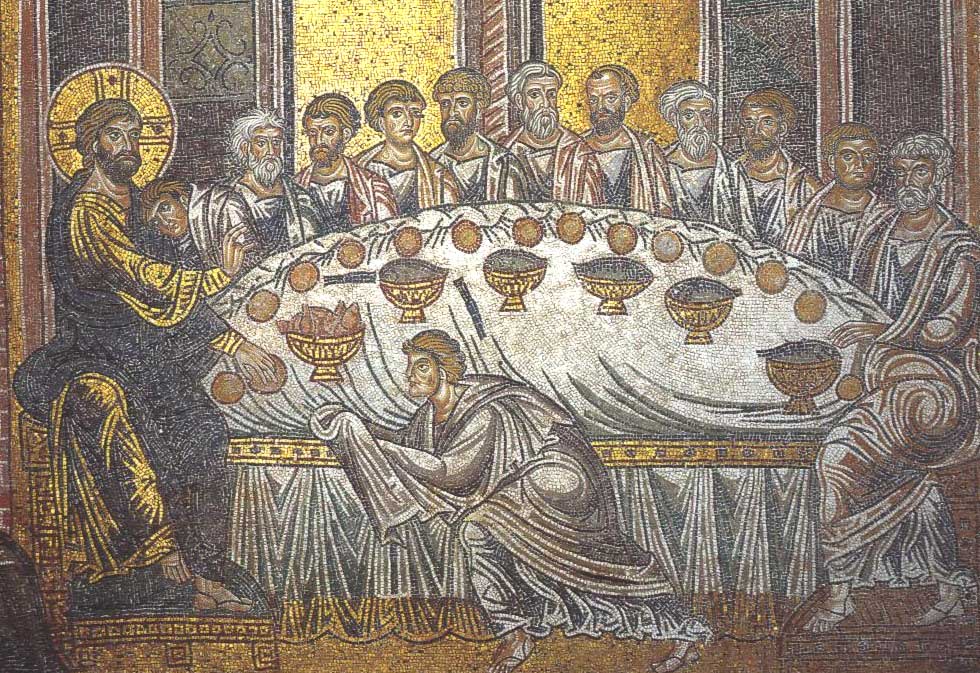
Pope Benedict’s Last Holy Thursday Homily
MASS OF THE LORD’S SUPPER HOMILY OF HIS HOLINESS BENEDICT XVI Basilica of St John Lateran Holy Thursday, 5 April 2012 Photo Gallery (Video) Dear Brothers and Sisters! Holy Thursday is not only the day of the institution of the Most Holy Eucharist, whose splendour bathes all else and in some ways draws it to[…]Continue reading→