
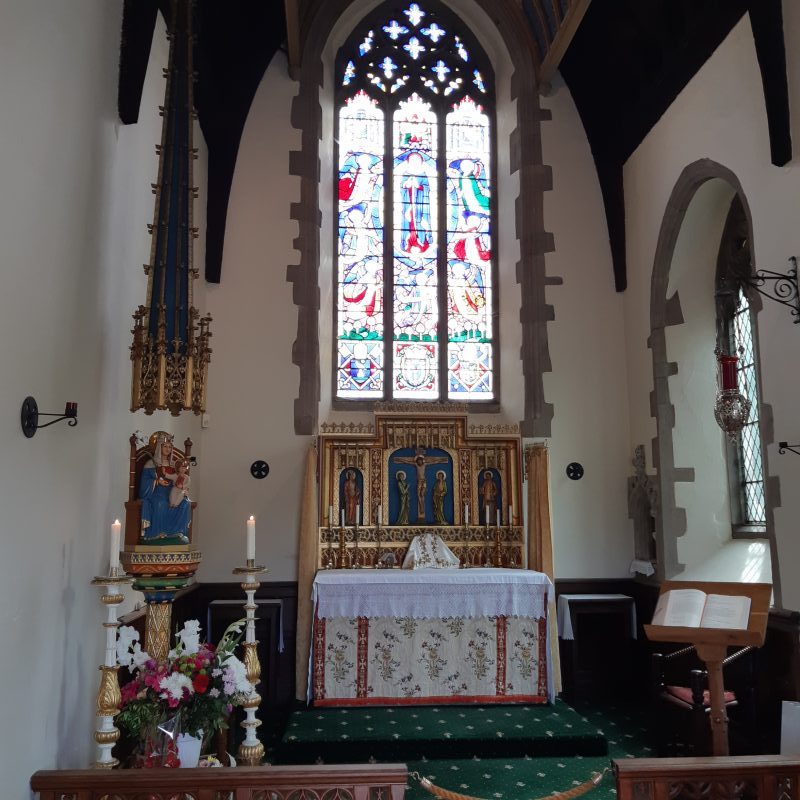
On Pilgrimage to Our Lady of Walsingham
(On this feast of the Visitation, it is fitting that we post this reflection from contributor Rebecca Jacobson on a pilgrimage she took to the primary Marian shrine in England, Our Lady of Walsingham. Wherever you live, make some sort of devotion – even if it cannot be a full pilgrimage! – to the blessed Mother, as she did to her kinswoman Elizabeth) Ed.
And many a pilgrim to day of his death / Took the road once a year to “England’s Nazareth.” (verse from “The Walsingham Hymn”)
Last August I had the joy of attending a walking pilgrimage to the Shrine of Our Lady of Walsingham, and what a beautiful time it was! The group was organized by the Latin Mass Society of England and Wales (hats-off to those folks), and I shall do my best to paint a picture of those three days.
Our gathering place was a community hall just outside Ely, a town boasting not only the beautiful Ely cathedral, but also St. Etheldreda’s chapel, a picturesque Roman Catholic church which houses the relic of her hand. Most pilgrims arrived Thursday evening, while Friday morning marked the start of our pilgrimage. The air rippled with gayety as my friend and I arrived, a trifle weary from our own romp through England. Pilgrims gathered from all across England, Wales, Scotland and Ireland, even New York (ourselves hailing from Alberta). Everyone shared an excited anticipation for the morrow’s journey. Our fellow pilgrims included many young people, seniors and families, and many priests and religious (in full habit) were ready to provide for the spiritual needs of the company. That evening, after a delicious supper out-of-doors, everyone camped for the night and prepared for an early start next day.
We began with a walk into Ely to attend Holy Mass — this being central to each day, as it ought to be. Thus spiritually nourished, we returned to find a bounteous out-of-doors breakfast laid for us — with porridge by the cauldron! After hastily eating and gathering up our things, we set off. Our group of 200 pilgrims was divided into smaller groups, or chapters, of about 40 people, to facilitate highway travel and communal praying and singing. Each chapter had both leader and cantor. Four sturdy men led the procession carrying a statue of Our Lady of Walsingham, while banners and flags fluttered in the breeze, merry voices called out to one another, and, once we started, rang out “Onward Christian Soldiers” as we wound our way through the streets of Ely and out into the countryside.
Mother Church has from the earliest of days encouraged pilgrimages as a means of increasing our devotion to Our Lord, as they remind us that our whole life is a pilgrimage toward eternity. As the Catechism of the Catholic Church states, “Pilgrimages evoke our earthly journey toward heaven and are traditionally very special occasions for renewal in prayer” (2691). They give us a chance to pause and intentionally re-orient our life towards our heavenly home. As John Paul II echoes in his homily of Aug. 6, 1999: “We are made for eternity, and eternity begins at this very moment.” A walking pilgrimage is meant to engage the whole body in prayer, as our feet walk for hours, our mind contemplates, our lungs breathe deeply, and our voice raised in prayer or song. We thus offer our whole body in prayer along the pilgrim way.
Before continuing, I should like to add a bit of background for those unfamiliar with the Walsingham story. In the eleventh century Our Lady appeared to the pious widow Richeldis and asked her to construct a replica of the Holy House of Nazareth, the house which witnessed the scene of the Annunciation. This virtuous lady began the project at once (echoing Our Lady’s own prompt fiat) and instructed carpenters to start building. When they encountered difficulty, both in choosing the exact site and in fitting the timbers together, the little house was miraculously built overnight by angels. The site became known as “England’s Nazareth,” a place for pilgrims to travel who, for whatever reason, could not make it to the Holy Land itself (something we can relate to at this time in history). In time an Augustinian Abbey was built and a shrine enclosed the Holy House. Walsingham became one of the major pilgrimage sites of the Middle Ages, with many kings, queens, and peasants seeking Our Lady’s intercession along the Walsingham Way. St. John Fisher and St. Thomas More undoubtedly visited the shrine, and it remained a special place of devotion for the kings of England from Henry III down to the infamous Henry VIII, at whose hands the house perished. When he began his dreadful destruction of shrines and monasteries, Walsingham was among the first to be destroyed.
The Abbey and Holy House were razed to the ground, the statue taken to London to be burned (though we may hope it was secretly saved) and the hallowed ground forbidden to the faithful. The shrine passed into oblivion, forgotten for centuries by an oppressed and weary England. A tall stone arch is all that now remains of the original priory grounds, looking like a giant, gaping door into another world: the lost world of Merrie England… Perhaps it is not quite lost, and like the wardrobe of Narnia, Walsingham is becoming a spiritual gateway into a merrier and happier England.
The nineteenth century saw a slow re-awakening of devotion to Walsingham — reignited by both Catholics and Anglicans, in fact. Pope Leo XIII famously stated that, “When England returns to Walsingham, Our Lady will return to England.” Hence there is much hope for a renewal of the Faith in England, which is certainly evidenced by the many pilgrims journeying to Walsingham once more in steadily increasing numbers.
This faith-filled renewal was certainly alive and well among last summer’s group of pilgrim faithful — a most encouraging sight. Age-old hymns of the Church kept us going along the way, and our cantors led us in singing the rosary in Latin, English, and French. A few sturdy secular songs were also included, to keep our chins up as we pressed onward. I could hardly keep from bursting the first time they rang out with “Rule Britannia.” Young fellows in wide-brimmed hats belted it out at the top of their lungs with a jubilant patriotism that was so good to see, and the ladies sang with clear, strong voices. It felt quite like something I might read in a storybook.
Our path itself rather evoked a storybook narrative as we passed through picturesque towns and villages, alongside a canal and through pleasant farmland. Blackberry brambles tumbled over each other in many places, at great pains to keep us from straying off the path. Fortunately the berries were plentiful, and I enjoyed many a juicy mouthful along the way. Particularly beautiful to me were the areas of countryside where tall trees lined small roadways not large enough for two cars, and deep green vines twined themselves up the trunks of the trees, while wild flowers and grasses grew in gay abandon along the edge of the path (I was delighted to see just how many are similar to those in Alberta). At one place we ate our lunch in a small field; in another, a shaded grove of trees, and a couple of times we stopped at a country pub for a pint o’ beer— yes, all 200 of us!
The pilgrimage indeed had its share of joviality, with no end of singing. On the road, Chapter Four at one time became much-coveted by the youth as the jolliest of the group, with its cantor bent on distinguishing his Chapter as the most enthusiastic singers. Young people, merrily jostling, swelled the chapter to such an unmanageable size that it had to be divided again to keep the chapter size consistent, much to the chagrin of those left out. Yes, there was a good deal of merry bantering on the road as well, which is naturally part of the fun of travelling in company with others.
Of course, the suppers were a wonderful time to enjoy one another’s company — three cheers for the volunteer cooks! Theirs was assuredly a pilgrimage of great self-sacrifice as they endured sorer feet and longer hours than those who walked. One night we made camp in a hall in the small town (the name of which escapes me), and after a delicious supper served by dogged volunteers, many of us slipped into the pub next door for an evening of music. Even after an entire days’ singing, many voices rang out quite merrily with such familiar tunes as “No, Nay Never,” “Greensleeves,” “Danny Boy,” and at the landlady’s special request, “Whiskey in a Jar.”
While the joys of the pilgrimage far outweighed the discomforts, a journey of 60 miles on foot was certainly not without its challenges. My legs and feet throbbed by the end of each day, and I was then quite grateful for companions to keep me going. There was also the discomfort of camping out at night, although women and children could sleep on the floor in the hall and so escape the penetrating dampness of a misty English morning. Each person had their own sacrificial pains to offer Our Lord, be it a physical trial or in some other way. Part of the spiritual nature of a pilgrimage is that we may be surprised by the particular struggles we encounter along the way. We bring our intentions and desires and place them in the hands of Our Lady, who receives them and sometimes shows us our true needs.
As we neared Walsingham we were greeted by a gathering of even greater numbers at the Slipper Chapel, where traditionally pilgrims will remove their shoes and walk the last mile barefoot to Walsingham. We attended our Sunday Mass there, then set off in the rain (the only real rain-shower of the trip) for Walsingham, many walking barefoot through the puddles. At one point I looked up with surprise and delight to see two children in macintoshes seated upon a large draft horse! Thus mounted they accompanied the pilgrimage for the final mile.
Our arrival in Walsingham was short and sweet. We venerated the site where the Holy House once stood, received a final blessing, and dispersed, our pilgrimage accomplished. The journey was certainly the destination in many ways. Still, as my friend and I made our way to the pilgrims’ hostel, there lingered in both of us a sense of something yet unfinished… perhaps a wistful longing for the Merrie, Catholic England that once was Mary’s dowry, that indeed might be renewed again. In any case, we decided it was a fitting end to a pilgrimage as a reminder that as we descend the ‘mountaintop’ and re-enter our daily lives, we are still exiles longing for heaven.
Our exile is not without its consolations, however, and the little town of Walsingham is certainly one of them. My first impressions revealed it to be quite beautiful and unspoilt by tourism. It is small enough that, upon our arrival, my companion and I had quite a time trying to find a place to eat that was not already closed or full of other pilgrims. Finally we found a table and a hearty meal at the Black Lion, followed up by a dish of the most delicious ice cream I’ve ever tasted. We also learned from our hospitable servers the amusing fact that Henry VIII had slept overnight in that very inn on his own journeys thither. In any case, my brief visit to Walsingham has certainly left its charm upon me, and perhaps I shall return there some day for a longer stay.
The purpose of any pilgrimage is to draw us closer to Christ, to love Him more deeply. Sometimes it proves the means by which Our Lord answers prayers, and as a devotion it is a beautiful way to act upon a desire for interior growth. Much more than just another ‘fun experience’ to talk about, pilgrimages should really make us better Catholics in the every-day walk of life.
What is truly wonderful is that this devotion — of going on pilgrimage — is so easily accessible, something we can do anytime, wherever we live. As Spring brings with it warmer weather, we can be on the lookout for opportunities to set off on our own pilgrimage. We need not wait for an organized group to join; we can go alone or with friends; we can turn an evening walk into an opportunity to praise God. The point is simply to do something. Through this valley of tears we must indeed travel; but let us do it as children of Our Lady, and for goodness sake, let us sing while we walk! “encouraging each other while it is still today” (as the Church reminds us in the Divine Office). And we can perhaps make our own homes a bit like the Holy House of Nazareth, paying homage to the little house of the Annunciation by doing ‘little things with great love’ — which is really what our earthly pilgrimage is all about.
Our Lady of Walsingham, pray for us!

Saint Kateri , Canada’s Protectress
This was the title given to Saint Kateri Tekakwitha, by Pope Benedict XVI, when he canonized her on October 28th, 2012, along with six others, in Saint Peter’ Square (she had been beatified by Pope John Paul II back in 1980). With Saint Joseph as our protector, along with the Canadian martyrs, we seem to[…]Continue reading→

Remembering Father Alphonse de Valk
(Today marks the sixth anniversary of the death of Father Alphonse de Valk, C.S.B., a faithful, courageous and indefatigable Basilian priest, pro-life-and-family apostle, and the founder of Catholic Insight magazine. Here is what we wrote those on his entering into eternity five years ago, as we continue to remember him in our prayers and thoughts)[…]Continue reading→

My Name is Bernadette
April 16th is a propitious day, for besides the anniversary of Father de Valk’s death, who founded Catholic Insight in its print form decades ago, and the commemoration of the ‘two Benedicts’, mentioned in accompanying posts, today we also recall Saint Bernadette Soubirous, the young visionary to whom the Virgin Mary appeared numerous times at[…]Continue reading→
Canonizing Sister Faustina and Divine Mercy
HOMILY OF THE HOLY FATHER MASS IN ST PETER’S SQUARE FOR THE CANONIZATION OF SR MARY FAUSTINA KOWALSKA Sunday, 30 April 2000 1. “Confitemini Domino quoniam bonus, quoniam in saeculum misericordia eius”; “Give thanks to the Lord for he is good; his steadfast love endures for ever” (Ps 118: 1). So the Church sings on the Octave of[…]Continue reading→

Divine Mercy Sunday – An Echo of Every Mass
Reach out your hand and put it in my side. Do not doubt but believe’… ‘My Lord and my God!’ (Jn. 20:18)). Today is Divine Mercy Sunday, and as we celebrate the end of the Easter Octave, we contemplate the wounded side of our Saviour, the Church’s source of life. On Good Friday in the[…]Continue reading→

Saint Stanislaus of Szczepanów
We celebrate Saint Stanislaus today (+ April 11, 1079), in light of this Easter Octave, a bishop and martyr who accepted the episcopacy only at the direct order of Pope Alexander II. He proved a wise and courageous leader of his flock, put to death by his own king, Boleslaus, for rebuking the monarch’s ‘immoral[…]Continue reading→
First Holy Communion: Sermon from May 16, 1943
Here is a sermon from the good old days by +Rev. Msgr. Vincent Nicholas Foy (August 14, 1915 – March 13, 2017), from 1943. Readers may recall that Pope Saint Pius X, by the decree Quam Singulari in 1910, lowered the customary age of reception of Holy Communion – after the rigours of the plague[…]Continue reading→
In the Glorious Light of Easter, Alleluia!
Set your minds on things that are above, not on things that are on earth, for you have died, and your life is hidden with Christ in God. When Christ who is your life is revealed, then you also will be revealed with him in glory (Col. 3:3-4). The Resurrection of Our Lord and Saviour[…]Continue reading→
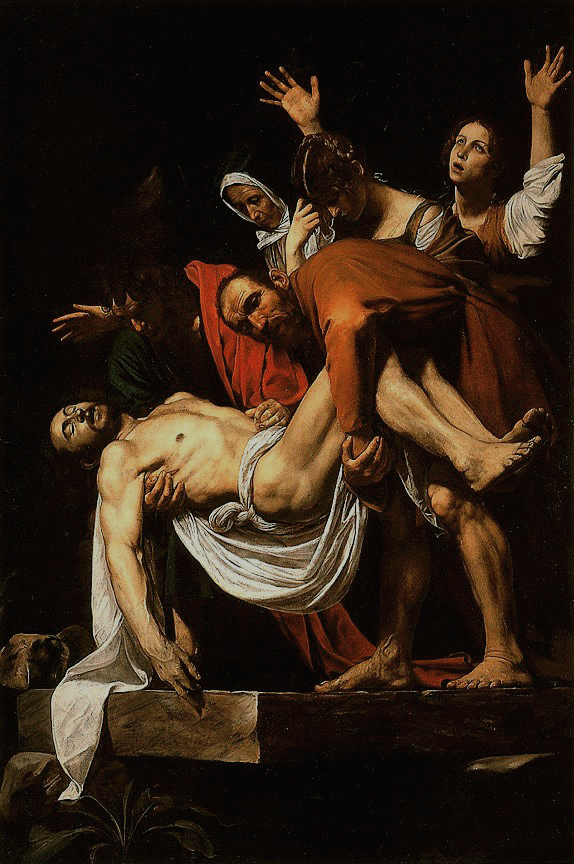
An Ancient Homily for Holy Saturday
The time between Good Friday and Easter Sunday is one of waiting, in silence, as the world wonders – anticipates – what will happen, after the death of Christ. We re-live this time each year in the anamnesis of our liturgy, and in turn look forward to the glorious re-creation of all things at the[…]Continue reading→
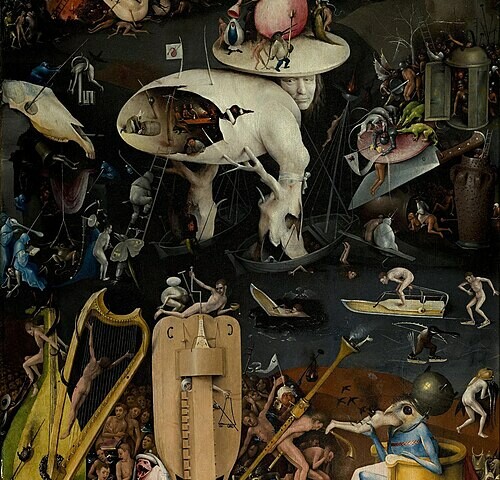
Europe’s Long Descent
(As we meditate on this day on Christ’s burial, and His descent into hell, it is fitting to ponder here with contributor Peter Marcus how the world seems to be heading there as well. The difference is that, although God cannot ‘redeem’ hell, nor those therein, He can and did redeem the world. There is[…]Continue reading→