

Marie of the Incarnation: Canadian Mystic and Missionary
Marie de l’Incarnation: Études de théologie spirituelle by Pierre Gervais, S.J.: A Review
Marie of the Incarnation, born Marie Guyart, was one of the first arrivals in ‘New France’, which would later become Canada, arriving here in in 1639, about the same time as many of the Jesuit and Franciscan missionaries, and she was in fact a correspondent with the great fellow missionary, and future martyr, Jean de Brebeuf. She set up the first Ursuline community, in what is now Quebec City (where her remains now lie in the same convent), praying, working and educating young girls, both French and Indigenous. She was a great and noble soul, who gave all for God, and for the new nation to which knew she was called in a very vivid vision. What follows is a review of her spirituality. Editor
Pierre Gervais is a Canadian-born Jesuit, professor of systematic, sacramental, and spiritual theology at the Institut d’Etudes Theologiques of Brussels as well as editor of the Nouvelle Revue Théologique. In his Foreword, Father Gervais explains the makeup of these “studies” or essays in spiritual theology based on the life and writings of Marie of the Incarnation (1599-1672), an Ursuline nun first of Tours (France) and then of Quebec. Different stages of Marie’s spiritual experience are examined as recounted in her own writings: the extant excerpts of the “Relation” of 1654 and a spiritual autobiography composed for her son (and only at his insistent request), Dom Claude Martin, who was a monk with the Benedictines of Saint-Maur. Gervais presents the general path of Marie’s spiritual journey, outlining the great stages of her growing awareness of her call to an apostolic and missionary vocation in New France. Particular aspects of Marie’s spiritual theology are tied in with special moments in her life but nevertheless have their parallels in present-day questions about the Christian life.
In describing her own spirituality, Marie does not normally use terms in a technical theological way, but her choice of words and distinctions are carefully made. The author analyzes closely Marie’s language and thought, interpreting them in more theological terms, while respecting Marie’s particular inspiration and experience. He also shows that, in spite of the distinctiveness of Marie’s spiritual experiences, it is perfectly consistent with Scripture. Marie’s descriptions of her spiritual experiences, like those of other mystics, can lead theologians to a fresh view of the mysteries of the Christian faith. For instance, Gervais analyzes an early stage in Marie’s spiritual journey, namely, the account (written in 1654) of her conversion of 1620: a vision of blood, followed by sacramental confession and a profound experience of God’s loving mercy. This analysis is applied to past and present pastoral thinking about the meaning of Christian conversion, including the steps involved in the sacrament of reconciliation. What Marie described in 1621 as a “new gift of prayer” was what we would term “evangelical contemplation,” i.e., prayer that centres on the person of Christ as found in the Gospels and leads to“an intimacy” with him in “his sacred mysteries from his birth to death.”
An analysis of traditional spiritual theology exhibits Marie’s overall conformity, in different language, with what Gervais calls “recent” Christian authors (including Thomas Aquinas, who died in 1275!). Her greatest contribution to mystical theology was Trinitarian. Marie’s visions of 1625, 1627, 1631, which moved beyond the senses and the imagination, were “three Trinitarian graces.” Marie distinguishes between her first Trinitarian experience (“grace of light”) and the last two (“grace all for love”). Her life long Marie recorded the growth of the special union with the Persons of the Trinity that was had been granted to her, and her prayer and apostolic vision were strongly marked by these Trinitarian “graces.” Marie’s spiritual relationship with the Persons of the Trinity was in close conformity with Scripture , especially with John’s Gospel. It was more “personalist” than the “essentialist” position generally adopted by theologians who have generally remained at a level comparable to Marie’s first “grace.” For Marie, the eternal Word, the second Person of the Trinity, alone is Spouse of the faithful soul. “Here,” Gervais says, “the Trinitarian mysticism of Marie of the Incarnation takes the exact opposite view of the common doctrine with respect to the Trinity’s indwelling.” His statements about the culminating third grace note her distinct relationship with each Person in a “mystery of alliance” with the Trinity.
Fifteen years after her conversion of 1620, Marie’s mysticism of union with the Trinity began developing into a mysticism of the missionary apostolate. In her “Relation” of 1654, fifteen years after her arrival in New France, Marie recalls that, while she was still in the convent at Tours, she received a personal revelation that somehow her life would be spent elsewhere (in spite of the rigid cloister imposed on religious women at the time). She gradually was led to understand she had an apostolic vocation. To be apostolic was not for her merely a question of saving souls. First and foremost, as Marie expressed it, “the apostolic spirit” was a fruit of the “the Spirit of Jesus Chris,” causing her “spirit to have life only in his,” to be completely absorbed by “the interests” of the divine “Master” and by “zeal for his glory, so that he might be known, loved and adored by all the nations redeemed by his precious Blood.” This spirit left her, with scriptural passages as evidence, to plead aggressively in her prayer like a lawyer, but driven by love: the Father owed it in strict justice to his Incarnate Word to establish Christ’s Kingdom everywhere because of his own repeated promises to the obedient Son who had already saved all people and to whom they now belonged by right. In all this, Marie had now become more ecclesial in spirit and thus a model for present-day religious communities in their apostolic missions.
Marie was the proponent of what Gervais calls “an apostolic type of mysticism,” a “mysticism of a new kind . . . in the history of spirituality, a mysticism that finds in apostolic commitment itself the basis of effective union with God.” There were two stages in this second great phase of her life. The first stage was a period of interior trials (1639-47): moments of self-accusation, emptiness, solitude of spirit, temptations to despair. It was a purgatory, even as she was aware of God present within. Throughout there was an underlying peace, even as she experienced unwillingly feelings of aggression and aversion for others. The second stage became the period of solid commitment to her missionary vocation (1647-72), beginning with an answer to her prayers to the Virgin Mary for deliverance from her trials. Marie’s spiritual growth during this new period was characterized by an astonishingly peaceful acceptance of God’s will after the catastrophic destruction of the Ursuline monastery by fire in 1650. For her, God is a good Father and Spouse. Though she was a cloistered nun, Marie’s union with the Trinity matured through her apostolate as foundress, evangelizer of the native peoples, and spiritual mother of the new Church. At no moment does one find in her a tension between contemplation and action.
Gervais summarizes his study by noting, “every spiritual text that flows from the heart heads to Scripture and makes it live anew; in this sense, however much [such a text] may mirror a particular person, language, and period, it transcends the limits of the past and remains rich in instruction for those who open their ears to it.” In fact, Father Gervais has put this principle into effect in directing eight-day retreats using as a guide Marie of the Incarnation’s spirituality and “states of prayer,” a type of retreat that may be different from the Ignatian approach but is not meant to replace it. As a variant for a certain stage in some persons’ lives, however, it will be appropriate and fruitful.
A Closed, Unsustainable, Descending Loop
As a follow-up to my thoughts on Payette’s payout, here be a stark image of where are here in Canada. As the graph shows in, well, graphic terms, since 2025, the public sector has contributed to 95.5% of economic growth. The private sector – which funds the public sector, or is supposed to – has[…]Continue reading→

Remembering Father Alphonse de Valk
(Today marks the sixth anniversary of the death of Father Alphonse de Valk, C.S.B., a faithful, courageous and indefatigable Basilian priest, pro-life-and-family apostle, and the founder of Catholic Insight magazine. Here is what we wrote those on his entering into eternity five years ago, as we continue to remember him in our prayers and thoughts)[…]Continue reading→
Presidential Pardon of Weronika Krawczyk
As a good news, follow-up to our story from Poland, of the persecution of Weronika Krawczyk for her pro-life views, we heard that she has been granted a presidential pardon. One might still wonder why one needs a presidential pardon for simply holding the long-held belief that the child within the womb is a child,[…]Continue reading→
Pope Leo and a Rosary for Peace
Pope Leo XIV has asked Catholics across the world to join him in a Rosary for peace today, at 18:00 Rome time (6 pm), which would be noon from where I write (EST). If you are able, whether at that time or another, and in whatever way you pray, to join in intercession with the[…]Continue reading→
Payette’s Payout
I was glancing through some headlines, and noticed a mention of Julie Payette – engineer and astronaut and sometime the Queen’s representative in Canada – which brought back vague memories. She was appointed Governor-General by Justin Trudeau in 2017. Ms. Payette resigned in 2021, amidst claims that she created a ‘toxic work environment’, with allegations[…]Continue reading→

Saint Stanislaus of Szczepanów
We celebrate Saint Stanislaus today (+ April 11, 1079), in light of this Easter Octave, a bishop and martyr who accepted the episcopacy only at the direct order of Pope Alexander II. He proved a wise and courageous leader of his flock, put to death by his own king, Boleslaus, for rebuking the monarch’s ‘immoral[…]Continue reading→
Weronika Krawczyk and Injustice in Poland
Catholic Action in Poland has issued a formal statement appealing to the President of the Republic of Poland to pardon Weronika Krawczyk—convicted for warning other women against an abortion-performing gynaecologist. Catholic Action (AK) emphasizes that no apology is owed to a doctor who has performed numerous abortions and proposed others; furthermore, the organization considers the[…]Continue reading→
Three Easter Musical Gems: Bach, Palestrina and Byrd
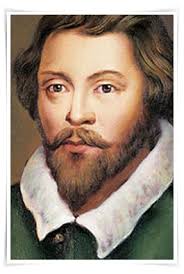
A very blessed and glorious Easter! Christus surrexit vere, alleluia! As we begin this Easter Octave with the great Solemnity of Easter, music to lift the soul would be one of Bach’s Easter cantatas, composed during his time at Leipzig in the early 1700’s, for the six Sundays of this festive season, leading up to[…]Continue reading→
Saint Isidore of Seville, the Internet and Industriousness
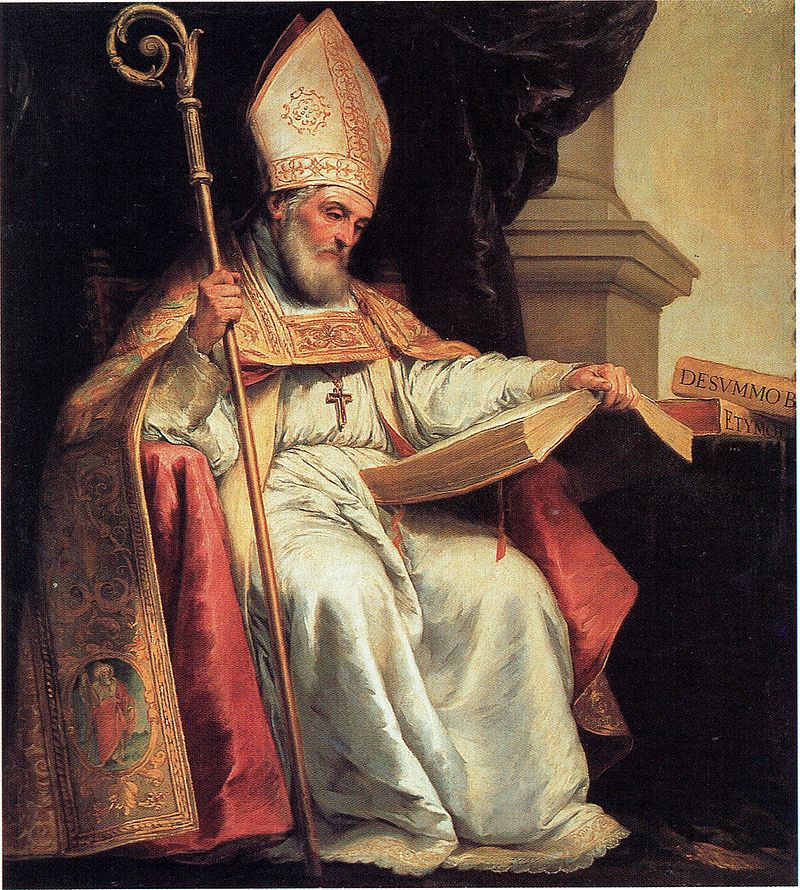
Today, April 4th, muted this year by Holy Saturday, is the commemoration of Saint Isidore of Seville (560-636) a bishop and doctor of the Church during a tumultuous age, when civilization was crumbling, coming apart at its very seams, which may sound sort of au courant. Then again, the form of this world has always[…]Continue reading→

An Ancient Homily for Holy Saturday
The time between Good Friday and Easter Sunday is one of waiting, in silence, as the world wonders – anticipates – what will happen, after the death of Christ. We re-live this time each year in the anamnesis of our liturgy, and in turn look forward to the glorious re-creation of all things at the[…]Continue reading→