
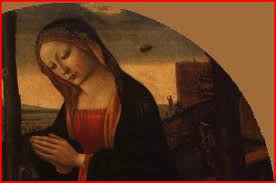
The Mary Enigma
(On this commemoration of Saint Bernadette Soubirous, it seems fitting to post this reflection from a new contributor from Ireland, Dr. A.E. Dundon, on the mystery of Our Lady, under the title she revealed to the young peasant girl in her own French patois, Que soy era immaculada councepciou. Some of the details herein are not dogma, but most are piously believed, as consistent with what we believe of Our Lady from divine revelation, not least her preservation from all sin. Editor)
In 1854, Pope Pius IX declared the Immaculate Conception of the Blessed Virgin Mary a dogma of the Catholic Church. Preserved from original sin from the time of her conception and throughout her life, the Catholic belief is that Mary had a remarkably pure and holy childhood. Because of this, Catholics show the Blessed Virgin great respect and reverence. Her feast day under that title is on December 8.
According to the prophet Jacob, Mary’s father was called Joachim and was a direct descendant of King David (the third king of Israel). Joachim lived a modest life in Nazareth, Galilee. His wife Anne, after twenty years’ sterility, conceived and gave birth to Mary on September 8, 14 bc. (The Gospel of St. James gives a detailed account of Mary’s birth.) In keeping with Israeli custom, Mary was baptized on the ninth day after birth. At this family-led gathering, a child would receive the name by which it was to be known. She was called Miriam (Mary) which means lady or mistress. St. Bernard (Cistercian monk and mystic 1090–1153) says: ‘The Mother of God could not receive a more appropriate name or one that could better express her high dignity.’
According to Jewish law, a mother was required to take her first-born daughter to the temple twenty-four days after birth to be purified. At this ceremony in Jerusalem, Anne vowed that as soon as Mary could distinguish good from evil, she would consecrate her to God. After the ceremony, Joachim and Anne returned to Nazareth where Mary spent her formative years. Later, Joachim and Anne decided to settle in Jerusalem. Although the reason for their departure from Nazareth is unknown, legend states that Mary took a vow of virginity when she was presented at the Temple in Jerusalem at the age of three.
Mary spent nine years in the Temple in Jerusalem. She prayed in the morning and completed her customary duties, which included embroidery, silk weaving, and studying sacred books. She was a devout follower of her people’s customs and practices.
Mary was kind, affable and compassionate. Her every action was accompanied by extreme modesty. She seldom spoke and always for a purpose. She was neither irritated nor angry, and she did not dishearten anyone. Her politeness was not an empty form of deception, but a spirit of kindness from the heart. When praying, her mind was so attentive that her soul seemed lost in adoration before her Lord, and her looks always revealed her as the mother of mercy. Even booming thunder or a howling tempest often passed unheeded. St. Ambrose (ad 374–397, theologian and Bishop of Milan) says of her: ‘No person was ever so gifted as Mary, with such a high degree of contemplation; her spirit, always in accordance with her heart, never for a moment lost sight of Him whom she loved more ardently . . .‘
The events of Mary’s life are outlined in the gospels and in the writings of some spiritual authors. Abbé Orsini (1802–1875), a French author, studied for the priesthood and ministered in Paris. In The Life of the Blessed Virgin Mary, Mother of God [1], he provided details of how Mary spent her days, how she dressed, and her relationship with God in prayer. Although the story of Mary’s life has many gaps and is lacking in places, it is still a compelling narrative.
When Joachim became unwell with a life-threatening illness, a dark cloud passed over Mary’s life. As he neared death, he called for his daughter and as he raised his hands to say farewell to her, it seemed that the glories, destined for his daughter, were suddenly revealed to him. Joachim let his hands fall and died. Mary and Anne went into mourning as required by Hebrew custom. However, Joachim’s death was soon followed by another sorrow. One night Anne felt weak, and using what strength she had she blessed her child. Mary turned around and her mother was dead. She was now without any protector except providence and was overcome by loneliness and grief. She made a vow of perpetual virginity.
Mary was entrusted to the guardianship of her cousin Elizabeth, who amazingly became pregnant in her eighties. Overwhelmed by this great news, Elizabeth could only say ‘The Lord has done this for me.’ When Mary was fifteen, the priests at the Temple decided that the time had arrived to unite her with a worthy spouse. Virginity was for her the holiest and the most honorable state for a woman. The priests and the elders of her family fixed their choice for her on a working-man from Nazareth. He was Joseph, a carpenter, now in his fifties. Mary did not consider it dishonorable to marry a man of his status. Although their union may have seemed ill-suited at first, it was a noble alliance. The nuptials took place on a mild winter’s day in Jerusalem. Mary wore a white lace veil and a long blue linen wedding dress, similar to what Jewish maidens wore. They decided to settle in Nazareth, Mary’s native town.
The peace of God reigned on Joseph and Mary at Nazareth. Their days were spent divided between prayer and work. Two months after their wedding, the Angel Gabriel appeared to Mary when she was praying. The Angel announced that she would ‘bring forth a son, named Jesus. He shall be great and shall be called the Son of the Most High . . .’ Mary felt troubled and wanted an explanation of this extraordinary visit. ‘How can this be, as I am still a virgin?’ The Angel, sensing her surprise, told her: ‘The power of the Most High will overshadow you’. Mary, who was free of original sin and chosen to be the mother of God, said: ‘Behold I am the handmaid of the Lord, be it done unto me according to thy word.’
Mary was a woman of admirable qualities, endowed with privileges above those of humanity. She conceived her Divine Son, whom neither the heavens nor the earth could contain, and was full of grace and merciful goodness.
The gospel according to St. John states: ‘There stood by the Cross of Jesus his mother . . .’ Mary is standing erect at the foot of the Cross of her son – standing not only physically but also courageously in both mind and heart. Mary is the Church’s ‘strong woman of all times.’ Calvary is a special representation of her strength. She is the epitome of pure, unadulterated strength.
It must have been incredibly difficult for Mary to witness the Crucifixion, even with her great intellect and insight. Her sufferings may be likened to compassion. Conventionally, com-passion means the ability to feel pity. She was not outraged by the Crucifixion of her son. Instead, she pitied Him in his sufferings and agony. She shared His passion and suffered for mankind. His pains were transferred to her sensitive disposition so she endured His sufferings for us.
St. John Vianney (1786–1859 also known as the Curé d’Ars, and renowned for his priestly work in Ars, France) describes Mary as ‘. . . the most beautiful creature that ever came forth from the hands of the Creator.’ She is known as ‘the Woman of Sorrows’ by all generations. Mary suffered every possible torment to the utmost, just as Jesus suffered human woes in their entirety.
Mary was immaculately conceived and was incredibly sensitive. Her faith made her feel the beauty and horror of the Cross, which was the victim of her beloved son.
[1] Orsini, M. (1838). The Life of the Blessed Virgin Mary, Mother of God. Trans. Patrick Power (Dublin, 1850).

Remembering Father Alphonse de Valk
(Today marks the sixth anniversary of the death of Father Alphonse de Valk, C.S.B., a faithful, courageous and indefatigable Basilian priest, pro-life-and-family apostle, and the founder of Catholic Insight magazine. Here is what we wrote those on his entering into eternity five years ago, as we continue to remember him in our prayers and thoughts)[…]Continue reading→

Divine Mercy Sunday – An Echo of Every Mass
Reach out your hand and put it in my side. Do not doubt but believe’… ‘My Lord and my God!’ (Jn. 20:18)). Today is Divine Mercy Sunday, and as we celebrate the end of the Easter Octave, we contemplate the wounded side of our Saviour, the Church’s source of life. On Good Friday in the[…]Continue reading→

Saint Stanislaus of Szczepanów
We celebrate Saint Stanislaus today (+ April 11, 1079), in light of this Easter Octave, a bishop and martyr who accepted the episcopacy only at the direct order of Pope Alexander II. He proved a wise and courageous leader of his flock, put to death by his own king, Boleslaus, for rebuking the monarch’s ‘immoral[…]Continue reading→
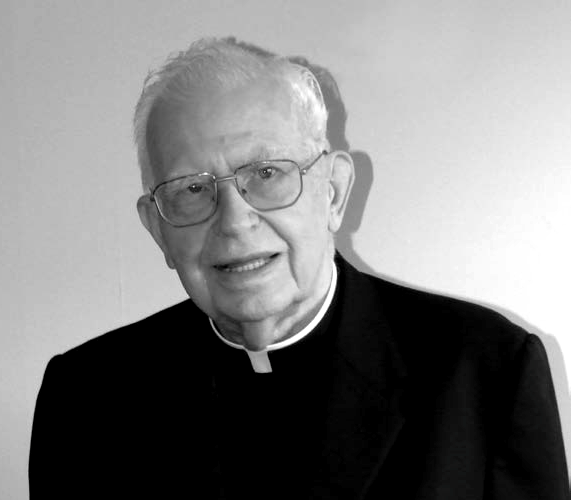
First Holy Communion: Sermon from May 16, 1943
Here is a sermon from the good old days by +Rev. Msgr. Vincent Nicholas Foy (August 14, 1915 – March 13, 2017), from 1943. Readers may recall that Pope Saint Pius X, by the decree Quam Singulari in 1910, lowered the customary age of reception of Holy Communion – after the rigours of the plague[…]Continue reading→
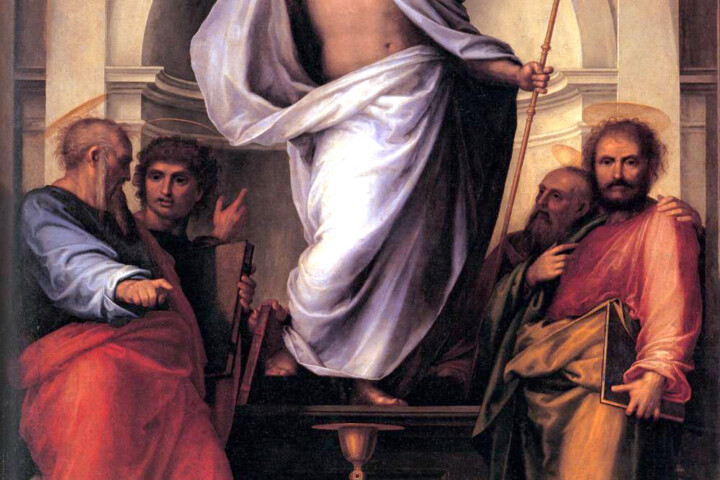
In the Glorious Light of Easter, Alleluia!
Set your minds on things that are above, not on things that are on earth, for you have died, and your life is hidden with Christ in God. When Christ who is your life is revealed, then you also will be revealed with him in glory (Col. 3:3-4). The Resurrection of Our Lord and Saviour[…]Continue reading→
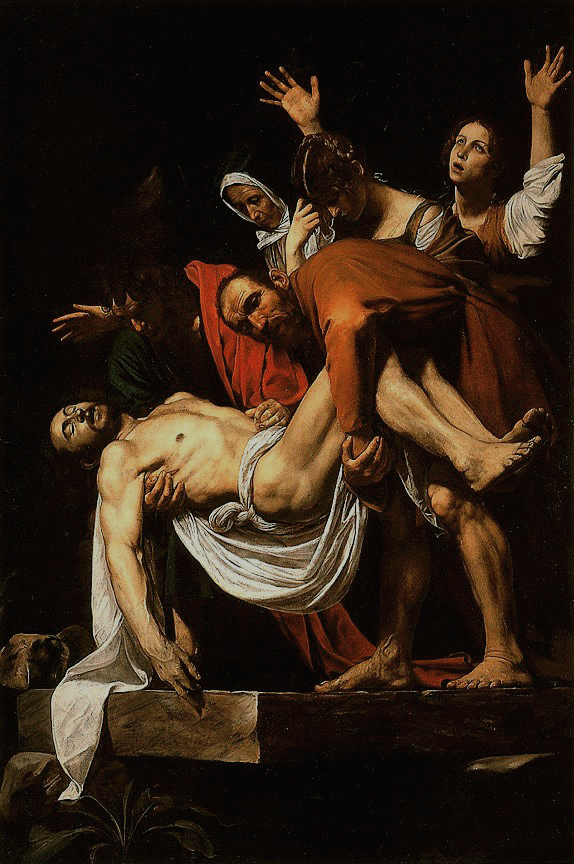
An Ancient Homily for Holy Saturday
The time between Good Friday and Easter Sunday is one of waiting, in silence, as the world wonders – anticipates – what will happen, after the death of Christ. We re-live this time each year in the anamnesis of our liturgy, and in turn look forward to the glorious re-creation of all things at the[…]Continue reading→
Europe’s Long Descent
(As we meditate on this day on Christ’s burial, and His descent into hell, it is fitting to ponder here with contributor Peter Marcus how the world seems to be heading there as well. The difference is that, although God cannot ‘redeem’ hell, nor those therein, He can and did redeem the world. There is[…]Continue reading→
Pope Saint John Paul II’s First Good Friday Homily
ADDRESS OF HIS HOLINESS JOHN PAUL II AT THE CONCLUSION OF THE STATIONS OF THE CROSS AT THE COLOSSEUM Good Friday, 13 April 1979 When we make the Way of the Cross from one station to the next, in spirit we are always at the spot wherethis journey had its “historical” place: where it[…]Continue reading→
A Meditation for Good Friday: How To Undo the Effects of Sin?
Cardinal Newman, now Saint John Henry Newman, was a towering figure of nineteenth-century Catholicism who is almost universally admired. I say “almost” because not everyone likes him. I knew a priest once, Arthur Caulkins, who has become disenchanted with Newman. As an undergraduate Arthur had been enamoured of Newman, and this interest continued when he[…]Continue reading→
Pope Benedict’s Last Holy Thursday Homily
MASS OF THE LORD’S SUPPER HOMILY OF HIS HOLINESS BENEDICT XVI Basilica of St John Lateran Holy Thursday, 5 April 2012 Photo Gallery (Video) Dear Brothers and Sisters! Holy Thursday is not only the day of the institution of the Most Holy Eucharist, whose splendour bathes all else and in some ways draws it to[…]Continue reading→