
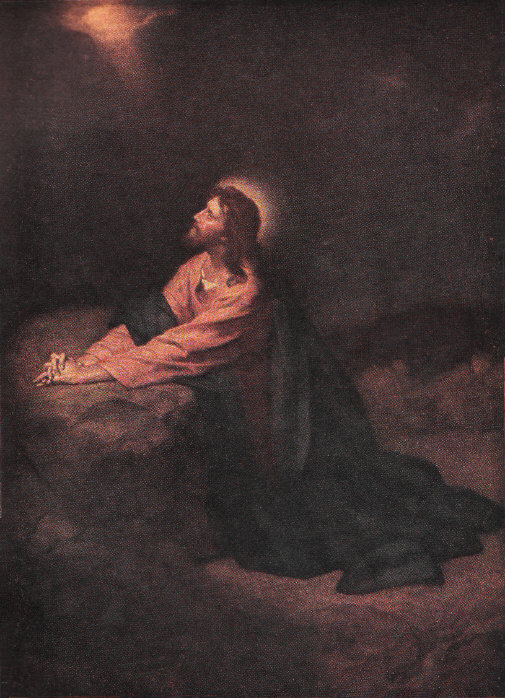
The Easter Triduum According to Three Popes
At the end of Holy Week we celebrate the Easter Triduum, the days from the evening of Holy Thursday to the evening of Easter Sunday. Since the Easter Triduum is the apex of the liturgical year liturgically it is considered as one day which unravels for us the unity of Christ’s Paschal Mystery. Hence, the liturgical services which make up this Triduum (or three days), namely the Mass of the Lord’s Supper, Good Friday of the Lord’s Passion as well as the Mass of the Lord’s Resurrection bring about this saving powerful unity of grace and hope.
Given the importance of the Eater Triduum it is beneficial to revisit the contribution three Popes left us on this topic. I shall be mentioning some reflections given to us by Pope St John Paul II, Pope Benedict XVI and the current Pope Francis. The resources I shall be accessing are three catecheses these Popes gave during their general audiences. The first one bears the date of Wednesday 27 March 2002, the second one was delivered on Wednesday 20 April 2011, and the third and final one was given on Wednesday 31 March 2021.
For Pope John Paul II the Easter Triduum is the key that help us experience intensely, through prayer and meditation, the power of Christ’s salvific act for us. He said: The Easter Triduum which will make us relive the central event of our salvation begins tomorrow. These will be days of more intense prayer and meditation in which, with the help of the moving rites of Holy Week, we will reflect on the passion, death and resurrection of Christ (no.1).
The Easter Triduum demonstrates that the Easter event is, in fact, the greatest feast of the Church. He explains: The meaning and fulfilment of human history lies in the Paschal Mystery. “Therefore”, the Catechism of the Catholic Church emphasizes, “Easter is not simply one feast among others, but the “Feast of Feasts’, the “Solemnity of Solemnities’, just as the Eucharist is the “Sacrament of Sacraments’ (the great Sacrament). St Athanasius calls Easter “the Great Sunday’ (Easter Letter 329) and the Eastern Churches call Holy Week “the Great Week’. The mystery of the Resurrection, in which Christ crushed death, permeates with its powerful energy our old time until all is subjected to him” (n. 1169).
Moreover, the Easter Triduum gives us a profound understanding of the Face of Christ who remains the Face of the only Hope humanity has in the situations it has to contend with. Pope Wojtyla teaches: In the Easter Triduum, we will fix our gaze more intensely on the face of Christ, a face of suffering and agony, that helps us understand better the drama of the events and situations that are afflicting humanity even in these days. His is a Face radiant with light that gives renewed hope to our lives (no.3).
Pope Benedict XVI, from his perspective, aptly describes the Easter Triduum as the hub of that culmination of the Lenten journey which is the Holy Week. He said: We have now arrived at the heart of Holy Week, the culmination of the Lenten journey. Tomorrow we shall enter the Easter Triduum, the three holy days in which the Church commemorates the mystery of the Passion, death and Resurrection of Jesus.
Furthermore, the Easter Triduum is the apogee of the mystery of salvation. Due to its singular importance, the Easter Triduum calls each and everyone of us, Christ’s believers, to participate in it with intensity. The Pope comments: I therefore urge you to accept this mystery of salvation and to participate intensely in the Easter Triduum, the fulcrum of the entire Liturgical Year and a time of special grace for every Christian. I invite you in these days to seek recollection and prayer, so as to draw more deeply from this source of grace. In this regard, with a view to the forthcoming celebrations every Christian is asked to celebrate the sacrament of Reconciliation, a moment of special adherence to the death and Resurrection of Christ, to be able to participate more fruitfully in Holy Easter.
Finally, for Pope Benedict, the Easter Triduum is the living testament and extraordinary witness of Jesus’ determination to carry out the Father’s will and be faithful to it. Hence, the criterion that throughout his life guided every decision Jesus made was his firm determination to love the Father, to be one with the Father and to be faithful to him; this decision to respond to his love impelled him to embrace the Father’s plan in every single circumstance, to make his own the plan of love entrusted to him in order to recapitulate all things in God, to lead all things to him.
In Pope Benedict’s view, when you and I celebrate with faith the Easter Triduum we train ourselves to imitate Jesus’ most holy example of doing always and everywhere the Father’s will. He said: In reliving the Sacred Triduum, let us also prepare ourselves to welcome God’s will in our life, knowing that our own true good, the way to life, is found in God’s will even if it appears harsh, in contrast with our intentions.
Finally, Pope Francis rightly emphasizes the centrality of the Easter Triduum as well as its renewing spirit of living again the salvific events of Christ’s redemptive act. He said: Already immersed in the spiritual atmosphere of Holy Week, we are on the eve of the Easter Triduum. From tomorrow until Sunday, we will live the central days of the Liturgical Year, celebrating the mystery of the Passion, Death and Resurrection of the Lord. And we live this mystery every time we celebrate the Eucharist. When we go to Mass, we do not go only to pray, no: we go to renew, to bring about again, this mystery, the Paschal mystery. It is important not to forget this. It is as though we were going to Calvary — it is the same — to renew, to bring about again the Paschal mystery.
Adding to this, Pope Francis also refers to that intensity of the liturgy which helps us go to the core of the mystery. When speaking about Good Friday, Pope Francis says: Good Friday is the day of penance, fasting and prayer. Through the texts of the Sacred Scripture and the liturgical prayers, we will be as though gathered on Calvary to commemorate the redemptive Passion and Death of Jesus Christ. In the intensity of the rite of the Liturgical Action, the Crucifix will be presented to us to adore. Adoring the Cross, we will relive the journey of the innocent Lamb sacrificed for our salvation.
With Pope Benedict let us pray to Mary, the Mother of God and Our Mother, to accompany us during this Easter Triduum to translate the grace we shall be receiving into acts of solidarity towards those who are suffering: Mary, guide us on this itinerary and obtain from your divine Son the grace to be able to spend our life for love of Jesus, in the service of our brethren. Amen.

Saint Kateri , Canada’s Protectress
This was the title given to Saint Kateri Tekakwitha, by Pope Benedict XVI, when he canonized her on October 28th, 2012, along with six others, in Saint Peter’ Square (she had been beatified by Pope John Paul II back in 1980). With Saint Joseph as our protector, along with the Canadian martyrs, we seem to[…]Continue reading→

Remembering Father Alphonse de Valk
(Today marks the sixth anniversary of the death of Father Alphonse de Valk, C.S.B., a faithful, courageous and indefatigable Basilian priest, pro-life-and-family apostle, and the founder of Catholic Insight magazine. Here is what we wrote those on his entering into eternity five years ago, as we continue to remember him in our prayers and thoughts)[…]Continue reading→

My Name is Bernadette
April 16th is a propitious day, for besides the anniversary of Father de Valk’s death, who founded Catholic Insight in its print form decades ago, and the commemoration of the ‘two Benedicts’, mentioned in accompanying posts, today we also recall Saint Bernadette Soubirous, the young visionary to whom the Virgin Mary appeared numerous times at[…]Continue reading→
Canonizing Sister Faustina and Divine Mercy
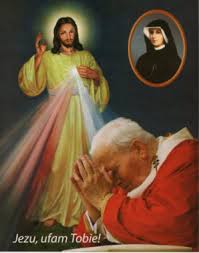
HOMILY OF THE HOLY FATHER MASS IN ST PETER’S SQUARE FOR THE CANONIZATION OF SR MARY FAUSTINA KOWALSKA Sunday, 30 April 2000 1. “Confitemini Domino quoniam bonus, quoniam in saeculum misericordia eius”; “Give thanks to the Lord for he is good; his steadfast love endures for ever” (Ps 118: 1). So the Church sings on the Octave of[…]Continue reading→

Divine Mercy Sunday – An Echo of Every Mass
Reach out your hand and put it in my side. Do not doubt but believe’… ‘My Lord and my God!’ (Jn. 20:18)). Today is Divine Mercy Sunday, and as we celebrate the end of the Easter Octave, we contemplate the wounded side of our Saviour, the Church’s source of life. On Good Friday in the[…]Continue reading→

Saint Stanislaus of Szczepanów
We celebrate Saint Stanislaus today (+ April 11, 1079), in light of this Easter Octave, a bishop and martyr who accepted the episcopacy only at the direct order of Pope Alexander II. He proved a wise and courageous leader of his flock, put to death by his own king, Boleslaus, for rebuking the monarch’s ‘immoral[…]Continue reading→
First Holy Communion: Sermon from May 16, 1943
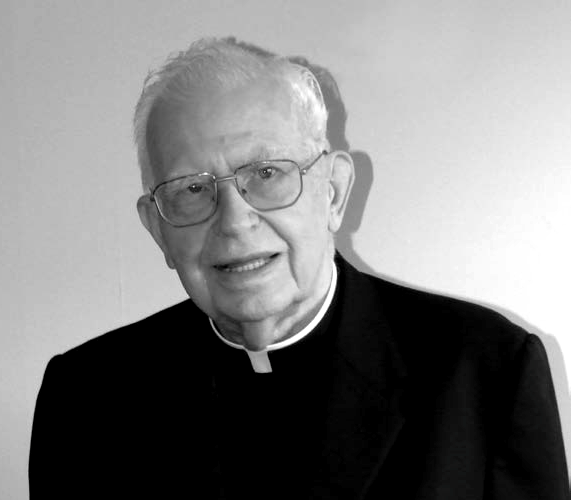
Here is a sermon from the good old days by +Rev. Msgr. Vincent Nicholas Foy (August 14, 1915 – March 13, 2017), from 1943. Readers may recall that Pope Saint Pius X, by the decree Quam Singulari in 1910, lowered the customary age of reception of Holy Communion – after the rigours of the plague[…]Continue reading→
In the Glorious Light of Easter, Alleluia!
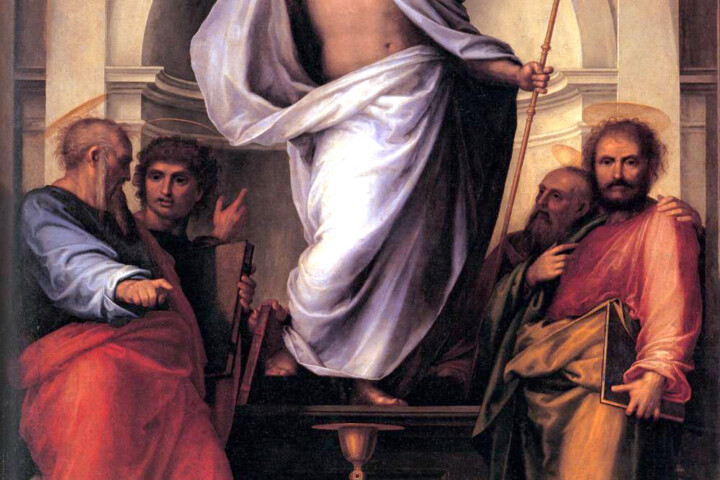
Set your minds on things that are above, not on things that are on earth, for you have died, and your life is hidden with Christ in God. When Christ who is your life is revealed, then you also will be revealed with him in glory (Col. 3:3-4). The Resurrection of Our Lord and Saviour[…]Continue reading→

An Ancient Homily for Holy Saturday
The time between Good Friday and Easter Sunday is one of waiting, in silence, as the world wonders – anticipates – what will happen, after the death of Christ. We re-live this time each year in the anamnesis of our liturgy, and in turn look forward to the glorious re-creation of all things at the[…]Continue reading→
Europe’s Long Descent
(As we meditate on this day on Christ’s burial, and His descent into hell, it is fitting to ponder here with contributor Peter Marcus how the world seems to be heading there as well. The difference is that, although God cannot ‘redeem’ hell, nor those therein, He can and did redeem the world. There is[…]Continue reading→