
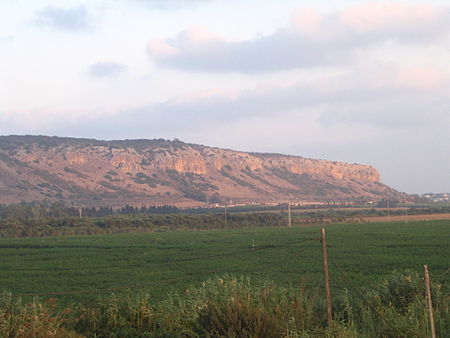
Climbing the Mountain of Carmel: What is Carmelite Theology?
If you google – or better yet visit – the Carmel of Lisieux, you will find a small French baroque mid-ceiling chapel connected by an average apartment cloister in the middle of a town. It has a small atrium inside, but nothing spacious. The Carmel of Dijon is the same, it has the usual French baroque mid-ceiling chapel and a cloistered apartment; I am not sure if it has an atrium, but like Lisieux, it’s small in size. It may be the general motif of 19th-century “Carmel” France but also, probably, its smallness has something great to offer, and its deminuity is a paradox for something big, something massive that the world has to hear, “The Little Way” and the “Total Abandonment.”
Until now, I cannot seem to wrap my head around the fact that the littleness of Lisieux and Dijon taught the world about the greatness of the love of God, and that the literal “Little Way” of Therese was an allusion to the actual littleness of the convent hall she once paved, and that Elizabeth’s “Total Abandonment” is a testament to the simplicity and poverty of Dijon which has nothing – literally – but God. But, perhaps, these two Carmelites teach us that it is not in the greatness that one encounters Jesus, not in the exquisite retablos, but rather in our own little way, in our own surrender, in our very own weakness, that we experience Him who is love. Sometimes, we need to be reminded of the smallness of Carmel, of Therese and Elizabeth, to appreciate the magnanimity of God’s love embracing us every day.
A Glimpse of Carmelite Theology
Ascending to Mount Carmel is a journey towards transfiguration. This journey towards God is the authentic Carmelite Theology, and in this process of configuring ourselves to God, we have the examples of Therese and Elizabeth teaching us that the real Carmel is not just the mountain, not even the hike, but the goal of communio with God. But how can we do that?
Be who you are and be perfectly well.
Echoing St. Francis de Sales, Therese teaches us that one requirement in ascending to the mountain of Carmel is “to be who we are called to be.” Therese emphasized that God asks us what we want. In the Gospel narrative, we hear this same theology when Jesus asks the blind man, “What do you want me to do with you?” in hindsight we can say, well, isn’t it obvious? That guy wanted to see! But why did Jesus ask him? Why did Jesus need to ask the blind man?
In our Christian life, Therese teaches us that God knows what we want, he knows everything! He even knows our deepest and darkest secrets, but why ask us? God wants us to know what we really want, and what we really need from him because it is in asking that we get to know ourselves more. In knowing what we want, in asking ourselves what we need, we can love him freely, without constraints, for real love is volition, it is willing.
All of us are called to climb this mountain but before climbing, God asks us, is this what you really want? Is this what you really wish? If yes, then climb with him, but if not, then don’t force yourself into hiking, for our “self” is the primary locus where we encounter God. if you do not know what you want, if you are not certain where to begin, don’t hike the mountain of Carmel for it will just ruin you, go and look for yourself, ask what you really want, and then see that God is there with you all along, he does not want you to follow blindly, but he wants you to realize fully that no matter what happens “I am with you.”
Therese likens God to a father who does not look for our mistakes, who does not wish to punish us, but rather to love us. A real father asks nothing from his newborn Child, rather he just gazes at him, loving him completely without expectation, without reservation, and without conditions because like him, God loves us unconditionally, sees us as who we really are, and accepts the entirety of our being without any reservation.
Be who you are and be perfectly well, climbing the mountain of Carmel means being who you are, not someone else, not what others think you are, nor what your superior thinks you are, but rather what God has made you to become for it is only in realizing this that your hike towards communio can begin.
Surrender yourself to God and everything else will follow.
Second, climbing Mount Carmel means surrendering everything, letting go of the heavy baggage, and focusing on the one main goal which is reaching the top. I remember the first time I went hiking with my best friend, I prepared so much and packed so many things, only throw some out along the way, for it got a little too heavy, too burdensome, and too hefty. Elizabeth of the Trinity, in her religious life, teaches us that climbing the mountain of Carmel means leaving everything behind, everything that makes it difficult to climb the mountains, all the burdens, all frustrations, all hate, everything, for it is only in letting go of everything and surrendering to God that one can climb the mount of Carmel.
St. Elizabeth of the Trinity has reminded us, in her life, that there is no point in dwelling on our own struggles, in her case, the discord and falling apart of her parents, her poor health, her temper, and the seeming distance of God. She teaches us that if we keep dwelling on these things, we will never see that God is inviting us to surrender everything to him and it is only in he who makes this possible. Therese, for her part, has also experienced a dark night of her soul, she has almost given up, but she realized that it is only in suffering that we become like Jesus, lovingly embracing the cross and dying for us.
Climbing the Mountain of Carmel means surrendering everything to God and allowing him to transform us into who we are really destined to be. My best friend Kai is right, I need to let go of the baggage to climb the mountain of Carmel, physical, psychological, and spiritual, for it is in freeing that we truly “receive.”
A Climb of Love
Finally, climbing Mount Carmel is a climb of Love. You cannot climb without loving, you cannot enjoy the hike without loving, you cannot walk and persevere in the hike without loving for love makes things possible.
St. Therese and St. Elizabeth teach us that Christian life is a vocation of love and that everything that we do, big or small, becomes “great” if done with the utmost act of love. St. Elizabeth mirrored this by offering everything that she had and St. Therese by saying that her vocation is love. Conciliar documents of the 2nd Vatican Council seem to point to this when Lumen Gentium mentions the universal call to holiness. Like Therese, the Church reminds every Christian that holiness is the ground by which our identity is rooted. Without holiness, priesthood is vain, without holiness, religious life is merely a cult, without holiness, everything that we have is flawed because it is in holiness that we become the image of God.
By saying that her vocation is Love, St. Therese not only affirms the later councils but rather transforms it and makes it even more real. Our Vocation is love not because it is different from holiness, but because love transforms, creates, and raises our beings to the heights of divinity. With love, our life becomes bearable, with love priesthood becomes sacrifice, with love, religious life becomes a community, and with love, we become that person who died not just for our sins, but because of his love for us. With love, we become like Jesus.
St. Paul has already reminded us of this, that without love, everything is nothing “If I speak in human and angelic tongues but do not have love, I am a resounding gong or a clashing cymbal. And if I have the gift of prophecy and comprehend all mysteries and all knowledge; if I have all faith so as to move mountains but do not have love, I am nothing. If I give away everything I own, and if I hand my body over so that I may boast but do not have love, I gain nothing.” (1 Corinthians 13)
Without love, everything falls apart, without love, our actions become mere obedience, without love, our prayer becomes a mere wish list, without love, our experience becomes a mere empty handshake and without love, all of our sufferings will just be pain. Therese and Elizabeth teach us that love is all that encompasses our being because it is from that love that we realize that we created, lived in, and destined in love, not on a human level but of God.
Our journey towards back to God is not a maze to be solved, but rather, a love that is to be experienced.
This is what it means to climb the mountain of Mt. Carmel and aspire to be in union with God. This is not a model that only a few can do, but rather an invitation for everyone. If Therese and Elizabeth, in their weakness did, so do we since we share that same vocation as they received. This is what Carmelite theology is, a union with God, a union in love, not in a Jansenist or Pelagian way, but in our realizing who we really are, in letting go, and in letting love.
Let me end this reflection with the beautiful prayer of St. Elizabeth of the Trinity, a prayer of love, a prayer of surrender to God. May we pray this as well as strive to continue our hike towards the top of the Mountain of Carmel.
“My God, Trinity whom I adore, help me forget myself entirely so to establish myself in you, unmovable and peaceful as if my soul were already in eternity. May nothing be able to trouble my peace or make me leave you, O my unchanging God, but may each minute bring me more deeply into your mystery! Grant my soul peace. Make it your heaven, your beloved dwelling, and the place of your rest. May I never abandon you there, but may I be there, whole and entire, completely vigilant in my faith, entirely adoring, and wholly given over to your creative action.”
Bibliography
Therese of the Child Jesus and of the Holy Face. Story of a Soul Study Edition [includes the Full Text of St. Therese of Lisieux’s Autobiography. Trans. John Clarke Ed. Mark Foley OCD. Washington DC: ICS Publication 2005.
Elizabeth of the Trinity. The Complete Works of Elizabeth of the Trinity, vol. 1 (featuring a General Introduction and Major Spiritual Writings). Trans Sister Alethea Kane. Washington DC: ICS Publication 1984.
Elizabeth of the Trinity. The Complete Works of Elizabeth of the Trinity, vol. II (featuring Her Letters from Carmel. Trans Anne Enguld Nash. Washington DC: ICS Publication 1995.
Von Balthasar, Hans Urs. Two Sisters in the Spirit: Therese of Lisieux and Elizabeth of the Trinity. San Francisco CA: Ignatius Press, 1995.

Remembering Father Alphonse de Valk
(Today marks the sixth anniversary of the death of Father Alphonse de Valk, C.S.B., a faithful, courageous and indefatigable Basilian priest, pro-life-and-family apostle, and the founder of Catholic Insight magazine. Here is what we wrote those on his entering into eternity five years ago, as we continue to remember him in our prayers and thoughts)[…]Continue reading→
Divine Mercy Sunday – An Echo of Every Mass
Reach out your hand and put it in my side. Do not doubt but believe’… ‘My Lord and my God!’ (Jn. 20:18)). Today is Divine Mercy Sunday, and as we celebrate the end of the Easter Octave, we contemplate the wounded side of our Saviour, the Church’s source of life. On Good Friday in the[…]Continue reading→

Saint Stanislaus of Szczepanów
We celebrate Saint Stanislaus today (+ April 11, 1079), in light of this Easter Octave, a bishop and martyr who accepted the episcopacy only at the direct order of Pope Alexander II. He proved a wise and courageous leader of his flock, put to death by his own king, Boleslaus, for rebuking the monarch’s ‘immoral[…]Continue reading→
First Holy Communion: Sermon from May 16, 1943
Here is a sermon from the good old days by +Rev. Msgr. Vincent Nicholas Foy (August 14, 1915 – March 13, 2017), from 1943. Readers may recall that Pope Saint Pius X, by the decree Quam Singulari in 1910, lowered the customary age of reception of Holy Communion – after the rigours of the plague[…]Continue reading→
In the Glorious Light of Easter, Alleluia!
Set your minds on things that are above, not on things that are on earth, for you have died, and your life is hidden with Christ in God. When Christ who is your life is revealed, then you also will be revealed with him in glory (Col. 3:3-4). The Resurrection of Our Lord and Saviour[…]Continue reading→
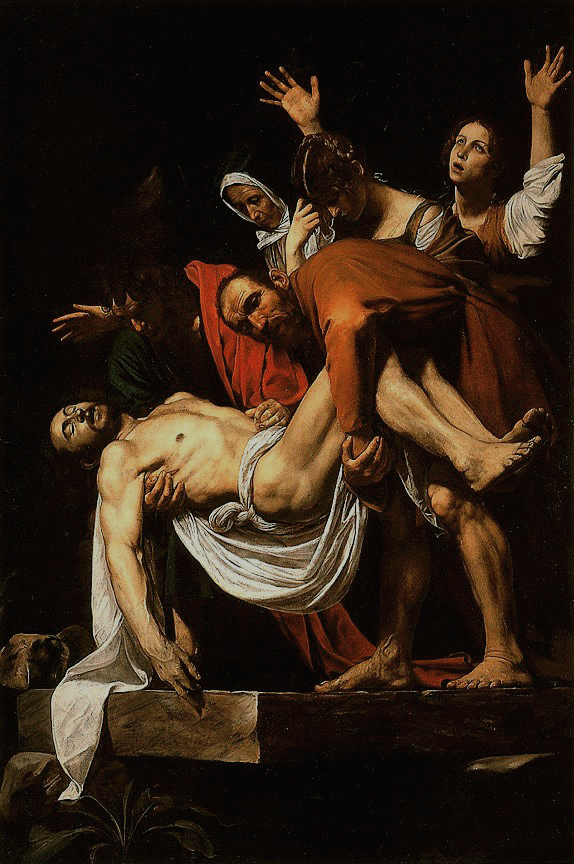
An Ancient Homily for Holy Saturday
The time between Good Friday and Easter Sunday is one of waiting, in silence, as the world wonders – anticipates – what will happen, after the death of Christ. We re-live this time each year in the anamnesis of our liturgy, and in turn look forward to the glorious re-creation of all things at the[…]Continue reading→
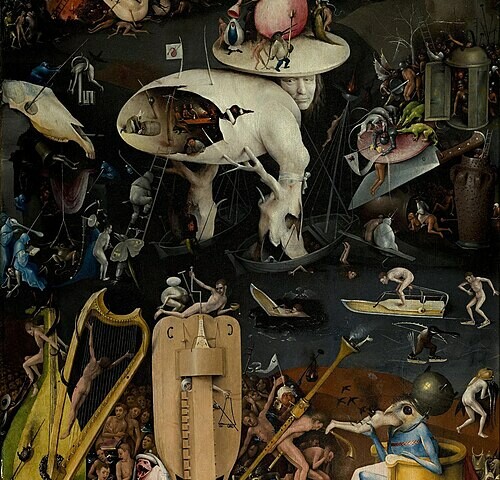
Europe’s Long Descent
(As we meditate on this day on Christ’s burial, and His descent into hell, it is fitting to ponder here with contributor Peter Marcus how the world seems to be heading there as well. The difference is that, although God cannot ‘redeem’ hell, nor those therein, He can and did redeem the world. There is[…]Continue reading→
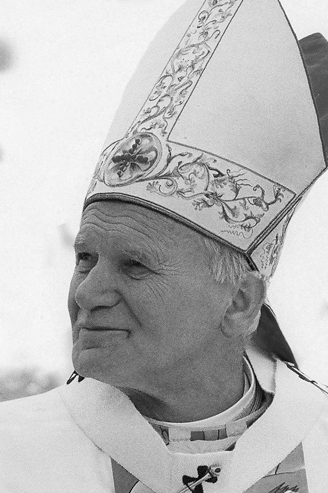
Pope Saint John Paul II’s First Good Friday Homily
ADDRESS OF HIS HOLINESS JOHN PAUL II AT THE CONCLUSION OF THE STATIONS OF THE CROSS AT THE COLOSSEUM Good Friday, 13 April 1979 When we make the Way of the Cross from one station to the next, in spirit we are always at the spot wherethis journey had its “historical” place: where it[…]Continue reading→
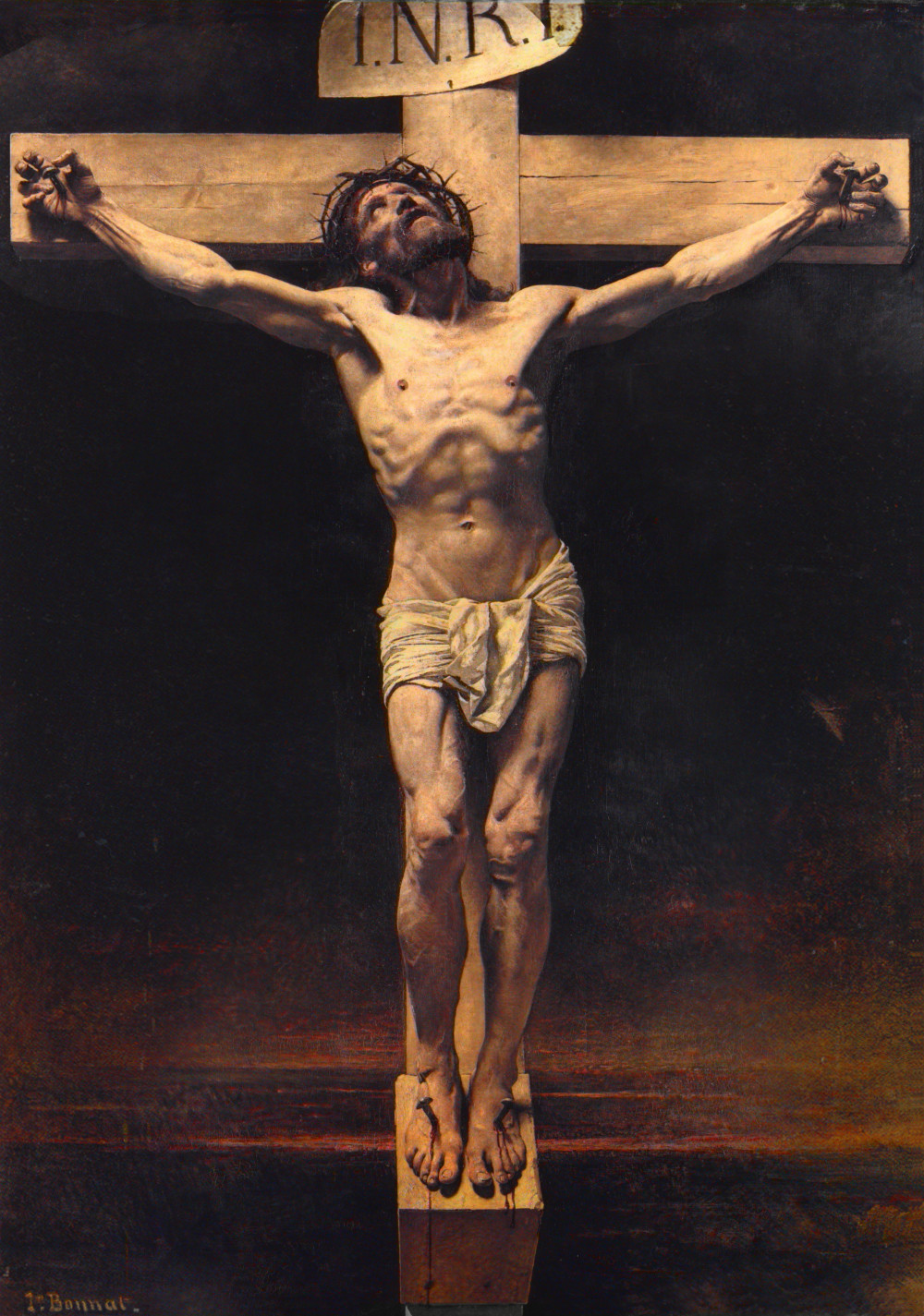
A Meditation for Good Friday: How To Undo the Effects of Sin?
Cardinal Newman, now Saint John Henry Newman, was a towering figure of nineteenth-century Catholicism who is almost universally admired. I say “almost” because not everyone likes him. I knew a priest once, Arthur Caulkins, who has become disenchanted with Newman. As an undergraduate Arthur had been enamoured of Newman, and this interest continued when he[…]Continue reading→
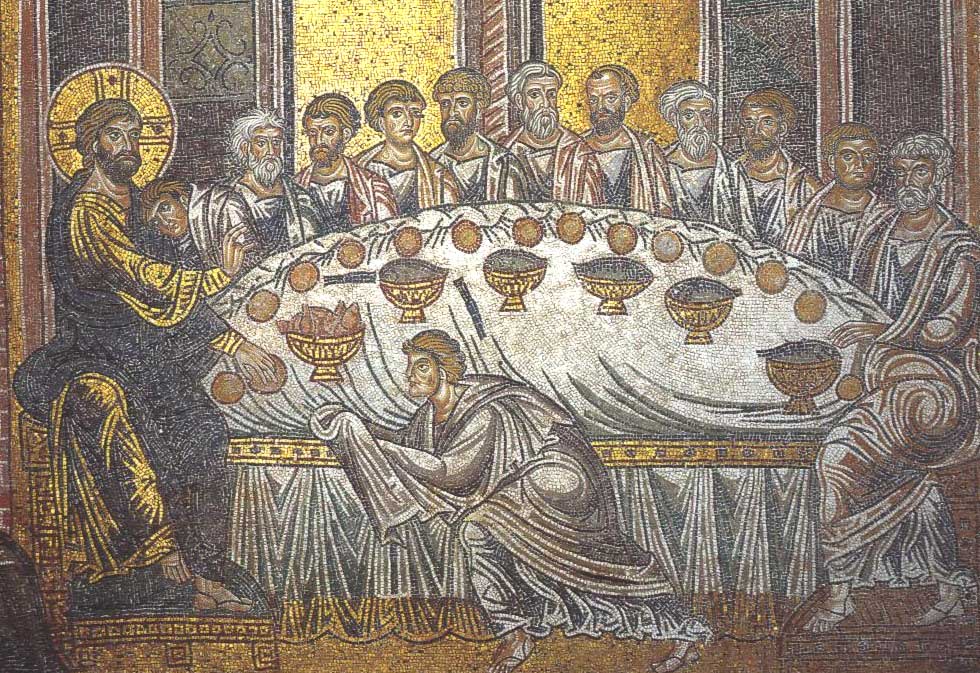
Pope Benedict’s Last Holy Thursday Homily
MASS OF THE LORD’S SUPPER HOMILY OF HIS HOLINESS BENEDICT XVI Basilica of St John Lateran Holy Thursday, 5 April 2012 Photo Gallery (Video) Dear Brothers and Sisters! Holy Thursday is not only the day of the institution of the Most Holy Eucharist, whose splendour bathes all else and in some ways draws it to[…]Continue reading→