
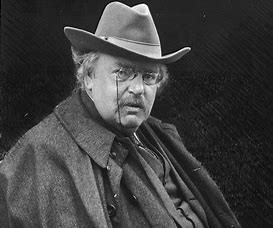
Christianity and Common Sense
Can one jump down one’s own throat? This was G.K. Chesterton’s reply to those who claim that anything is possible. When we exercise common sense we are really doing no more than thinking thoughts that hardly need to be proven. Such thoughts are the common bread that all thinking beings will eat without grumbling and will ask for more when they see a chance to get it. The common sense of the Judaeo-Christian tradition is that there is a God. Jews and Christians are not exceptional, since the common sense of every human society is that some kind of Divinity must exist. As the psalmist says, “The fool in his heart says there is no God.” (Psalm 14:1) He fools only himself.
Not only is there a God, there is an immortal soul in each of us. We believe this because it is common sense to believe that which ennobles. We want to believe what gives us hope, rather than that which takes hope away. And why not? What joy or even prospect of joy has atheism given the world? Rather, atheism takes joy away, and one can find many an atheist on his deathbed turning his thought to the possibility that perhaps he was wrong after all. Deathbed conversions are common place because they are in essence a common sense approach to death. Then again, try to find a Christian on his deathbed turning to atheism.
Christianity, tracing the age of its roots back to Adam and Eve, deeply reflects common sense about our common human nature. That many have not adapted this common sense as their own, however, is no surprise. Again, as Chesterton said, “The Christian ideal has not been tried and found wanting; it has been found difficult and left untried.” Every unbeliever has his own reason for refusing to believe, but it can be well considered that every one of those reasons is a perversely egoistic desire to avoid confronting the Almighty as possessing an Ego bigger and infinitely better than one’s own.
For many centuries the world took seriously the common sense of Christianity. That this common sense has been abandoned for uncommon nonsense in modern times is merely a reflection of the fact that modern Man is not so bright as he takes himself to be. After all, this last century alone (dominated by godless philosophies) has put into our hands the very weapons by which humanity could extinguish itself. For all its pride of intellect, doing that was hardly common sense.
In what diverse ways has orthodox Christianity been a bulwark for common sense? One could easily produce an endless litany of common sense “Thou shalts” and “Thou shall nots.” On the negative side, Christianity has censored many kinds of behavior that are self-evidently self destructive or destructive of others. For example, does it really need to be proven that pornography is demeaning to those who produce it and those who consume it? Does it really need to be proven that the killing of the unborn is a horrendous violation of our human nature? Does it really need to be proven that the deliberate killing of the elderly (or those in pain or incompetent) is a moral abomination? Does it really need to be proven that we should not intervene in order to assist others who want to kill themselves? Does it really need to be proven that sodomy is not only immoral, but unnatural? Does it really need to be proven that a man marrying a man, or a woman marrying a woman, is an insult to the institution that has been held sacred in all cultures since the dawn of human history, an institution that sustains the bond of love between male and female as the primary means by which the human race can reproduce itself and survive?
On the positive side of common sense, Christianity has taught us that there is not one set of morals for one class of people and another set for another class. How could a common sense religion teach other than that all are ruled by the same God, who is merciful and just to all without exception? Christianity has ever taught us (even when some found a self-serving reason to deny it) the eminently common sense doctrine that we should do unto others as we would have them do unto us. Going the absolute farthest step, it also teaches us that there can be no greater love than that we lay down our life for a friend.
Christianity, then, is a religion that believes in making sense, and most of all common sense. There may be different kinds of common sense: the kind men are famous for and the kind women are famous for. Between men and women, let us give Rudyard Kipling the last word for uncommonly good sense. “Any woman can manage a clever man; but it requires a rather clever woman to manage a fool.”
The ancient Romans found the stunning growth of Christianity to be a rebuke of the common pagan morality of their day. And why not? The early Christian converts flocked to Christ for comfort and protection as to a Shepherd who well tends to his sheep. As that pagan morality now returns to haunt the world, we hope and pray for the Holy Spirit to chase it back into the red hell from which it has risen up blood drenched and smiling.

Remembering Father Alphonse de Valk
(Today marks the sixth anniversary of the death of Father Alphonse de Valk, C.S.B., a faithful, courageous and indefatigable Basilian priest, pro-life-and-family apostle, and the founder of Catholic Insight magazine. Here is what we wrote those on his entering into eternity five years ago, as we continue to remember him in our prayers and thoughts)[…]Continue reading→

Divine Mercy Sunday – An Echo of Every Mass
Reach out your hand and put it in my side. Do not doubt but believe’… ‘My Lord and my God!’ (Jn. 20:18)). Today is Divine Mercy Sunday, and as we celebrate the end of the Easter Octave, we contemplate the wounded side of our Saviour, the Church’s source of life. On Good Friday in the[…]Continue reading→

Saint Stanislaus of Szczepanów
We celebrate Saint Stanislaus today (+ April 11, 1079), in light of this Easter Octave, a bishop and martyr who accepted the episcopacy only at the direct order of Pope Alexander II. He proved a wise and courageous leader of his flock, put to death by his own king, Boleslaus, for rebuking the monarch’s ‘immoral[…]Continue reading→
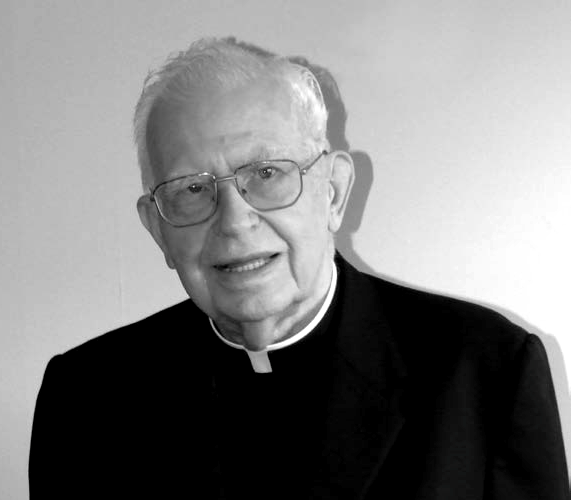
First Holy Communion: Sermon from May 16, 1943
Here is a sermon from the good old days by +Rev. Msgr. Vincent Nicholas Foy (August 14, 1915 – March 13, 2017), from 1943. Readers may recall that Pope Saint Pius X, by the decree Quam Singulari in 1910, lowered the customary age of reception of Holy Communion – after the rigours of the plague[…]Continue reading→

In the Glorious Light of Easter, Alleluia!
Set your minds on things that are above, not on things that are on earth, for you have died, and your life is hidden with Christ in God. When Christ who is your life is revealed, then you also will be revealed with him in glory (Col. 3:3-4). The Resurrection of Our Lord and Saviour[…]Continue reading→

An Ancient Homily for Holy Saturday
The time between Good Friday and Easter Sunday is one of waiting, in silence, as the world wonders – anticipates – what will happen, after the death of Christ. We re-live this time each year in the anamnesis of our liturgy, and in turn look forward to the glorious re-creation of all things at the[…]Continue reading→

Europe’s Long Descent
(As we meditate on this day on Christ’s burial, and His descent into hell, it is fitting to ponder here with contributor Peter Marcus how the world seems to be heading there as well. The difference is that, although God cannot ‘redeem’ hell, nor those therein, He can and did redeem the world. There is[…]Continue reading→
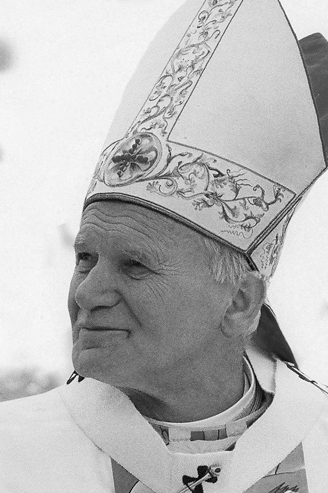
Pope Saint John Paul II’s First Good Friday Homily
ADDRESS OF HIS HOLINESS JOHN PAUL II AT THE CONCLUSION OF THE STATIONS OF THE CROSS AT THE COLOSSEUM Good Friday, 13 April 1979 When we make the Way of the Cross from one station to the next, in spirit we are always at the spot wherethis journey had its “historical” place: where it[…]Continue reading→
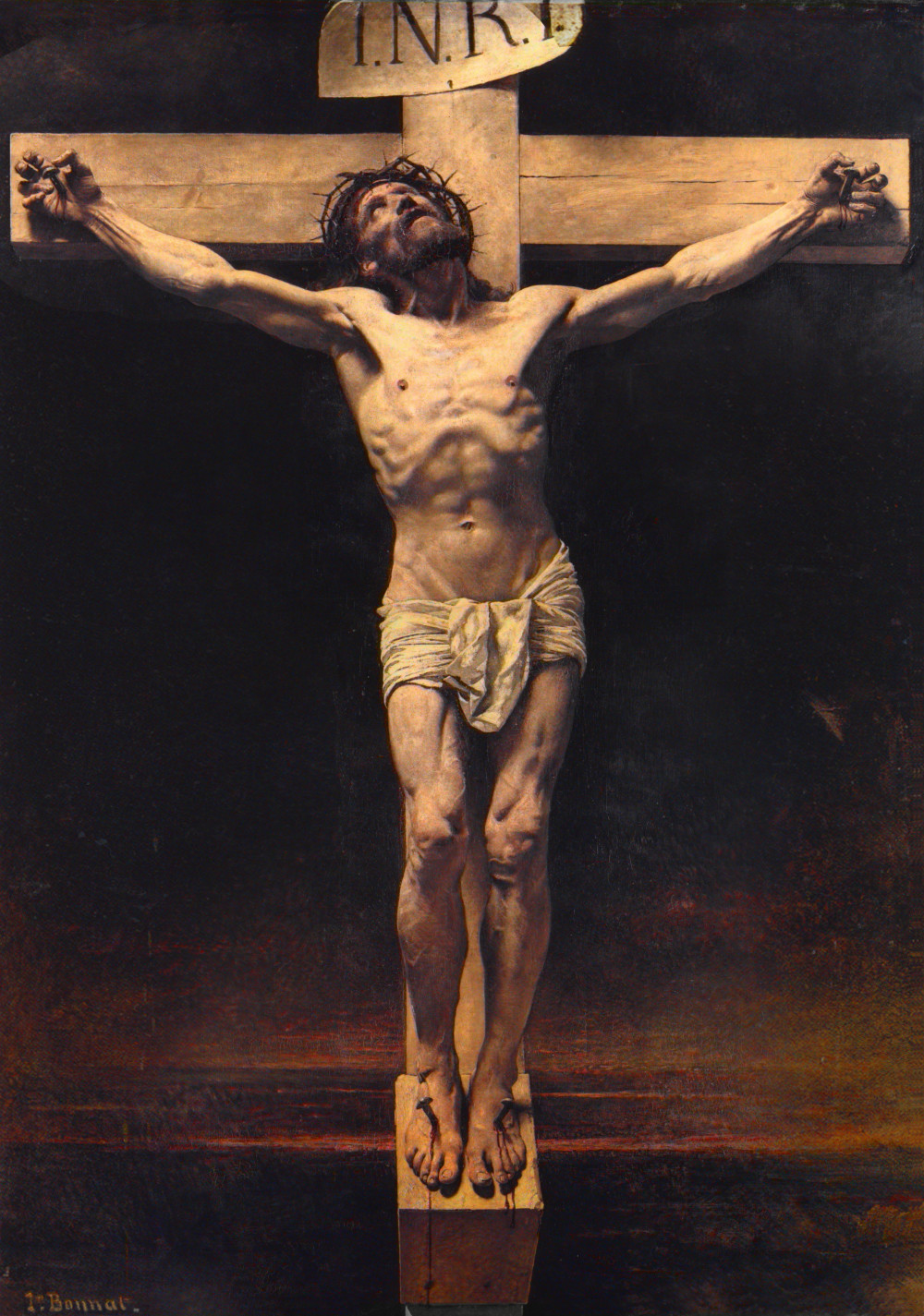
A Meditation for Good Friday: How To Undo the Effects of Sin?
Cardinal Newman, now Saint John Henry Newman, was a towering figure of nineteenth-century Catholicism who is almost universally admired. I say “almost” because not everyone likes him. I knew a priest once, Arthur Caulkins, who has become disenchanted with Newman. As an undergraduate Arthur had been enamoured of Newman, and this interest continued when he[…]Continue reading→
Pope Benedict’s Last Holy Thursday Homily
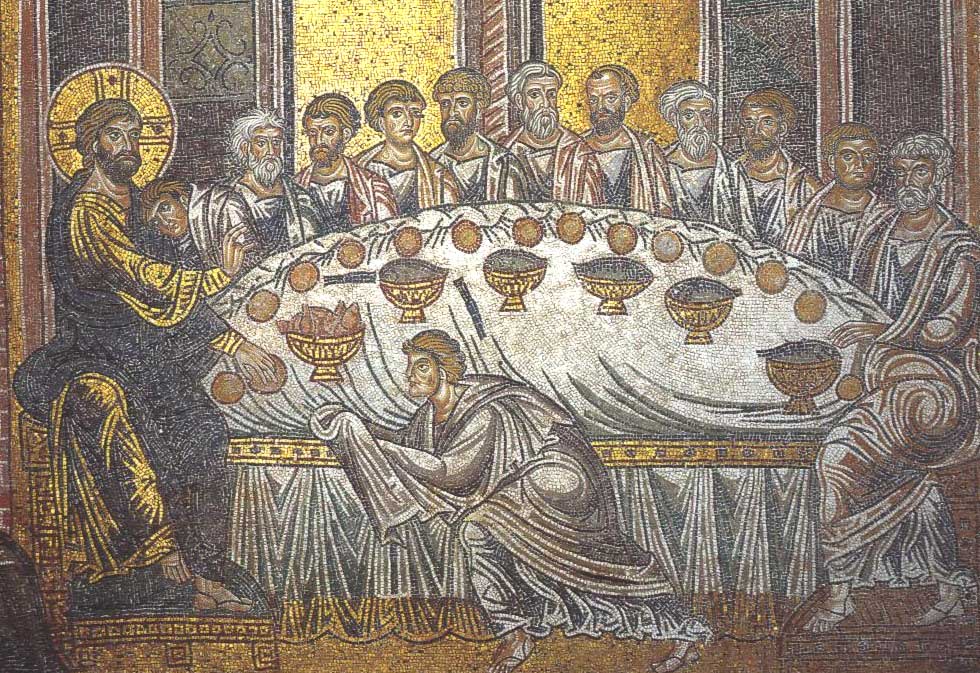
MASS OF THE LORD’S SUPPER HOMILY OF HIS HOLINESS BENEDICT XVI Basilica of St John Lateran Holy Thursday, 5 April 2012 Photo Gallery (Video) Dear Brothers and Sisters! Holy Thursday is not only the day of the institution of the Most Holy Eucharist, whose splendour bathes all else and in some ways draws it to[…]Continue reading→