
Where Conservatives and Liberals Disagree
Any definition of conservatism includes the desire to hold on to and save whatever is good and valuable. Since religion concerns itself above all with not only valuing God, but also others and ourselves as children of God (especially those who are closest to us, our families) religion naturally tends to be conservative. It is no accident that religion highly values family integrity. Among the traditional Commandments are the duties to be faithful to our spouse, respectful toward our parents, and loving toward our children. Without respect within the family, where respect is first taught with diligence, there can be no certainty of respect anywhere else in society. And so it is that even parents who are not particularly religious will, if they are prudent, seek some kind of religious upbringing for their children. Some parents, including skeptics who do not go to church, will go so far as to send their children to Christian schools rather than to public schools where respect is notoriously absent today.
Conservatism is respect for traditions that have served the person or society. Without tradition we would have no past with which to compare the present or anticipate the future. As Archbishop Sheen said in his book Peace of Soul, “Nothing is more tragic in an individual who was once wise than to lose his memory, and nothing is more tragic to a civilization than the loss of its traditions.” For this reason conservatism holds fast to the idea of timeless truths that must not only be honored, but also fought for should the need arise. Just as one would fight for one’s country if one is a patriot, all the more so should one be willing to fight for one’s faith, and for the triumph of good over evil. Conservatism supports the cross and the flag, both to be cherished as symbols that rouse us to defend all our sacred values. Those who mock the cross and the flag are lacking in conservative values. Those who would burn the cross or the flag neither get, nor deserve, the respect of their neighbors.
The principles of conservatism are essentially positive, not at all narrow or negative as they are often portrayed in the media. The doctrine of fair play according to moral and legal rules is essential to the conservative creed. The conservative believes in meritocracy, whereby people ought to be advanced because of their talents, not because of their connections or the color of their skin. The belief in private property, and the right to own the fruits of one’s labors, is essential to the conservative creed. But likewise the true conservative voluntarily shares the fruits of his labors with others in need. Without this trait the conservative becomes a hypocrite because it is evident that all he cares to conserve is his own private interests.
The conservative, who cherishes eternal truths, has to wage an ongoing battle with those who would, under the pretense of progress, advance convenient lies intended to overthrow the eternal verities. For example, it is the job of the conservative educator to resist those who would transform the classroom into a place where propaganda is taught on behalf of new doctrines that are intended to replace old ones. There are some educators today dedicated to spreading the falsehood that the Founders of America were not even Christian, or were actively opposed to Christian values. A conservative educator is obliged to show, by citing the letters and speeches of the founders, that they were (with rare exceptions) most definitely religious men and women.
The liberal sometimes thinks of himself, with something of a sneer, as the opposite of a conservative. He is a rebel for progress, he likes to think, while the conservative is all for regress. This is to underestimate the social value of the conservative. As Chesterton put it: “He is only a very shallow critic who cannot see an eternal rebel in the heart of every Conservative.”
Is Religion Liberal?
At the heart of liberalism is the notion that people ought to be free and that progress is the ultimate goal both for the individual and for society. For that reason alone, to be liberal is consistent with being religious. In John 8:32 Jesus says, “Then you will know the truth, and the truth will set you free.” Free from what? Slavery to sin. Religion liberates us from the power of Satan in order to make progress in our spiritual lives. However, the key to such progress is that we want to be liberated from sin. Human freedom is useless and self destructive unless the freedom we pursue is to be better than we are, and not just the freedom to rebel against everything, including God and Truth.
In matters non-religious the liberal believes that old solutions to old problems can be bettered by new solutions that are more efficient and productive. The train supplanted the horse. The car supplanted the train. The airplane supplanted the car. That long distance speed has been improved there can be no doubt. Whether in the long run the pollution produced by technology’s advances will prove to be counterproductive and ultimately destructive is a question that is not likely to be answered until it is determined that newer types of clean fuel will replace the older ones that may threaten our environment.
Change for progress always brings problems of adaptation. When farm technology was improved to the extent that machines could replace many farm workers, the only place the farm workers could go was into the city, where other automated machines were being invented to replace human laborers, again leaving many workers unemployed. When nuclear weapons were invented, they were the most advanced form of destruction. Though tens of thousands of these bombs have been built, only two have been used in Japan, and that was nearly eighty years ago. So the much-ballyhooed progress in weaponry is doubtful at best, and all the more problematic if international nuclear wars break out.
Again, when liberal crusaders advance a cause in the name of freedom and progress, the result is not always for the best. For example, when some liberal activists seek to limit the role of religion in society (usually because they have no religion of their own) they drive a wedge between religious institutions and public institutions. The result often is that public civility takes a nosedive, and the social cohesion provided by the influence of religion on public morals also goes into decline. The case could well be made that if you compare the public morals of today with those of sixty years ago, you would see a decided decline in civility and a notable rise in the crime rate in virtually all categories.
Between the liberal and the conservative there can be a deadly opposition of egos that is not easily resolved. The conservative is inclined to believe that Truth and Charity are commanded by God. The liberal is more inclined to believe that Truth and Charity ought to be commanded by the government. In this contest of wills, the conservative believes the highest freedom is to spend one’s money on God’s work in the world. The liberal is more inclined to spend other people’s money. “Tax and spend” is the most common phrase heard to describe the liberal economic philosophy. The liberal loves socialism because it seems to offer a reasonable solution to social problems. The conservative views socialism as legislated stealing. He certainly does not regard it as liberating or progressive, and he knows the socialist world everywhere leans eventually toward totalitarian control of the way money flows from the taxpayers to thieves in government and their cohorts in the private sector.
Again, Archbishop Fulton Sheen on godless liberalism in Peace of Soul: “The traditional restraints and moral sanctions of society come to be regarded more and more as worthless, outworn taboos or as cruel checks placed upon individual egotism, which now goes under the name of freedom.” That is to say, liberalism without God is not only godless; it is downright demonic. The only freedom to be found in godless liberalism is the freedom to discover hell and embrace its devils with open arms.

Remembering Father Alphonse de Valk
(Today marks the sixth anniversary of the death of Father Alphonse de Valk, C.S.B., a faithful, courageous and indefatigable Basilian priest, pro-life-and-family apostle, and the founder of Catholic Insight magazine. Here is what we wrote those on his entering into eternity five years ago, as we continue to remember him in our prayers and thoughts)[…]Continue reading→

Divine Mercy Sunday – An Echo of Every Mass
Reach out your hand and put it in my side. Do not doubt but believe’… ‘My Lord and my God!’ (Jn. 20:18)). Today is Divine Mercy Sunday, and as we celebrate the end of the Easter Octave, we contemplate the wounded side of our Saviour, the Church’s source of life. On Good Friday in the[…]Continue reading→

Saint Stanislaus of Szczepanów
We celebrate Saint Stanislaus today (+ April 11, 1079), in light of this Easter Octave, a bishop and martyr who accepted the episcopacy only at the direct order of Pope Alexander II. He proved a wise and courageous leader of his flock, put to death by his own king, Boleslaus, for rebuking the monarch’s ‘immoral[…]Continue reading→

First Holy Communion: Sermon from May 16, 1943
Here is a sermon from the good old days by +Rev. Msgr. Vincent Nicholas Foy (August 14, 1915 – March 13, 2017), from 1943. Readers may recall that Pope Saint Pius X, by the decree Quam Singulari in 1910, lowered the customary age of reception of Holy Communion – after the rigours of the plague[…]Continue reading→

In the Glorious Light of Easter, Alleluia!
Set your minds on things that are above, not on things that are on earth, for you have died, and your life is hidden with Christ in God. When Christ who is your life is revealed, then you also will be revealed with him in glory (Col. 3:3-4). The Resurrection of Our Lord and Saviour[…]Continue reading→

An Ancient Homily for Holy Saturday
The time between Good Friday and Easter Sunday is one of waiting, in silence, as the world wonders – anticipates – what will happen, after the death of Christ. We re-live this time each year in the anamnesis of our liturgy, and in turn look forward to the glorious re-creation of all things at the[…]Continue reading→

Europe’s Long Descent
(As we meditate on this day on Christ’s burial, and His descent into hell, it is fitting to ponder here with contributor Peter Marcus how the world seems to be heading there as well. The difference is that, although God cannot ‘redeem’ hell, nor those therein, He can and did redeem the world. There is[…]Continue reading→
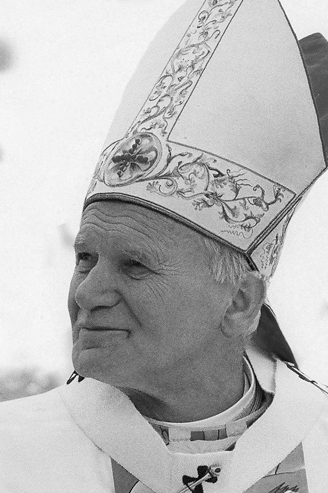
Pope Saint John Paul II’s First Good Friday Homily
ADDRESS OF HIS HOLINESS JOHN PAUL II AT THE CONCLUSION OF THE STATIONS OF THE CROSS AT THE COLOSSEUM Good Friday, 13 April 1979 When we make the Way of the Cross from one station to the next, in spirit we are always at the spot wherethis journey had its “historical” place: where it[…]Continue reading→
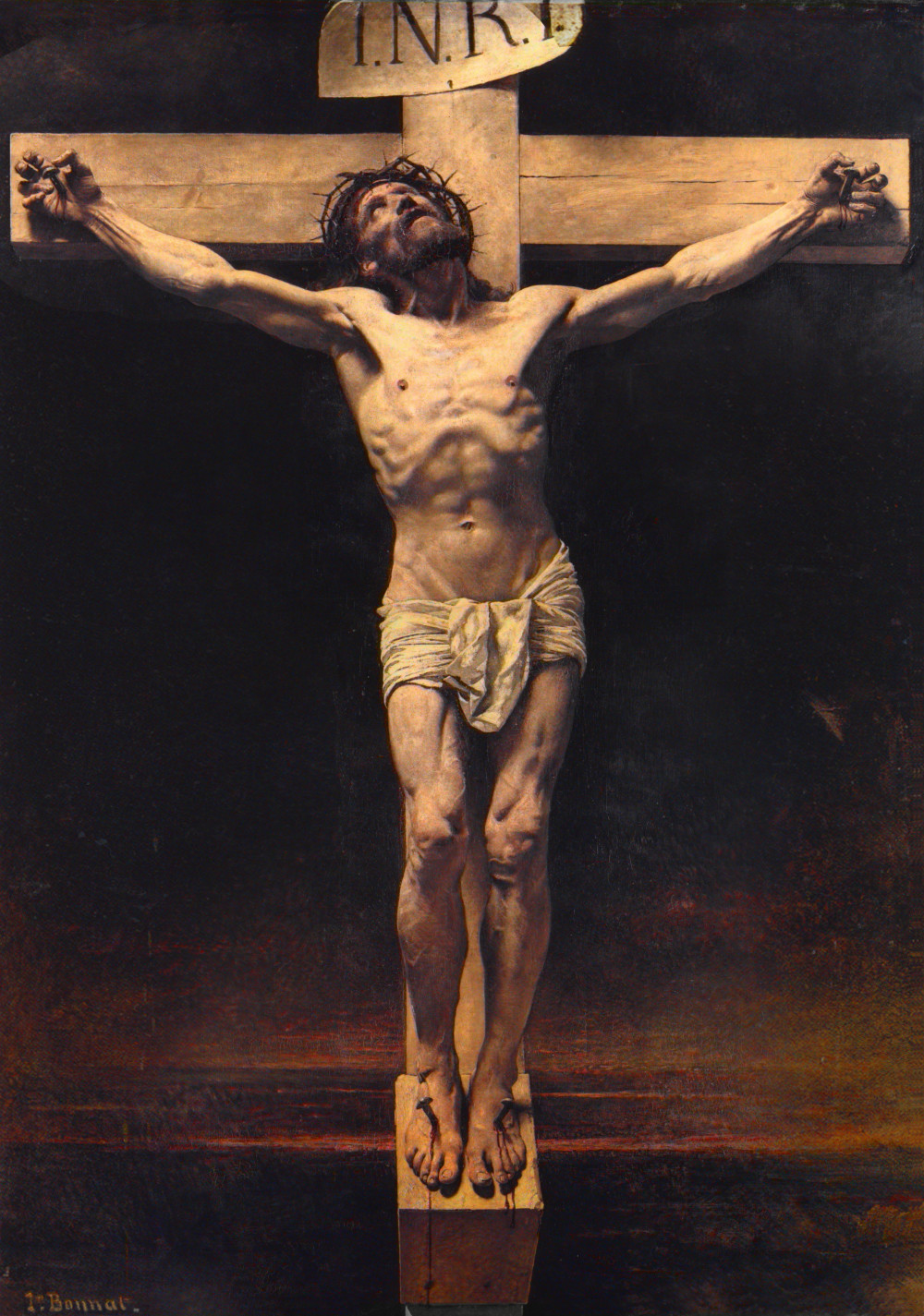
A Meditation for Good Friday: How To Undo the Effects of Sin?
Cardinal Newman, now Saint John Henry Newman, was a towering figure of nineteenth-century Catholicism who is almost universally admired. I say “almost” because not everyone likes him. I knew a priest once, Arthur Caulkins, who has become disenchanted with Newman. As an undergraduate Arthur had been enamoured of Newman, and this interest continued when he[…]Continue reading→
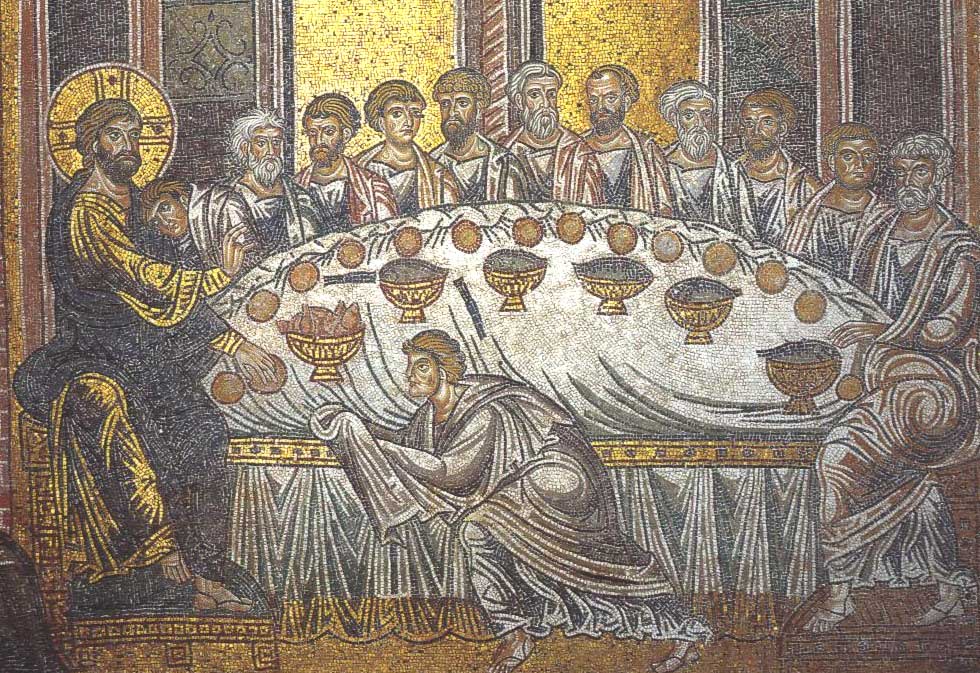
Pope Benedict’s Last Holy Thursday Homily
MASS OF THE LORD’S SUPPER HOMILY OF HIS HOLINESS BENEDICT XVI Basilica of St John Lateran Holy Thursday, 5 April 2012 Photo Gallery (Video) Dear Brothers and Sisters! Holy Thursday is not only the day of the institution of the Most Holy Eucharist, whose splendour bathes all else and in some ways draws it to[…]Continue reading→