
Saint Thomas Aquinas and the Anointing of the Sick
January 28th is normally the liturgical feast of St Thomas Aquinas, called the Common Doctor due to the excellent clarity of his teaching, as well as the Angelic Doctor because his devotion to the holy angels and the thought he contributed to our understanding of them together with his angelic purity and personal holiness and, finally, the Doctor of Humanity since he was always ready to receive the values of all cultures.
Since God has given me the grace to serve Him with the sick, I saw it is significant to appreciate St Thomas Aquinas also within the context of the pastoral and sacramental care of our patients at Sir Anthony Mamo Oncology Centre, particularly regarding the administration of the Sacrament of the Sick. In fact, on his feast day I would like to show my appreciation, esteem and love for the great humble Thomas especially in his priceless contribution concerning the effect of the Sacrament of the Anointing of the Sick. He speaks about this point in the third part of his Summa Theologica question 30.
Thomas tackles the question of whether the Anointing of the Sick, which he calls Extreme Unction, avails for the remission of sins. In his answer to this question by stating that It is written (James 5:15): “If he be in sins, they shall be forgiven him.” Further, every sacrament of the New Law confers grace. Now grace effects the forgiveness of sins. Therefore since Extreme Unction is a sacrament of the New Law, its effect is the remission of sins.
In his theology, St Thomas reminds us that the Sacrament of the Anointing of the Sick has been instituted in order that it gives the cure from the malady of sin, likening the Sacrament with Baptism. He writes: I answer that, each sacrament was instituted for the purpose of one principal effect, though it may, in consequence, produce other effects besides. And since a sacrament causes what it signifies, the principal effect of a sacrament must be gathered from its signification. Now this sacrament is conferred by way of a kind of medicament, even as Baptism is conferred by way of washing, and the purpose of a medicament is to expel sickness. Hence the chief object of the institution of this sacrament is to cure the sickness of sin. Therefore, just as Baptism is a spiritual regeneration, and Penance, a spiritual resurrection, so Extreme Unction is a spiritual healing or cure.
For Aquinas, the Sacrament of the Anointing of the Sick shows us that our soul has its life. Furthermore, this sacrament fortifies our weakness in leading a holy life due to the effects of original sin. He teaches us: Now just as a bodily cure presupposes bodily life in the one who is cured, so does a spiritual cure presuppose spiritual life. Hence this sacrament is not an antidote to those defects which deprive man of spiritual life, namely. original and mortal sin, but is a remedy for such defects as weaken man spiritually, so as to deprive him of perfect vigor for acts of the life of grace or of glory; which defects consist in nothing else but a certain weakness and unfitness, the result in us of actual or original sin. against which weakness man is strengthened by this sacrament.
The grace that is conferred to us when we receive this sacrament is so powerful that it obliterates sin and its remnant. Thomas explains: Since, however, this strength is given by grace, which is incompatible with sin, it follows that. in consequence, if it finds any sin, either mortal or venial, it removes it as far as the guilt is concerned, provided there be no obstacle on the part of the recipient; just as we have stated to be the case with regard to the Eucharist and Confirmation (III:73:7; III:79:3). Hence, too, James speaks of the remission of sin as being conditional, for he says: “If he be in sins, they shall be forgiven him,” viz. as to the guilt. Because it does not always blot out sin, since it does not always find any: but it always remits in respect of the aforesaid weakness which some call the remnants of sin… Consequently we must say that the principal effect of this sacrament is the remission of sin, as to its remnants, and, consequently, even as to its guilt, if it find it.
In his deep theological thinking St Thomas reminds us that the Sacrament of the Anointing of the Sick, can blot out sin indirectly whilst it does not exclude the necessity of Penance. Moreover, the grace of the Sacrament of the Anointing of the Sin helps the person’s will to be more inclined towards contrition. Thus it diminishes the debt of temporal punishment and the mind becomes less prone to sin. Thomas writes:
This sacrament, by the grace which it bestows, makes the movement of the free will towards sin to be one of contrition, just as may occur in the Eucharist and Confirmation. Again it diminishes the debt of temporal punishment; and this indirectly, in as much as it takes away weakness, for a strong man bears the same punishment more easily than a weak man. Hence it does not follow that the measure of satisfaction is diminished. As to the remnants of sin, they do not mean here those dispositions which result from acts, and are inchoate habits so to speak, but a certain spiritual debility in the mind, which debility being removed, though such like habits or dispositions remain, the mind is not so easily prone to sin.
St Thomas calls our attention to the fact that the Sacrament of the Anointing of the Sick brings about internal healing, provided that its recipient is open to it. Drawing comparison with the Sacrament of Baptism, Aquinas states that the Sacrament of the Anointing, whilst bringing about spiritual healing does not always cause bodily healing. He says:
Just as Baptism causes a spiritual cleansing from spiritual stains by means of a bodily washing, so this sacrament causes an inward healing by means of an outward sacramental healing: and even as the baptismal washing has the effect of a bodily washing, since it effects even a bodily cleansing, so too, Extreme Unction has the effect of a bodily remedy, namely a healing of the body. But there is a difference, for as much as the bodily washing causes a bodily cleansing by a natural property of the bodily element, and consequently always causes it, whereas Extreme Unction causes a bodily healing, not by a natural property of the matter, but by the Divine power which works reasonably. And since reasonable working never produces a secondary effect, except in so far as it is required for the principal effect, it follows that a bodily healing does not always ensue from this sacrament, but only when it is requisite for the spiritual healing: and then it produces it always, provided there be no obstacle on the part of the recipient.
Finally, Aquinas reminds us that the Sacrament of the Anointing of the Sick does not imprint a character in the soul simply because it not a sacrament whereby man is deputed to some sacred duty. Let us remember that this sacrament is for no other purpose than a remedy and man is not deputed thereby to do or receive anything holy. Therefore it does not imprint a character.
Let us help the sick to have the best disposition towards this sacrament of remedy and forgiveness first spiritual and then, be it God’s will, also that of the body. May the remedy of this sacrament help them and those around them to keep seeking God and his kingdom especially in these trying situations.
With St Thomas Aquinas’ own words let us make our own prayer to the Lord: Grant me, O Lord my God, a mind to know you, a heart to seek you, wisdom to find you, conduct pleasing to you, faithful perseverance in waiting for you, and a hope of finally embracing you. Amen.

Saint Kateri , Canada’s Protectress
This was the title given to Saint Kateri Tekakwitha, by Pope Benedict XVI, when he canonized her on October 28th, 2012, along with six others, in Saint Peter’ Square (she had been beatified by Pope John Paul II back in 1980). With Saint Joseph as our protector, along with the Canadian martyrs, we seem to[…]Continue reading→

Remembering Father Alphonse de Valk
(Today marks the sixth anniversary of the death of Father Alphonse de Valk, C.S.B., a faithful, courageous and indefatigable Basilian priest, pro-life-and-family apostle, and the founder of Catholic Insight magazine. Here is what we wrote those on his entering into eternity five years ago, as we continue to remember him in our prayers and thoughts)[…]Continue reading→

My Name is Bernadette
April 16th is a propitious day, for besides the anniversary of Father de Valk’s death, who founded Catholic Insight in its print form decades ago, and the commemoration of the ‘two Benedicts’, mentioned in accompanying posts, today we also recall Saint Bernadette Soubirous, the young visionary to whom the Virgin Mary appeared numerous times at[…]Continue reading→
Canonizing Sister Faustina and Divine Mercy
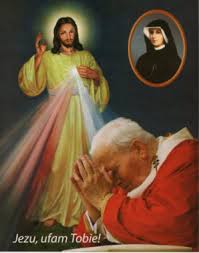
HOMILY OF THE HOLY FATHER MASS IN ST PETER’S SQUARE FOR THE CANONIZATION OF SR MARY FAUSTINA KOWALSKA Sunday, 30 April 2000 1. “Confitemini Domino quoniam bonus, quoniam in saeculum misericordia eius”; “Give thanks to the Lord for he is good; his steadfast love endures for ever” (Ps 118: 1). So the Church sings on the Octave of[…]Continue reading→
Divine Mercy Sunday – An Echo of Every Mass
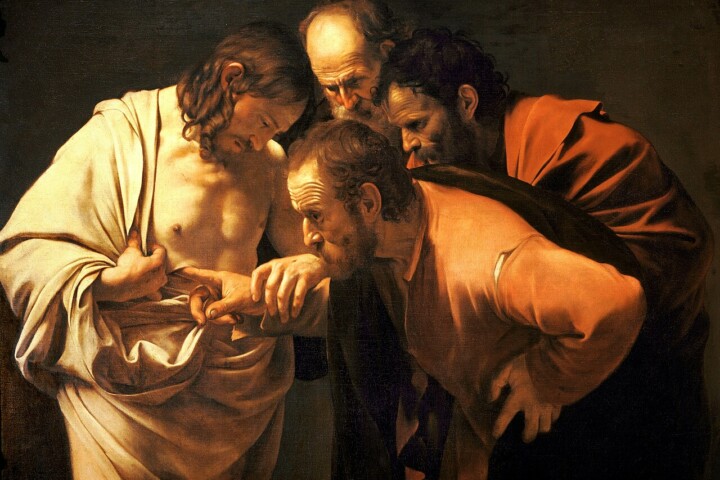
Reach out your hand and put it in my side. Do not doubt but believe’… ‘My Lord and my God!’ (Jn. 20:18)). Today is Divine Mercy Sunday, and as we celebrate the end of the Easter Octave, we contemplate the wounded side of our Saviour, the Church’s source of life. On Good Friday in the[…]Continue reading→
First Holy Communion: Sermon from May 16, 1943
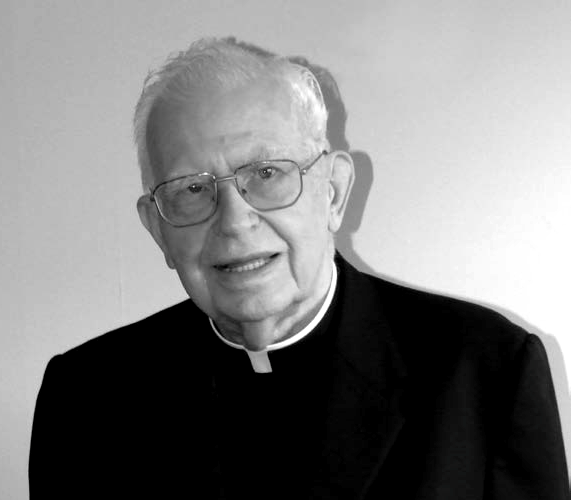
Here is a sermon from the good old days by +Rev. Msgr. Vincent Nicholas Foy (August 14, 1915 – March 13, 2017), from 1943. Readers may recall that Pope Saint Pius X, by the decree Quam Singulari in 1910, lowered the customary age of reception of Holy Communion – after the rigours of the plague[…]Continue reading→
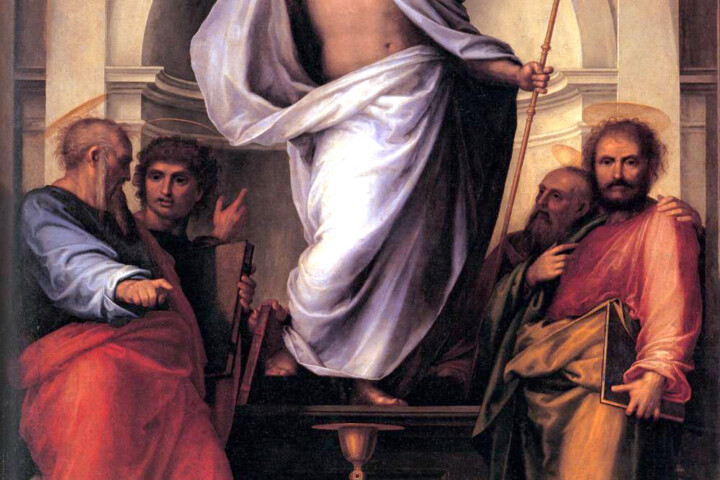
In the Glorious Light of Easter, Alleluia!
Set your minds on things that are above, not on things that are on earth, for you have died, and your life is hidden with Christ in God. When Christ who is your life is revealed, then you also will be revealed with him in glory (Col. 3:3-4). The Resurrection of Our Lord and Saviour[…]Continue reading→
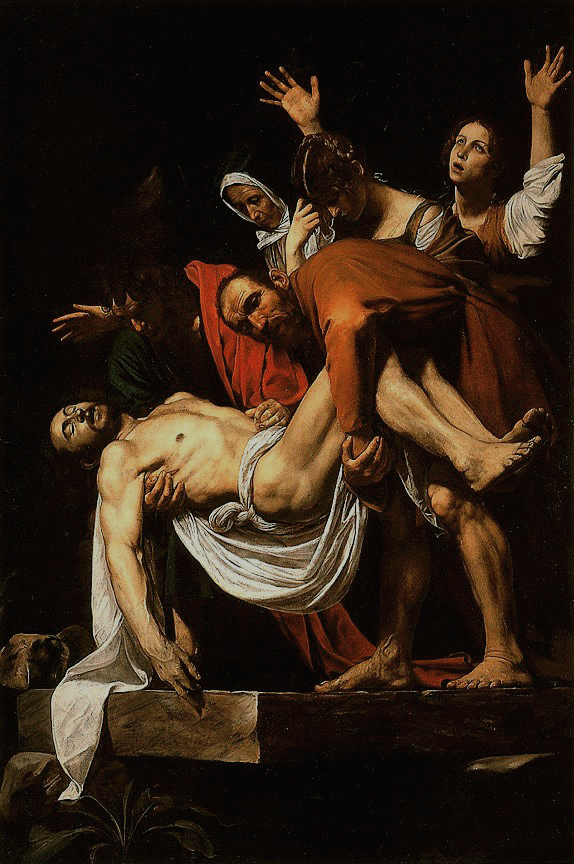
An Ancient Homily for Holy Saturday
The time between Good Friday and Easter Sunday is one of waiting, in silence, as the world wonders – anticipates – what will happen, after the death of Christ. We re-live this time each year in the anamnesis of our liturgy, and in turn look forward to the glorious re-creation of all things at the[…]Continue reading→
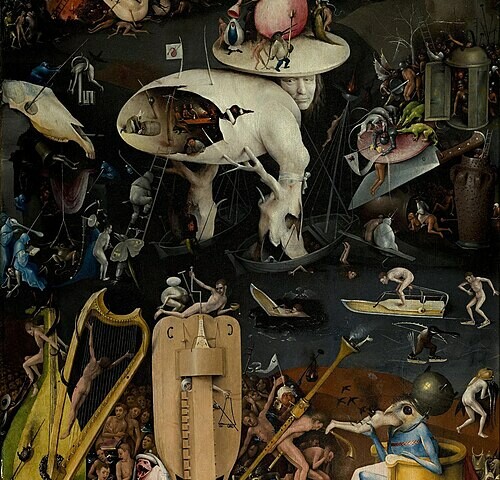
Europe’s Long Descent
(As we meditate on this day on Christ’s burial, and His descent into hell, it is fitting to ponder here with contributor Peter Marcus how the world seems to be heading there as well. The difference is that, although God cannot ‘redeem’ hell, nor those therein, He can and did redeem the world. There is[…]Continue reading→
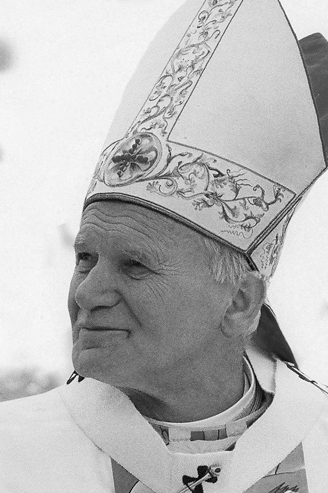
Pope Saint John Paul II’s First Good Friday Homily
ADDRESS OF HIS HOLINESS JOHN PAUL II AT THE CONCLUSION OF THE STATIONS OF THE CROSS AT THE COLOSSEUM Good Friday, 13 April 1979 When we make the Way of the Cross from one station to the next, in spirit we are always at the spot wherethis journey had its “historical” place: where it[…]Continue reading→