

Morality Without Religion?
Nobody can deny that there has to be a moral consensus about what is right and what is wrong in order to have a coherent moral society. The question nobody has been able to answer to most people’s satisfaction is: How do you craft an obligatory morality that all may consent to without ascribing the source of that morality to God? If there is to be an absolute standard for morals, it certainly cannot be found in the laws of society. The reason for this is that nobody can dictate an absolute sense of law on their own authority.
Though some people think abortion is right, some think it is wrong; the law cannot be so schizophrenic as to allow that it is both right and wrong. But isn’t it one or the other? Society cannot allow us to choose whether or not we may ignore the law. But if the government is going to establish laws, it must have a higher authority than itself upon which to base those laws. If the authority of a just God is not to be invoked, society cannot determine what laws must be followed except by a vote of the majority of those who enact the laws. While in a practical way this seems the most desirable compromise, it is not necessarily so. The reason is that the majority can be wrong, and in some cases deadly wrong. One sees this, for example, in the case of a mob lynching an innocent victim. Such an act is not likely to occur inside a church in the presence of a priest.
The absence or suppression of religious institutions in a society is a sure recipe for immoral laws. The conduct of the courts in the Soviet Union during the reign of the dictator Josef Stalin and in Germany under Adolf Hitler are perfect examples of how corrupt a society can become when established religion is persecuted or ignored.
Religion is the traditional institution by which moral values are conveyed from one generation to the next. This is why, when people suppress religious institutions, there is usually a fierce reaction that sets in. People lose respect for the old morals because they have lost respect for, and loyalty to, their religious convictions. Thus criminal activity will greatly increase. We see this especially among the majority of convicted criminals who, sent to prison, often admit that, even if baptized, they have had little or no religious instruction in their childhood. We see the principle applied also by the lower recidivism rate (percent of prisoners who return to prison after their release) of convicts who have taken advantage of services provided by prison chaplains, and who have developed a prayer life prior to their release from prison.
Principals of parochial schools can attest to the numerous students accepted for enrollment whose parents do not have any religious convictions whatever. Such parents recognize that the religious schools offer a firmer foundation in morals than the public ones. This is all the more true today as we see the behavioral problems rampant in public schools, especially those schools where the teachers and the administration are notably antagonistic toward any expressions of religious sentiment or thought, and where the textbooks and lesson plans may even contain propaganda materials that parents would consider to be downright immoral or lunatic.
Hardly anyone with an education in morals will deny that the times we live in are less moral than the times we grew up in. Children are prey to all kinds of insidious influences by the many corrupt champions of depraved music, movies, books, and television. All these influences, working against the interests of children and a sense of common decency, are supposedly protected by the First Amendment according to the perpetrators of moral decline. But it does not seems likely that the Founders of the U.S. Constitution meant the First Amendment for the protection of foul language, not to mention pornography. They meant free speech not for the protection of sensational and indecent images, but for the defense of ideas. Sometimes it seems that the only right to free speech not protected by the First Amendment is the idea that parents have a right to speak out against those who use it to violate the innocence of their children.
A final thought: “No man’s religion ever survives his morals.” Robert South

Remembering Father Alphonse de Valk
(Today marks the sixth anniversary of the death of Father Alphonse de Valk, C.S.B., a faithful, courageous and indefatigable Basilian priest, pro-life-and-family apostle, and the founder of Catholic Insight magazine. Here is what we wrote those on his entering into eternity five years ago, as we continue to remember him in our prayers and thoughts)[…]Continue reading→
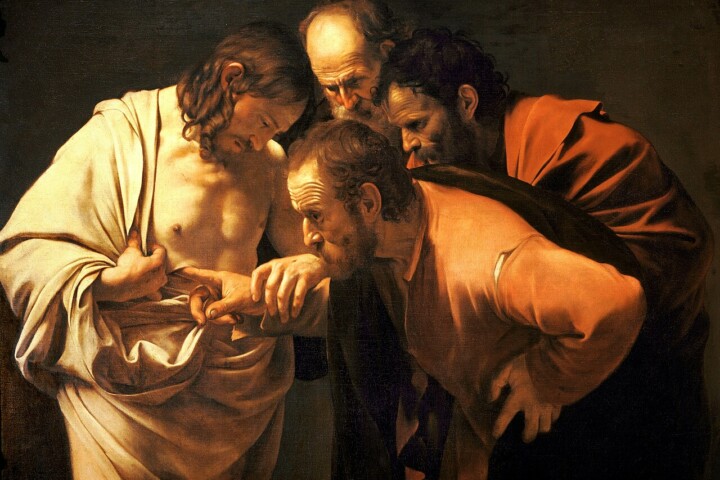
Divine Mercy Sunday – An Echo of Every Mass
Reach out your hand and put it in my side. Do not doubt but believe’… ‘My Lord and my God!’ (Jn. 20:18)). Today is Divine Mercy Sunday, and as we celebrate the end of the Easter Octave, we contemplate the wounded side of our Saviour, the Church’s source of life. On Good Friday in the[…]Continue reading→

Saint Stanislaus of Szczepanów
We celebrate Saint Stanislaus today (+ April 11, 1079), in light of this Easter Octave, a bishop and martyr who accepted the episcopacy only at the direct order of Pope Alexander II. He proved a wise and courageous leader of his flock, put to death by his own king, Boleslaus, for rebuking the monarch’s ‘immoral[…]Continue reading→
First Holy Communion: Sermon from May 16, 1943
Here is a sermon from the good old days by +Rev. Msgr. Vincent Nicholas Foy (August 14, 1915 – March 13, 2017), from 1943. Readers may recall that Pope Saint Pius X, by the decree Quam Singulari in 1910, lowered the customary age of reception of Holy Communion – after the rigours of the plague[…]Continue reading→
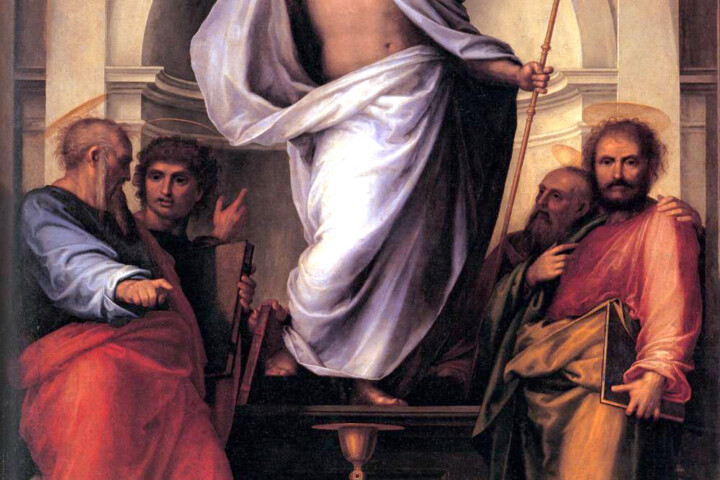
In the Glorious Light of Easter, Alleluia!
Set your minds on things that are above, not on things that are on earth, for you have died, and your life is hidden with Christ in God. When Christ who is your life is revealed, then you also will be revealed with him in glory (Col. 3:3-4). The Resurrection of Our Lord and Saviour[…]Continue reading→
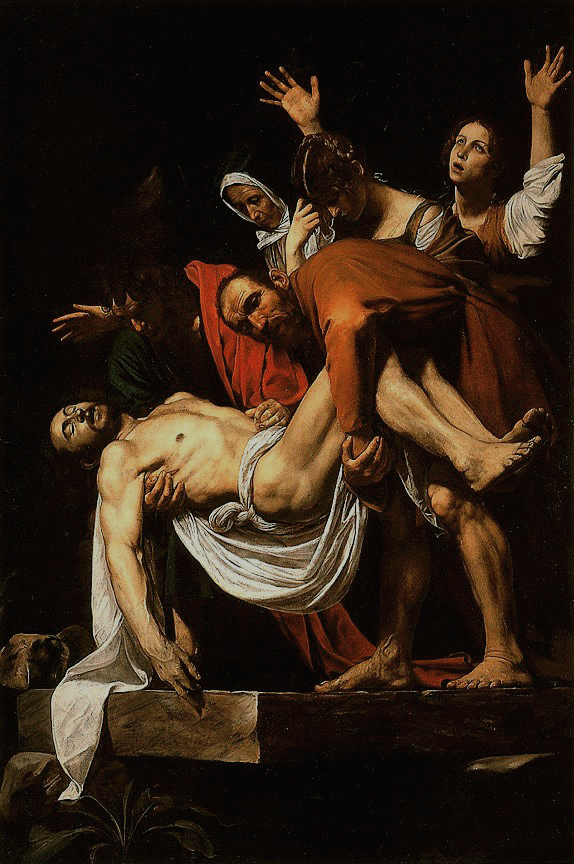
An Ancient Homily for Holy Saturday
The time between Good Friday and Easter Sunday is one of waiting, in silence, as the world wonders – anticipates – what will happen, after the death of Christ. We re-live this time each year in the anamnesis of our liturgy, and in turn look forward to the glorious re-creation of all things at the[…]Continue reading→
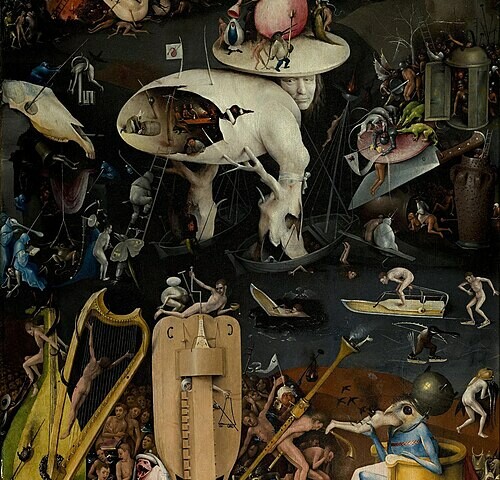
Europe’s Long Descent
(As we meditate on this day on Christ’s burial, and His descent into hell, it is fitting to ponder here with contributor Peter Marcus how the world seems to be heading there as well. The difference is that, although God cannot ‘redeem’ hell, nor those therein, He can and did redeem the world. There is[…]Continue reading→
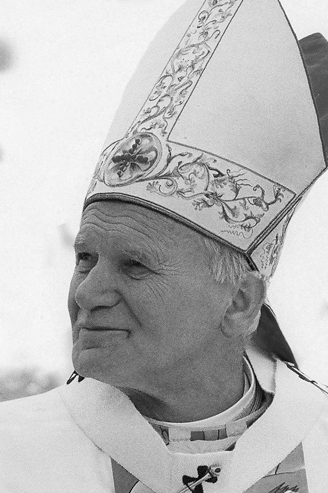
Pope Saint John Paul II’s First Good Friday Homily
ADDRESS OF HIS HOLINESS JOHN PAUL II AT THE CONCLUSION OF THE STATIONS OF THE CROSS AT THE COLOSSEUM Good Friday, 13 April 1979 When we make the Way of the Cross from one station to the next, in spirit we are always at the spot wherethis journey had its “historical” place: where it[…]Continue reading→
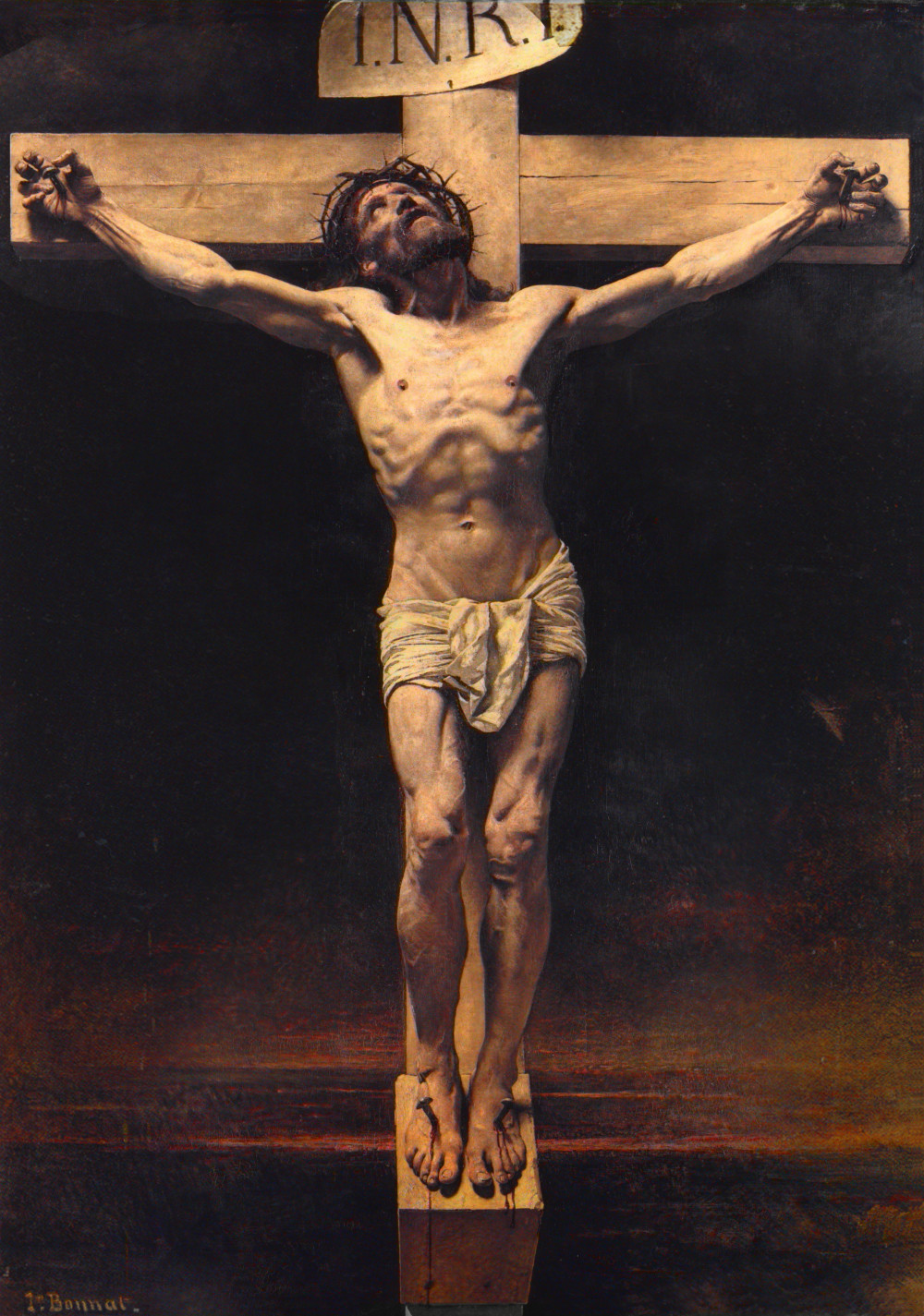
A Meditation for Good Friday: How To Undo the Effects of Sin?
Cardinal Newman, now Saint John Henry Newman, was a towering figure of nineteenth-century Catholicism who is almost universally admired. I say “almost” because not everyone likes him. I knew a priest once, Arthur Caulkins, who has become disenchanted with Newman. As an undergraduate Arthur had been enamoured of Newman, and this interest continued when he[…]Continue reading→
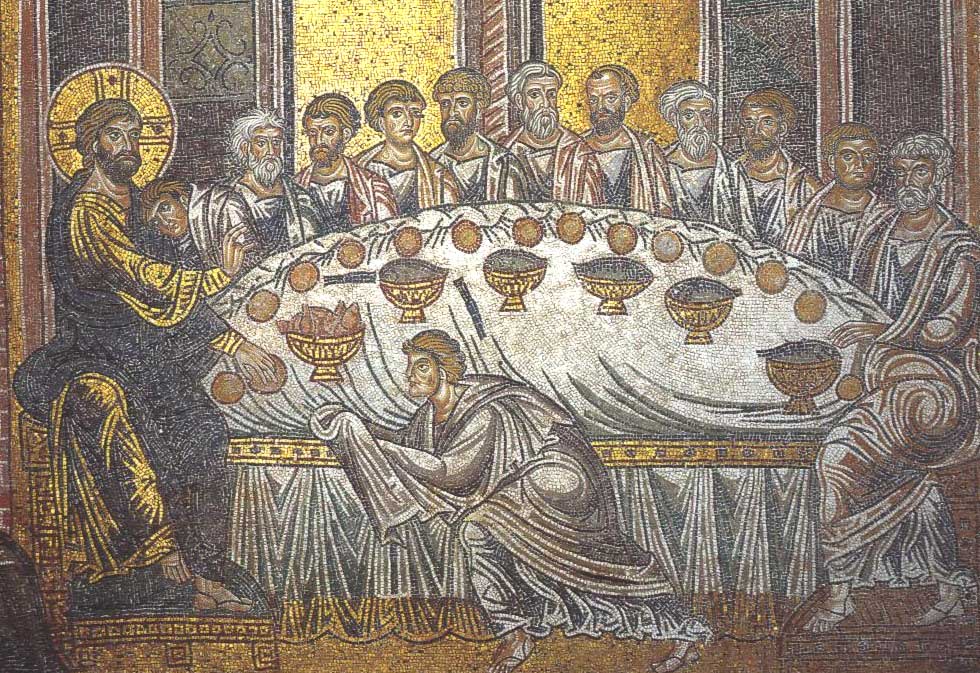
Pope Benedict’s Last Holy Thursday Homily
MASS OF THE LORD’S SUPPER HOMILY OF HIS HOLINESS BENEDICT XVI Basilica of St John Lateran Holy Thursday, 5 April 2012 Photo Gallery (Video) Dear Brothers and Sisters! Holy Thursday is not only the day of the institution of the Most Holy Eucharist, whose splendour bathes all else and in some ways draws it to[…]Continue reading→