
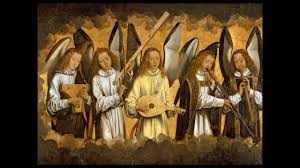
Nicholas Ludford: A Forgotten Master of English Polyphony
Among the composers of Renaissance England, Thomas Tallis and William Byrd are easily the best known, but they are not the only composers to emerge from Our Lady’s Dowry. Among the older generation, Robert Fayrfax (1464-1521) and John Taverner (c.1495-1545) are more familiar, but one master of this style remains neglected.
Nicholas Ludford was born about 1485. Unlike Fayrfax, he held no degrees, and even in his lifetime seems to have only been known locally. Ludford was employed as a verger at the collegiate chapel of St. Stephen’s, Westminster, where his responsibilities included playing the organ and singing. His Missa Lapidaverunt Stephanum, based on the Antiphon at Lauds for the feast of St. Stephen, speaks to his involvement there.
Many of Ludford’s compositions are contained in the Lambeth, Caius and Peterhouse Choirbooks. Despite his obscurity, he holds the place as the most prolific composer of Masses in Pre-Reformation England, with a total of seventeen know Masses, although three are lost and three exist only in fragments. Ludford composed a complete cycle of Lady Masses in three parts with both the Ordinary and Propers, intended for use in the smaller chapels of larger institutions. The part books bear the coat of arms of both Henry VIII and Catherine of Aragon and belonged to their collection of manuscripts. This cycle of Masses was perhaps a gift from Ludford to the king and queen.
Contemporary accounts of Ludford depict him as reserved and very devout. Unlike Thomas Tallis (c. 1505–1585) and John Sheppard (c. 1513–1558), Ludford did not adapt to the demand for a change in styles after the English Reformation, and instead stopped composing in 1535. Nick Sandon notes, “Ludford’s music is of the highest quality, comparable with that of any of his contemporaries, but unlike that of Taverner it did not continue to be copied into later-sixteenth- and early-seventeenth-century musical collections. One reason for this could be that since none of his surviving music has quite the directness and economy of scale that some of Taverner’s has, it did not appeal to Elizabethan and Jacobean taste; another reason might be that because no story about repenting his Catholic past and accepting Protestantism became attached to him as it did to Taverner, he was not regarded as ‘one of us’ but became a symbol of a vanished order.”[1]
Under Sir Richard Terry, Ludford’s music resurfaced, being sung in Westminster Cathedral in 1913. In 1993 The Cardinall’s Musick released the first recording of Ludford, with a total of four volumes. Among the excellent recordings available, New College Choir, Oxford has recorded the Missa Benedicta and the votive antiphons Ave Cuius Conceptio and Domine Jesu Christe in what is the only recording to date with boy trebles, which is how this music would have been originally sung.
Stylistically, Ludford frequently employs a cantus firmus technique, in which the initial motivic idea is based on a chant melody. It is also surprisingly florid compared to the music of the much-younger recusant composer William Byrd (c. 1540–1623), which seems more akin to Palestrina on the continent. Nearly all of the individual movements in Ludford’s output are at least ten minutes in length. One must wonder if time worked differently in the Sarum Mass during the 16th century, for such a long Mass setting would be unacceptable at most Masses in the usus antiquior today. It is possible that Ludford’s glorious Masses will be confined to concert use in our perpetually-preoccupied age and never return to the liturgy. Perhaps this age could learn something from this florid music on how we can slow down and give God one of our most precious commodities — our time.
[1] https://www.blueheron.org/wp-content/uploads/2018/08/Sandon-notes-5CD-set.pdf

Saint Kateri , Canada’s Protectress
This was the title given to Saint Kateri Tekakwitha, by Pope Benedict XVI, when he canonized her on October 28th, 2012, along with six others, in Saint Peter’ Square (she had been beatified by Pope John Paul II back in 1980). With Saint Joseph as our protector, along with the Canadian martyrs, we seem to[…]Continue reading→

Remembering Father Alphonse de Valk
(Today marks the sixth anniversary of the death of Father Alphonse de Valk, C.S.B., a faithful, courageous and indefatigable Basilian priest, pro-life-and-family apostle, and the founder of Catholic Insight magazine. Here is what we wrote those on his entering into eternity five years ago, as we continue to remember him in our prayers and thoughts)[…]Continue reading→

My Name is Bernadette
April 16th is a propitious day, for besides the anniversary of Father de Valk’s death, who founded Catholic Insight in its print form decades ago, and the commemoration of the ‘two Benedicts’, mentioned in accompanying posts, today we also recall Saint Bernadette Soubirous, the young visionary to whom the Virgin Mary appeared numerous times at[…]Continue reading→
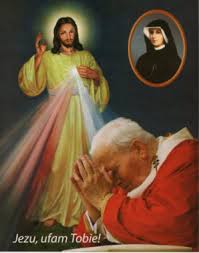
Canonizing Sister Faustina and Divine Mercy
HOMILY OF THE HOLY FATHER MASS IN ST PETER’S SQUARE FOR THE CANONIZATION OF SR MARY FAUSTINA KOWALSKA Sunday, 30 April 2000 1. “Confitemini Domino quoniam bonus, quoniam in saeculum misericordia eius”; “Give thanks to the Lord for he is good; his steadfast love endures for ever” (Ps 118: 1). So the Church sings on the Octave of[…]Continue reading→

Divine Mercy Sunday – An Echo of Every Mass
Reach out your hand and put it in my side. Do not doubt but believe’… ‘My Lord and my God!’ (Jn. 20:18)). Today is Divine Mercy Sunday, and as we celebrate the end of the Easter Octave, we contemplate the wounded side of our Saviour, the Church’s source of life. On Good Friday in the[…]Continue reading→

Saint Stanislaus of Szczepanów
We celebrate Saint Stanislaus today (+ April 11, 1079), in light of this Easter Octave, a bishop and martyr who accepted the episcopacy only at the direct order of Pope Alexander II. He proved a wise and courageous leader of his flock, put to death by his own king, Boleslaus, for rebuking the monarch’s ‘immoral[…]Continue reading→
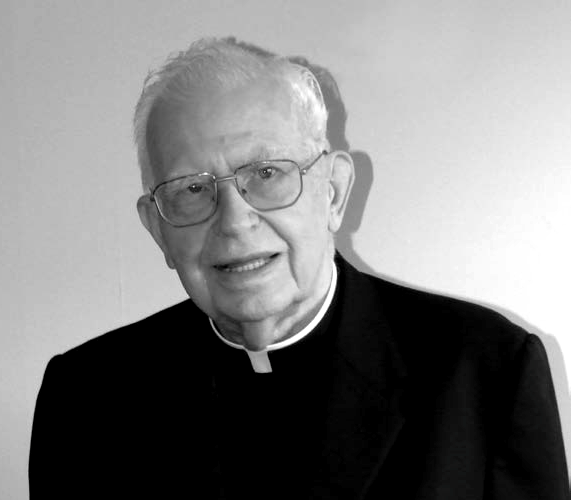
First Holy Communion: Sermon from May 16, 1943
Here is a sermon from the good old days by +Rev. Msgr. Vincent Nicholas Foy (August 14, 1915 – March 13, 2017), from 1943. Readers may recall that Pope Saint Pius X, by the decree Quam Singulari in 1910, lowered the customary age of reception of Holy Communion – after the rigours of the plague[…]Continue reading→
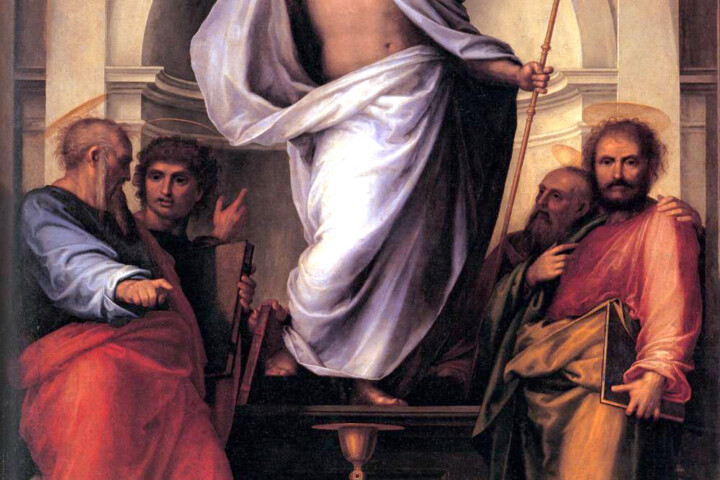
In the Glorious Light of Easter, Alleluia!
Set your minds on things that are above, not on things that are on earth, for you have died, and your life is hidden with Christ in God. When Christ who is your life is revealed, then you also will be revealed with him in glory (Col. 3:3-4). The Resurrection of Our Lord and Saviour[…]Continue reading→
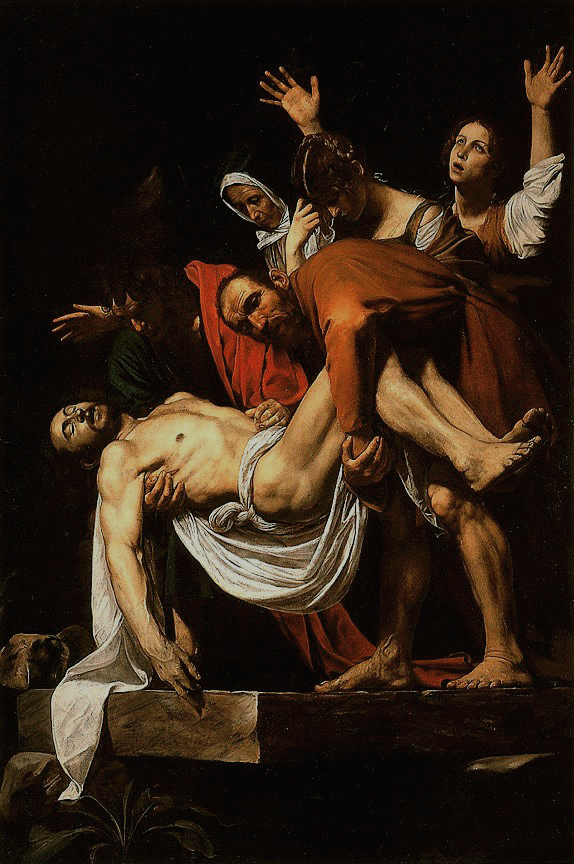
An Ancient Homily for Holy Saturday
The time between Good Friday and Easter Sunday is one of waiting, in silence, as the world wonders – anticipates – what will happen, after the death of Christ. We re-live this time each year in the anamnesis of our liturgy, and in turn look forward to the glorious re-creation of all things at the[…]Continue reading→

Europe’s Long Descent
(As we meditate on this day on Christ’s burial, and His descent into hell, it is fitting to ponder here with contributor Peter Marcus how the world seems to be heading there as well. The difference is that, although God cannot ‘redeem’ hell, nor those therein, He can and did redeem the world. There is[…]Continue reading→