
Prodigal Catholics – Why They Leave, and Why They Return
A Pew Research Center poll indicated one out of every ten Americans is an ex-Catholic. Add them up as if they were a church unto themselves and they would be the third largest church in America behind Catholics and Baptists. Why is this happening?
That question could have a thousand answers. Some Catholics may leave because, due to the shortage of priests, they have not felt or experienced the needed personal interest and counsel of their pastor. A handshake on the way out of church hardly qualifies as personal spiritual nurturing. Sometimes Catholics leave because their parents have not nurtured them to be connected with Christ in any meaningful way, in which case they might cease altogether to be Christian. Some Catholics leave because, in the easy arrogance of youth, they come to regard themselves as able to be quite good enough without God’s helping hand. Some Catholics who have had bad experiences inside the Church community, or who have been subjected to dull and uninspired catechists, or who are repulsed by certain teachings, or who despise going to confession, cease to be Catholic, yet cannot bring themselves to abandon Christ altogether and find a measure of consolation by joining another Christian denomination.
In some Protestant Churches there is often found a sense of hospitality and community. Protestant services are sometimes more interesting and the sermons and music are more “lively” (it’s not uncommon to find Catholic churches hiring Protestant musicians to direct the choir). Also, many of the older mainline Protestant denominations are left- leaning and reflect the more secular values of what has become a distinctly liberal and secular society. The more conservative evangelical churches might draw into them Catholics who are fed up with the lack of moral conviction in fellow cafeteria Catholics, not to mention the constant plethora of scandals and lawsuits involving the Catholic clergy. A significant factor for those Catholics who join mainline Protestant churches is that 44% of them join by marrying a spouse of that denomination, while only 22% join an evangelical church for the same reason.
There is no way to gauge how much of the former Catholic’s discontent with the Church is based on the unmeasurable and subjective factors of how the Catholic Church is treated in the media and in academia. Such treatment has been grossly negative and comes from many sources, usually progressive or liberal. When the treatment is not negative it is dismissive, as in the case of several major television networks refusing to report the lawsuits filed by more than forty Catholic institutions against the Obama administration for infringement of religious freedoms. In the academic world it’s a well-known fact that scholars who are not Catholic look down on their Catholic colleagues as somewhat less than enlightened. Students who present a Catholic point of view in their written work are often chastised and graded down for doing so by non-Catholic professors. Psychologist Dr. Paul Vitz in his book Faith of the Fatherless talks about how, as a young scholar, he drifted away from his Catholic faith because if he had not, he would have been ostracized by fellow scholars in his field. To his credit, he later found the courage to return to the Church and admit his former surrender to the culture of Catholic bashing.
Some time ago a Pew poll indicated that two-thirds of Catholics who leave the Church do so before they reach the age of 24. How this tendency is to be reversed is one of the central problems of the Catholic Church today. The Catechism of the Catholic Church, while excellent in many ways for explaining the faith to fully formed adult Catholics, may be an excellent read, but for many young Catholics that tome is way too heavy and may read like an encyclopedia rather than a manual that should help them to think with intelligence and imagination about the precious gift of their Catholic faith. Another kind of approach is long overdue that could combine apologetics, the art of defending the faith, along with the Catechism as a productive way to reach the young and inspire them with solid conviction. Since the 1960s the non-Catholic world has mounted an aggressive attack on traditional Catholic values, so that is has become imperative young Catholics should begin to see themselves as courageous and knowledgeable defenders of the faith rather than prime targets for those who overtly campaign for the death of Christianity in particular, and religion in general. But defending the faith assumes reasoning skills honed by looking at arguments pro and con. This the Catechism does not do, leaving the young without weapons with which to counter the constant assaults against their faith. Ever since G.K. Chesterton and C.S. Lewis there have appeared scores of excellent Christian apologists whose writings have never been read by too many young Catholics. The time is overdue for the Catholic bishops to rectify, not just locally but nationally, this sad neglect of a powerful way to address the flight of many young Catholics from the Church.
Why They Return
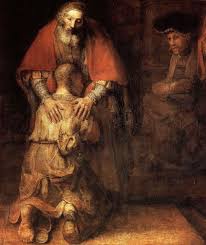
More interesting than the question of why Catholics leave the Church is the question of why so many of them sooner or later return. According to one study, for every person entering an RCIA program to learn about the Catholic faith, there are ten potential “lost” Catholics returning to the Church. At least 250,000 people have participated in Landings, a program designed to welcome Catholics back to the Church. The Landings program consists of small groups (approximately eight) of Catholics and returning Catholics meeting on a regular basis to share their faith journey. The objective is for the returning Catholic to be welcomed as a long lost member of the family, much as the Father welcomes his Prodigal Son in the parable told by Jesus, rather than with the judgmental resentment shown by the son’s brother in the same parable. Also, Catholics Come Home, founded by Tom Peterson, is a website that guides Catholics to ways they can begin their journey home.
There are many reasons why Catholics do come home. They come home because they are homeless. They realize that the anchor of faith and morality they long ago pulled up has set them adrift on a rudderless ship sailing aimlessly from port to port. They come home because they long for a return to that time in their lives when Christmas and Easter meant a good deal more than mere occasions for eating and drinking. They miss the message of beauty and hope celebrated by the Incarnation and the Resurrection. They come home because they remember that the Sacrament of Reconciliation really did wash them of their sins, and they now have more sins than ever that need washing. They come home because they realize suddenly that the reasons for leaving were not so good as they wanted to believe at the time they left.
They come home because the more they read the Bible, the more they realize what others cannot see; that the Catholic Church is fully a Bible religion. They come home because they have at last overcome whatever anger or resentment they had that once inclined them to leave. They come home because they realize the limitations of a life without God or the narrowness of a Christian faith that seems not to answer theological questions with the fullness and depth the Catholic Church does. They come home because they see their children are about to enter a world that has lost its moral compass, and they need such a compass to find their own way through life. They come home because they are lonely and realize at last that the Catholic Church is as much a family as any other faith if they but will to find it so. They come home because living for self is not good, and they know the Catholic Church offers as many opportunities to live for others as there are needs to be filled. They come home because they have lost a loved one, and the loss has left them in need of someone to turn to. They come home because the home where they once lived, and to which they still owe a vestigial loyalty, is under attack from every side and floundering to survive. They come home because deep down in their hearts they can never be anything but a Catholic. But perhaps most of all, they come home because they miss the Eucharist, the absence of which is felt in every other church they enter.
They come home because, at long last, the Catholic Church has reached out to them with a loving invitation to return and find the Church a more comforting home than it was the day they left it. They come home because, as somebody once said, you can take the man out of the Church, but you cannot take the Church out of the man. They come home because they learn at last that the most difficult religion in the world to practice is consistent with the principle that no really great thing worth doing is ever easily done.

Remembering Father Alphonse de Valk
(Today marks the sixth anniversary of the death of Father Alphonse de Valk, C.S.B., a faithful, courageous and indefatigable Basilian priest, pro-life-and-family apostle, and the founder of Catholic Insight magazine. Here is what we wrote those on his entering into eternity five years ago, as we continue to remember him in our prayers and thoughts)[…]Continue reading→

Divine Mercy Sunday – An Echo of Every Mass
Reach out your hand and put it in my side. Do not doubt but believe’… ‘My Lord and my God!’ (Jn. 20:18)). Today is Divine Mercy Sunday, and as we celebrate the end of the Easter Octave, we contemplate the wounded side of our Saviour, the Church’s source of life. On Good Friday in the[…]Continue reading→

Saint Stanislaus of Szczepanów
We celebrate Saint Stanislaus today (+ April 11, 1079), in light of this Easter Octave, a bishop and martyr who accepted the episcopacy only at the direct order of Pope Alexander II. He proved a wise and courageous leader of his flock, put to death by his own king, Boleslaus, for rebuking the monarch’s ‘immoral[…]Continue reading→

First Holy Communion: Sermon from May 16, 1943
Here is a sermon from the good old days by +Rev. Msgr. Vincent Nicholas Foy (August 14, 1915 – March 13, 2017), from 1943. Readers may recall that Pope Saint Pius X, by the decree Quam Singulari in 1910, lowered the customary age of reception of Holy Communion – after the rigours of the plague[…]Continue reading→

In the Glorious Light of Easter, Alleluia!
Set your minds on things that are above, not on things that are on earth, for you have died, and your life is hidden with Christ in God. When Christ who is your life is revealed, then you also will be revealed with him in glory (Col. 3:3-4). The Resurrection of Our Lord and Saviour[…]Continue reading→

An Ancient Homily for Holy Saturday
The time between Good Friday and Easter Sunday is one of waiting, in silence, as the world wonders – anticipates – what will happen, after the death of Christ. We re-live this time each year in the anamnesis of our liturgy, and in turn look forward to the glorious re-creation of all things at the[…]Continue reading→

Europe’s Long Descent
(As we meditate on this day on Christ’s burial, and His descent into hell, it is fitting to ponder here with contributor Peter Marcus how the world seems to be heading there as well. The difference is that, although God cannot ‘redeem’ hell, nor those therein, He can and did redeem the world. There is[…]Continue reading→
Pope Saint John Paul II’s First Good Friday Homily
ADDRESS OF HIS HOLINESS JOHN PAUL II AT THE CONCLUSION OF THE STATIONS OF THE CROSS AT THE COLOSSEUM Good Friday, 13 April 1979 When we make the Way of the Cross from one station to the next, in spirit we are always at the spot wherethis journey had its “historical” place: where it[…]Continue reading→
A Meditation for Good Friday: How To Undo the Effects of Sin?
Cardinal Newman, now Saint John Henry Newman, was a towering figure of nineteenth-century Catholicism who is almost universally admired. I say “almost” because not everyone likes him. I knew a priest once, Arthur Caulkins, who has become disenchanted with Newman. As an undergraduate Arthur had been enamoured of Newman, and this interest continued when he[…]Continue reading→
Pope Benedict’s Last Holy Thursday Homily
MASS OF THE LORD’S SUPPER HOMILY OF HIS HOLINESS BENEDICT XVI Basilica of St John Lateran Holy Thursday, 5 April 2012 Photo Gallery (Video) Dear Brothers and Sisters! Holy Thursday is not only the day of the institution of the Most Holy Eucharist, whose splendour bathes all else and in some ways draws it to[…]Continue reading→