
Math and the Modern World
Many students – well, let’s broaden the genus, and say many former students, with haunted memories of vague equations and sine-curves and integrals – claim to ‘hate math’, that they were ‘never good at it’, and they’re just not a ‘math person’. Au contraire. Like music, anyone can, at some level, do math – it just requires a bit of perseverance and patience. And whatever one’s proclivities, mathematics has certainly helped build what we know of as our modern world, for better or for worse, as Bo Malmberg persuasively argues.
There is an intellectual thread that runs through all of these advances: measurement and calculation. Geometric calculations led to breakthroughs in painting, astronomy, cartography, surveying, and physics. The introduction of mathematics in human affairs led to advancements in accounting, finance, fiscal affairs, demography, and economics – a kind of social mathematics. All reflect an underlying ‘calculating paradigm’ – the idea that measurement, calculation, and mathematics can be successfully applied to virtually every domain. This paradigm spread across Europe through education, which we can observe by the proliferation of mathematics textbooks and schools. It was this paradigm, more than science itself, that drove progress. It was this mathematical revolution that created modernity.
The mathematical revolution has indeed spawned technological wonders, and, as may be gleaned, as far as math’s effect on the world goes, the author seems to side on the ‘better’ – and there are certainly marvels galore, from interplanetary spacecraft to modern computing. In the narrative, there is some at least implicit downplaying of the prior over-emphasis on classical education, derived largely from the philosophically-based ratio studiorum of the Jesuits. Yet, Dr. Malmberg does admit that Jesuits did include some rigorous mathematics in their curricula, and we may agree that a foundation in math is necessary for a well-rounded education, at least of some basic sort, so that one is not, for example, bamboozled by slanted statistics and can balance one’s household budget.
Yet, for all of its success, math itself remains unmoored and lost without a clear telos. What is the purpose of the internet or I-phone, if one has little to say, or, worse, one’s head is filled with falsehoods? We have become homo technologicus, with advanced tools we know not what for. All that calculus, which helped invent millions of marvelous mini-computers with windows into all knowledge, just to scroll through Tik-Tok or Instagram, or blow away imaginary pixelated villains in a video world?
And what of math and the modern university? Many of the morass of majors now pullulating academic calendars don’t require much, if any, math courses at all, which may explain much of current students’ emotionalism and illogicality, the baneful effects of which are now on full display, with the tragic fruits, as one pundit put it, of arrogance allied ignorance. Whatever one says of the science of numbers, it at least trains the mind to rigorous argumentation, and provides a necessary basis to reasoning properly Some degrees, the more demanding ones, require a dose of calculus and such.
But we need the full ‘liberal arts’ to ‘free’ us from debilitating ignorance, and slavery to the algorithm: The trivium of logic, grammar and rhetoric, and the quadrivium of arithmetic, geometry, astronomy and music, in some form or another. But we also need the Church’s wisdom, as embodied in the rich tradition of philosophy and theology, to integrate and apply all that knowledge and techne, by the ‘higher things’ – God, the soul, the moral life, ethics – which is, in the end, what life is all about. As the Second Vatican Council Constitution, the Church in the Modern World, warns, the world stands in grave peril, unless wiser men are forthcoming.
We need a lot more than math for such wisdom, but a study of the numerical harmony of God’s cosmos certainly paves the way.
A Closed, Unsustainable, Descending Loop
As a follow-up to my thoughts on Payette’s payout, here be a stark image of where are here in Canada. As the graph shows in, well, graphic terms, since 2025, the public sector has contributed to 95.5% of economic growth. The private sector – which funds the public sector, or is supposed to – has[…]Continue reading→

Remembering Father Alphonse de Valk
(Today marks the sixth anniversary of the death of Father Alphonse de Valk, C.S.B., a faithful, courageous and indefatigable Basilian priest, pro-life-and-family apostle, and the founder of Catholic Insight magazine. Here is what we wrote those on his entering into eternity five years ago, as we continue to remember him in our prayers and thoughts)[…]Continue reading→
Presidential Pardon of Weronika Krawczyk
As a good news, follow-up to our story from Poland, of the persecution of Weronika Krawczyk for her pro-life views, we heard that she has been granted a presidential pardon. One might still wonder why one needs a presidential pardon for simply holding the long-held belief that the child within the womb is a child,[…]Continue reading→
Pope Leo and a Rosary for Peace
Pope Leo XIV has asked Catholics across the world to join him in a Rosary for peace today, at 18:00 Rome time (6 pm), which would be noon from where I write (EST). If you are able, whether at that time or another, and in whatever way you pray, to join in intercession with the[…]Continue reading→
Payette’s Payout
I was glancing through some headlines, and noticed a mention of Julie Payette – engineer and astronaut and sometime the Queen’s representative in Canada – which brought back vague memories. She was appointed Governor-General by Justin Trudeau in 2017. Ms. Payette resigned in 2021, amidst claims that she created a ‘toxic work environment’, with allegations[…]Continue reading→

Saint Stanislaus of Szczepanów
We celebrate Saint Stanislaus today (+ April 11, 1079), in light of this Easter Octave, a bishop and martyr who accepted the episcopacy only at the direct order of Pope Alexander II. He proved a wise and courageous leader of his flock, put to death by his own king, Boleslaus, for rebuking the monarch’s ‘immoral[…]Continue reading→
Weronika Krawczyk and Injustice in Poland
Catholic Action in Poland has issued a formal statement appealing to the President of the Republic of Poland to pardon Weronika Krawczyk—convicted for warning other women against an abortion-performing gynaecologist. Catholic Action (AK) emphasizes that no apology is owed to a doctor who has performed numerous abortions and proposed others; furthermore, the organization considers the[…]Continue reading→
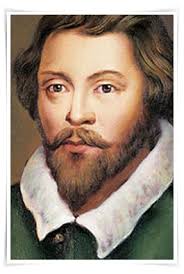
Three Easter Musical Gems: Bach, Palestrina and Byrd
A very blessed and glorious Easter! Christus surrexit vere, alleluia! As we begin this Easter Octave with the great Solemnity of Easter, music to lift the soul would be one of Bach’s Easter cantatas, composed during his time at Leipzig in the early 1700’s, for the six Sundays of this festive season, leading up to[…]Continue reading→
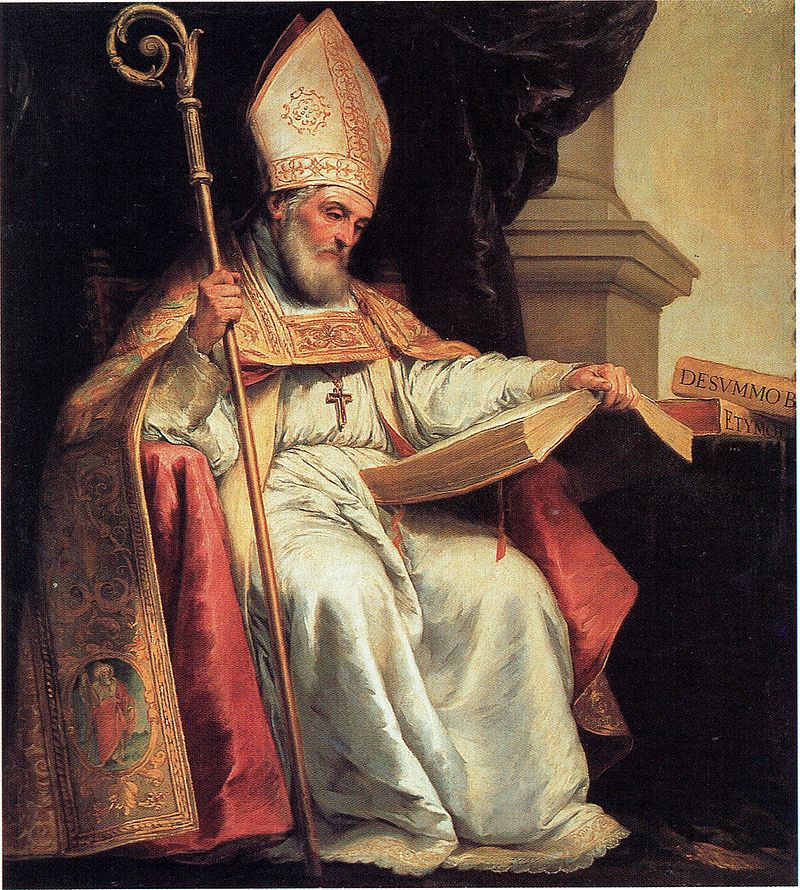
Saint Isidore of Seville, the Internet and Industriousness
Today, April 4th, muted this year by Holy Saturday, is the commemoration of Saint Isidore of Seville (560-636) a bishop and doctor of the Church during a tumultuous age, when civilization was crumbling, coming apart at its very seams, which may sound sort of au courant. Then again, the form of this world has always[…]Continue reading→

An Ancient Homily for Holy Saturday
The time between Good Friday and Easter Sunday is one of waiting, in silence, as the world wonders – anticipates – what will happen, after the death of Christ. We re-live this time each year in the anamnesis of our liturgy, and in turn look forward to the glorious re-creation of all things at the[…]Continue reading→