
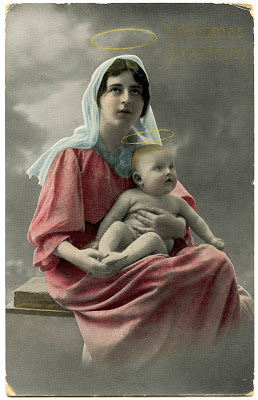
The Most Holy Name of Mary
The feast of the Holy Name of Mary, celebrated on September 12th, has a long history. It was in 1513 when Pope Julius III gave the permission to the Cuenta diocese in Spain to celebrate The Holy Name of Mary feast. This feast had a proper Office to September 15, the octave of our Lady’s Nativity. As a result of the liturgical reform undertaken by Pope St. Pius V, wherein it was abolished it was Pope Sixtus V that not only reinstated the feast but also moved it to September 17. Following this liturgical move the feast became so popular throughout Spain as well as the Kingdom of Naples.
As time went by, some religious orders were granted permission to celebrate the feast. It was Pope Innocent XI who made “The Feast of the Holy Name of Mary” possible for the entire Church. Initially it started to be celebrated on the Sunday following the Nativity of Mary. However, thanks to a decree, Pope St Pius X commanded that this feast be celebrated on September 12, the reason being that of commemorating the great victory over the Turks at the Battle of Vienna in 1683. When for a short time this feast was mistakenly mixed with that of the Blessed Virgin Mary’s Nativity on September 8, it was re-established for September 12.
Mary’s name is holy because she is the Mother of God. Mary is the holiest of all creatures, designed by the Father, through the Son in the Holy Spirit to be the Queen of heaven and earth. Mary is the Mother of Mercy. In the feast of the Holy Name of Mary we commemorate God’s outstanding love for Mary thanks to the privileges He imparted on her as well as her powerful intercessory role, fully united with that of Her Son Jesus Christ on our behalf, thanks to whom we all received grace upon grace (John 1:16).
Mary’s name is Hebrew is Miryam whereas its Aramaic rendering is Mariam. One interpretation is that it comes from the root merur which means “bitterness”. Both saints and scholars have been attracted by the interesting diversity of interpretations which the name of “Mary” stands for.
For St Isodore of Seville, Mary means enlightener. He writes: Mary means enlightener, because she brought forth the Light of the world. In the Syriac tongue, Mary signifies Lady (St. Isidore of Seville +636). For St Bernard Mary means Star of the Sea. He says: Let me say something concerning this name also, which is interpreted to mean Star of the sea, and admirably suits the Virgin Mother (St. Bernard +1153). For St Aelred Mary is also a stairway to Heaven. He explains: Therefore a certain Star has risen for us today: Our Lady, Saint Mary. Her name means Star of the sea; no doubt the Star of this sea which is the world. Therefore, we ought to lift up our eyes to this Star that has appeared on earth today in order that she may lead us, in order that she may enlighten us, in order that she may show us these steps so that we shall know them, in order that she may help us so that we may be able to ascend. And therefore it is a beautiful thing that Mary is placed in this stairway of which we are speaking, there where we must begin to climb. As the Evangelist says, Jacob begot Joseph, the husband of Mary, so immediately at the very moment of our conversion she appears to us and receives us into her care and enlightens us in her light and accompanies us along this laborious path.” (St Aelred +1167).
St Thomas Aquinas reflects: Mary means Star of the sea, for as mariners are guided to port by the ocean star, so Christians attain to glory through Mary’s maternal intercession“. In a poetic style St Bonaventure explains that the name of Mary has four meanings. He states: This most holy, sweet and worthy name was ’eminently fitted to so holy, sweet and worthy a virgin. For Mary means a bitter sea,2 star of the sea, the illuminated or illuminatrix.3 Mary is interpreted Lady. Mary is a bitter sea to the demons; to men she is the Star of the sea; to the Angels she is illuminatrix, and to all creatures she is Lady (St Bonaventure +1274).
For St Louis de Montfort Mary means the summation of God’s graces. He writes: God the Father gathered all the waters together and called them the seas or maria [Latin, seas]. He gathered all His grace together and called it Mary or Maria . . . This immense treasury is none other than Mary whom the saints call the ‘treasury of the Lord.’ From her fullness all men are made rich (St. Louis de Montfort +1716).
While honouring the Name of the Tota Pulchra, the Beautiful One, let us now pray the subsequent prayer which greatly honours the Name of Mary, accompanied by St Alphonsus de Liguori:
O great Mother of God and my Mother Mary, it is true that I am unworthy to name thee; but thou, who lovest me and desirest my salvation, must, notwithstanding the impurity of my tongue, grant that I may always invoke thy most holy and powerful name in my aid, for thy name is the succor of the living, and the salvation of the dying. Ah, most pure Mary, most sweet Mary, grant that henceforth thy name may be the breath of my life. O Lady, delay not to help me when I invoke thee, for in all the temptations which assail me, and in all my wants, I will never cease calling upon thee, and repeating again and again, Mary, Mary. Thus it is that I hope to act during my life, and more particularly at death, that after that last struggle I may eternally praise thy beloved name in heaven, O clement, O pious, O sweet Virgin Mary.
Ah, Mary, most amiable Mary, with what consolation, what sweetness, what confidence, what tenderness, is my soul penetrated in only naming, in only thinking of thee! I thank my Lord and God, who, for my good, has given thee a name so sweet and deserving of love, and at the same time so powerful. But, my sovereign Lady, I am not satisfied with only naming thee, I wish to name thee with love: I desire that my love may every hour remind me to call on thee, so that I may be able to exclaim with St. Bonaventure, “O name of the Mother of God, thou art my love.” My own dear Mary, O my beloved Jesus, may your most sweet names reign in my heart, and in all hearts. Grant that I may forget all others to remember, and always invoke, your adorable names alone. Ah! Jesus my Redeemer, and my Mother Mary, when the moment of death comes when I must breathe forth my soul and leave this worid, deign, through your merits, to grant that I may then pronounce my last words, and that they may be, “I love thee, O Jesus; I love thee, O Mary; to you do I give my heart and my soul.” Amen.

Saint Kateri , Canada’s Protectress
This was the title given to Saint Kateri Tekakwitha, by Pope Benedict XVI, when he canonized her on October 28th, 2012, along with six others, in Saint Peter’ Square (she had been beatified by Pope John Paul II back in 1980). With Saint Joseph as our protector, along with the Canadian martyrs, we seem to[…]Continue reading→

Remembering Father Alphonse de Valk
(Today marks the sixth anniversary of the death of Father Alphonse de Valk, C.S.B., a faithful, courageous and indefatigable Basilian priest, pro-life-and-family apostle, and the founder of Catholic Insight magazine. Here is what we wrote those on his entering into eternity five years ago, as we continue to remember him in our prayers and thoughts)[…]Continue reading→

My Name is Bernadette
April 16th is a propitious day, for besides the anniversary of Father de Valk’s death, who founded Catholic Insight in its print form decades ago, and the commemoration of the ‘two Benedicts’, mentioned in accompanying posts, today we also recall Saint Bernadette Soubirous, the young visionary to whom the Virgin Mary appeared numerous times at[…]Continue reading→

Canonizing Sister Faustina and Divine Mercy
HOMILY OF THE HOLY FATHER MASS IN ST PETER’S SQUARE FOR THE CANONIZATION OF SR MARY FAUSTINA KOWALSKA Sunday, 30 April 2000 1. “Confitemini Domino quoniam bonus, quoniam in saeculum misericordia eius”; “Give thanks to the Lord for he is good; his steadfast love endures for ever” (Ps 118: 1). So the Church sings on the Octave of[…]Continue reading→

Divine Mercy Sunday – An Echo of Every Mass
Reach out your hand and put it in my side. Do not doubt but believe’… ‘My Lord and my God!’ (Jn. 20:18)). Today is Divine Mercy Sunday, and as we celebrate the end of the Easter Octave, we contemplate the wounded side of our Saviour, the Church’s source of life. On Good Friday in the[…]Continue reading→

Saint Stanislaus of Szczepanów
We celebrate Saint Stanislaus today (+ April 11, 1079), in light of this Easter Octave, a bishop and martyr who accepted the episcopacy only at the direct order of Pope Alexander II. He proved a wise and courageous leader of his flock, put to death by his own king, Boleslaus, for rebuking the monarch’s ‘immoral[…]Continue reading→
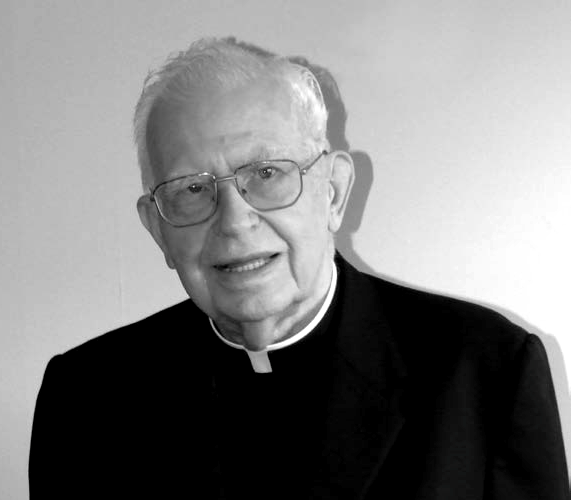
First Holy Communion: Sermon from May 16, 1943
Here is a sermon from the good old days by +Rev. Msgr. Vincent Nicholas Foy (August 14, 1915 – March 13, 2017), from 1943. Readers may recall that Pope Saint Pius X, by the decree Quam Singulari in 1910, lowered the customary age of reception of Holy Communion – after the rigours of the plague[…]Continue reading→
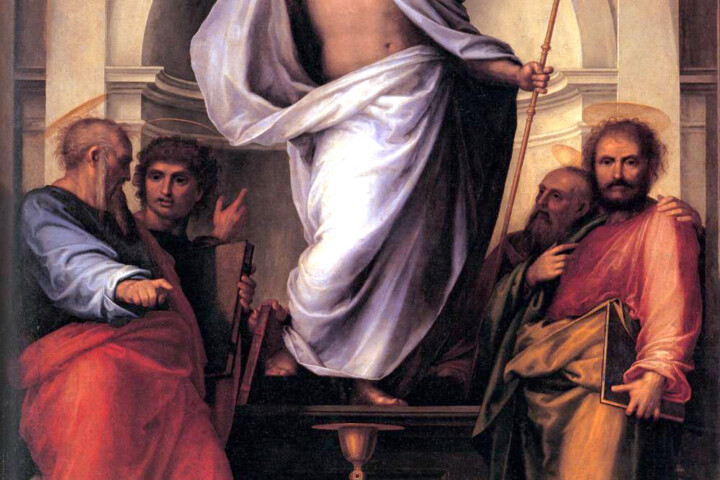
In the Glorious Light of Easter, Alleluia!
Set your minds on things that are above, not on things that are on earth, for you have died, and your life is hidden with Christ in God. When Christ who is your life is revealed, then you also will be revealed with him in glory (Col. 3:3-4). The Resurrection of Our Lord and Saviour[…]Continue reading→
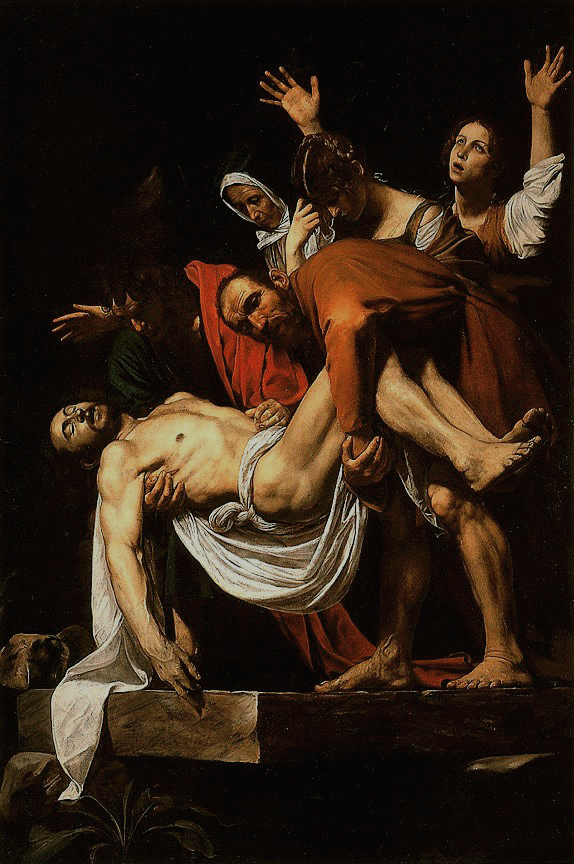
An Ancient Homily for Holy Saturday
The time between Good Friday and Easter Sunday is one of waiting, in silence, as the world wonders – anticipates – what will happen, after the death of Christ. We re-live this time each year in the anamnesis of our liturgy, and in turn look forward to the glorious re-creation of all things at the[…]Continue reading→
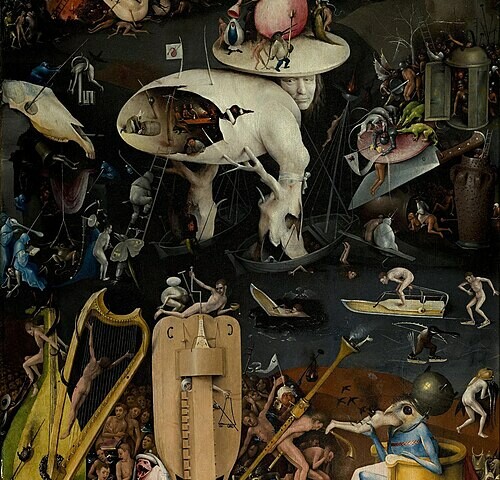
Europe’s Long Descent
(As we meditate on this day on Christ’s burial, and His descent into hell, it is fitting to ponder here with contributor Peter Marcus how the world seems to be heading there as well. The difference is that, although God cannot ‘redeem’ hell, nor those therein, He can and did redeem the world. There is[…]Continue reading→