
Pope Benedict and Augustine – Part II
BENEDICT XVI
GENERAL AUDIENCE
Paul VI Audience Hall
Wednesday, 16 January 2008
Saint Augustine of Hippo (2)
Dear Brothers and Sisters,
Today, like last Wednesday, I would like to talk about the great Bishop of Hippo, St Augustine. He chose to appoint his successor four years before he died. Thus, on 26 September 426, he gathered the people in the Basilica of Peace at Hippo to present to the faithful the one he had designated for this task. He said: “In this life we are all mortal, and the day which shall be the last of life on earth is to every man at all times uncertain; but in infancy there is hope of entering boyhood… looking forward from boyhood to youth, from youth to manhood and from manhood to old age; whether these hopes may be realized or not is uncertain, but there is in each case something which may be hoped for. But old age has no other period of this life to look forward to with expectation: in any case, how long old age may be prolonged is uncertain…. I came to this town – for such was the will of God – when I was in the prime of life. I was young then, but now I am old” (Ep 213, 1). At this point Augustine named the person he had chosen as his successor, the presbyter Heraclius. The assembly burst into an applause of approval, shouting 23 times, “To God be thanks! To Christ be praise!”. With other acclamations the faithful also approved what Augustine proposed for his future: he wanted to dedicate the years that were left to him to a more intense study of Sacred Scripture (cf. Ep 213, 6).
Indeed, what followed were four years of extraordinary intellectual activity: he brought important works to conclusion, he embarked on others, equally demanding, held public debates with heretics – he was always seeking dialogue – and intervened to foster peace in the African provinces threatened by barbarian southern tribes. He wrote about this to Count Darius, who had come to Africa to settle the disagreement between Boniface and the imperial court which the tribes of Mauritania were exploiting for their incursions: “It is a higher glory still”, he said in his letter, “to stay war itself with a word, than to slay men with the sword, and to procure or maintain peace by peace, not by war. For those who fight, if they are good men, doubtlessly seek peace; nevertheless, it is through blood. Your mission, however, is to prevent the shedding of blood” (Ep 229, 2). Unfortunately, the hope of pacification in the African territories was disappointed; in May 429, the Vandals, whom out of spite Boniface had invited to Africa, passed the straits of Gibraltar and streamed into Mauritania. The invasion rapidly reached the other rich African provinces. In May or June 430, “the destroyers of the Roman Empire”, as Possidius described these barbarians (Vita, 30, 1), were surrounding and besieging Hippo.
Boniface had also sought refuge in the city. Having been reconciled with the court too late, he was now trying in vain to block the invaders’ entry. Possidius, Augustine’s biographer, describes Augustine’s sorrow: “More tears than usual were his bread, night and day, and when he had reached the very end of his life, his old age caused him, more than others, grief and mourning (Vita, 28, 6). And he explains: “Indeed, that man of God saw the massacres and the destruction of the city; houses in the countryside were pulled down and the inhabitants killed by the enemy or put to flight and dispersed. Private churches belonging to priests and ministers were demolished, sacred virgins and Religious scattered on every side; some died under torture, others were killed by the sword, still others taken prisoner, losing the integrity of their soul and body and even their faith, reduced by their enemies to a long, drawn-out and painful slavery” (ibid., 28, 8).
(To continue reading, please see here)
A Closed, Unsustainable, Descending Loop
As a follow-up to my thoughts on Payette’s payout, here be a stark image of where are here in Canada. As the graph shows in, well, graphic terms, since 2025, the public sector has contributed to 95.5% of economic growth. The private sector – which funds the public sector, or is supposed to – has[…]Continue reading→
Presidential Pardon of Weronika Krawczyk
As a good news, follow-up to our story from Poland, of the persecution of Weronika Krawczyk for her pro-life views, we heard that she has been granted a presidential pardon. One might still wonder why one needs a presidential pardon for simply holding the long-held belief that the child within the womb is a child,[…]Continue reading→
Pope Leo and a Rosary for Peace
Pope Leo XIV has asked Catholics across the world to join him in a Rosary for peace today, at 18:00 Rome time (6 pm), which would be noon from where I write (EST). If you are able, whether at that time or another, and in whatever way you pray, to join in intercession with the[…]Continue reading→
Payette’s Payout
I was glancing through some headlines, and noticed a mention of Julie Payette – engineer and astronaut and sometime the Queen’s representative in Canada – which brought back vague memories. She was appointed Governor-General by Justin Trudeau in 2017. Ms. Payette resigned in 2021, amidst claims that she created a ‘toxic work environment’, with allegations[…]Continue reading→
Weronika Krawczyk and Injustice in Poland
Catholic Action in Poland has issued a formal statement appealing to the President of the Republic of Poland to pardon Weronika Krawczyk—convicted for warning other women against an abortion-performing gynaecologist. Catholic Action (AK) emphasizes that no apology is owed to a doctor who has performed numerous abortions and proposed others; furthermore, the organization considers the[…]Continue reading→
Saint Isidore of Seville, the Internet and Industriousness
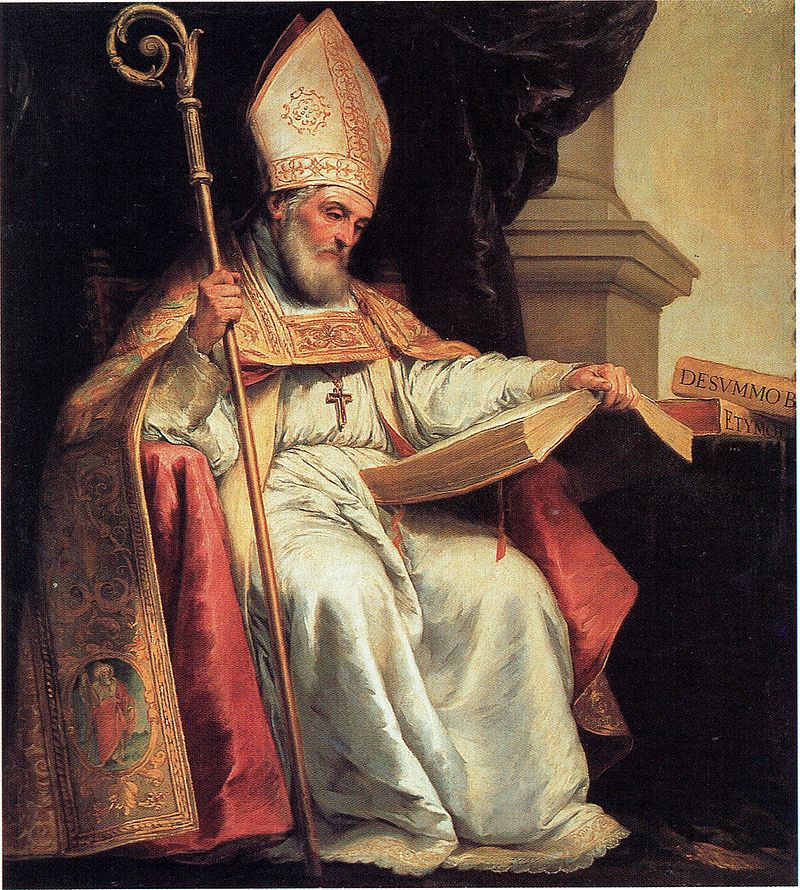
Today, April 4th, muted this year by Holy Saturday, is the commemoration of Saint Isidore of Seville (560-636) a bishop and doctor of the Church during a tumultuous age, when civilization was crumbling, coming apart at its very seams, which may sound sort of au courant. Then again, the form of this world has always[…]Continue reading→
Bishop Fulton Sheen’s 58th Good Friday Reflection
Incredible, at the beginning of this reflection, that the Venerable Bishop Sheen declares that he has given nearly 58 Good Friday reflections – this, as far as I can gather, was his final one, and he seems in full vigour in mind and body. The good bishop and evangelist died in his 84th year on[…]Continue reading→
A Minimal Friar and the Death of a Great Pope
This April the second- overshadowed by Holy Thursday this year – marks the memorial of Saint Francis of Paola (1417-1507), founder of the ‘Minim’ friars, so called for their humility and poverty, who interpreted the rule of Saint Francis of Assisi in quite a literal sense: extreme poverty, trust in God, foregoing all animal and[…]Continue reading→
Pope Benedict’s Last Holy Thursday Homily
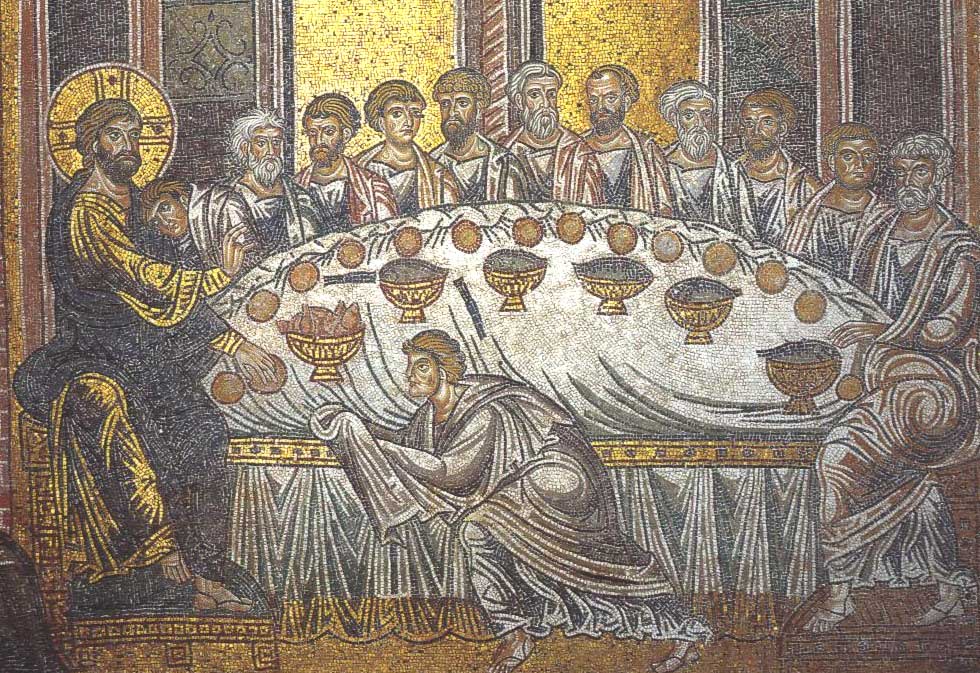
MASS OF THE LORD’S SUPPER HOMILY OF HIS HOLINESS BENEDICT XVI Basilica of St John Lateran Holy Thursday, 5 April 2012 Photo Gallery (Video) Dear Brothers and Sisters! Holy Thursday is not only the day of the institution of the Most Holy Eucharist, whose splendour bathes all else and in some ways draws it to[…]Continue reading→
Woven versus Seamless Garments
The reflection on the worthy project by Magie Dominic was intriguing, and I thought I would offer a brief follow-up commentary. The garment woven out of many pieces is a poignant symbol, even a ‘sacramental’, inspired by prayer and grace. We are all united in some way, and should strive for such unity, wherever we[…]Continue reading→