
Pope Francis and the Assumption
(Many readers of Catholic Insight likely have some, shall we say, issues with Pope Francis, and his actions of late – his ambiguous if not outright puzzling and confusing statements on fundamental moral issues, his support for dubious if not scandalous clerics and so on. The upcoming synod may provoke outright schism, on which we will say more anon. However, like Christ said of the flawed spiritual guides of his own time, we should still do as they say, even if not always do what they do. God works through imperfect instruments – we are all such – and the Pope is still the Pope, and can still teach truths that will help us in our spiritual pilgrimage – such as the two-year indulgence he recently promulgated for Saint Thomas Aquinas. Here, Father Attard gives us some words from Pope Francis on imitating Our Lady in this octave of the Assumption. Mary is the one closest to her Son who most perfectly imitates Him, and who shows us the way to heaven).
The more the Lord is giving me the grace to read the writings of Pope Francis the more I am realizing his great love for Mary – the spiritual insights he gives on Mary are very illuminating, life-giving and encouraging. Today I would like to share with you what the Lord taught me through his Angelus Addresses on the Solemnity of the Assumption of Mary.
For Pope Francis, the Assumption of Mary represents a school of important virtues, the first that of humility. In his Angelus Address of August 15, 2021, Pope Francis gave a very beautiful description of this leading virtue. He said:
Mary’s secret is humility. It is her humility that attracted God’s gaze to her. The human eye always looks for grandeur and allows itself to be dazzled by what is flashy. Instead, God does not look at the appearance. God looks at the heart (cf 1 Sam 16:7) and is enchanted by humility. Humility of heart enchants God. Today, looking at Mary assumed into heaven, we can say that humility is the way that leads to Heaven. The word “humility” comes from the Latin word humus, which means “earth”. It is paradoxical: to arrive on high, into Heaven, what is needed is to stay low, like the earth! Jesus teaches this: “he who humbles himself will be exalted” (Lk 14:11). God does not exalt us because of our gifts, because of our wealth or because of our skills, but because of humility. God loves humility. God lifts up those who humble themselves; he lifts up those who serve. Mary, in fact, attributes no other “title” except servant to herself: she is, “the handmaid of the Lord” (Lk 1:38). She says nothing else about herself, she seeks nothing else for herself.
Upon reading this catechesis of what humility is and how Mary mirrors to me humility I felt challenged by the relevant questions the Holy Father posed for us:
Today, then, let us ask ourselves, each one of us in our heart: how am I doing with humility? Do I seek to be recognized by others, to affirm myself and to be praised, or do I think rather about serving? Do I know how to listen, like Mary, or do I want only to speak and receive attention? Do I know how to keep silence, like Mary, or am I always chattering? Do I know how to take a step back, defuse quarrels and arguments, or do I always want to stand out? Let us think about these questions: how am I doing with humility?
Within the same catechesis Pope Francis makes a reference to the virtue of silence. He said: The poet Dante calls the Virgin Mary, “humbler and loftier than any creature” (Paradise, XXXIII, 2). It is beautiful to think that the humblest and loftiest creature in history, the first to win heaven with her entire being, in soul and body, lived out her life for the most part within the domestic walls, in the ordinary, in humility. The days of the Full of Grace were not all that striking. They followed one another, often exactly the same, in silence: externally, nothing extraordinary. But God’s gaze was always upon her, admiring her humility, her availability, the beauty of her heart never stained by sin.
My simple question is the following: What am I after in my spiritual life: fame, noise, attention on me or letting God’s grace transform me in that arduous, most beneficial silence, as occurred in Mary’s life? Is this not real holiness?
Another virtue which Pope Francis teaches me in his Angelus Address on the Solemnity of the Assumption is service. Mary teaches us that true power lies in serving those in need. In the Angelus Address of August 15, 2021:
What does that canticle of Mary mean? What is the meaning? She does not intend to chronicle the time — she is not a journalist — but to tell us something much more important: that God, through her, has inaugurated a historical turning point; he has definitively established a new order of things. She, small and humble, has been raised up and — we celebrate this today — brought to the glory of Heaven, while the powerful of the world are destined to remain empty-handed. Think of the parable of that rich man who had a beggar, Lazarus, at his door. How did he end up? Empty-handed. Our Lady, in other words, announces a radical change, an overturning of values. While she speaks with Elizabeth, carrying Jesus in her womb, she anticipates what her Son will say, when he will proclaim blessed the poor and humble, and warn the rich and those who base themselves on their own self-sufficiency. The Virgin, then, prophesies with this canticle, with this prayer: she prophesies that it will not be power, success and money to prevail, but rather that service, humility and love will prevail. And as we look at her, in glory, we understand that true power is service — let us not forget this: true power is service — and to reign means to love. And that this is the road to Heaven.
In this catechesis Pope Francis gave us some fruitful questions for our soul searching regarding virtue which defines us as disciples of Jesus when he told us:
A new commandment I give to you, that you love one another; even as I have loved you, that you also love one another. By this all men will know that you are my disciples, if you have love for one another (John 13: 34-35). The Holy Father said: So, looking at ourselves, we can ask ourselves: does that reversal announced by Mary affect my life? Do I believe that to love is to reign, and to serve is power? Do I believe that the destination of my life is Heaven, is paradise? Or do I worry only about having a good time down here? Am I concerned only with worldly, material things? Again, as I observe world events, do I let myself be entrapped by pessimism or, like the Virgin, am I able to discern the work of God who, through gentleness and smallness, achieves great things?
Finally, the Assumption of Mary instills in us hope. The Holy Father had this to say on the virtue of hope in this catechesis: Brothers and sisters, Mary today sings of hope and rekindles hope in us. In her, we see the destination of our journey. She is the first creature who, with her whole self, body and soul, victoriously crosses the finish line of Heaven. She shows us that Heaven is within reach. How come? Yes, Heaven is within reach, if we too do not give in to sin, if we praise God in humility and serve others generously. Do not give in to sin. But some might say, “But, Father, I am weak”. “But the Lord is always near you, because he is merciful”. Do not forget God’s style: proximity, compassion and tenderness. He is always close to us, in his style. Our Mother takes us by the hand, she accompanies us to glory, she invites us to rejoice as we think of heaven. Let us bless Mary with our prayer, and let us ask her for a gaze capable of glimpsing Heaven on earth.
Do I really believe that Heaven lies within my reach? Am I praying to Mary not to give in to sin? Am I asking her to help me praise God with all humility and to see Her Son Jesus in the people who are in great need around me?
With Saint Bernard let us pray to Mary the Memorare:
Remember, O most gracious Virgin Mary, that never was it known that anyone who fled to your protection, implored your help or sought your intercession, was left unaided. Inspired by this confidence, I fly unto you, O Virgin of virgins, my Mother. To you I come, before you I stand, sinful and sorrowful. O Mother of the Word incarnate, despise not my petitions, but, in your mercy, hear and answer me. Amen.
A Closed, Unsustainable, Descending Loop
As a follow-up to my thoughts on Payette’s payout, here be a stark image of where are here in Canada. As the graph shows in, well, graphic terms, since 2025, the public sector has contributed to 95.5% of economic growth. The private sector – which funds the public sector, or is supposed to – has[…]Continue reading→

Remembering Father Alphonse de Valk
(Today marks the sixth anniversary of the death of Father Alphonse de Valk, C.S.B., a faithful, courageous and indefatigable Basilian priest, pro-life-and-family apostle, and the founder of Catholic Insight magazine. Here is what we wrote those on his entering into eternity five years ago, as we continue to remember him in our prayers and thoughts)[…]Continue reading→
Presidential Pardon of Weronika Krawczyk
As a good news, follow-up to our story from Poland, of the persecution of Weronika Krawczyk for her pro-life views, we heard that she has been granted a presidential pardon. One might still wonder why one needs a presidential pardon for simply holding the long-held belief that the child within the womb is a child,[…]Continue reading→
Pope Leo and a Rosary for Peace
Pope Leo XIV has asked Catholics across the world to join him in a Rosary for peace today, at 18:00 Rome time (6 pm), which would be noon from where I write (EST). If you are able, whether at that time or another, and in whatever way you pray, to join in intercession with the[…]Continue reading→
Payette’s Payout
I was glancing through some headlines, and noticed a mention of Julie Payette – engineer and astronaut and sometime the Queen’s representative in Canada – which brought back vague memories. She was appointed Governor-General by Justin Trudeau in 2017. Ms. Payette resigned in 2021, amidst claims that she created a ‘toxic work environment’, with allegations[…]Continue reading→

Saint Stanislaus of Szczepanów
We celebrate Saint Stanislaus today (+ April 11, 1079), in light of this Easter Octave, a bishop and martyr who accepted the episcopacy only at the direct order of Pope Alexander II. He proved a wise and courageous leader of his flock, put to death by his own king, Boleslaus, for rebuking the monarch’s ‘immoral[…]Continue reading→
Weronika Krawczyk and Injustice in Poland
Catholic Action in Poland has issued a formal statement appealing to the President of the Republic of Poland to pardon Weronika Krawczyk—convicted for warning other women against an abortion-performing gynaecologist. Catholic Action (AK) emphasizes that no apology is owed to a doctor who has performed numerous abortions and proposed others; furthermore, the organization considers the[…]Continue reading→
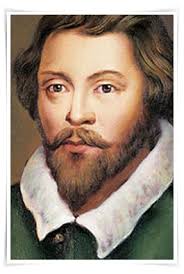
Three Easter Musical Gems: Bach, Palestrina and Byrd
A very blessed and glorious Easter! Christus surrexit vere, alleluia! As we begin this Easter Octave with the great Solemnity of Easter, music to lift the soul would be one of Bach’s Easter cantatas, composed during his time at Leipzig in the early 1700’s, for the six Sundays of this festive season, leading up to[…]Continue reading→
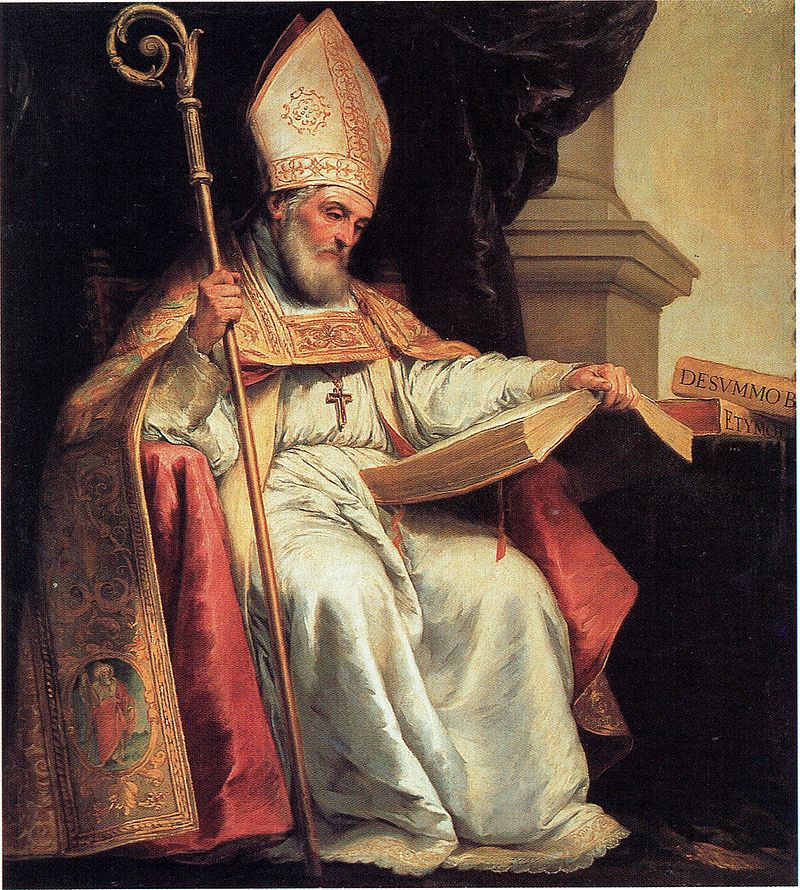
Saint Isidore of Seville, the Internet and Industriousness
Today, April 4th, muted this year by Holy Saturday, is the commemoration of Saint Isidore of Seville (560-636) a bishop and doctor of the Church during a tumultuous age, when civilization was crumbling, coming apart at its very seams, which may sound sort of au courant. Then again, the form of this world has always[…]Continue reading→
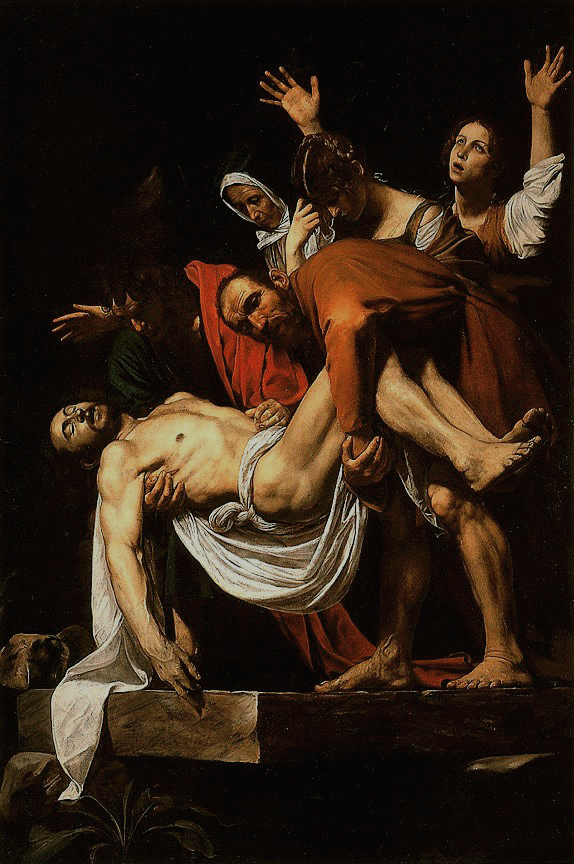
An Ancient Homily for Holy Saturday
The time between Good Friday and Easter Sunday is one of waiting, in silence, as the world wonders – anticipates – what will happen, after the death of Christ. We re-live this time each year in the anamnesis of our liturgy, and in turn look forward to the glorious re-creation of all things at the[…]Continue reading→