
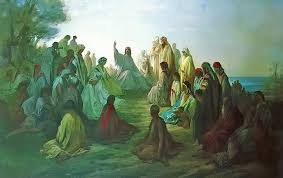
Seventeenth Sunday: Choosing the Highest Good
Again, the kingdom of heaven is like a merchant in search of fine pearls; on finding one pearl of great value, he went and sold all he had and bought it (Mt. 13:45-46). ⧾
All of the parables, the long ones and even the shortest of them, like the one on the pearl of great value invite us who listen to them with faith so that the kingdom of heaven may be our highest good (summum bonum). For three Sundays now we have meditated on these familiar texts and have interpreted them or have listened to Our Lord’s own interpretation or explanation of them in the sacred text. What is the pearl of great value? The first lesson of the Mass may help us to define it. Is it a long life or riches? (It cannot be the life of our enemies, although we all have our moments). A case could be made for both: a long life to help our family along or to serve the needs of the Church; riches likewise to help others in their needs. These are noble intentions but what good is anything at all without understanding to discern what is right? What good are riches if they cause us to lose ourselves or a long life if it is squandered in dissolution? A wise and discerning mind, the Lord’s gift to King Solomon is perhaps what is and always has been what is needed most. Even if we are blessed with such a mind, we can’t presume that this will be automatically passed on to those who follow us, be they our children or the person who may succeed us in our tasks. How tragic that it was said of Solomon’s son Rehoboam that he was expansive and folly and limited in sense (Sir. 47:23). One generation. It didn’t last long.
For at least two generations or more, both the secular culture and sadly, our religious culture have repudiated our rich Christian heritage in a cultural revolution not unlike the one inflicted upon the Chinese people by the communism of Mao Zedong that violently purged that nation of what were termed the ‘Four Olds’: old customs, culture, habits and ideas. What is sometimes referred to as cultural Marxism has similarly infiltrated our national and religious institutions; and these are in most cases unrecognizable. The tragic effects of this revolution are perhaps most evident in the transformation of once Catholic Quebec. The so-called quiet revolution of that province has its corollary in our own province as a quieter revolution; slower but just as destructive.
One may argue or even attempt to refute this interpretation of our recent history and the trajectory of this repudiation of the past as it continues to unfold, but facts are stubborn things. At least as it concerns the Church, many once thriving institutions are barely recognizable and no longer true to their stated foundational principles. The same can be said most especially of institutes of learning especially at the higher levels: students are indoctrinated in ideologies, not educated. There is a difference.
Archbishop Fulton J. Sheen observed: It is a characteristic of any decaying civilization that the great masses of the people are unaware of the tragedy. Humanity in a crisis is generally insensitive to the gravity of the times in which it lives. Men do not want to believe their own times are wicked, partly because they have no standard outside of themselves by which to measure their times. If there is no fixed concept of justice, how shall men know it is violated? Only those who live by faith really know what is happening in the world; the great masses without faith are unconscious of the destructive processes going on, because they have lost the vision of the heights from which they have fallen. In an age such as ours, when people are encouraged to be obsessively self-referential, the standards by which to judge what is happening both without and within are effectively non-existent because objective truth, goodness and even beauty are subordinated to the dictates of the imperial self and as we are seeing today, the very categories of nature and logic are repudiated; and the end result is a mass of people who are both unbelieving and unthinking.
By contrast, we who are endeavouring to live by faith, whether by God’s good grace we never repudiated our faith in this revolutionary age, or whether we have returned to the practice of the faith after bitter trials, are able to see what has transpired and continues to unfold before our very eyes for what it really and truly is: a revolution against God godly order. We humbly acknowledge that God Himself is our highest good, and that in Christ Jesus, the Word made flesh, the offer of salvation is made to all men. His immutable, living word that we reverently proclaim and attentively listen to is the standard by which we wisely discern all things with heart and mind and so we are at the very least disposed to be formed to have a wise and discerning mind. It is above all in the worship of God in the Holy Sacrifice of the Mass that we are formed to see and discern all things with a view to eternity and to eternal truth. This is why the Mass is so important and why the proper worship of God is indispensable to a life of purpose and meaning. The Mass is the feast of faith and the school of life.
The great Saint of the Eucharist, St Peter Julian Eymard whose feast we will celebrate in early August, echoes the insights of Archbishop Sheen: An age prospers or dwindles in proportion to its devotion to the Eucharist. This is the measure of its spiritual life, faith, charity and virtue. There is much to ponder in these few words. Nevertheless, it is too easy a thing to call out the errors of our times and bemoan our lot. St. Augustine, who lived in a time of great social and political upheaval said: Bad times, hard times, this is what people keep saying, but let us live well (– and I would add, worship well), and times will be good. We are the times. Such as we are, such are the times.
Let us not allow anyone or anything to prevent us from faithfully and zealously working to establish God’s Kingdom, in the firm conviction that, as St. Paul teaches us, all things work together for good for those who love God, who are called according to his purpose (Rom. 8:28). May our lives be centered on the Eucharistic Mystery, the source of truth, wisdom and charity, God Himself. Our Sunday Mass is a weekly reminder of the great heights to which we are called: divine intimacy with the God of salvation who calls us first and foremost to be co-operators of the truth (cooperatores veritatis), God’s truth that endures forever (et veritas Domini manet in aeternum).

Remembering Father Alphonse de Valk
(Today marks the sixth anniversary of the death of Father Alphonse de Valk, C.S.B., a faithful, courageous and indefatigable Basilian priest, pro-life-and-family apostle, and the founder of Catholic Insight magazine. Here is what we wrote those on his entering into eternity five years ago, as we continue to remember him in our prayers and thoughts)[…]Continue reading→

Divine Mercy Sunday – An Echo of Every Mass
Reach out your hand and put it in my side. Do not doubt but believe’… ‘My Lord and my God!’ (Jn. 20:18)). Today is Divine Mercy Sunday, and as we celebrate the end of the Easter Octave, we contemplate the wounded side of our Saviour, the Church’s source of life. On Good Friday in the[…]Continue reading→

Saint Stanislaus of Szczepanów
We celebrate Saint Stanislaus today (+ April 11, 1079), in light of this Easter Octave, a bishop and martyr who accepted the episcopacy only at the direct order of Pope Alexander II. He proved a wise and courageous leader of his flock, put to death by his own king, Boleslaus, for rebuking the monarch’s ‘immoral[…]Continue reading→

First Holy Communion: Sermon from May 16, 1943
Here is a sermon from the good old days by +Rev. Msgr. Vincent Nicholas Foy (August 14, 1915 – March 13, 2017), from 1943. Readers may recall that Pope Saint Pius X, by the decree Quam Singulari in 1910, lowered the customary age of reception of Holy Communion – after the rigours of the plague[…]Continue reading→

In the Glorious Light of Easter, Alleluia!
Set your minds on things that are above, not on things that are on earth, for you have died, and your life is hidden with Christ in God. When Christ who is your life is revealed, then you also will be revealed with him in glory (Col. 3:3-4). The Resurrection of Our Lord and Saviour[…]Continue reading→

An Ancient Homily for Holy Saturday
The time between Good Friday and Easter Sunday is one of waiting, in silence, as the world wonders – anticipates – what will happen, after the death of Christ. We re-live this time each year in the anamnesis of our liturgy, and in turn look forward to the glorious re-creation of all things at the[…]Continue reading→

Europe’s Long Descent
(As we meditate on this day on Christ’s burial, and His descent into hell, it is fitting to ponder here with contributor Peter Marcus how the world seems to be heading there as well. The difference is that, although God cannot ‘redeem’ hell, nor those therein, He can and did redeem the world. There is[…]Continue reading→
Pope Saint John Paul II’s First Good Friday Homily
ADDRESS OF HIS HOLINESS JOHN PAUL II AT THE CONCLUSION OF THE STATIONS OF THE CROSS AT THE COLOSSEUM Good Friday, 13 April 1979 When we make the Way of the Cross from one station to the next, in spirit we are always at the spot wherethis journey had its “historical” place: where it[…]Continue reading→
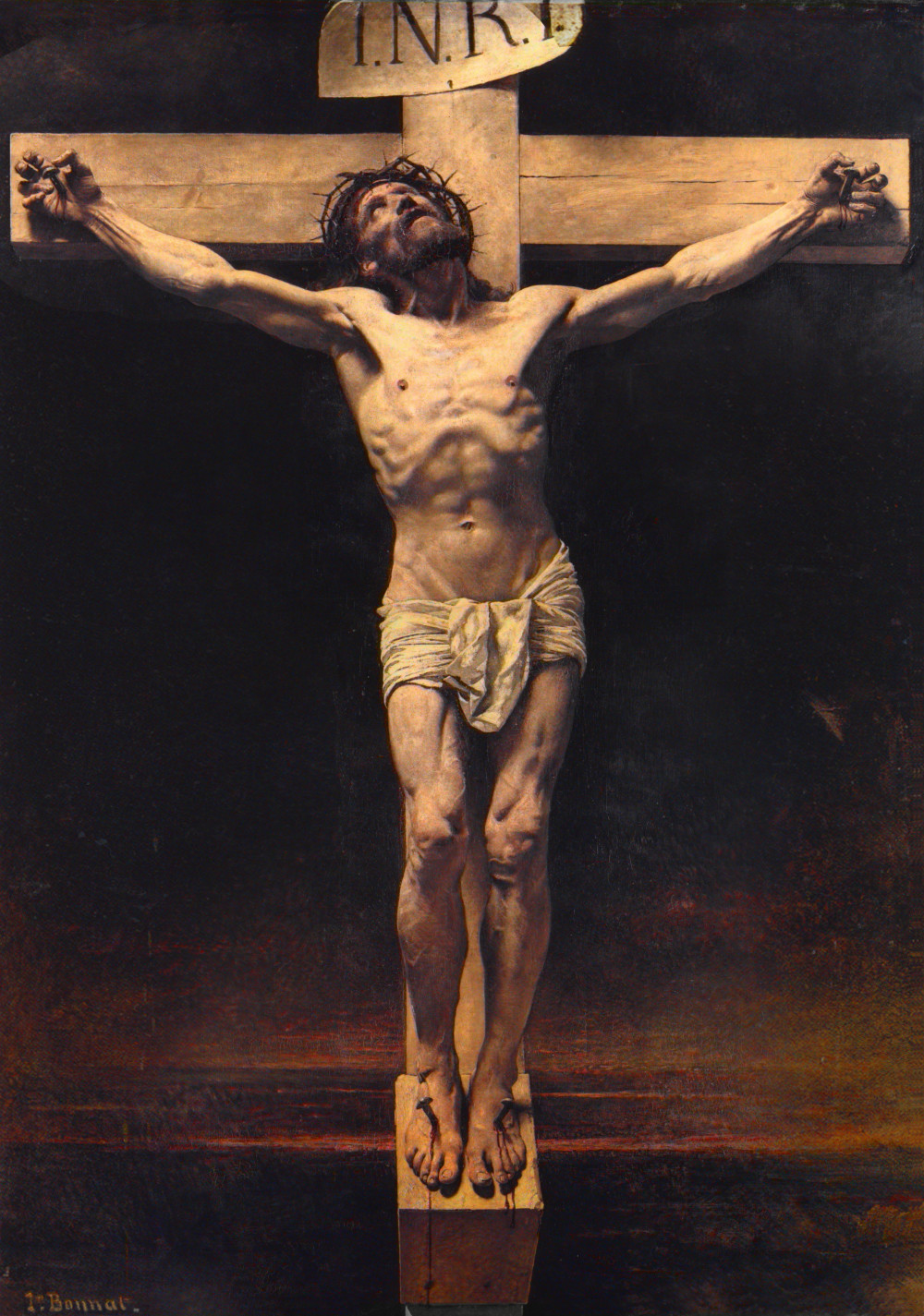
A Meditation for Good Friday: How To Undo the Effects of Sin?
Cardinal Newman, now Saint John Henry Newman, was a towering figure of nineteenth-century Catholicism who is almost universally admired. I say “almost” because not everyone likes him. I knew a priest once, Arthur Caulkins, who has become disenchanted with Newman. As an undergraduate Arthur had been enamoured of Newman, and this interest continued when he[…]Continue reading→
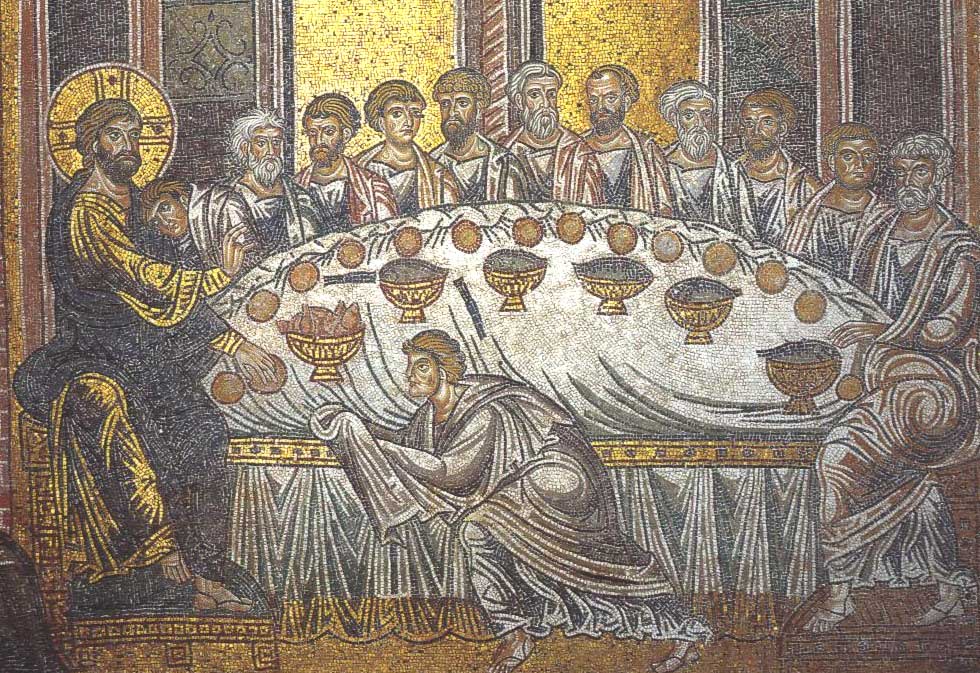
Pope Benedict’s Last Holy Thursday Homily
MASS OF THE LORD’S SUPPER HOMILY OF HIS HOLINESS BENEDICT XVI Basilica of St John Lateran Holy Thursday, 5 April 2012 Photo Gallery (Video) Dear Brothers and Sisters! Holy Thursday is not only the day of the institution of the Most Holy Eucharist, whose splendour bathes all else and in some ways draws it to[…]Continue reading→