
Pope Benedict and John the Baptist
Today we celebrate in the Church the birth of St John the Baptist, and much has been said and written about the Precursor of Our Lord.
Already in Byzantine iconography, John the Baptist attains a very special place in the iconostasis. In fact the figure of the Forerunner of the Lord is always represented in icon together with Jesus the Saviour dressed in royal garments, Mary, the Mother of the Saviour and the Mother of God, accompanied by an array of other saints. These include the Archangels Michael and Gabriel, the Apostles Peter and Paul, bishop saints and martyrs. This icon is put exactly above the Mystical Supper icon. The technical name for the icon wherein one finds St John the Baptist is called Deisis or prayer since all the figures in it turn to Christ in prayer.
The Byzantine liturgy greatly venerates St John the Baptist because of Christ’s direct testimony of him. Secondly, John led an austere ascetical life and, finally, John, empowered by the spirit and power of Eli’jah (Luke 1:17) bears witness to Christ by his blood.
All these considerations help us appreciate Pope Benedict’s contribution on the figure of John the Baptist. In his General Audience on the Martyrdom of St John the Baptist of Wednesday, 29 August 2012, given at Castel Gandolfo, the German Pope outlines a succinct historical church of the Lord’s Forerunner. He said: These small historical references help us to understand how ancient and deeply-rooted is the veneration of John the Baptist. His role in relation to Jesus stands out clearly in the Gospels. St Luke in particular recounts his birth, his life in the wilderness and his preaching, while in today’s Gospel St Mark tells us of his dramatic death. John the Baptist began his preaching under the Emperor Tiberius in about 27-28 A.D., and the unambiguous invitation he addressed to the people, who flocked to listen to him, was to prepare the way to welcome the Lord, to straighten the crooked paths of their lives through a radical conversion of heart (cf. Lk 3:4).
Pope Benedict points out that John the Baptist was more than an ardent preacher of repentance and conversion. He was the confessor of Christ as the Lamb of God (Jn 1:29) as the Truth to be believed in. He was so adamant in his belief that he was ready to pay the ultimate price for his loyalty to Christ. Thus taught Pope Benedict within the same catechesis:
However, John the Baptist did not limit himself to teaching repentance or conversion. Instead, in recognizing Jesus as the “Lamb of God” who came to take away the sin of the world (Jn 1:29), he had the profound humility to hold up Jesus as the One sent by God, drawing back so that he might take the lead, and be heard and followed. As his last act the Baptist witnessed with his blood to faithfulness to God’s commandments, without giving in or withdrawing, carrying out his mission to the very end. In the 9th century the Venerable Bede says in one of his Homilies: “St John gave his life for [Christ]. He was not ordered to deny Jesus Christ, but was ordered to keep silent about the truth” (cf. Homily 23: CCL 122, 354). And he did not keep silent about the truth and thus died for Christ who is the Truth. Precisely for love of the truth he did not stoop to compromises and did not fear to address strong words to anyone who had strayed from God’s path.
Already from his conception John was a gift of divine grace and mercy first to his aging parents Zechariah and Elizabeth and then to the entire People of God. Pope Benedict explained this point in the following manner:
John was the divine gift for which his parents Zechariah and Elizabeth had been praying for so many years (cf. Lk 1:13); a great gift, humanly impossible to hope for, because they were both advanced in years and Elizabeth was barren (cf. Lk 1:7); yet nothing is impossible to God (cf. Lk 1:36). The announcement of this birth happened precisely in the place of prayer, in the temple of Jerusalem, indeed it happened when Zechariah had the great privilege of entering the holiest place in the temple to offer incense to the Lord (cf. Lk 1:8-20). John the Baptist’s birth was also marked by prayer: the Benedictus, the hymn of joy, praise and thanksgiving which Zechariah raises to the Lord and which we recite every morning in Lauds, exalts God’s action in history and prophetically indicates the mission of their son John: to go before the Son of God made flesh to prepare his ways (cf. Lk 1:67-79).
For Pope Benedict St John the Baptist is an extraordinary teacher of the art of prayer and spiritual life: The entire existence of the Forerunner of Jesus was nourished by his relationship with God, particularly the period he spent in desert regions (cf. Lk 1:80). The desert regions are places of temptation but also where man acquires a sense of his own poverty because once deprived of material support and security, he understands that the only steadfast reference point is God himself. John the Baptist, however, is not only a man of prayer, in permanent contact with God, but also a guide in this relationship. The Evangelist Luke, recalling the prayer that Jesus taught his disciples, the Our Father, notes that the request was formulated by the disciples in these words: “Lord, teach us to pray, just as John taught his own disciples” (cf. Lk 11:1).
Pope Benedict’s reflections on St John the Baptist help us more to appreciate the contribution of the Jewish historian Josephus who attests to John’s holiness when he wrote: He was indeed a man endued with all virtue, who exhorted the Jews to the practice of justice towards men and piety towards God; and also to baptism, preaching that they would become acceptable to God if they renounced their sins, and to the cleanness of their bodies added purity of soul.
In this day and age we need to delve deeper into prayer and spiritual life. This is a very important resource in order to witness fearlessly to Jesus, the Lamb of God and to his teachings in front of the great confusion our world is going through. Let us pray to St John the Baptist to intercede for us, in front God’s throne, to be strong witnesses of Jesus who alone is the Way, the Truth and the Life which take us to the Father.
Grant, we pray, almighty God, that your family may walk in the way of salvation and, attentive to what Saint John the Precursor urged, may come safely to the One he foretold, our Lord Jesus Christ. Who lives and reigns with you in the unity of the Holy Spirit, God, for ever and ever. Amen.
A Closed, Unsustainable, Descending Loop
As a follow-up to my thoughts on Payette’s payout, here be a stark image of where are here in Canada. As the graph shows in, well, graphic terms, since 2025, the public sector has contributed to 95.5% of economic growth. The private sector – which funds the public sector, or is supposed to – has[…]Continue reading→
Presidential Pardon of Weronika Krawczyk
As a good news, follow-up to our story from Poland, of the persecution of Weronika Krawczyk for her pro-life views, we heard that she has been granted a presidential pardon. One might still wonder why one needs a presidential pardon for simply holding the long-held belief that the child within the womb is a child,[…]Continue reading→
Pope Leo and a Rosary for Peace
Pope Leo XIV has asked Catholics across the world to join him in a Rosary for peace today, at 18:00 Rome time (6 pm), which would be noon from where I write (EST). If you are able, whether at that time or another, and in whatever way you pray, to join in intercession with the[…]Continue reading→
Payette’s Payout
I was glancing through some headlines, and noticed a mention of Julie Payette – engineer and astronaut and sometime the Queen’s representative in Canada – which brought back vague memories. She was appointed Governor-General by Justin Trudeau in 2017. Ms. Payette resigned in 2021, amidst claims that she created a ‘toxic work environment’, with allegations[…]Continue reading→
Weronika Krawczyk and Injustice in Poland
Catholic Action in Poland has issued a formal statement appealing to the President of the Republic of Poland to pardon Weronika Krawczyk—convicted for warning other women against an abortion-performing gynaecologist. Catholic Action (AK) emphasizes that no apology is owed to a doctor who has performed numerous abortions and proposed others; furthermore, the organization considers the[…]Continue reading→
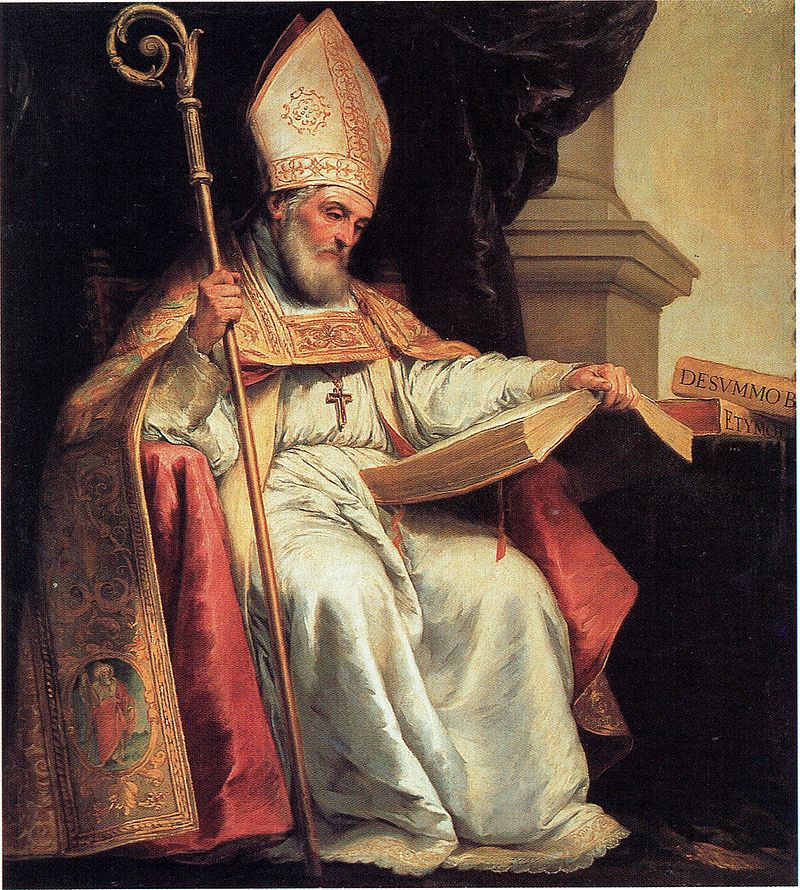
Saint Isidore of Seville, the Internet and Industriousness
Today, April 4th, muted this year by Holy Saturday, is the commemoration of Saint Isidore of Seville (560-636) a bishop and doctor of the Church during a tumultuous age, when civilization was crumbling, coming apart at its very seams, which may sound sort of au courant. Then again, the form of this world has always[…]Continue reading→
Bishop Fulton Sheen’s 58th Good Friday Reflection
Incredible, at the beginning of this reflection, that the Venerable Bishop Sheen declares that he has given nearly 58 Good Friday reflections – this, as far as I can gather, was his final one, and he seems in full vigour in mind and body. The good bishop and evangelist died in his 84th year on[…]Continue reading→
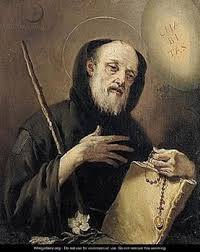
A Minimal Friar and the Death of a Great Pope
This April the second- overshadowed by Holy Thursday this year – marks the memorial of Saint Francis of Paola (1417-1507), founder of the ‘Minim’ friars, so called for their humility and poverty, who interpreted the rule of Saint Francis of Assisi in quite a literal sense: extreme poverty, trust in God, foregoing all animal and[…]Continue reading→
Woven versus Seamless Garments
The reflection on the worthy project by Magie Dominic was intriguing, and I thought I would offer a brief follow-up commentary. The garment woven out of many pieces is a poignant symbol, even a ‘sacramental’, inspired by prayer and grace. We are all united in some way, and should strive for such unity, wherever we[…]Continue reading→
Bill C-9: Prelude to Persecution?
Well, it happened, as I suppose was inevitable, at least in a secular sense (from God’ perspective, there’s always hope). Bill C-9, the ironically named ‘Combatting Hate Act’ passed the House of Commons with a 186-137 vote. Look on the good side – there’s still over a hundred sane people in parliament who believe in[…]Continue reading→