

At the Heart of ESG and the UN SDGs
Marriage in the Alps
The ESG (Environmental, Social and Governance) principles and metrics are aligned with and derived from the UN Sustainable Development Goals. The UN SDGs (Sustainable Development Goals) appear superficially benevolent but “sustainable development” is a euphemism that the uninitiated and gullible would need to unscramble. Indeed, sustainable development at the UN and among its patrons, benefactors and friends is associated with population, and a prospering population has been declared as the obstacle to sustainability.
2030 Agenda
The World Summit on Sustainable Development (WSSD), also known as Rio+10 in Johannesburg in 2002 lamented that the poorest countries tend to have the highest population growth rates, and that this undermines efforts to invest in human development, reduce poverty and promote sustainable development. That is, to rid the world of poverty, we need to rid the world of the poor. Among legion regional and international conferences and meetings throughout the years, was Rio+20 in 2012 with its display of a poster showing an ailing and miserable earth personified and diagnosed as being stricken by an infection of humans. The UN Sustainable Development Summit in 2015 was convened to adopt the 2030 Agenda for Sustainable Development, which contains the SGDs and its 169 targets.
Although Malthus refrained from advocating centralised enforcement of population control, Gro Brundtland sustained her radical feminist efforts brought from Scandinavia to the world at large. She was a fervent advocate for abortion during the Rio+20 Conference on Sustainable Development (UNCSD), 2012[1], where she called on all countries to decriminalise abortion – as a “minimum” measure, declared that access to abortifacient birth control drugs and devices constituted a human right, and dissimulated on the expression “reproductive health care” denying that it is understood to include abortion[2]. She also refuted the inclusion of parental consent in the drive to provide “reproductive health care” to adolescents.
Nevertheless, Dr. Brundtland was a mere pawn in anti-man anti-family anti-marriage battle, that continues to gather steam today with woke social justice concepts at the fore, with the social justice warriors, feminists, humanists, hedonists, and LGBT activists strung and swung along to the tune of their puppet masters, with the climate, food, pandemic and energy scares thrown in to make the masses malleable, vulnerable, docile and even convinced – as if supplementation of panem et circenses was necessary to call down the new world order with its one government and post-national states – and their citizens stripped of all pretense of sovereignty.
The objective at this juncture is not to argue that the world and nature exists for man – and that man is not the problematique, the cancer[3]or the pollutant upon the Earth[4], but rather a problem solver, that man’s ingenuity is a resource, that human creativity is the world’s source of wealth. Although environmental stewardship is indubitably important, debunking lifeboat economics to discover that the earth is not a spaceship, and demonstrating that demographic growth is fully compatible with an integral and shared development[5], may not be required considering that humanity prospered at unprecedented pace in the 20th century as compared to the ages that preceded it all, while population and consumption was rapidly growing – as did the availability and accessibility of natural resources.
The present demographic crisis is in fact an ageing population and a dearth of children, with the birth control and abortion culture, destruction of family values[6] and the re-conceptualisation of woman leading not only to spiritual disaster but also to depopulation with Europe already in decline, and over 13% of homes in Japan now empty.
The history of racist eugenics and utilitarian population control prior to the secular ecologists and Social Darwinists is not treated herein. However the heritage of inter alia Herbert Spencer, William Sumner, Francis Galton, Karl Pearson, Marie Stopes[7] and Margaret Sanger[8] is enjoyed by the drivers of sustainable development today. Notably the first World Population Conference of the UN’s predecessor the League of Nations in Geneva 1927, was Sanger’s initiative. She founded Planned Parenthood which is the largest abortion business in the USA, having tentacles all over the developing world via the IPPF. It is closely associated with the UNFPA – the UN’s Population Fund, and is associated with the foetal body parts industry[9].
The present objective is to substantiate the nature of “sustainable development” as it is contained in the UN SDGs which cohabit with ESGs, and to preface the complex motivations that impel it, so that we may better understand the ESG surge, and explore its current and potential impact on institutions and individuals. Fundamental to the idea of sustainable development as promoted by the organs of the United Nations, and associated bodies such as the World Economic Forum, the European Union, the Club of Rome[10], funded by governments, corporations, international banks and reputed family Foundations, and as manifested in the UN Sustainable Development Goals, which are embedded in the UN Global Compact, sustainability reporting frameworks such as the GRI, and ultimately the ESGs – is a misanthropic view of man.
Your Eyes Shall Be Opened
This perspective of humanity in the eyes of the childs and fellers who would rule the world, and their minions, provides a key to interpreting the endeavours and the literature through which an illusional magnanimity is proclaimed – and the pervasive prevalence of preponderant words such as diversity[11], inclusivity, gender and equity is indicative and decisive. The aspiration for world government and the enabling institutionalisation of the right to apparently benevolent dictatorship may likewise cloak the desire for tyrannical control over mind, matter and soul through beguiling strategies whereby the victims willingly co-operate. Assent and justification is received from headless chickens collectively in their pecking order, already conditioned into susceptibility through the fear of extant and impending apocalyptic catastrophe – whether the fever or shivers of contagion or the telluric inferno or deluge, and benumbed in narcissistic and nihilistic hedonism into their own diminution, not just societally and demographically, but also culturally through the rejection of their divinely gifted dignity, and the good of chastity, marriage and the natural family.
A Fugitive and a Vagabond
The purported jurisdiction of the UN SDGs encompasses every resource and socio-economic activity – the waters and the land, the beasts and the fowls, the herbs and the fruits and the work of our hands; it embraces nutrition, education, healthcare, administration and infrastructure. Under-lock and un-deciphered, the UN SGGs appear good, fair and delightful and the ESGs read like common sense corporate governance and responsible enterprise stewardship enshrouding in darkness the age old manoeuvering towards a proud duplicitous and God-loathing plutopia, which a few men may subdue.
Dominoes
Grave concern then is ipso facto due, as to already manifesting corollaries and further implications on companies, countries, communities and eventually individuals, as ESG proceeds from talk to policy, from annual reports and competitions to audited full disclosures, from voluntary selective scoring to standardised mandated performance metrics. The question is arisen as to whether ruin impends consequent to compliance – as well as to non-compliance, and the creed and the deities of ESG are due our studied attention prior to submission of homage.
Sources:
[1] https://eppc.org/publication/what-really-happened-at-cairo/ (15 mar)
[2] https://www.washingtonpost.com/archive/politics/1994/09/06/explosive-abortion-issue-refueled-at-forum/40cb5981-d16d-4760-805f-9a715dff8542/ (13 mar)
[3] https://www.churchmilitant.shop/Research-Material/04-Global_Warming/resources/143.pdf (16 mar)
[4] https://www.vatican.va/content/john-paul-ii/en/encyclicals/documents/hf_jp-ii_enc_01051991_centesimus-annus.html
[5] Compendium of the Social Doctrine of the Church (vatican.va); Caritas in veritate (June 29, 2009) | BENEDICT XVI (vatican.va)
[6] https://www.linkedin.com/posts/dr7eshan_rights-advocates-come-forward-to-support-activity-7056919054145503232-GBfU?utm_source=share&utm_medium=member_desktop
[7] https://www.hli.org/resources/who-was-marie-stopes/ (30 mar); https://www.influencewatch.org/non-profit/population-services-international/ (30 mar)
[8] https://www.americamagazine.org/politics-society/2020/07/28/margaret-sangers-extreme-brand-eugenics (30 mar)
[9] https://www.washingtonexaminer.com/opinion/op-eds/planned-parenthood-was-just-forced-to-admit-in-court-to-harvesting-aborted-fetal-parts (30 mar)
[10] The Club of Rome is renowned for its 1972 report I limiti dello sviluppo that identified the dangers to humanity of the population explosion, scarcity of food and resources, and an energy crisis. They responded to the Brundtland report in 1987 by drafting the Earth Charter, Mikhail Gorbachev being a protagonist who failed to learn a lesson from the recent history of his own country. Their second report in 1974 is famed for referring to humanity as a cancer upon the earth: “The World Has Cancer and The Cancer Is Man”. In 1991 it concluded that the enemy of humanity is humanity itself.
[11] https://open.substack.com/pub/dreshandias/p/diversity?r=1qgpbn&utm_campaign=post&utm_medium=web

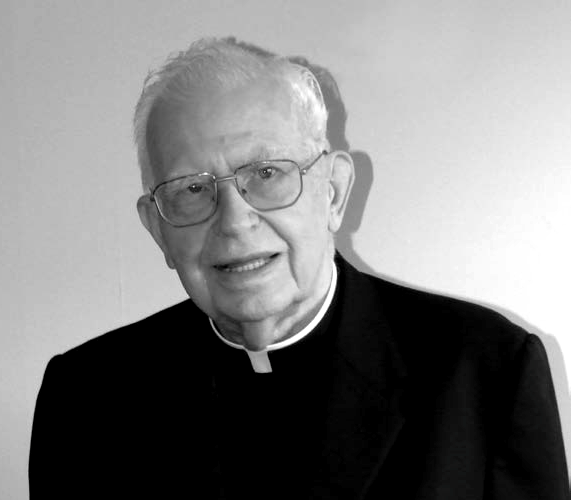
Remembering Father Alphonse de Valk
(Today marks the sixth anniversary of the death of Father Alphonse de Valk, C.S.B., a faithful, courageous and indefatigable Basilian priest, pro-life-and-family apostle, and the founder of Catholic Insight magazine. Here is what we wrote those on his entering into eternity five years ago, as we continue to remember him in our prayers and thoughts)[…]Continue reading→

Divine Mercy Sunday – An Echo of Every Mass
Reach out your hand and put it in my side. Do not doubt but believe’… ‘My Lord and my God!’ (Jn. 20:18)). Today is Divine Mercy Sunday, and as we celebrate the end of the Easter Octave, we contemplate the wounded side of our Saviour, the Church’s source of life. On Good Friday in the[…]Continue reading→

Saint Stanislaus of Szczepanów
We celebrate Saint Stanislaus today (+ April 11, 1079), in light of this Easter Octave, a bishop and martyr who accepted the episcopacy only at the direct order of Pope Alexander II. He proved a wise and courageous leader of his flock, put to death by his own king, Boleslaus, for rebuking the monarch’s ‘immoral[…]Continue reading→
First Holy Communion: Sermon from May 16, 1943
Here is a sermon from the good old days by +Rev. Msgr. Vincent Nicholas Foy (August 14, 1915 – March 13, 2017), from 1943. Readers may recall that Pope Saint Pius X, by the decree Quam Singulari in 1910, lowered the customary age of reception of Holy Communion – after the rigours of the plague[…]Continue reading→

In the Glorious Light of Easter, Alleluia!
Set your minds on things that are above, not on things that are on earth, for you have died, and your life is hidden with Christ in God. When Christ who is your life is revealed, then you also will be revealed with him in glory (Col. 3:3-4). The Resurrection of Our Lord and Saviour[…]Continue reading→

An Ancient Homily for Holy Saturday
The time between Good Friday and Easter Sunday is one of waiting, in silence, as the world wonders – anticipates – what will happen, after the death of Christ. We re-live this time each year in the anamnesis of our liturgy, and in turn look forward to the glorious re-creation of all things at the[…]Continue reading→
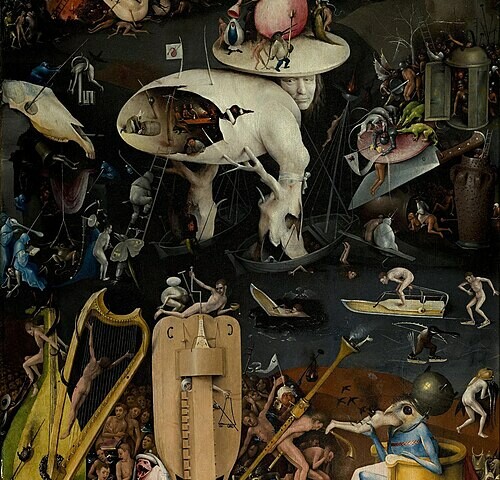
Europe’s Long Descent
(As we meditate on this day on Christ’s burial, and His descent into hell, it is fitting to ponder here with contributor Peter Marcus how the world seems to be heading there as well. The difference is that, although God cannot ‘redeem’ hell, nor those therein, He can and did redeem the world. There is[…]Continue reading→
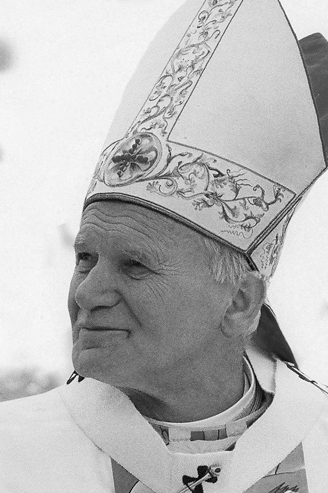
Pope Saint John Paul II’s First Good Friday Homily
ADDRESS OF HIS HOLINESS JOHN PAUL II AT THE CONCLUSION OF THE STATIONS OF THE CROSS AT THE COLOSSEUM Good Friday, 13 April 1979 When we make the Way of the Cross from one station to the next, in spirit we are always at the spot wherethis journey had its “historical” place: where it[…]Continue reading→
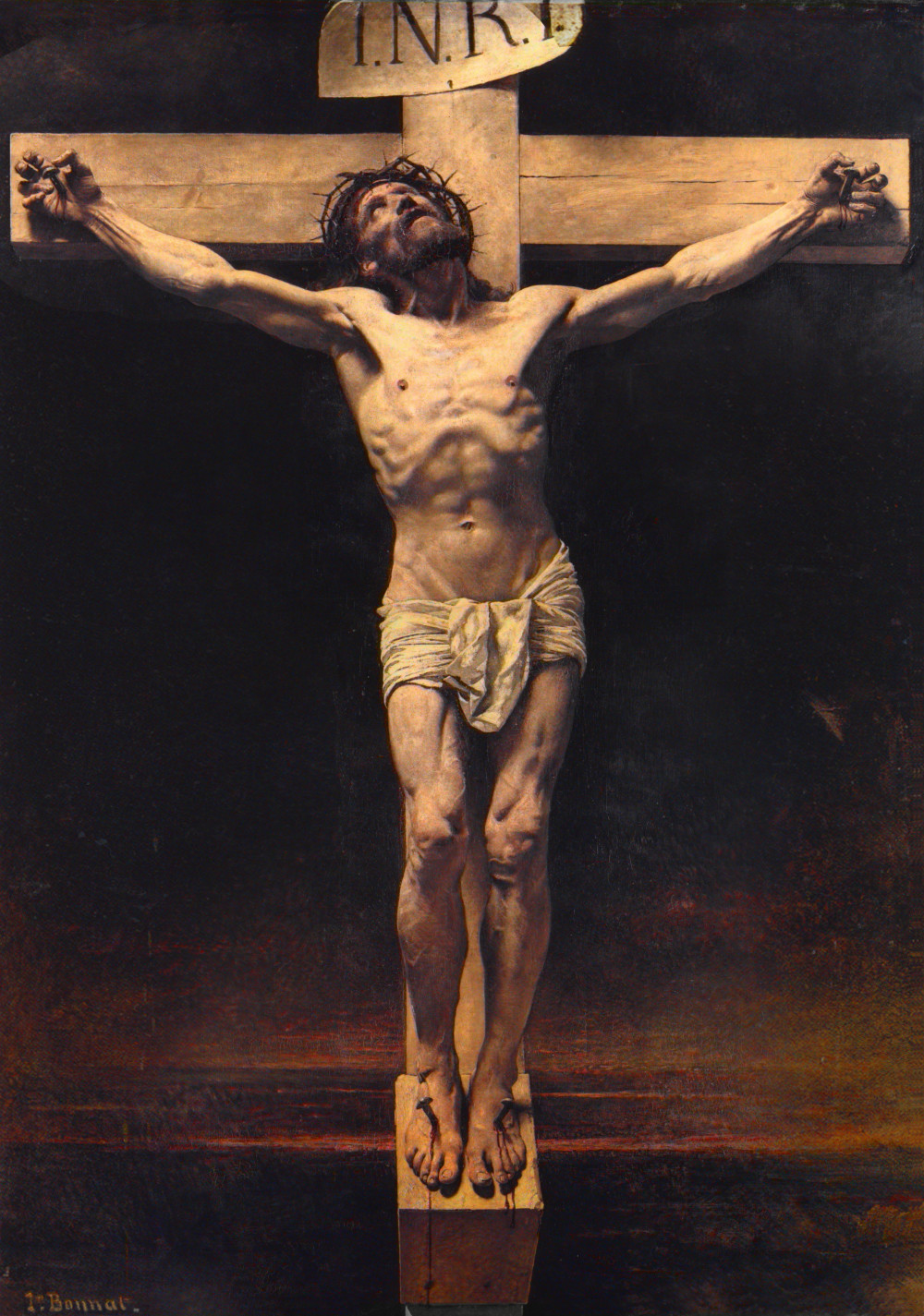
A Meditation for Good Friday: How To Undo the Effects of Sin?
Cardinal Newman, now Saint John Henry Newman, was a towering figure of nineteenth-century Catholicism who is almost universally admired. I say “almost” because not everyone likes him. I knew a priest once, Arthur Caulkins, who has become disenchanted with Newman. As an undergraduate Arthur had been enamoured of Newman, and this interest continued when he[…]Continue reading→
Pope Benedict’s Last Holy Thursday Homily
MASS OF THE LORD’S SUPPER HOMILY OF HIS HOLINESS BENEDICT XVI Basilica of St John Lateran Holy Thursday, 5 April 2012 Photo Gallery (Video) Dear Brothers and Sisters! Holy Thursday is not only the day of the institution of the Most Holy Eucharist, whose splendour bathes all else and in some ways draws it to[…]Continue reading→