
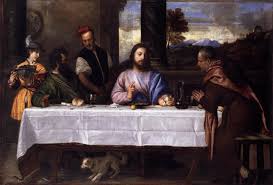
Holy Thursday: The Institution of the Holy Eucharist
The most vital characteristic of our Catholic faith is not its external organization that has of late, thanks to Pope Francis, attracted the attention of the media. What makes us flourish, if flourish we do, is our vivid consciousness of the presence of Jesus with us in the Eucharist, what we call “the Real Presence.” It has been the subject of countless sermons and commentaries over the centuries simply because it is central to the faith. It so functions because it continues in a wonderful way what began with the coming of the Son of God in the flesh. There we find together the transcendent and the immanent, the supernatural and natural, the spiritual and the physical. For to encounter the man Jesus was truly to encounter God. Similarly, in the Eucharist we have the physical presence of Jesus—“This is my body”—that ensures that he is fully present as the God-man. There’s a further grandeur to the Blessed Sacrament that Jesus enunciated in his farewell discourse at the Last Supper: his own presence within us when we receive Communion ensures that of the Father as well, for Jesus said, “If a man loves me, he will keep my word, and my Father will love him, and we will come to him and make our home with him.”[1] And with the Father comes the Holy Spirit: “I will pray the Father, and he will give you another Counselor, to be with you forever.”[2] You see, then, that an immediate consequence of our recognition of the real presence is an awareness of the dignity of the Christian as the dwelling place of the Holy Trinity.
Scripture uses several metaphors to express these sublime tenets of our faith: the vine and the branches in Saint John, the Pauline doctrine of the (mystical) body, Saint Peter’s description of the temple made of living stones. The first two—the vine and its branches or the body and its parts—are universal, in that they refer to what Saint Paul termed the whole Christ, head and members.[3] The image of the temple—the “spiritual house” of 1 Peter 2.5—however, can signify the individual believer as well as the Church as a whole, for Saint Paul states categorically, “Do you not know that you are God’s temple and that God’s Spirit dwells in you?”[4]
Thus, what is true for me in this respect holds also for my fellow Catholics. That’s why, I believe, we Catholics are always trying to discover whether or not someone new we meet is a Catholic, an annoying practice for the uninitiated as we more-or-less discretely enquire about his religious affiliation. If he turns out to be an agnostic or an atheist, I sigh, “How boring.” But if it should be another Catholic I say to myself, “He has received the Eucharist. He has been sanctified by the presence of God more wonderfully than was the temple of Solomon.” And I feel an impulse to kneel as Saint John did when he was visited by an angel in the course of those revelations that form the contents of the Apocalypse. For I am in the presence, not of a bag of bones but of a creature who may one day shine with the light of eternal glory. Often, alas, today, I find myself encountering former Catholics who have declined perhaps into some sect or even into disbelief. What grief to be in the presence of the temple in ruins. And thus, I begin to understand why devout Jews gather at the wailing wall in Jerusalem, the only section of the ancient temple that remains. What was once the very habitation of the triune God has become, in the words of the prophet Jeremiah, “the haunt of jackals”[5] What tragedy it is to contemplate the indelible marks of baptism and confirmation on the soul of someone who has been unfaithful to the obligations and dismissive of the privileges they represent.
The judgmental vehemence of these sentiments should give me pause, reminding me of our Lord’s words: “Judge not and you will not be judged.” How ready I am to condemn another person, and how ready to exonerate myself. Jane Austen knew as much: “Like many other great moralists and preachers, she had been eloquent on a point in which her own conduct would ill bear examination.”[6] And, perhaps more suitably for a sermon, I may cite The Imitation of Christ:
We blame little failings in others but pass over great faults in ourselves. We are quick enough to resent what we suffer at the hands of others without considering how much others have to bear from us. Anyone who examines his own behavior carefully would not be prone to judge another’s severely.[7]
Let me put aside, therefore, consideration of the failings of other people. There is in fact only one person I am called upon to judge, and to judge harshly, and that person is myself. Truly, what use have I made of the blessings the Lord has lavished upon me in general and, specifically, in his abiding presence in the Blessed Sacrament?[8] This is Holy Thursday, and as we commemorate the institution of the Eucharist each one of us should strive to deepen his own appreciation of the inestimable gift Jesus has made of himself; for what he has begun on earth in this sacred rite will one day be completed in his everlasting kingdom if I love him and act upon his word.
Addendum
Let me offer here an examination of conscience from The Imitation of Christ:
Lament and be sorry, because you are still; so sensual and worldly
so unmortified in your passions,
so full of the itch of concupiscence, . . .
so reckless in your physical indulgence,
so often entangled in vain fancies,
so inclined to external things and so negligent of the internal;
so ready to laughter and so dissolute,
so unready for weeping and contrition;
so prone to ease and indulgence of the flesh,
so dull in zeal and fervour;
so curious to hear novelties,
so loath to be humble and despised;
so desirous to own things and so grudging in giving and so close in keeping;
so inconsiderate in speaking and so reluctant to keep silence;
so disorderly in behavior and so inconsiderate in action;
so eager after food,
so deaf towards the Word of God;
so eager to rest and so slow to labour;
so keen for gossip,
so sleepy at religious services and so eager for them to end and so inattentive during them and so negligent in being faithful to them,
so lukewarm in receiving Holy Communion;
so quickly distracted and so seldom recollected;
so quickly moved to anger and so readily displeased at others and so prone to judging and so severe at reproving;
so joyful in prosperity and so weak in adversity;
so frequent in making good resolutions and so ineffective in putting them into effect.[9]
[1] Jn 14.23.
[2] Jn 15.26.
[3] Eph 4.16-17.
[4] 1 Cor 3.16.
[5] Jer 51.37.
[6] Jane Austen, Persuasion, ch. 11.
[7] Thomas à Kempis, The Imitation of Christ, II.5.
[8] See Addendum, below.
[9] Cf. Thomas à Kempis, The Imitation of Christ, IV.7.

Saint Kateri , Canada’s Protectress
This was the title given to Saint Kateri Tekakwitha, by Pope Benedict XVI, when he canonized her on October 28th, 2012, along with six others, in Saint Peter’ Square (she had been beatified by Pope John Paul II back in 1980). With Saint Joseph as our protector, along with the Canadian martyrs, we seem to[…]Continue reading→

Remembering Father Alphonse de Valk
(Today marks the sixth anniversary of the death of Father Alphonse de Valk, C.S.B., a faithful, courageous and indefatigable Basilian priest, pro-life-and-family apostle, and the founder of Catholic Insight magazine. Here is what we wrote those on his entering into eternity five years ago, as we continue to remember him in our prayers and thoughts)[…]Continue reading→

My Name is Bernadette
April 16th is a propitious day, for besides the anniversary of Father de Valk’s death, who founded Catholic Insight in its print form decades ago, and the commemoration of the ‘two Benedicts’, mentioned in accompanying posts, today we also recall Saint Bernadette Soubirous, the young visionary to whom the Virgin Mary appeared numerous times at[…]Continue reading→

Canonizing Sister Faustina and Divine Mercy
HOMILY OF THE HOLY FATHER MASS IN ST PETER’S SQUARE FOR THE CANONIZATION OF SR MARY FAUSTINA KOWALSKA Sunday, 30 April 2000 1. “Confitemini Domino quoniam bonus, quoniam in saeculum misericordia eius”; “Give thanks to the Lord for he is good; his steadfast love endures for ever” (Ps 118: 1). So the Church sings on the Octave of[…]Continue reading→

Divine Mercy Sunday – An Echo of Every Mass
Reach out your hand and put it in my side. Do not doubt but believe’… ‘My Lord and my God!’ (Jn. 20:18)). Today is Divine Mercy Sunday, and as we celebrate the end of the Easter Octave, we contemplate the wounded side of our Saviour, the Church’s source of life. On Good Friday in the[…]Continue reading→

Saint Stanislaus of Szczepanów
We celebrate Saint Stanislaus today (+ April 11, 1079), in light of this Easter Octave, a bishop and martyr who accepted the episcopacy only at the direct order of Pope Alexander II. He proved a wise and courageous leader of his flock, put to death by his own king, Boleslaus, for rebuking the monarch’s ‘immoral[…]Continue reading→
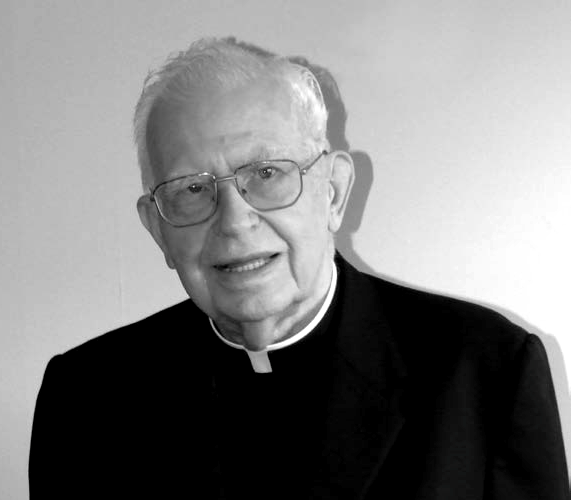
First Holy Communion: Sermon from May 16, 1943
Here is a sermon from the good old days by +Rev. Msgr. Vincent Nicholas Foy (August 14, 1915 – March 13, 2017), from 1943. Readers may recall that Pope Saint Pius X, by the decree Quam Singulari in 1910, lowered the customary age of reception of Holy Communion – after the rigours of the plague[…]Continue reading→
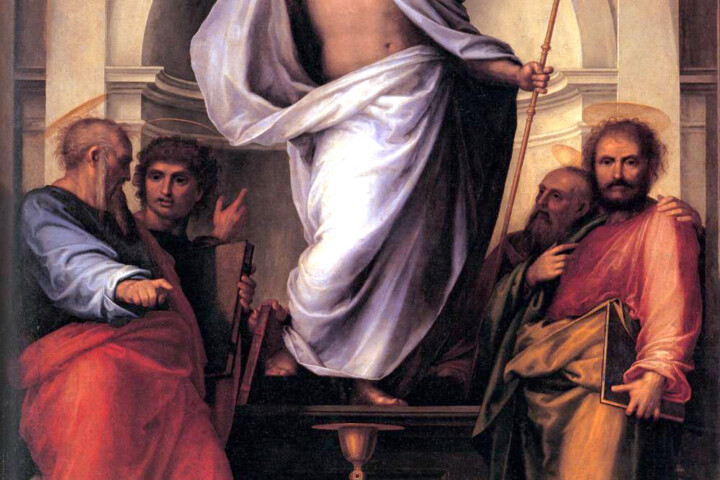
In the Glorious Light of Easter, Alleluia!
Set your minds on things that are above, not on things that are on earth, for you have died, and your life is hidden with Christ in God. When Christ who is your life is revealed, then you also will be revealed with him in glory (Col. 3:3-4). The Resurrection of Our Lord and Saviour[…]Continue reading→
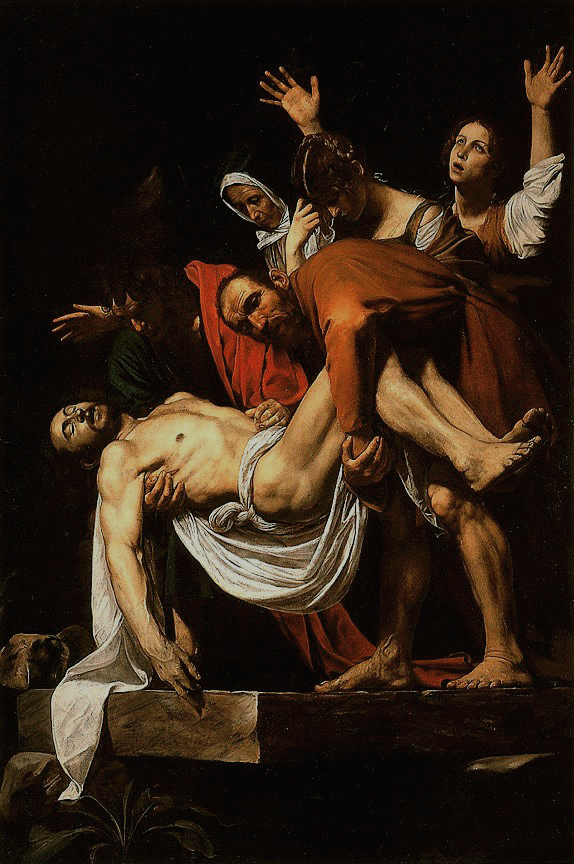
An Ancient Homily for Holy Saturday
The time between Good Friday and Easter Sunday is one of waiting, in silence, as the world wonders – anticipates – what will happen, after the death of Christ. We re-live this time each year in the anamnesis of our liturgy, and in turn look forward to the glorious re-creation of all things at the[…]Continue reading→
Europe’s Long Descent
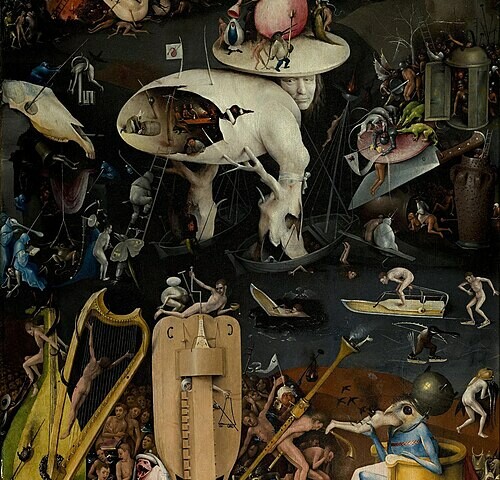
(As we meditate on this day on Christ’s burial, and His descent into hell, it is fitting to ponder here with contributor Peter Marcus how the world seems to be heading there as well. The difference is that, although God cannot ‘redeem’ hell, nor those therein, He can and did redeem the world. There is[…]Continue reading→