
ESG – Environmental, Social and Governance – A Gift from the Greeks?
Cold Winds
ESG is the fashionable kid on the corporate governance block, and the cause of plenty of buzz among thought, political and business leaders. Corporations are currently careening and lurching ahead – even bending backwards, in their efforts to assent to its incursion, implement its criteria, comply with its demands, imbibe its philosophy, and signal their conformity.
It is remarkable how vigorously ESG is being propelled and likewise succumbed to, and it may be worth trying to understand why at least the former might be. One could wonder whether its principles and manifestations as multifariously understood and interpreted by boards, CEOs, accounting auditing and advisory firms, eponymous consultants, and HR departments accurately and holistically represent its objectives. When its necessities are duly implemented, and eventually and inevitably made evident in how its outcomes are measured – and the consequences thereof borne, the question would arise as to whether its manifold ultimata are actually benevolent or beneficial, and whether the cost of submission dispossessive.
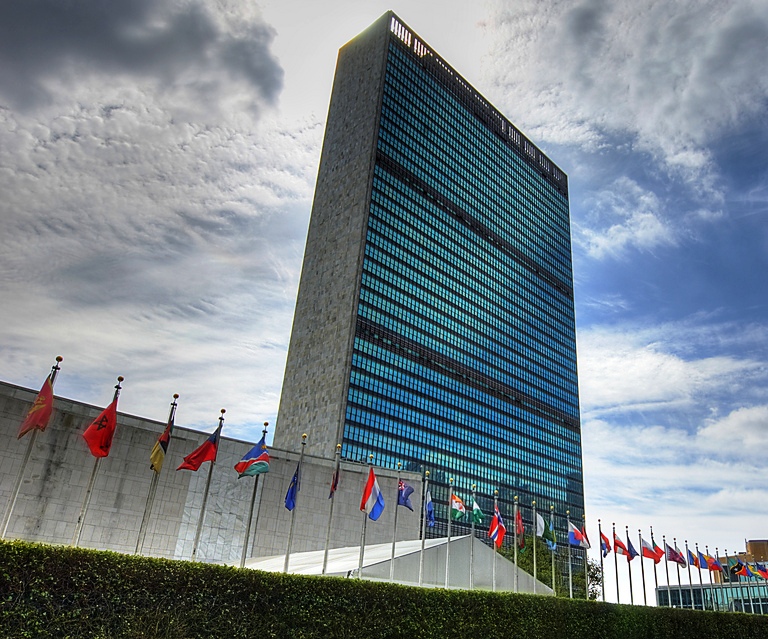
Institutional leaders dazzled by the glamour of ESG emanating from global institutions such as the World Economic Forum with their much publicised meetings at the primatial see of Davos, and the United Nations Organisation with its sparkling veneer of respectability – and riding its thrilling wave of ecumenical intimacies and apparent altruism, need to reflect on what distinguishes it from common sense governance, corporate or otherwise, and prudent responsible environmental and social imperatives.
Perhaps unknowingly, we are at a point of tipping over in toto the philosophy of commerce, and surrendering with shining eyes and smiling face to a mercurial, inconsistent, unreasonable modern manifestation of misanthropic socialism that seeks to undermine the very fabric of government and society.
Origin of an Acronym
The expression “Environmental, Social and Governance” is usually associated with its criteria, metrics, frameworks, and more lucratively with its risk assessments, analysts, consultants, rating agencies, investors – or often simply its “issues”. It emerged into prominence with the launch on 27th April 2006 at the New York Stock Exchange[1], of the six UN Principles of Responsible Investment (UN PRI)[2]. The formulation of these principles was initiated by UN Secretary-General Kofi Annan. The basis was provided by the legal framework proposed in the Freshfields Report of 2005[3] commissioned by the UNEP Finance Initiative[4], and the recommendations in the “Who Cares Wins” report of 2004[5] sponsored by the UN Global Compact[6] and the Swiss Government – both projects initiated for the purpose of providing such a basis. The 2004 report is frequently credited with the origin of the expression[7].
The UN PRIs were proposed as a framework for investors for integrating ESG criteria into corporate decision-making, ownership practices and performance evaluations[8]. Annan admitted that ““these Principles grew out of the understanding that while finance fuels the global economy, investment decision-making does not sufficiently reflect environmental, social and corporate governance considerations – or put another way, the tenets of sustainable development”. And this should trigger the ringing of bells, if not the blaring of sirens, for at least three reasons.
The Global Reporting Initiative (GRI), established in 1997, to provide accountability frameworks for companies to display responsible environmental business practices, began to adopt ESG shortly afterwards in 2009, and adopted the UN Sustainable Development Goals (SDG) framework in 2015, and consolidated its relationship with the UN Global Compact in 2017[9].
The UN Global Compact (UNGC), the master interface between the United Nations and Business whose primary focus is enabling and driving the achievement of the UN Sustainable Development Goals, since the expiration of its ideological predecessor, the UN Millennium Development Goals (MDG), officially incorporates ESG scoring in all firm-level investments and decision-making processes[10] and uses ESG to track companies progress on the UN’s SDGs[11].
Stakeholder-ism
On 19th August 2019, The Business Roundtable (TBR)[12] which is comprised of 181 of the most powerful corporate executives in the US, announced that the purpose of a corporation is to “promote an economy that serves all Americans” and declared their commitment to deliver value to all stakeholders. Then in the December 2019 World Economic Forum (WEF) summit in Davos a new and “universal” purpose for all companies was declared, that would be to “engage all of its stakeholders in shared and sustained value creation”, and to “harmonise the divergent interests” of all stakeholders “through a shared commitment to policies and decisions”[13].
The adoption of this philosophy of so-called “stakeholder capitalism” as the universal purpose of business, where consent and compliance with both financial and with often ambiguous, controversial, irrelevant, subjective non-financial requirements are demanded, during what has been envisioned as the fourth industrial revolution that would enable the eerie “sustainable” and ”equitable” great reset into the new world order of global governance called for during the fear and uncertainty of the tragic CoViD saga unfolding at the time – will have as its metrics ESG.
The International Business Council (IBC) of the WEF, composed of multinational business and consequently governmental and academic leaders, once called “new champions”, declared in 2017 its initiative to align company corporate values and strategies to the UN SDGs[14]. together with the big four accounting firms Deloitte (governance), PwC (planet), KPMG (people) and Ernst & Young (prosperity) are driving the standardisation and adoption of ESG metrics[15], and these are structured to align with the UN’s 2030 Agenda for Sustainable Development, as manifested in its 17 SDGs and 169 metrics[16].
The International Sustainability Standards Board (ISSB), which oversees the Sustainability Accounting Standards Board (SASB), and is governed by the International Financial Reporting Standards (IFRS) Foundation is directing the consolidation of all existing ESG models in order to produce a unitary ESG standard by June 2023. Countries are also sustainability-scored with ESG. China is ahead in rolling out its social credit system for individuals. Keeping trust is glorious, and we will have nothing and be happy.
Global Governance
There is much complexity above and beyond the description and explanation provided herein with respect to the forces that move the interlinking of institutions and interrelationships and the plenitude of activity. Apart from the demise of shareholder primacy in the context of business and subsidiarity in general, it is evident that imposition of ESG compels overarching adoption of its presuppositions, values and culture irrespective of individual, corporate and national sovereignty. Furthermore, it seems credible the intimate relationship between the UN’s rosy term “sustainable development” and ESG, in the face of its evident proliferation, burgeoning and growing dominance in corporate, social, political circles and elsewhere. It is imperative to discover what ‘sustainability’ means at the UN and among its associates, and to examine and tackle the most flagrant and rank aspects of the ESG philosophy, motivations, roots, present demands and future prospects – not only for those who willingly embrace it, but also for those who seek to remain as their partners in the interconnected commercial value chains.
[1] https://press.un.org/en/2006/sg2111.doc.htm (accessed 8th March 2023)
[2] https://www.unpri.org/about-us/about-the-pri (22 mar)
[3] https://www.unepfi.org/fileadmin/documents/freshfields_legal_resp_20051123.pdf (20 mar)
[4] The UNEP was established in 1972 by Maurice Strong notorious inter alia for his proposal of requiring reproductive licenses to have babies, in the wake of the Stockholm conference; the UNEP FI was established in May 1992 before the start of Rio 1992, and exists to mobilise private sector finance for “sustainable development”.
[5] https://www.ifc.org/wps/wcm/connect/de954acc-504f-4140-91dc-d46cf063b1ec/WhoCaresWins_2004.pdf?MOD=AJPERES&CVID=jqeE.mD (22 mar)
[6] https://unglobalcompact.org/take-action/action/responsible-investment (accessed 8th March 2023)
[7] https://www.forbes.com/sites/georgkell/2018/07/11/the-remarkable-rise-of-esg/?sh=4157e8b71695 (9 mar)
[8] https://www.forbes.com/sites/betsyatkins/2020/06/08/demystifying-esgits-history–current-status/?sh=f0c4ad52cdd3 (8 mar)
[9] https://www.globalreporting.org/about-gri/mission-history/ (10 mar)
[10] https://heartland.org/publications/understanding-environmental-social-and-governance-esg-metrics-a-basic-primer/ (8 mar)
[11]https://unglobalcompact.org/participation/join/commitment (9 mar); https://unglobalcompact.org/what-is-gc/our-work/sdg-integration (9 mar) https://sustainabledevelopment.un.org/content/documents/8965Global%20Compact.pdf (9 mar)
[12] https://purpose.businessroundtable.org (21 mar)
[13] https://www.weforum.org/agenda/2019/12/davos-manifesto-2020-the-universal-purpose-of-a-company-in-the-fourth-industrial-revolution/ (22 mar)
[14] https://corpgov.law.harvard.edu/2020/10/17/key-takeaways-from-the-new-wef-ibc-esg-disclosure-framework/ (accessed 21st March)
[15] https://www3.weforum.org/docs/WEF_IBC_Measuring_Stakeholder_Capitalism_Report_2020.pdf (10 mar)
[16] https://www.weforum.org/stakeholdercapitalism/our-metrics (10 mar); https://www.globalreporting.org/public-policy-partnerships/sustainable-development/integrating-sdgs-into-sustainability-reporting/ (10 mar)

Saint Kateri , Canada’s Protectress
This was the title given to Saint Kateri Tekakwitha, by Pope Benedict XVI, when he canonized her on October 28th, 2012, along with six others, in Saint Peter’ Square (she had been beatified by Pope John Paul II back in 1980). With Saint Joseph as our protector, along with the Canadian martyrs, we seem to[…]Continue reading→

Remembering Father Alphonse de Valk
(Today marks the sixth anniversary of the death of Father Alphonse de Valk, C.S.B., a faithful, courageous and indefatigable Basilian priest, pro-life-and-family apostle, and the founder of Catholic Insight magazine. Here is what we wrote those on his entering into eternity five years ago, as we continue to remember him in our prayers and thoughts)[…]Continue reading→

My Name is Bernadette
April 16th is a propitious day, for besides the anniversary of Father de Valk’s death, who founded Catholic Insight in its print form decades ago, and the commemoration of the ‘two Benedicts’, mentioned in accompanying posts, today we also recall Saint Bernadette Soubirous, the young visionary to whom the Virgin Mary appeared numerous times at[…]Continue reading→

Canonizing Sister Faustina and Divine Mercy
HOMILY OF THE HOLY FATHER MASS IN ST PETER’S SQUARE FOR THE CANONIZATION OF SR MARY FAUSTINA KOWALSKA Sunday, 30 April 2000 1. “Confitemini Domino quoniam bonus, quoniam in saeculum misericordia eius”; “Give thanks to the Lord for he is good; his steadfast love endures for ever” (Ps 118: 1). So the Church sings on the Octave of[…]Continue reading→

Divine Mercy Sunday – An Echo of Every Mass
Reach out your hand and put it in my side. Do not doubt but believe’… ‘My Lord and my God!’ (Jn. 20:18)). Today is Divine Mercy Sunday, and as we celebrate the end of the Easter Octave, we contemplate the wounded side of our Saviour, the Church’s source of life. On Good Friday in the[…]Continue reading→

Saint Stanislaus of Szczepanów
We celebrate Saint Stanislaus today (+ April 11, 1079), in light of this Easter Octave, a bishop and martyr who accepted the episcopacy only at the direct order of Pope Alexander II. He proved a wise and courageous leader of his flock, put to death by his own king, Boleslaus, for rebuking the monarch’s ‘immoral[…]Continue reading→

First Holy Communion: Sermon from May 16, 1943
Here is a sermon from the good old days by +Rev. Msgr. Vincent Nicholas Foy (August 14, 1915 – March 13, 2017), from 1943. Readers may recall that Pope Saint Pius X, by the decree Quam Singulari in 1910, lowered the customary age of reception of Holy Communion – after the rigours of the plague[…]Continue reading→

In the Glorious Light of Easter, Alleluia!
Set your minds on things that are above, not on things that are on earth, for you have died, and your life is hidden with Christ in God. When Christ who is your life is revealed, then you also will be revealed with him in glory (Col. 3:3-4). The Resurrection of Our Lord and Saviour[…]Continue reading→

An Ancient Homily for Holy Saturday
The time between Good Friday and Easter Sunday is one of waiting, in silence, as the world wonders – anticipates – what will happen, after the death of Christ. We re-live this time each year in the anamnesis of our liturgy, and in turn look forward to the glorious re-creation of all things at the[…]Continue reading→

Europe’s Long Descent
(As we meditate on this day on Christ’s burial, and His descent into hell, it is fitting to ponder here with contributor Peter Marcus how the world seems to be heading there as well. The difference is that, although God cannot ‘redeem’ hell, nor those therein, He can and did redeem the world. There is[…]Continue reading→