
Searching and Confessing: Augustine of Hippo’s Quench for Wisdom and Truth
Here in Malta, on January 13th, there will be the launching of a book about Saint Augustine of Hippo named: Searching and Confessing. Augustine of Hippo’s Quench for Wisdom and Truth. Malta: Augustinian Province, 2023 (ISBN: 978-9918-0-0430-0).
Searching and Confessing is a recent publication of the Augustinian Professor Fr Salvino Caruana. The book of 255 pages consists of five main chapters on an extremely detailed and well documented elaboration of various themes from Augustine of Hippo’s oeuvre. In the opening chapter the author delineates Augustine’s journey, and inner travail, until he was conquered by the grace of Christ. Thanks to the insistence, and incessant prayer, of his saintly mother Monica to accompany her to the basilica where the saintly Bishop of Milan, Ambrose, preached. Although he was never able to meet the saint much to Augustine’s dismay, he was, however, convinced to abandon the Manicheans and embrace the Catholic faith in which Ambrose baptized him on the 24th of April 387.
All along this New Way of life, Augustine acknowledges a series of conversions, which he describes as confessions too. A confessio peccatorum, a confession of sins; a confessio humilitatis, a confessions of humility; a confessio infirmitatis, namely, a confession of weakness, infirmity; and a confessio laudis, a confession of praise of God, his Maker and Creator. All four kinds of conversion he marvellously described in the very first paragraph of the first chapter of The Confessions, a masterpiece of Early Christian literature. Augustine eventually confesses: Give what You command, and command what You will (10,29,40).
According to Fr Salvino, there is yet another, a fifth kind of conversion, namely, a confessio pastoralis, the unquenchable desire, and power of words, with which the Saint strived to carry along and convert his hearers in Hippo Regius. In one particular sermon, the Bishop confessed: I will not save myself without you (17,12). Augustine contrasted four major streams of false doctrine, namely, that of the Manicheans regarding the True Faith; that of the Donatists regarding the True Church of Christ; that of the Pelagians with regards to spiritual endeavours and the Grace of Christ; and, finally, that of the Semipelagians, regarding the merits of the good actions (spiritual) of some Monks of the monastery of Hadrumetum.
Fr. Salvino then proves how mistaken one would be should one consider Augustine’s whole pastoral activity in Hippo as primarily directed towards the spiritual well-being of the Catholic population of the saint’s diocese. In the fourth chapter the author considers in detail Augustine’s relentless and unflinching efforts in order to alleviate the severe consequences of a number of social injustices to which his community in Hippo Regius was daily subjected by dishonest and wicked local political administrators. He set up the renowned matricula pauperum (Letter 20* (Divjak) 2), from where all kinds of goods and daily needs were distributed freely to the poor. Augustine also saw to the setting up of a sort of hospital, known as a Xenodochium (Sermon 10), where everyone could receive medical care and cure gratis. This, Fr Caruana, describes as another form of confession, namely, a confessio caritatis.
The apex of Augustine’s spiritual march the author considers in the fifth and final chapter. In it Fr Caruana describes in detail the Person and work of Christ, the Christus Medicus, the Divine Doctor. Augustine understood very well the necessity of cure in the body’s unending struggle for survival. Christ had seen to this in His mission for the Jews first, and then for all His contemporaries. He cured miraculously all the sick that were brought to Him, and in a few cases, raised them back to life from the clutches of death. According to Augustine, Christ was thus not just the divine Doctor but also the divine Medicine that cures all. He alone, and no other medical doctor, was able to cure all kinds of ailments, as He alone knew from which stuff man had been created and He alone therefore knew best where to place His curing hands on our sick bodies. He was the Creator and Saviour of all, and knows also man’s weaknesses and sins, and whom he considered as the poor traveler who fell victim of some highway robbers.
Augustine understood very well the depth of the wound which the evil one had caused, namely pride. It was in order to heal us from this wound that Christ had come as our Doctor, unique and humble. The Sacred Scriptures define Christ as the heavenly sent Medicine to cure man’s pride and help him on the way towards health; all this is revealed and considered, according to Augustine, in the account of the Eight Beatitudes according to Matthew.
The book Searching and Confessing. Augustine of Hippo’s Quench for Wisdom and Truth by Professor Fr Salvino Caruana OSA is another valid instrument in bringing into life the great Father of the Church Saint Augustine, which the Church as well as society badly needs his intellectual and pastoral insights.
A Closed, Unsustainable, Descending Loop
As a follow-up to my thoughts on Payette’s payout, here be a stark image of where are here in Canada. As the graph shows in, well, graphic terms, since 2025, the public sector has contributed to 95.5% of economic growth. The private sector – which funds the public sector, or is supposed to – has[…]Continue reading→
Presidential Pardon of Weronika Krawczyk
As a good news, follow-up to our story from Poland, of the persecution of Weronika Krawczyk for her pro-life views, we heard that she has been granted a presidential pardon. One might still wonder why one needs a presidential pardon for simply holding the long-held belief that the child within the womb is a child,[…]Continue reading→
Pope Leo and a Rosary for Peace
Pope Leo XIV has asked Catholics across the world to join him in a Rosary for peace today, at 18:00 Rome time (6 pm), which would be noon from where I write (EST). If you are able, whether at that time or another, and in whatever way you pray, to join in intercession with the[…]Continue reading→
Payette’s Payout
I was glancing through some headlines, and noticed a mention of Julie Payette – engineer and astronaut and sometime the Queen’s representative in Canada – which brought back vague memories. She was appointed Governor-General by Justin Trudeau in 2017. Ms. Payette resigned in 2021, amidst claims that she created a ‘toxic work environment’, with allegations[…]Continue reading→
Weronika Krawczyk and Injustice in Poland
Catholic Action in Poland has issued a formal statement appealing to the President of the Republic of Poland to pardon Weronika Krawczyk—convicted for warning other women against an abortion-performing gynaecologist. Catholic Action (AK) emphasizes that no apology is owed to a doctor who has performed numerous abortions and proposed others; furthermore, the organization considers the[…]Continue reading→
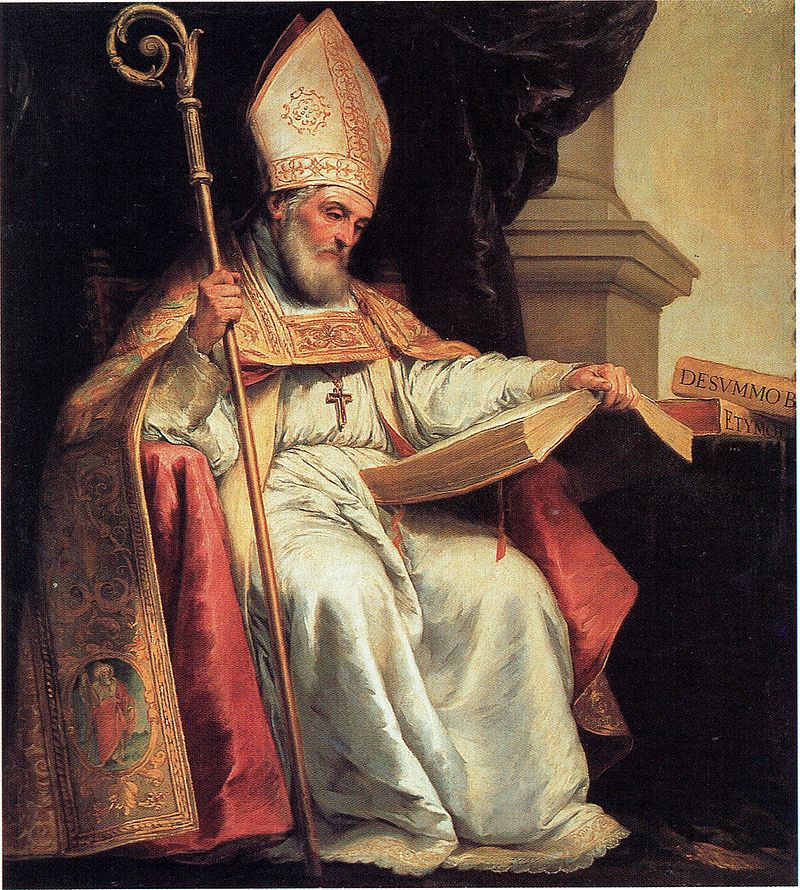
Saint Isidore of Seville, the Internet and Industriousness
Today, April 4th, muted this year by Holy Saturday, is the commemoration of Saint Isidore of Seville (560-636) a bishop and doctor of the Church during a tumultuous age, when civilization was crumbling, coming apart at its very seams, which may sound sort of au courant. Then again, the form of this world has always[…]Continue reading→
Bishop Fulton Sheen’s 58th Good Friday Reflection
Incredible, at the beginning of this reflection, that the Venerable Bishop Sheen declares that he has given nearly 58 Good Friday reflections – this, as far as I can gather, was his final one, and he seems in full vigour in mind and body. The good bishop and evangelist died in his 84th year on[…]Continue reading→
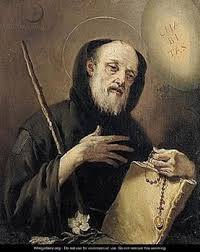
A Minimal Friar and the Death of a Great Pope
This April the second- overshadowed by Holy Thursday this year – marks the memorial of Saint Francis of Paola (1417-1507), founder of the ‘Minim’ friars, so called for their humility and poverty, who interpreted the rule of Saint Francis of Assisi in quite a literal sense: extreme poverty, trust in God, foregoing all animal and[…]Continue reading→
Woven versus Seamless Garments
The reflection on the worthy project by Magie Dominic was intriguing, and I thought I would offer a brief follow-up commentary. The garment woven out of many pieces is a poignant symbol, even a ‘sacramental’, inspired by prayer and grace. We are all united in some way, and should strive for such unity, wherever we[…]Continue reading→
Bill C-9: Prelude to Persecution?
Well, it happened, as I suppose was inevitable, at least in a secular sense (from God’ perspective, there’s always hope). Bill C-9, the ironically named ‘Combatting Hate Act’ passed the House of Commons with a 186-137 vote. Look on the good side – there’s still over a hundred sane people in parliament who believe in[…]Continue reading→