
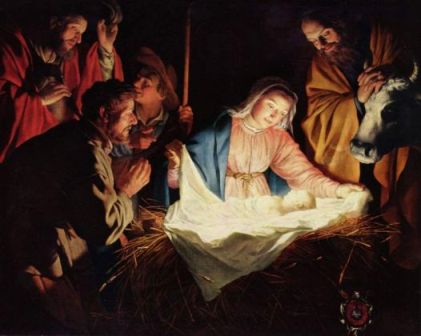
The Nativity of Our Saviour
Many fond memories emerge when I think about celebrating Christmas over the years, such as being with family, exchanging gifts, enjoying delicious food and relaxing. I am sure those reading this article have many good and beautiful memories linked to Christmas and I hope you are creating many more this this year.
We know that at the very core of our Christmas celebrations is the celebration of the Nativity of the Lord, the birth of our Savior Jesus Christ. This is wondrously described in chapter 1 of John’s Gospel account. John begins by that stating that “[i]n the beginning was the Word, and the Word was with God, and the Word was God” (v. 1). He goes on to explain that “the Word became flesh and lived among us” (v. 14). The Word who became flesh is, of course, Jesus Christ, true God and true man.
In the Acts of the Apostles, St. Paul describes the process through which Jesus came into the world. Paul states that “[t]he God of this people Israel chose our ancestors and made the people great during their stay in the land of Egypt…” (13:17). God then led the Jewish people out of Egypt and into the promised land. After this God raised up different rulers and eventually King David ruled over Israel (13:17-22).
God promised to make David’s kingdom an eternal kingdom, but this seemed uncertain since several hundred years before Jesus came to earth the kingdom of Israel split apart and became fragmented as it was conquered by other nations. But eventually Jesus of Nazareth was born. Humanly speaking, Jesus is a descendant of King David and yet he is both God and Man, divinity and humanity wedded into one Person, and Jesus established the eternal kingdom of God that had been prophesied so long ago – not an earthly kingdom but a heavenly one (2 Sam 7:8-16).1, 2
Chapter 2 of Luke provides rich details surrounding Jesus’ birth. Some shepherds had been visited by an angel who told them “to you is born this day in the city…[of Bethlehem] a Savior, who is the Messiah, the Lord” (v. 11). These shepherds hurried off to Bethlehem and found Mary and Joseph and the newborn Jesus lying in a manger. They then told others about this amazing and God-filled event they had witnessed (vv. 15-17). As Luke states, “Mary treasured all these words and pondered them in her heart…[while] [t]he shepherds returned, glorifying and praising God for all they had heard and seen…” (vv. 19-20).
It is important to note how the Blessed Virgin Mary pondered the shepherds’ words in her heart. In other words, she deeply reflected on who this baby she just gave birth to really is, and the tremendous impact He has on all of mankind.3 And now some 2000 years after the birth of Jesus, it is vital that we also deeply reflect on the impact of His coming into the world. In other words, let us consider various reasons for the Word becoming flesh.
For one, the Word became flesh to reconcile us with God.4 Sin has plagued humanity since it began, for sin leads to a gap between God and man in that God does not turn His back on us but we turn our backs on Him. Thus, God bridged that gap by becoming man and reconciling us to Himself through the forgiveness of sins. And we experience this forgiveness in a particularly powerful way through our beautiful sacrament of Confession.5
Another reason the Word became flesh is so we could better understand and appreciate in a very tangible way how much God loves us.6 Some of the Church’s saints, including St. Thomas Aquinas, have explained that God could have saved us just by declaring our sins forgiven but He chose to become one of us and to die on the Cross to demonstrate how much He loves us. As Jesus says, “[n]o one has greater love than this, to lay down one’s life for one’s friends” (Jn 15:13). Through His saving death on the Cross, Jesus gave all of humanity a magnificent lesson on what self-sacrificial love and unselfishness are all about.7
A third reason the Word became flesh is to be a model of holiness so that we can enter into a relationship with Him – a relationship that heals and frees us like no other. Jesus tells us to “[t]ake my yoke upon you, and learn from me; for I am gentle and humble in heart, and you will find rest for your souls” (Mt 11:29).8
We are wonderfully made in the image and likeness of God (Gen 1:26) and yet our culture inculcates in us the idea that fulfillment and worth are found only in earthly things such as status and achievement, material possessions, exotic vacations, and glamorous houses. But because of Jesus our worth and dignity are not linked to what we achieve, or do, or acquire; He loves us for who we are! Jesus calls us to simply love Him and share His love with others, and when we fail, we are to ask for His forgiveness, experience His mercy, and try again. What could be more liberating than this? 9
Fourth, the Word became flesh so we can partake in His divine nature. In other words, by taking on human nature Christ is united to us in such a profound way that He absorbs us into His divinity; through Christ we become more like Him, we become adopted sons and daughters of God.10
This has awesome implications for us, both in this world and in the next. In St. Paul’s letter to his co-worker Titus, the Apostle writes that when Jesus Christ “…appeared, [H]e saved us, not because of any works of righteousness that we had done, but according to his mercy…” (Titus 3:4b-5a). In other words, eternal salvation flows entirely from God’s grace, a free gift to us. It is not something that we achieve through our own merit and yet through grace we become a more Christ-like presence in this world – we become more compassionate, merciful, and courageous!11
Elaborating on the beauty and import of being a Christ-like presence in this world, St. Teresa of Avila wrote that “Christ has no body but yours, [n]o hands, no feet on earth but yours, [y]ours are the eyes with which He looks [c]ompassion on this world, [y]ours are the feet with which He walks to do good, [y]ours are the hands, with which He blesses all the world.”12
The fact that the Word became flesh has profoundly transformed all of humanity and creation. And this Word who became flesh is no mere historical event or concept – He is a Person, our Risen Savior Jesus Christ!
So, as we celebrate the Nativity of the Lord, Christmas, I pray and hope all of us grow in our relationship with the Risen Lord Jesus, who “…is the same yesterday and today and forever” (Heb 13:8). It this saving truth that is “at the heart” of our Christmas joy. It is this saving truth that prompts me to wish all those reading this to have a very blessed and merry Christmas!
Sources
1 Ignatius Catholic Study Bible: The New Testament (p. 229).
2 St. Joseph Edition of the New American Bible (p. 302).
3 Ignatius Catholic Study Bible: The New Testament (p. 110).
4 Catechism of the Catholic Church. 457
5 Brant Pitre, The Mass Readings Explained. The Nativity of the Lord -Years A, B and C (Part one), p. 17.
6 Catechism of the Catholic Church. 458.
7 Brant Pitre, Ibid.
8 Catechism of the Catholic Church. 459.
9 Source: https://www.oursundayvisitor.com/detachment-self-emptying-leads-to-holiness/ (Retrieved December 19, 2022).
10 Catechism of the Catholic Church. 460.
11 Ignatius Catholic Study Bible: The New Testament (p. 407).
12 Source: https://catholic-link.org/quotes/st-teresa-of-avila-quote-christ-has-no-body-but-yours/ (Retrieved December 19, 2022).

Remembering Father Alphonse de Valk
(Today marks the sixth anniversary of the death of Father Alphonse de Valk, C.S.B., a faithful, courageous and indefatigable Basilian priest, pro-life-and-family apostle, and the founder of Catholic Insight magazine. Here is what we wrote those on his entering into eternity five years ago, as we continue to remember him in our prayers and thoughts)[…]Continue reading→

Divine Mercy Sunday – An Echo of Every Mass
Reach out your hand and put it in my side. Do not doubt but believe’… ‘My Lord and my God!’ (Jn. 20:18)). Today is Divine Mercy Sunday, and as we celebrate the end of the Easter Octave, we contemplate the wounded side of our Saviour, the Church’s source of life. On Good Friday in the[…]Continue reading→

Saint Stanislaus of Szczepanów
We celebrate Saint Stanislaus today (+ April 11, 1079), in light of this Easter Octave, a bishop and martyr who accepted the episcopacy only at the direct order of Pope Alexander II. He proved a wise and courageous leader of his flock, put to death by his own king, Boleslaus, for rebuking the monarch’s ‘immoral[…]Continue reading→

First Holy Communion: Sermon from May 16, 1943
Here is a sermon from the good old days by +Rev. Msgr. Vincent Nicholas Foy (August 14, 1915 – March 13, 2017), from 1943. Readers may recall that Pope Saint Pius X, by the decree Quam Singulari in 1910, lowered the customary age of reception of Holy Communion – after the rigours of the plague[…]Continue reading→

In the Glorious Light of Easter, Alleluia!
Set your minds on things that are above, not on things that are on earth, for you have died, and your life is hidden with Christ in God. When Christ who is your life is revealed, then you also will be revealed with him in glory (Col. 3:3-4). The Resurrection of Our Lord and Saviour[…]Continue reading→

An Ancient Homily for Holy Saturday
The time between Good Friday and Easter Sunday is one of waiting, in silence, as the world wonders – anticipates – what will happen, after the death of Christ. We re-live this time each year in the anamnesis of our liturgy, and in turn look forward to the glorious re-creation of all things at the[…]Continue reading→

Europe’s Long Descent
(As we meditate on this day on Christ’s burial, and His descent into hell, it is fitting to ponder here with contributor Peter Marcus how the world seems to be heading there as well. The difference is that, although God cannot ‘redeem’ hell, nor those therein, He can and did redeem the world. There is[…]Continue reading→
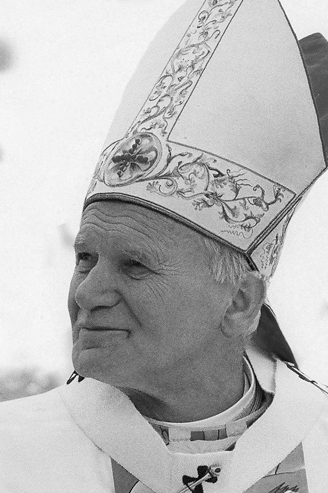
Pope Saint John Paul II’s First Good Friday Homily
ADDRESS OF HIS HOLINESS JOHN PAUL II AT THE CONCLUSION OF THE STATIONS OF THE CROSS AT THE COLOSSEUM Good Friday, 13 April 1979 When we make the Way of the Cross from one station to the next, in spirit we are always at the spot wherethis journey had its “historical” place: where it[…]Continue reading→
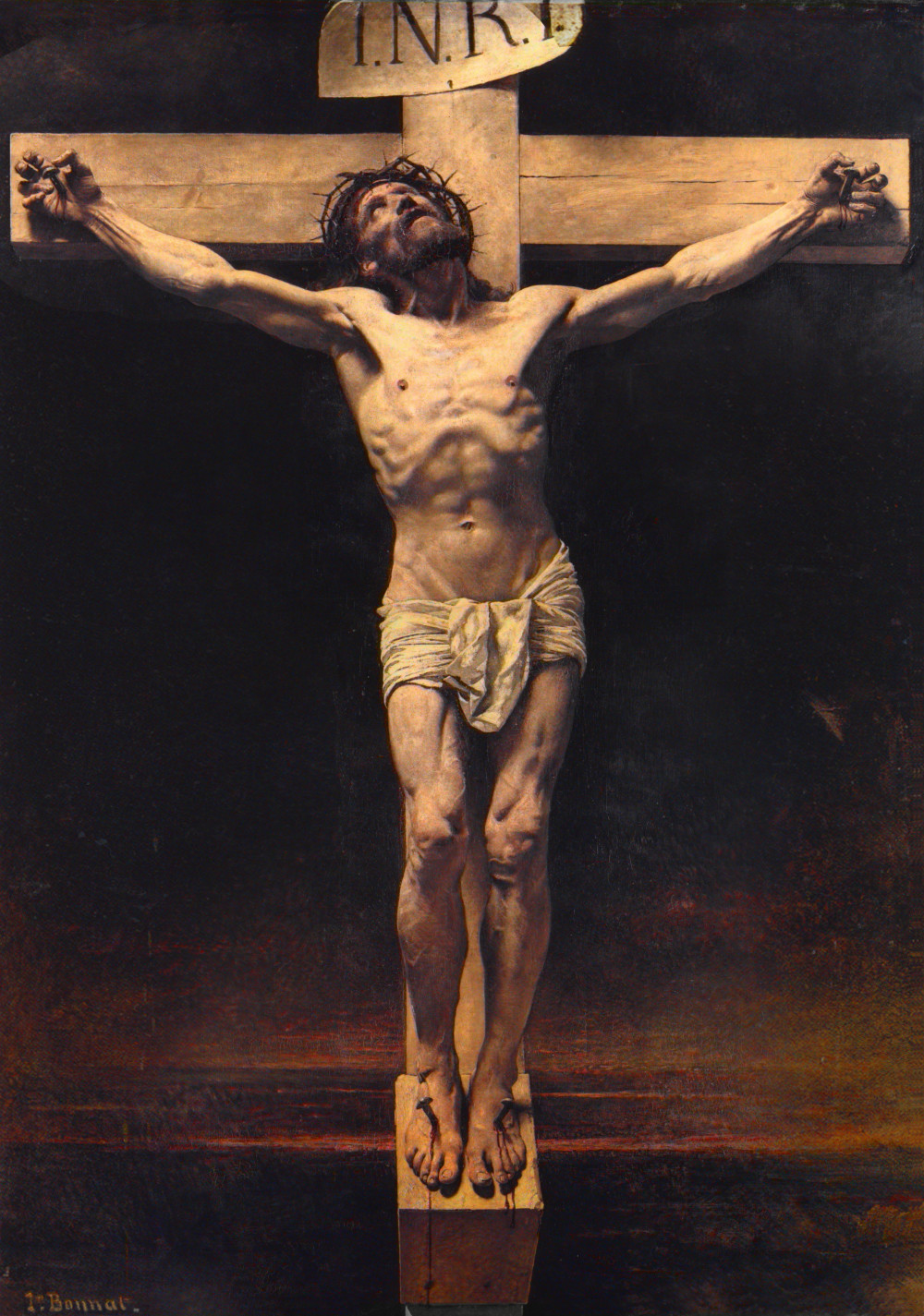
A Meditation for Good Friday: How To Undo the Effects of Sin?
Cardinal Newman, now Saint John Henry Newman, was a towering figure of nineteenth-century Catholicism who is almost universally admired. I say “almost” because not everyone likes him. I knew a priest once, Arthur Caulkins, who has become disenchanted with Newman. As an undergraduate Arthur had been enamoured of Newman, and this interest continued when he[…]Continue reading→
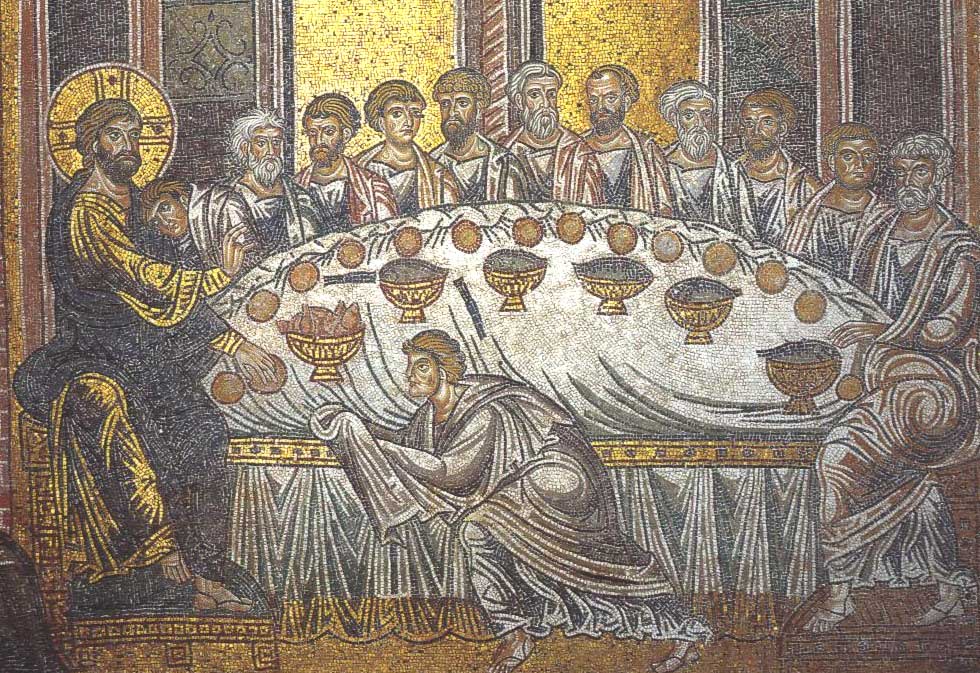
Pope Benedict’s Last Holy Thursday Homily
MASS OF THE LORD’S SUPPER HOMILY OF HIS HOLINESS BENEDICT XVI Basilica of St John Lateran Holy Thursday, 5 April 2012 Photo Gallery (Video) Dear Brothers and Sisters! Holy Thursday is not only the day of the institution of the Most Holy Eucharist, whose splendour bathes all else and in some ways draws it to[…]Continue reading→