
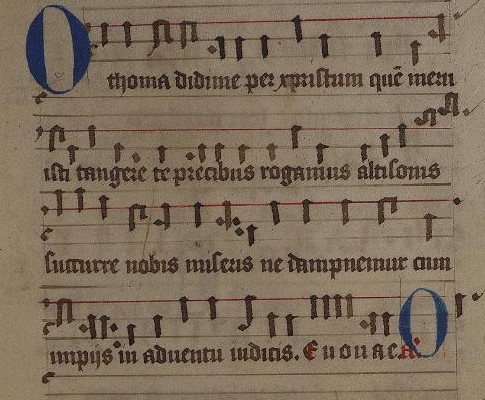
The Seven O Antiphons Explained
For seven days, from December 17th leading up to December 23rd, in the Liturgy of the Hours one encounters the seven antiphons of Advent, which are also the Gospel acclamation in the masses which are celebrated during these days. The liturgical term which these antiphons are given is The Greater Antiphons. In some places, an extra candle is lit each night on a particular seven-branch candle stand. The importance of these antiphons was so great that in medieval monasteries they were intoned only by the superiors. Hence, the abbot intoned the first antiphon on the first day, the following day the prior and so forth.
The liturgical reform brought about the Vatican II had these texts inserted as the Alleluia verse just prior to the Gospel at the Mass starting from December 17. The famous hymn O come, o come Emmanuel employs these texts for its verses, which is sung in practically every Catholic church throughout the Advent season. Liturgists inform us that both the texts as well as the music goes back to the time of the Benedictine Pope St Gregory the Great, between the sixth and seventh centuries. Their author selected seven titles for the coming Messiah which initiate each antiphon. Let us give now both the English as well as the Latin text of these antiphons:
On December 17, O Sapientia (O wisdom)
English: O Wisdom, coming forth from the mouth of the Most High, reaching from one end to the other, mightily and sweetly ordering all things: Come and teach us the way of prudence.
Latin: O Sapientia, quae ex ore Altissimi prodiisti, attingens a fine usque ad finem, fortiter suaviterque disponens omnia: veni ad docendum nos viam prudentiae.
On December 18, O Adonai (O Lord)
English: O Adonai, and leader of the House of Israel, who appeared to Moses in the fire of the burning bush and gave him the law on Sinai: Come and redeem us with an outstretched arm.
Latin: O Adonai, et Dux domus Israel, qui Moysi in igne flammae rubi apparuisti, et ei in Sina legem dedisti: veni ad redimendum nos in brachio extento.
On December 19, O Radix Jesse (O Root of Jesse)
English: O Root of Jesse, standing as a sign among the peoples; before you kings will shut their mouths, to you the nations will make their prayer: Come and deliver us, and delay no longer.
Latin: O Radix Jesse, qui stas in signum populorum, super quem continebunt reges os suum, quem Gentes deprecabuntur: veni ad liberandum nos, jam noli tardare.
On December 20, O Clavis David (O Key of David)
English: O Key of David and sceptre of the House of Israel; you open and no one can shut; you shut and no one can open: Come and lead the prisoners from the prison house, those who dwell in darkness and the shadow of death.
Latin: O Clavis David, et sceptrum domus Israel; qui aperis, et nemo claudit; claudis, et nemo aperit: veni, et educ vinctum de domo carceris, sedentem in tenebris, et umbra mortis.
On December 21, O Oriens (O Rising Sun)
English: O Morning Star, splendour of light eternal and sun of righteousness: Come and enlighten those who dwell in darkness and the shadow of death.
Latin: O Oriens, splendor lucis aeternae, et sol justitiae: veni, et illumina sedentes in tenebris, et umbra mortis.
On December 22, O Rex Gentium (O King of the Nations)
English: O King of the nations, and their desire, the cornerstone making both one: Come and save the human race, which you fashioned from clay.
Latin: O Rex Gentium, et desideratus earum, lapisque angularis, qui facis utraque unum: veni, et salva hominem, quem de limo formasti.
On December 23, O Emmanuel (O God Who is With Us)
English: O Emmanuel, our king and our lawgiver, the hope of the nations and their Saviour: Come and save us, O Lord our God.
Latin: O Emmanuel, Rex et legifer noster, exspectatio Gentium, et Salvator earum: veni ad salvandum nos, Domine, Deus noster.
It is important to offer some appreciation concerning both the text of the O Antiphons as well as the lyrics of the O Come, O Come Emmanuel. To begin with, these texts’ structure initiates with an invocation to the Messiah that is inspired by an Old Testament title, which is expanded as well as elaborated. In conclusion, the text ends with a petition for the Messiah to come and act on our behalf in accordance with the title which was attributed to him at the outset of the antiphon.
An intriguing detail is the fact that when the first letter of these titles is read backward (EROCRAS), its Latin rendition is ero cras, tomorrow I shall be here. Some suggest that Wolfgang Amadeus Mozart (1756 till 1791), the famous Austrian prolific and influential composer of the Classical period of music (1750 to 1820 roughly), shared the same love for these word games like running things backwards.
The antiphons’ texts are directly taken from Bible readings and references which hold and signify the Old Testament hope for the promised Messiah that Isaiah had promised whom Isaiah had foretold.
O Sapientia comes from Sirach, Chapter 24 and the Book of Wisdom, Chapters 6 to 9.
O Adonai from Exodus, Chapters 3, 15 and 24 and from Deuteronomy, Chapter 5.
O Radix Jesse from Isaiah, Chapter 11.
O Clavis David from Isaiah, Chapter 22, with a nod to the Book of Revelation, Chapter 3, verse 7 [“… who opens and no one closes; who closes and no one opens”].
O Oriens from Zechariah, Chapters 3:8 and 6:12, from Isaiah, Chapters 9:2 and 60:1-3, from the Book of Wisdom, Chapter 7:26, as well as from Luke 1:78 and Hebrews 1:3.
O Rex gentium from Jeremiah, Chapter 10:7, from Haggai 2:8, Isaiah 28:16, Genesis 2:7 and Ephesians 2:14.
O Emmanuel is drawn from the famous prophecy to Ahaz (Isaiah 7:14) and from Isaiah 33:22; Genesis 49:10; Zechariah 9:9 and John 20:28.
O Sapientia (Sirach, Ch. 24)
“I [wisdom] came forth from the mouth of the Most High … Alone I compassed the vault of heaven and traversed the depths of the abyss (Wisdom, Ch. 8). She reaches mightily from one end of the earth to the other, and she orders all things well.
O Adonai (Exodus, Ch. 3:15)
God also said to Moses, ‘Thus you shall say to the Israelites, ‘The Lord [YHWH], the God of your ancestors … has sent me to you: This is my name forever, and this my title for all generations.
O Radix Jesse (Isaiah, Ch. 11)
A shoot shall come out from the stump of Jesse, and a branch shall grow out of his roots.
O Clavis David (Isaiah, Ch. 22:22)
I shall place on his [Eliakim’s] shoulder the key of the house of David; he shall open, and no one shall shut; he shall shut, and no one shall open.
O Oriens (Isaiah, Ch. 9:2)
The people who walked in darkness have seen a great light; those who lived in a land of deep darkness – on them light has shined.
O Rex gentium (Jeremiah 10:7)
Who would not fear you, O King of the nations? (Isaiah, Ch. 28:16) See, I am laying in Zion a foundation stone, a tested stone, a precious cornerstone, a sure foundation …
O Emmanuel (Isaiah 7:14)
Look, the young woman (Greek septuagint has “a virgin”) is with child and shall bear a son, and shall name him Emmanuel.
In these remaining days, just before the celebration of the solemnity of Christmas, let us read these biblical passages and pray to the Lord to change us in himself according to the content of each antiphon. You can end your prayer for the day by playing and singing the hymn O come, O come Emmanuel (Veni Veni Emmanuel).
O God, Creator and Redeemer of human nature, who willed that your Word should take flesh in an ever-virgin womb, look with favor on our prayers, that your Only Begotten Son, having taken to himself our humanity, may be pleased to grant us a share in his divinity. Who lives and reigns with you in the unity of the Holy Spirit, God, for ever and ever.

Saint Kateri , Canada’s Protectress
This was the title given to Saint Kateri Tekakwitha, by Pope Benedict XVI, when he canonized her on October 28th, 2012, along with six others, in Saint Peter’ Square (she had been beatified by Pope John Paul II back in 1980). With Saint Joseph as our protector, along with the Canadian martyrs, we seem to[…]Continue reading→

Remembering Father Alphonse de Valk
(Today marks the sixth anniversary of the death of Father Alphonse de Valk, C.S.B., a faithful, courageous and indefatigable Basilian priest, pro-life-and-family apostle, and the founder of Catholic Insight magazine. Here is what we wrote those on his entering into eternity five years ago, as we continue to remember him in our prayers and thoughts)[…]Continue reading→

My Name is Bernadette
April 16th is a propitious day, for besides the anniversary of Father de Valk’s death, who founded Catholic Insight in its print form decades ago, and the commemoration of the ‘two Benedicts’, mentioned in accompanying posts, today we also recall Saint Bernadette Soubirous, the young visionary to whom the Virgin Mary appeared numerous times at[…]Continue reading→
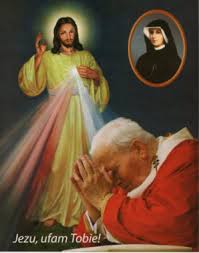
Canonizing Sister Faustina and Divine Mercy
HOMILY OF THE HOLY FATHER MASS IN ST PETER’S SQUARE FOR THE CANONIZATION OF SR MARY FAUSTINA KOWALSKA Sunday, 30 April 2000 1. “Confitemini Domino quoniam bonus, quoniam in saeculum misericordia eius”; “Give thanks to the Lord for he is good; his steadfast love endures for ever” (Ps 118: 1). So the Church sings on the Octave of[…]Continue reading→

Divine Mercy Sunday – An Echo of Every Mass
Reach out your hand and put it in my side. Do not doubt but believe’… ‘My Lord and my God!’ (Jn. 20:18)). Today is Divine Mercy Sunday, and as we celebrate the end of the Easter Octave, we contemplate the wounded side of our Saviour, the Church’s source of life. On Good Friday in the[…]Continue reading→
First Holy Communion: Sermon from May 16, 1943
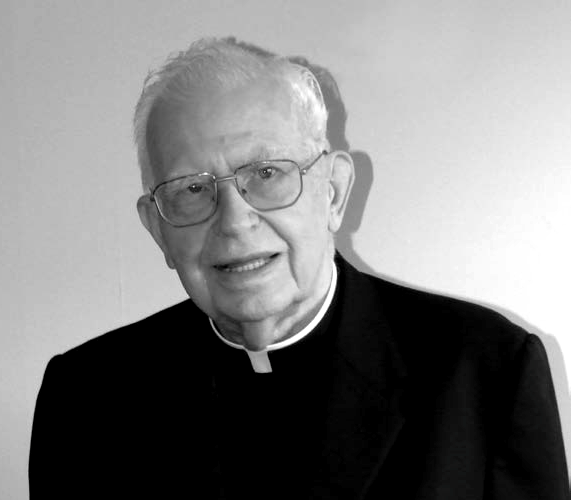
Here is a sermon from the good old days by +Rev. Msgr. Vincent Nicholas Foy (August 14, 1915 – March 13, 2017), from 1943. Readers may recall that Pope Saint Pius X, by the decree Quam Singulari in 1910, lowered the customary age of reception of Holy Communion – after the rigours of the plague[…]Continue reading→
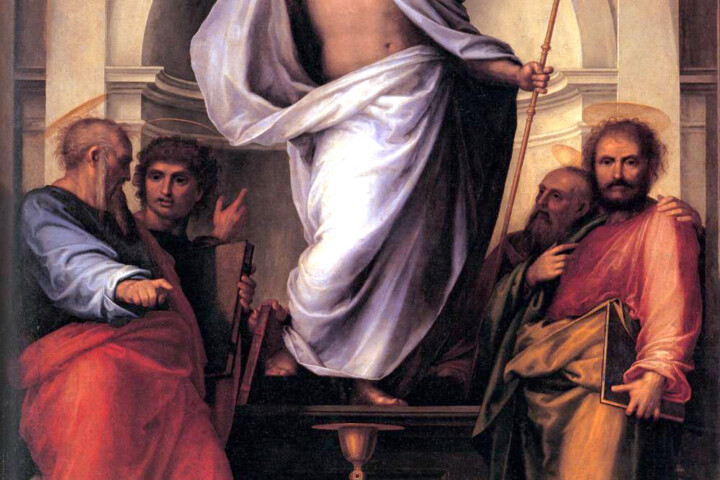
In the Glorious Light of Easter, Alleluia!
Set your minds on things that are above, not on things that are on earth, for you have died, and your life is hidden with Christ in God. When Christ who is your life is revealed, then you also will be revealed with him in glory (Col. 3:3-4). The Resurrection of Our Lord and Saviour[…]Continue reading→

An Ancient Homily for Holy Saturday
The time between Good Friday and Easter Sunday is one of waiting, in silence, as the world wonders – anticipates – what will happen, after the death of Christ. We re-live this time each year in the anamnesis of our liturgy, and in turn look forward to the glorious re-creation of all things at the[…]Continue reading→
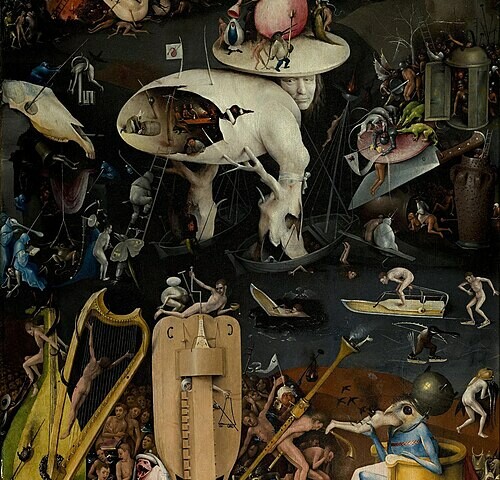
Europe’s Long Descent
(As we meditate on this day on Christ’s burial, and His descent into hell, it is fitting to ponder here with contributor Peter Marcus how the world seems to be heading there as well. The difference is that, although God cannot ‘redeem’ hell, nor those therein, He can and did redeem the world. There is[…]Continue reading→
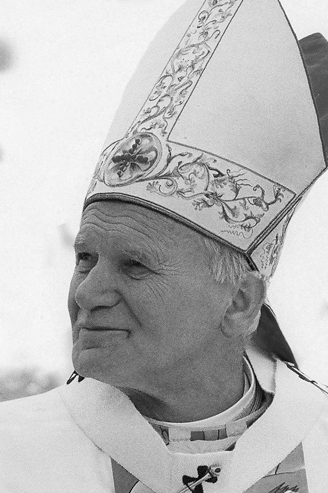
Pope Saint John Paul II’s First Good Friday Homily
ADDRESS OF HIS HOLINESS JOHN PAUL II AT THE CONCLUSION OF THE STATIONS OF THE CROSS AT THE COLOSSEUM Good Friday, 13 April 1979 When we make the Way of the Cross from one station to the next, in spirit we are always at the spot wherethis journey had its “historical” place: where it[…]Continue reading→