
Thirty Third Sunday: Remaining Faithful Unto the End
Beware that you are not led astray (Lk. 21:8).
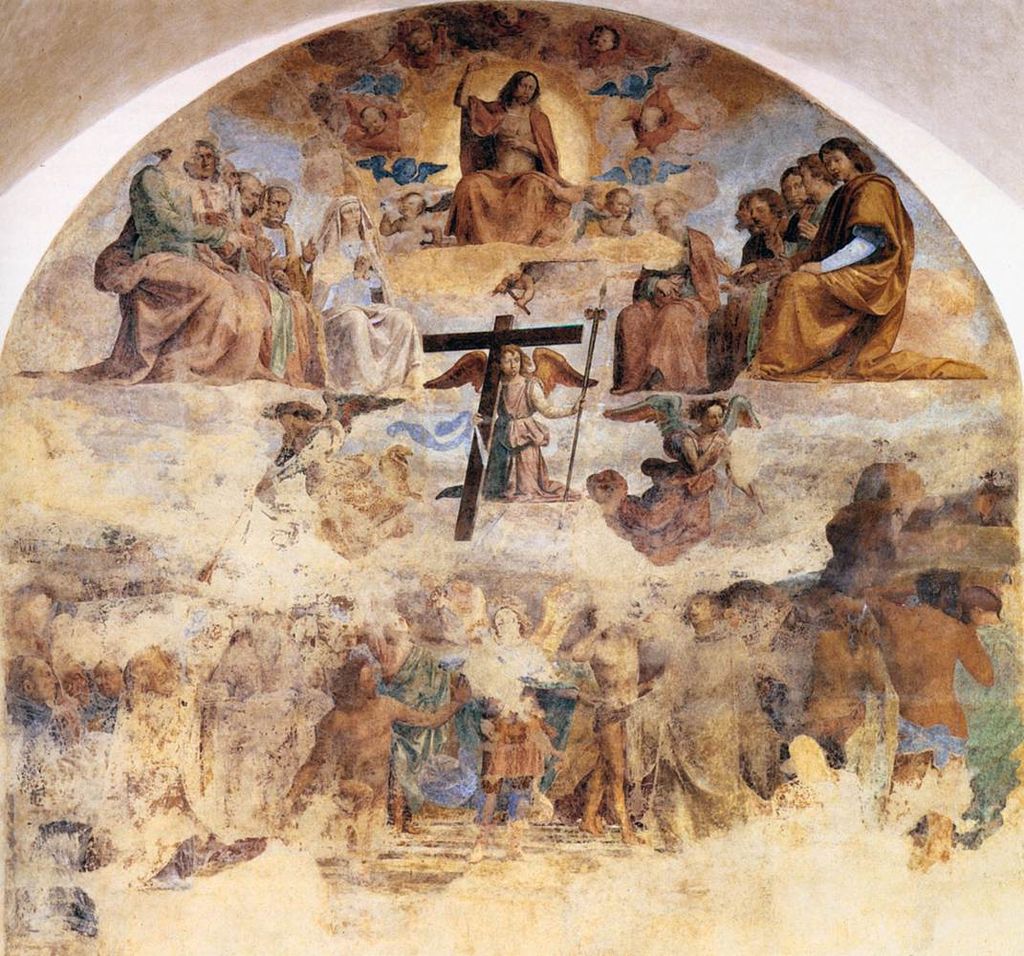
The sacred liturgy again today directs our attention to the eschaton, the teaching about the end time when Our Lord will bring to fulfillment the kingdom which He has established. This too is a dogma of the faith that we affirm in the recitation of the Creed: He will come again in glory to judge the living and the dead and His Kingdom will have no end. But Our Lord cautions us: ‘Beware that you are not led astray; for many will come in my name and say, ‘I am he!’ and, ‘The time is near!’ Do not go after them’ (Lk. 21:8). In the face of uncertainties and confusion, wars and rumors of war it is not surprising that there is a more than passing interest in prophecies. Our world is anxious for prophecy and there is no end to messages and alleged prophecies. Again, we do well to heed the words of Our Lord: And then if any one says to you, ‘Look, here is the Christ!’ or ‘Look, there he is!’ do not believe it. False Christs and false prophets will arise and show signs and wonders, to lead astray, if possible, the elect. But take heed; I have told you all things beforehand (Mk. 13:21-23). In their simple brevity, Our Lord’s words tell us all we need to know. The world will end. The end will be preceded by a great apostasy (that is to say, a great falling away) and a great affliction. After that Our Lord’s Second Coming will take place and of His Kingdom there shall be no end.
Sacred Scripture however, also warns us about another danger: the dismissive pride of scoffers. In his Second Epistle, St. Peter wrote, First of all you must understand this; that scoffers will come in the last days with scoffing, following their own passions and saying, ‘Where is the promise of his coming?’ (2 Pet. 3:3-4). In the midst of this confusion, dismissiveness on the one hand and obsessive concern on the other, we must cling to Christ, keep our conscience clear (Cf. 1Tim 1:19) and seek refuge in the Immaculate Heart of Mary, whose prophetic words at Fatima are most worthy of belief, for they speak both of divine punishment and of conversion of hearts. In our Judeo-Christian tradition prophets are not seen as fortune tellers who predict the future but as messengers sent by God to call His people to conversion, integrity of life and submission to the law and holy will of God. The prophets always call us back to a right relationship with God and by consequence, with one another.
We venerate our Lady as Queen of Prophets, and it is most significant that Our Lady appeared at Fatima in Portugal in 1917 to deliver her call to conversion. In 1646, King John IV of Portugal and all his people had promised their fidelity to Our Lady under the title of the Immaculate Conception and since that time she had been proclaimed Queen and Patroness of Portugal: for this reason, Portuguese kings did not wear a crown, since it was reserved exclusively for Our Lady. This is more than a quaint point of history or piety. It expresses a desire to imitate the disposition of Our Lady before God: ‘Behold, I am the servant of the Lord’. The king too is God’s servant; and so is the prime minister – whether he admits or not. The horrors that humanity has experienced since these apparitions are in essence, the direct result of a humanity that seeks to displace God; a humanity that seeks even to pervert the natural law of God. And this attempt to displace God has with evident success, even been attempted and tragically and ruinously effected in God’s Church.
The Venerable Pope Pius XII, a victim of historical revisionism, whose pontificate was particularly marked by the events of Fatima, made this astonishing prophecy about our times: A day will come when the civilized world will deny its God, when the Church will doubt as Peter doubted. She will be tempted to believe that man has become God. In our churches, Christians will search in vain for the red lamp where God awaits them. Like Mary Magdalene, weeping before the empty tomb, they will ask, ‘Where have they taken Him?’ (Roche, Pie XII Devant L’Histoire, p. 52-53).
A day will come when the civilized world will deny its God. That day has come and it is long in passing. This is especially evident in the legislation being enacted to facilitate the destruction of human life, especially in the most vulnerable. An unbelieving proud spirit continues to manifest itself especially in the words and actions of those who govern both secular and ecclesiastical institutions and governments. In our nation, to our shame, a form of national sin of blasphemy and sacrilege against the sanctity and inviolability of human life has become, so it seems, a point of pride for our politicians, some of whom have sacrilegiously proclaimed our nation as a place where one can murder an unborn child should this not be possible elsewhere. Our country is being promoted as a human abattoir! Where are the denunciations? Where are the excommunications? This national sin is bar to the Blessing of God and an obstacle of a positive nature to God’s grace. Pray that we may be spared; for God’s judgment on us and the whole world is long overdue!
If men of good will are scarcely found among the ruling class, let us at least make reparation for these sins and endeavour to live lives of reverent piety in the midst of a perverse and crooked generation; in the hope that we might that we might shine as lights as we hold forth the word of life (Cf. Phil. 2:15). Humanly speaking, we are dispossessed and disenfranchised, but God will not be mocked. Let us ignore the dismissive pride of scoffers and never allow ourselves to be deceived by those who would have us believe that our Faith has changed. If our ancestors were wrong in their day, then we are wrong in ours. The unchanging truth of God abides for ever; and He desires that all be saved and come to the knowledge of the truth (1 Tim. 2:4). In every age of the Church and in every place, including ours, there are two perennial questions that every Christian must answer and do so correctly. Both are questions posed by Our Lord Himself: ‘But who do you say that I am’? (Mk. 8:29) and, ‘When the Son of Man comes will he find faith on earth’? (Lk. 18:8). Devotion to Our Lady’s Immaculate Heart will guard the integrity of our faith in the Messiah, and in turn, with fervent faith we will confess Him Lord and Saviour. +

Remembering Father Alphonse de Valk
(Today marks the sixth anniversary of the death of Father Alphonse de Valk, C.S.B., a faithful, courageous and indefatigable Basilian priest, pro-life-and-family apostle, and the founder of Catholic Insight magazine. Here is what we wrote those on his entering into eternity five years ago, as we continue to remember him in our prayers and thoughts)[…]Continue reading→

Divine Mercy Sunday – An Echo of Every Mass
Reach out your hand and put it in my side. Do not doubt but believe’… ‘My Lord and my God!’ (Jn. 20:18)). Today is Divine Mercy Sunday, and as we celebrate the end of the Easter Octave, we contemplate the wounded side of our Saviour, the Church’s source of life. On Good Friday in the[…]Continue reading→

Saint Stanislaus of Szczepanów
We celebrate Saint Stanislaus today (+ April 11, 1079), in light of this Easter Octave, a bishop and martyr who accepted the episcopacy only at the direct order of Pope Alexander II. He proved a wise and courageous leader of his flock, put to death by his own king, Boleslaus, for rebuking the monarch’s ‘immoral[…]Continue reading→

First Holy Communion: Sermon from May 16, 1943
Here is a sermon from the good old days by +Rev. Msgr. Vincent Nicholas Foy (August 14, 1915 – March 13, 2017), from 1943. Readers may recall that Pope Saint Pius X, by the decree Quam Singulari in 1910, lowered the customary age of reception of Holy Communion – after the rigours of the plague[…]Continue reading→
In the Glorious Light of Easter, Alleluia!
Set your minds on things that are above, not on things that are on earth, for you have died, and your life is hidden with Christ in God. When Christ who is your life is revealed, then you also will be revealed with him in glory (Col. 3:3-4). The Resurrection of Our Lord and Saviour[…]Continue reading→
An Ancient Homily for Holy Saturday
The time between Good Friday and Easter Sunday is one of waiting, in silence, as the world wonders – anticipates – what will happen, after the death of Christ. We re-live this time each year in the anamnesis of our liturgy, and in turn look forward to the glorious re-creation of all things at the[…]Continue reading→
Europe’s Long Descent
(As we meditate on this day on Christ’s burial, and His descent into hell, it is fitting to ponder here with contributor Peter Marcus how the world seems to be heading there as well. The difference is that, although God cannot ‘redeem’ hell, nor those therein, He can and did redeem the world. There is[…]Continue reading→
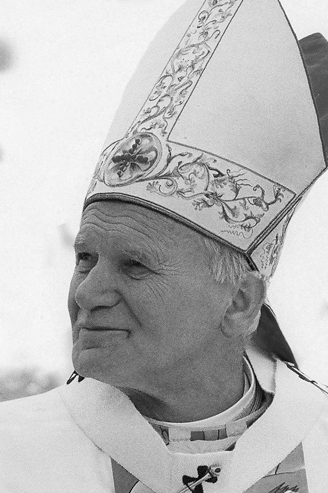
Pope Saint John Paul II’s First Good Friday Homily
ADDRESS OF HIS HOLINESS JOHN PAUL II AT THE CONCLUSION OF THE STATIONS OF THE CROSS AT THE COLOSSEUM Good Friday, 13 April 1979 When we make the Way of the Cross from one station to the next, in spirit we are always at the spot wherethis journey had its “historical” place: where it[…]Continue reading→
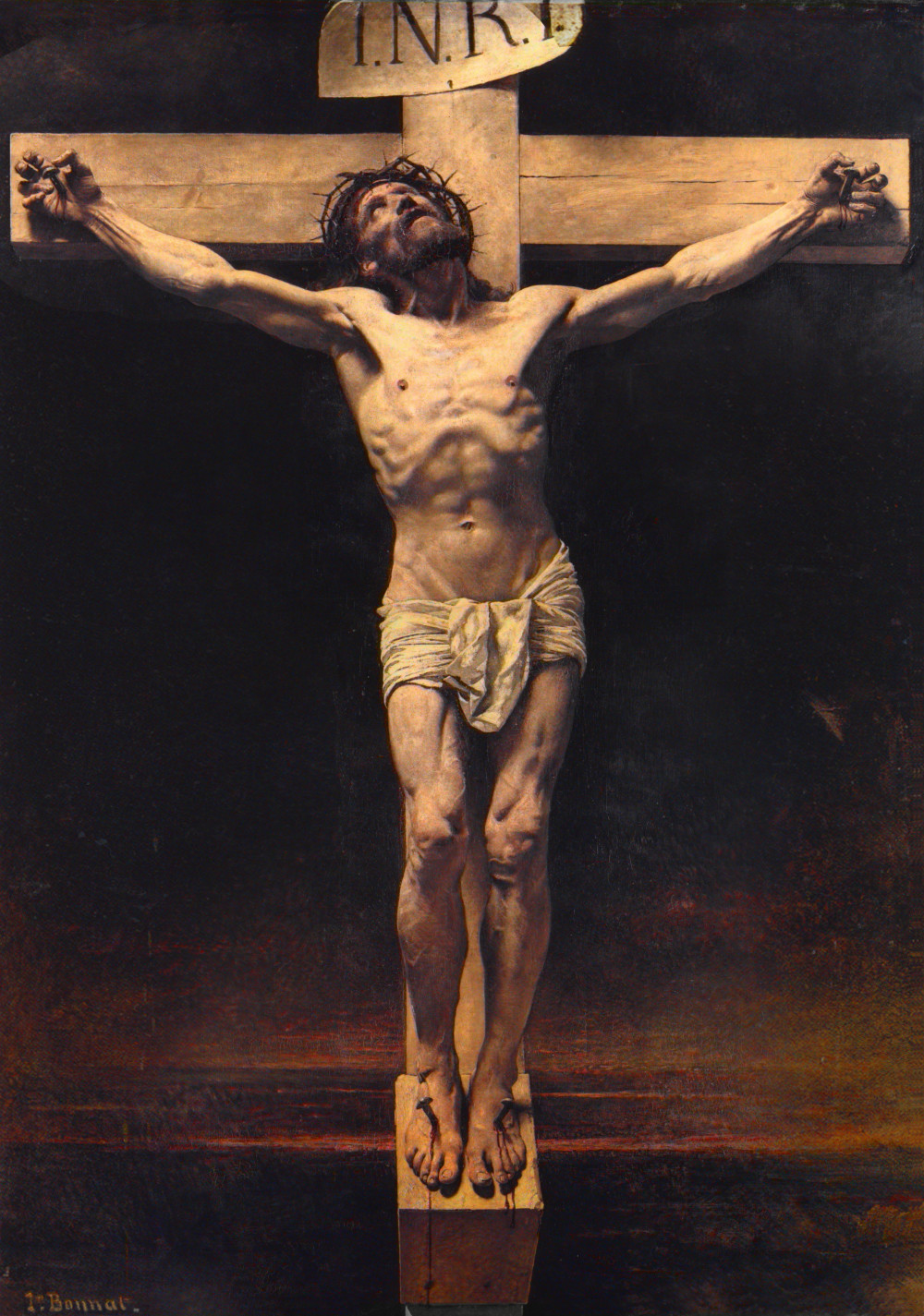
A Meditation for Good Friday: How To Undo the Effects of Sin?
Cardinal Newman, now Saint John Henry Newman, was a towering figure of nineteenth-century Catholicism who is almost universally admired. I say “almost” because not everyone likes him. I knew a priest once, Arthur Caulkins, who has become disenchanted with Newman. As an undergraduate Arthur had been enamoured of Newman, and this interest continued when he[…]Continue reading→
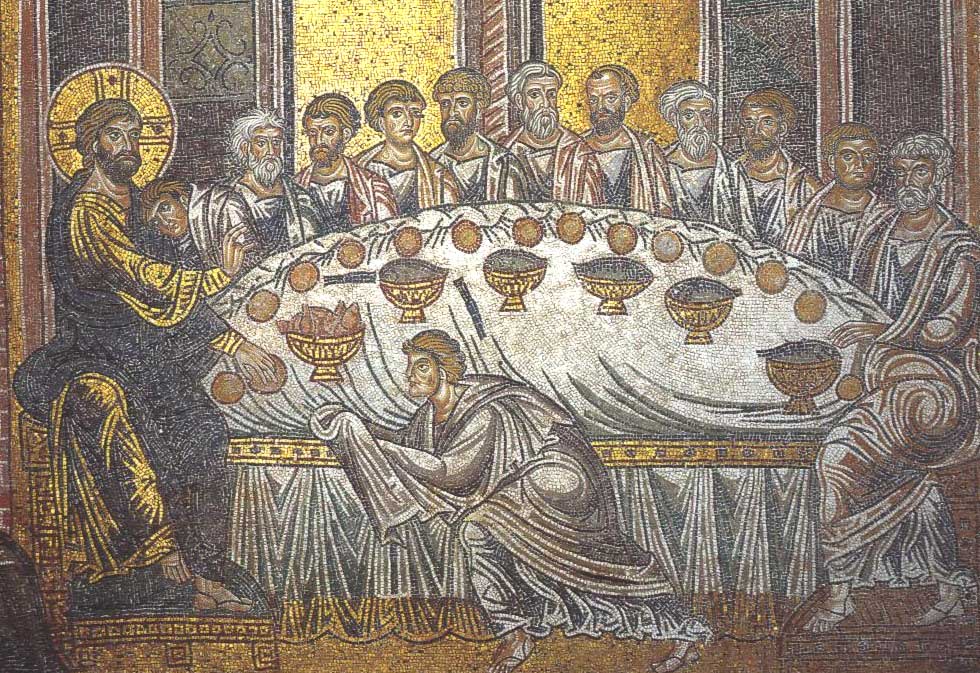
Pope Benedict’s Last Holy Thursday Homily
MASS OF THE LORD’S SUPPER HOMILY OF HIS HOLINESS BENEDICT XVI Basilica of St John Lateran Holy Thursday, 5 April 2012 Photo Gallery (Video) Dear Brothers and Sisters! Holy Thursday is not only the day of the institution of the Most Holy Eucharist, whose splendour bathes all else and in some ways draws it to[…]Continue reading→