
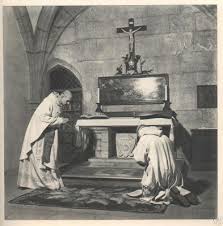
Thirtieth Sunday: Humble Prayer, in Truth
The prayer of the humble pierces the clouds, and it will not rest until it reaches its goal (Sir. 35:17) ⧾
Like all of our Lord’s parables, the parable of the tax collector and the Pharisee is meant to lead gradually to the hidden reality that can be truly discovered only through discipleship (Pope Benedict XVI). In other words, we can only fully understand what Our Lord is teaching us if we endeavour to be His disciples. Our Lord says: To you it has been given to know the secrets of the kingdom of God, but for others they are in parables, so that seeing they may see, and hearing they may not understand (Lk. 8:10).
The choice of characters in this parable is very interesting because Our Lord contrasts two opposite extremes; at least as it concerns respectability and social acceptance. Tax collectors were generally suspected of dishonesty and despised as sinners, especially by the Pharisees. Collectors were sometimes guilty of extortion, exacting personal commissions beyond the required tax amount; and since they collected taxes for the unwelcome Romans, foreign rulers, collectors were also branded as traitors to Israel’s hope for national independence. The Pharisees also despised tax collectors because their contacts with Gentiles rendered them defiled by ritual standards. Although not Israel’s official teachers or leaders, the Pharisees – the Jewish historian Josephus Flavius tells us that there were roughly six thousand of them – were popular and held great sway with the masses. The Pharisees whose name literally means separated ones (perushim) were religious separatists: while Our Lord’s proclamation of the Kingdom of God was open to all the nations, reaching out to embrace all with mercy, even a sinful tax collector; for the Son of Man came to seek and to save what was lost (Lk. 19:10).
Those who heard this parable as Our Lord told it did not have to stretch their imagination to understand what He was saying. As the Word of God is brought to bear on our lives in our specific time, I suggest that the prayer of the tax collector and the prayer of the Pharisee are expressive of two very different approaches to the Gospel in a culture (and sadly, even in the Church in our times) that at face value, seems to have rejected the need for salvation or deliverance – for this is what salvation implies: being delivered and transferred to a situation or state of safety from one of certain mortal danger. Beating his breast, the tax collector prays, ‘God, be merciful to me, a sinner’ (Lk. 18:13). His prayer, and it is no less our prayer, gives voice to the insufficiency of the human condition. Moral self-sufficiency is an illusion that can tempt all of us whether we be tempted by our youth or wealth or ability or intellect. We are not self-sufficient either individually or even collectively. Our happiness ultimately depends on the quality of our relationships with ourselves, with others and most importantly, with God. Perhaps tax collectors sought their security in the abundance of wealth; even at the cost of being ostracized as virtual enemies among their own people. As Our Lord tells the parable, the tax collector was standing far off [and] would not even look up to heaven. He is an outcast and at least in relation to his community, dead. The prayer of the tax collector is a cry for deliverance, for mercy and salvation. His confession of sin – ‘God be merciful to me a sinner’ – is an essential requisite for salvation in the spiritual order. The authentic Gospel of salvation that the Church has been charged to preach addresses each individual and in the response of repentance that one makes to this Gospel there is a commitment to save one’s soul; for what does it profit a man to gain the whole world and forfeit his life (Mk. 8:36)? The tax collector for all intents had no life to speak of. He was completely alienated from others and yes, even from himself; and in the experience of poverty he cries out for mercy. The prayer of the humble pierces the clouds, and it will not rest until it reaches its goal. And so Our Lord assures us: ‘I tell you, this man went down to his house justified’ (Lk. 18:14). A right relationship with God is the foundation of a truly happy life.
The prayer of the Pharisee is an exercise in self-affirmation – the danger of those who risk salvation by demanding that God and the Church bless and condone a sinful life. Imperiously self-engrossed and self-referential, they demand that the Church betray her mission and her Lord so that immorality is ratified. This is all pharisaical insofar as it is all self-referential. The Pharisee is at the centre of his prayer, not God. Very simply, our prayer is that of the tax collector. The Confiteor that we recite at the beginning of Holy Mass, and which we never omit, places us at least spiritually speaking, the solid ground of humility. Perhaps one of the saddest developments of our times at least as it concerns our prayer, is the omission of the Confiteor in so many churches. Such an omission renders the Kyrie eleison superfluous and meaningless and such a prayer, if it be a prayer at all, never reaches its goal.
Let the goal of our prayer always be the Heart of Our Lord, salvation of those who trust and hope in Him. Neither our prayer nor our life can be self-referential; that is why when come together for worship, we don’t come to celebrate our community or ourselves. We are created to find our fulfilment outside ourselves; in the gift of self to others through sacrificial love and ultimately only in God. In his sinful life the tax collector was tempted to material self-sufficiency which proved to be an illusion. The Pharisee sought salvation in himself and his good deeds but this too is false for truth be told, sometimes, perhaps often, only God can save us from ourselves. In all humility and confidence, grateful for the gift of salvation we make our own the words of the Psalmist: O Lord, my heart is not proud nor haughty my eyes. I have not gone after things too great nor marvels beyond me. Truly I have set my soul in silence and in peace. As a child rests in its mother’s arms, even so is my soul. O Israel, hope in the Lord both now and forever (131). ⧾

Remembering Father Alphonse de Valk
(Today marks the sixth anniversary of the death of Father Alphonse de Valk, C.S.B., a faithful, courageous and indefatigable Basilian priest, pro-life-and-family apostle, and the founder of Catholic Insight magazine. Here is what we wrote those on his entering into eternity five years ago, as we continue to remember him in our prayers and thoughts)[…]Continue reading→

Divine Mercy Sunday – An Echo of Every Mass
Reach out your hand and put it in my side. Do not doubt but believe’… ‘My Lord and my God!’ (Jn. 20:18)). Today is Divine Mercy Sunday, and as we celebrate the end of the Easter Octave, we contemplate the wounded side of our Saviour, the Church’s source of life. On Good Friday in the[…]Continue reading→

Saint Stanislaus of Szczepanów
We celebrate Saint Stanislaus today (+ April 11, 1079), in light of this Easter Octave, a bishop and martyr who accepted the episcopacy only at the direct order of Pope Alexander II. He proved a wise and courageous leader of his flock, put to death by his own king, Boleslaus, for rebuking the monarch’s ‘immoral[…]Continue reading→

First Holy Communion: Sermon from May 16, 1943
Here is a sermon from the good old days by +Rev. Msgr. Vincent Nicholas Foy (August 14, 1915 – March 13, 2017), from 1943. Readers may recall that Pope Saint Pius X, by the decree Quam Singulari in 1910, lowered the customary age of reception of Holy Communion – after the rigours of the plague[…]Continue reading→

In the Glorious Light of Easter, Alleluia!
Set your minds on things that are above, not on things that are on earth, for you have died, and your life is hidden with Christ in God. When Christ who is your life is revealed, then you also will be revealed with him in glory (Col. 3:3-4). The Resurrection of Our Lord and Saviour[…]Continue reading→

An Ancient Homily for Holy Saturday
The time between Good Friday and Easter Sunday is one of waiting, in silence, as the world wonders – anticipates – what will happen, after the death of Christ. We re-live this time each year in the anamnesis of our liturgy, and in turn look forward to the glorious re-creation of all things at the[…]Continue reading→

Europe’s Long Descent
(As we meditate on this day on Christ’s burial, and His descent into hell, it is fitting to ponder here with contributor Peter Marcus how the world seems to be heading there as well. The difference is that, although God cannot ‘redeem’ hell, nor those therein, He can and did redeem the world. There is[…]Continue reading→
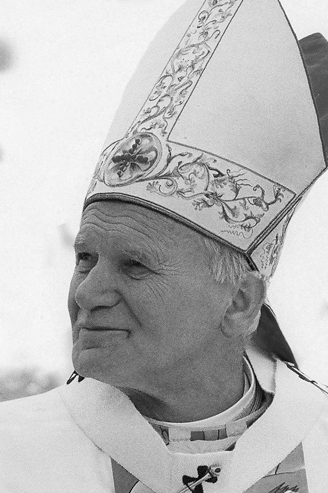
Pope Saint John Paul II’s First Good Friday Homily
ADDRESS OF HIS HOLINESS JOHN PAUL II AT THE CONCLUSION OF THE STATIONS OF THE CROSS AT THE COLOSSEUM Good Friday, 13 April 1979 When we make the Way of the Cross from one station to the next, in spirit we are always at the spot wherethis journey had its “historical” place: where it[…]Continue reading→
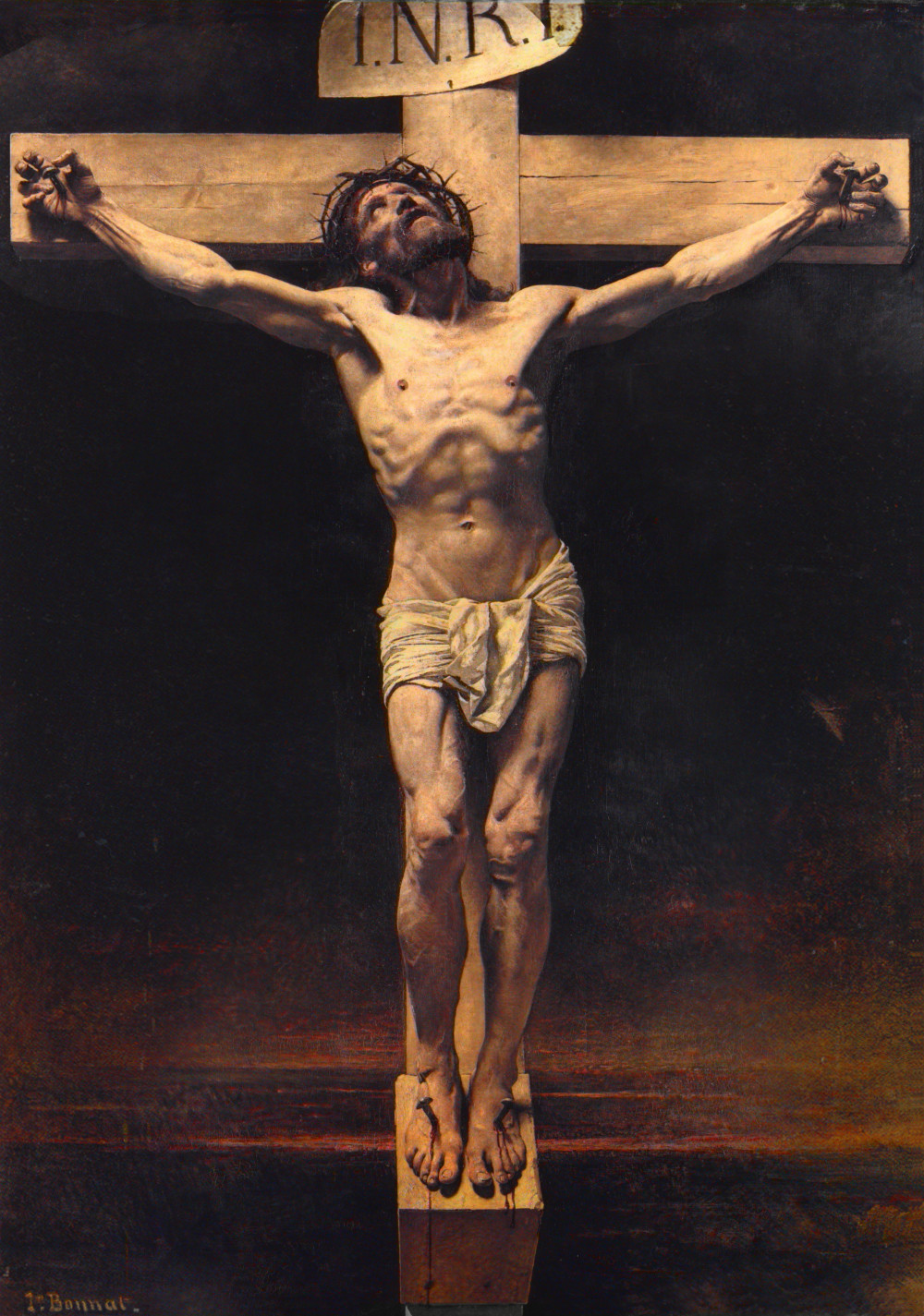
A Meditation for Good Friday: How To Undo the Effects of Sin?
Cardinal Newman, now Saint John Henry Newman, was a towering figure of nineteenth-century Catholicism who is almost universally admired. I say “almost” because not everyone likes him. I knew a priest once, Arthur Caulkins, who has become disenchanted with Newman. As an undergraduate Arthur had been enamoured of Newman, and this interest continued when he[…]Continue reading→
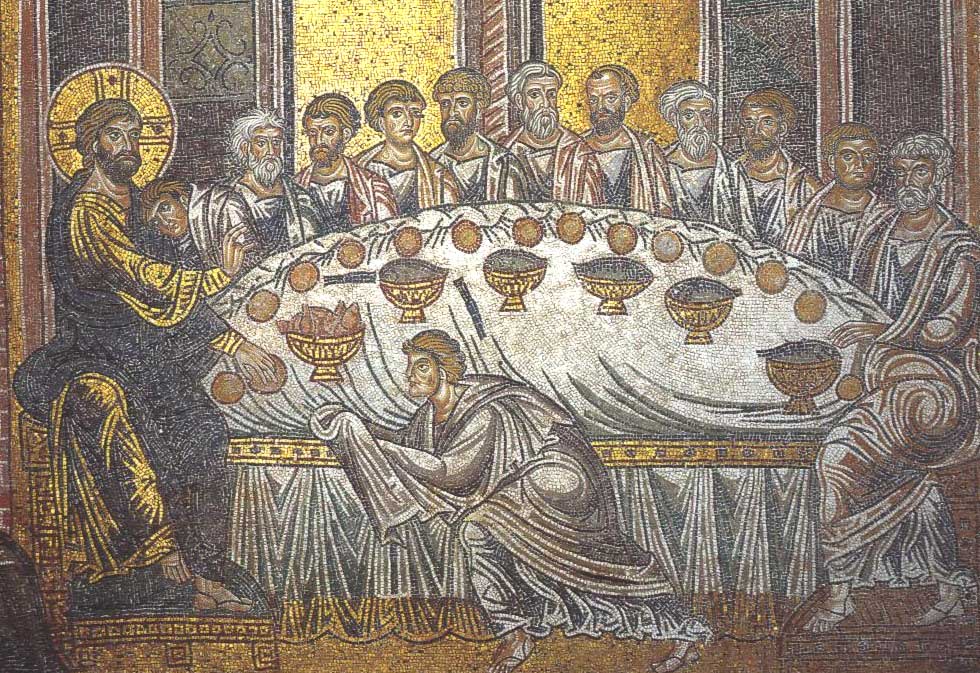
Pope Benedict’s Last Holy Thursday Homily
MASS OF THE LORD’S SUPPER HOMILY OF HIS HOLINESS BENEDICT XVI Basilica of St John Lateran Holy Thursday, 5 April 2012 Photo Gallery (Video) Dear Brothers and Sisters! Holy Thursday is not only the day of the institution of the Most Holy Eucharist, whose splendour bathes all else and in some ways draws it to[…]Continue reading→