
Twenty Eighth Sunday: Gratitude, and Glory, to God
Then one of them, when he saw that he was healed, tuned back, praising God with a loud voice. He prostrated himself at Jesus’ feet and thanked him. And he was a Samaritan (Lk. 17:12). ⧾
As our nation marks the Thanksgiving holiday, the Gospel reading today speaks of gratitude and also of a lack of gratitude. ‘Were not ten made clean? But the other nine, where are they? Was none of them found to return and give praise to God except this foreigner? (Lk. 17:14). I am reminded of the line in Shakespeare’s King Lear: How sharper than a serpent’s tooth it is, To have a thankless child. Saying thank you is one of the first lessons we learn as children, though it would seem that the expression of gratitude comes naturally to us. Gratitude is really a matter of justice for in acknowledging a good deed we express a debt of sorts. This is why lack of gratitude bothers us so much; whether it be a thankless child or relative or someone driving who fails to acknowledge a courtesy extended. There is something about rudeness that has a way of getting under our skin.
When we express gratitude towards God we are fulfilling the first commandment, which states the fundamental human obligation to acknowledge the existence of God and worship Him, because without God, we would not exist. By definition, religion is the virtue that enables us to render to God the worship, honour, devotion and service He deserves. To be precise, religion is a moral virtue, a part of the virtue of justice since we give to God what is owed Him as our Creator and our Father. Hence we are bound to foster and cherish towards Him sentiments of adoration, praise, thanksgiving, loyalty, piety and love. Our worship adds nothing to God’s glory but it is what we owe Him and this homage is of great value and benefit to us. The chief acts of the virtue of religion are adoration, prayer, sacrifice and oblation. All of these acts have a beneficial impact on our daily life for as we worship so we live. Archbishop Fulton J. Sheen observed that the man who thinks only of himself says prayers of petition, he who thinks of his neighbour says prayers of intercession; he who thinks of loving and serving God says prayers of abandonment to God’s will, that is the prayer of the saints. I should think that in the course of the celebration of the Holy Sacrifice of the Mass our prayer encompasses all of these.
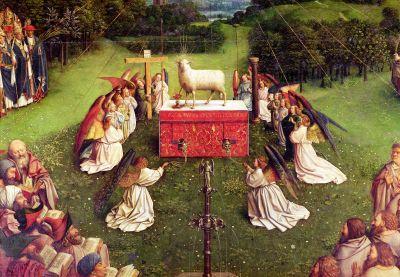
The Gospels relate that while Our Lord was at the house of Simon the leper in Bethany a woman came with an alabaster flask of ointment of pure nard, very costly, and she broke the flask and poured it over his head (Mk. 14:3). Some murmured at this act of extravagance but Our Lord reproached them saying, ‘Let her alone; why do you trouble her. She has done a beautiful thing to me. For you always have the poor with you….And truly, I say to you, wherever the gospel is preached in the whole world, what she has done will be held in memory of her (Mk. 14:6-9). Some things are done purely for the greater glory of God and the beauty of these expressions of adoration, whether a beautiful and ornate church structure or noble vessels, express our love for God. The world’s greatest works of art in any form were created for the greater glory of God and these continue to inspire and ennoble humanity. They are timeless reminders of the glory that is ours in the praise and worship of God. What the thankful leper did is also held in memory wherever the gospel is preached in the whole world; and his expression of gratitude, an exercise of the virtue of religion, has been a source of inspiration at least in one very significant instance with far reaching effects.
Many of you are familiar with Mother Angelica of the Annunciation, the American nun who founded the Eternal Word Television. Mother Angelica belonged to the religious community of the Poor Clares of Perpetual Adoration whose founders, Mother Marie of St. Clare and Father Bonaventure Heurlant, in 1854 gave life to a unique branch of the Poor Clares, cloistered nuns whose special charism is perpetual adoration of the Most Blessed Sacrament in a spirit of reparative thanksgiving. Mother Marie Clare was inspired by the Gospel account of the one leper who returned to give thanks to Our Lord to establish a religious community dedicated exclusively to adoring and thanking God. Through their unceasing adoration the nuns strive to make reparation to for all the sacrileges, abuses and blasphemies committed against the Most Blessed Sacrament; and to give thanks for the gift of the Eucharist, Jesus truly present in our midst. Father Bonaventure the co-founder observed that nothing has ever wounded the Heart of Jesus more than ingratitude.
What a wonderful expression of faith and gratitude these Nuns are to the whole Church; and they of course, are not alone, for there are many religious communities dedicated to Adoration of the Most Blessed Sacrament. In one of the earliest documents of his pontificate, Pope St. John Paul II noted: The Church and the world have a great need of Eucharistic worship. Jesus waits for us in this sacrament of love. Let us be generous with our time in going to meet Him in adoration and in contemplation that is full of faith and ready to make reparation for the great faults and crimes of the world. May our adoration never cease (Dominicae Cenae, February 24, 1980).
Perhaps more than any other exercise of Christian piety, Eucharistic Adoration enables us to grow in intimacy with Our Lord, to develop an authentic religious spirit, and to deepen our spirit of gratitude. If we wish to deepen our love of God and of our neighbour, there is no better exercise than Eucharistic Adoration. It is in the silence of Eucharistic Adoration that we train ourselves in godliness or piety (Cf. 1 Tim. 4:16), which is reverence for what comes from God. Piety is one of the seven gifts of the Holy Spirit; a powerful gift that when expressed humbly and sincerely, gives due honour to God and draws others to Him. Our Eucharistic piety, which can never be excessive, enables us to deepen our love for the Blessed Sacrament and to be formed in a life centred on the Eucharist, a Eucharistic life.
As we celebrate the Thanksgiving this weekend, let us also give thanks for the people in our life who have nourished and continue to nurture our faith; and whatever we do, let us not forget to thank the cook! ⧾

Remembering Father Alphonse de Valk
(Today marks the sixth anniversary of the death of Father Alphonse de Valk, C.S.B., a faithful, courageous and indefatigable Basilian priest, pro-life-and-family apostle, and the founder of Catholic Insight magazine. Here is what we wrote those on his entering into eternity five years ago, as we continue to remember him in our prayers and thoughts)[…]Continue reading→

Divine Mercy Sunday – An Echo of Every Mass
Reach out your hand and put it in my side. Do not doubt but believe’… ‘My Lord and my God!’ (Jn. 20:18)). Today is Divine Mercy Sunday, and as we celebrate the end of the Easter Octave, we contemplate the wounded side of our Saviour, the Church’s source of life. On Good Friday in the[…]Continue reading→

Saint Stanislaus of Szczepanów
We celebrate Saint Stanislaus today (+ April 11, 1079), in light of this Easter Octave, a bishop and martyr who accepted the episcopacy only at the direct order of Pope Alexander II. He proved a wise and courageous leader of his flock, put to death by his own king, Boleslaus, for rebuking the monarch’s ‘immoral[…]Continue reading→
First Holy Communion: Sermon from May 16, 1943
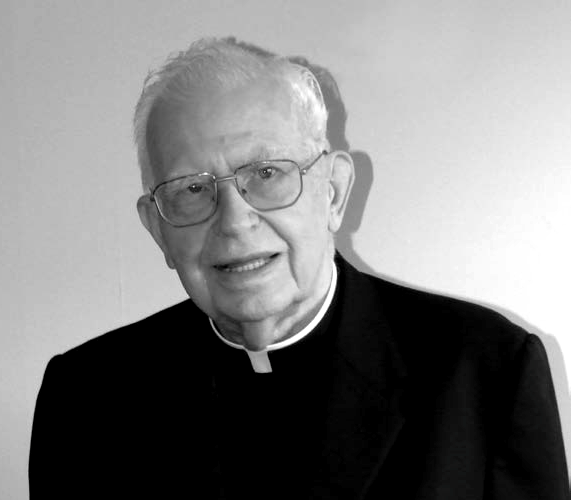
Here is a sermon from the good old days by +Rev. Msgr. Vincent Nicholas Foy (August 14, 1915 – March 13, 2017), from 1943. Readers may recall that Pope Saint Pius X, by the decree Quam Singulari in 1910, lowered the customary age of reception of Holy Communion – after the rigours of the plague[…]Continue reading→
In the Glorious Light of Easter, Alleluia!
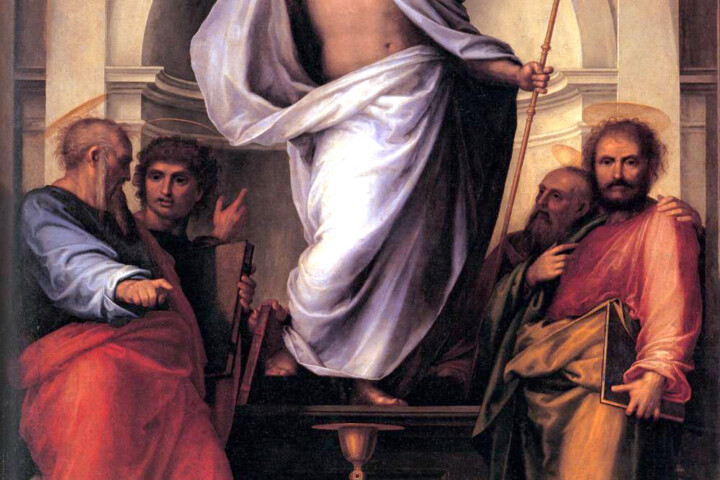
Set your minds on things that are above, not on things that are on earth, for you have died, and your life is hidden with Christ in God. When Christ who is your life is revealed, then you also will be revealed with him in glory (Col. 3:3-4). The Resurrection of Our Lord and Saviour[…]Continue reading→
An Ancient Homily for Holy Saturday
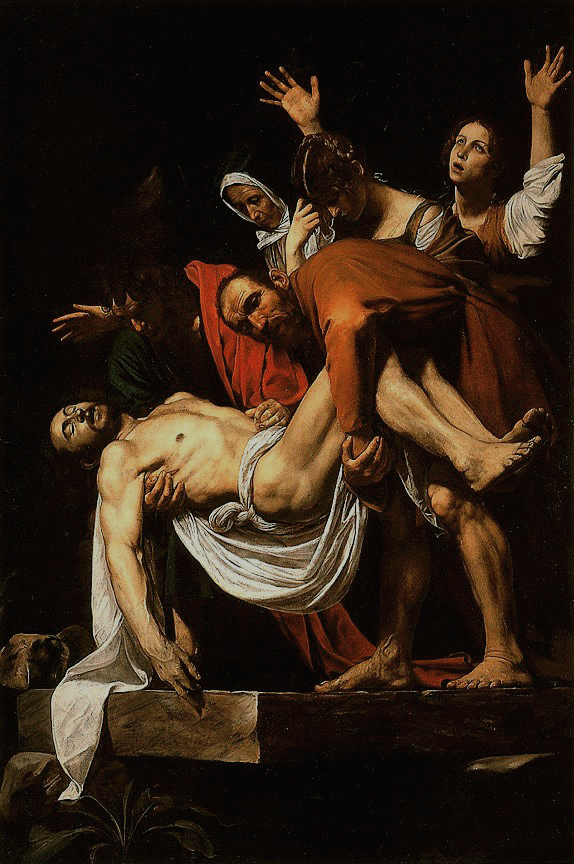
The time between Good Friday and Easter Sunday is one of waiting, in silence, as the world wonders – anticipates – what will happen, after the death of Christ. We re-live this time each year in the anamnesis of our liturgy, and in turn look forward to the glorious re-creation of all things at the[…]Continue reading→
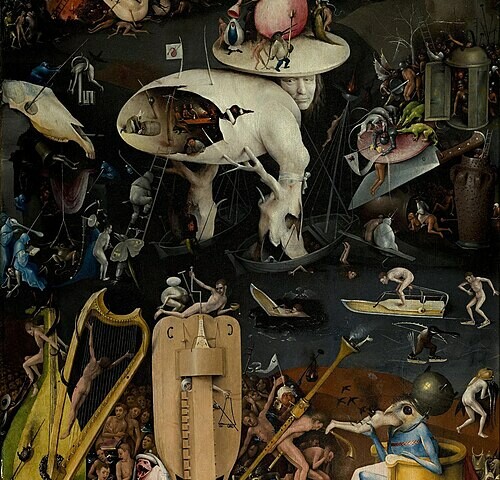
Europe’s Long Descent
(As we meditate on this day on Christ’s burial, and His descent into hell, it is fitting to ponder here with contributor Peter Marcus how the world seems to be heading there as well. The difference is that, although God cannot ‘redeem’ hell, nor those therein, He can and did redeem the world. There is[…]Continue reading→
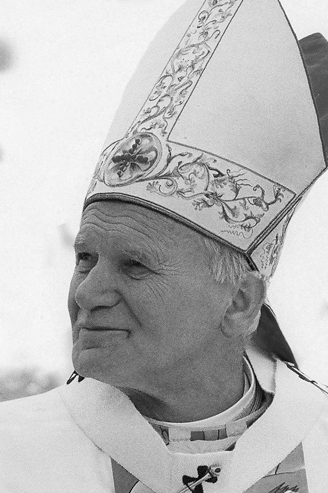
Pope Saint John Paul II’s First Good Friday Homily
ADDRESS OF HIS HOLINESS JOHN PAUL II AT THE CONCLUSION OF THE STATIONS OF THE CROSS AT THE COLOSSEUM Good Friday, 13 April 1979 When we make the Way of the Cross from one station to the next, in spirit we are always at the spot wherethis journey had its “historical” place: where it[…]Continue reading→
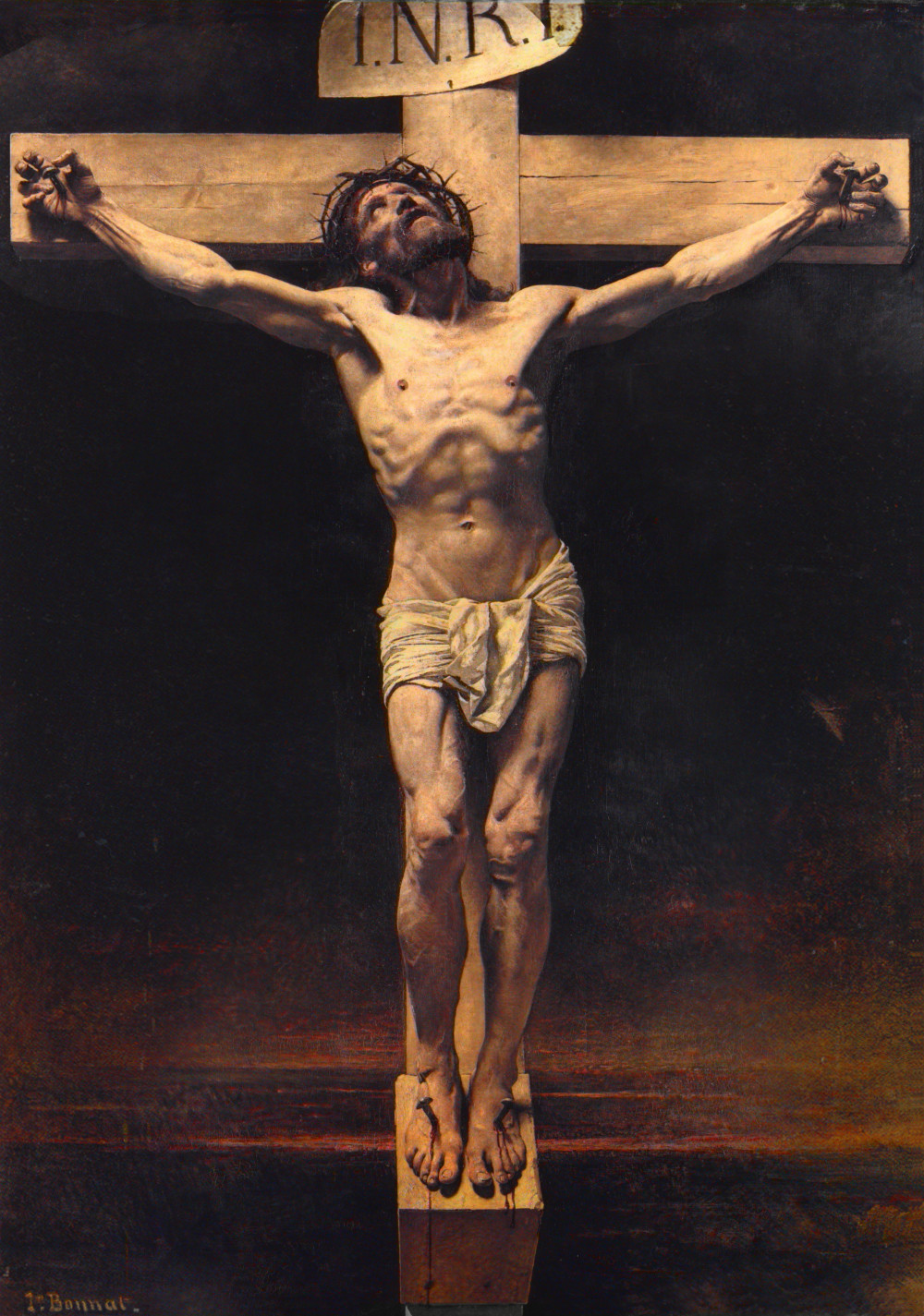
A Meditation for Good Friday: How To Undo the Effects of Sin?
Cardinal Newman, now Saint John Henry Newman, was a towering figure of nineteenth-century Catholicism who is almost universally admired. I say “almost” because not everyone likes him. I knew a priest once, Arthur Caulkins, who has become disenchanted with Newman. As an undergraduate Arthur had been enamoured of Newman, and this interest continued when he[…]Continue reading→
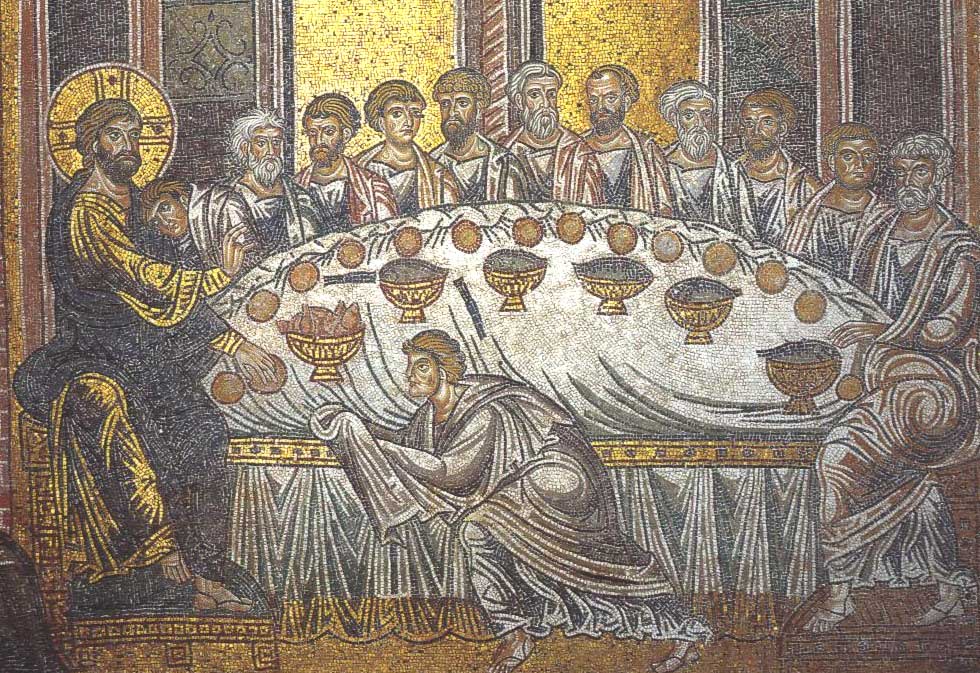
Pope Benedict’s Last Holy Thursday Homily
MASS OF THE LORD’S SUPPER HOMILY OF HIS HOLINESS BENEDICT XVI Basilica of St John Lateran Holy Thursday, 5 April 2012 Photo Gallery (Video) Dear Brothers and Sisters! Holy Thursday is not only the day of the institution of the Most Holy Eucharist, whose splendour bathes all else and in some ways draws it to[…]Continue reading→