
Twenty-Fourth Sunday: The Good Shepherd and the Love of God Incarnate
The saying is sure and worthy of full acceptance, that Christ Jesus came into the world to save sinners – of whom I am the foremost (1Tim. 1:15). ⧾
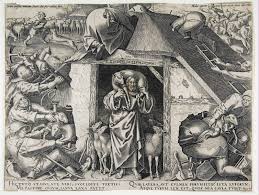
The parable of the Good Shepherd, perhaps one of the best known of Our Lord’s parables, communicates to us, and to all who have ever heard it the very essence of the Christian message: that Christ Jesus came into the world to save sinners. Through His parables Our Lord invites us to the feast of the Kingdom, but He also asks for a radical choice: to gain the kingdom, one must give everything. Words are not enough; deeds are required (Catechism of the Catholic Church, 546). Our Lord Himself exemplifies for us how we are to respond to Him because in His Sacrifice on the Cross He gives us everything of Himself. In speaking of Himself as the Good Shepherd who seeks out the lost sheep, Our Lord reveals the love that God has for us. This love is not a generic love, so to speak, but a personal love which searches for and rejoices in each person, especially those furthest from Him. ‘Rejoice with me for I have found my sheep that was lost.’ Just so I tell you, there will be more joy in heaven over one sinner who repents than over ninety-nine righteous persons who need no repentance (Lk. 15:6-7).
The parable of the Good Shepherd very simply communicates a very profound theological or religious truth, indeed the very essence of our Trinitarian faith in God: Who in becoming Man comes out of Himself, bridging the infinite distance between Creator and creature, and Who takes us by the hand, in such a way that with Christ we return to God and are united to Him in the loving communion of the Holy Trinity. This is the novelty of Christianity, and the fullest revelation of the truth of God in relation to the human person. It is a truth that each one of us can only fully understand and appreciate through the aid of a personal, prayerful relationship with Our Lord. This is a relationship which deepens through grace, imitation and love.
This love for Jesus, the Messiah, is something completely new, without any precedent in Judaism. Many texts of the Old Testament speak of how God would intervene and save His people, but the individual member of the Jewish people is never exhorted to love the Messiah. It is an undying love for the person of the Messiah which the first Christians saw as an essential way of expressing their relationship with Our Lord. This is new; and perhaps in part, it explains why the earliest representations of Our Lord favoured the Good Shepherd. ‘Rejoice with me for I have found my sheep that was lost.’ The boundless love of Our Lord for each one of us individually can only be returned by a personal love on our part, a love that please God, becomes the unconditional priority in our lives as we grow in the grace of our discipleship. This is why we endeavour to make the worship of God in the Mass the centre of our life, for here we listen attentively to Our Lord and receive Him with love and devotion in Holy Communion.
The Angelic Doctor, St. Thomas Aquinas says of the Eucharist that since it is the sacrament of Our Lord’s Passion, it contains in itself the Jesus Christ who suffered for us. Thus, whatever is an effect of Our Lord’s Passion is also an effect of this sacrament. For this sacrament is nothing other than the application of Our Lord’s Passion to us. What this means at a very personal and intimate level is that the grace that each one of receives in this Sacrament is a grace that corresponds to our own very specific needs: this grace heals in us what is specific to our own wounds, it sanctifies and fortifies what is good in us for God’s greater glory and our salvation. This is how the personal love of Our Lord for each one of us sanctifies us and enables us to reflect His own goodness, truth and beauty. St. Ambrose observed that the Church is beautiful in her saints. This is the wealth and power of the Church; not political prestige, not real estate, and certainly not the approval of worldly powers. ‘Woe to you when all men speak well of you, for so did their fathers to the false prophets’ (Lk. 6:26). We contribute to this commonwealth, what is held in common, by striving for holiness which is best defined as the perfection of charity. This is true of every saint, whether a martyr, or widow or virgin or confessor. What is the characteristic of saints, without exception? They cultivate friendship, because it is one of the noblest manifestations of the human heart and has something divine about it. When we cultivate a profound and intimate friendship with Our Lord, we develop a great capacity to befriend others and to lead them also to Our Lord, our origin and our ultimate destiny.
In the Eucharist, the Sacrament of His Sacred Passion, Our Lord increases in us that supernatural love or charity that is the friendship of man for God and for all that belong to Him (St. Thomas Aquinas). One of the effects of this Sacrament then, perhaps the most important in relation to our life in common is that it enables us to relate to others in a manner that transcends the selfishness and pettiness that are so often the cause of so much rancour and turmoil. Our Eucharistic Lord is not only the Good Shepherd who seeks out the lost sheep. As Man, He is our way to God and in the journey of life He teaches us to model our own life on His own life in gentleness and humility. He is our companion on the journey, the goal of the journey and the food our journey. As we make it our glory to praise and to worship the Most Holy Trinity in the Holy Sacrifice of the Mass, may the grace of the Holy Eucharist which we receive today take possession of our minds and bodies, so that its effects, and not our own desires, may always prevail in us (Prayer after Communion, Twenty-Fourth Sunday Per Annum, The Roman Missal). ⧾

Remembering Father Alphonse de Valk
(Today marks the sixth anniversary of the death of Father Alphonse de Valk, C.S.B., a faithful, courageous and indefatigable Basilian priest, pro-life-and-family apostle, and the founder of Catholic Insight magazine. Here is what we wrote those on his entering into eternity five years ago, as we continue to remember him in our prayers and thoughts)[…]Continue reading→

Divine Mercy Sunday – An Echo of Every Mass
Reach out your hand and put it in my side. Do not doubt but believe’… ‘My Lord and my God!’ (Jn. 20:18)). Today is Divine Mercy Sunday, and as we celebrate the end of the Easter Octave, we contemplate the wounded side of our Saviour, the Church’s source of life. On Good Friday in the[…]Continue reading→

Saint Stanislaus of Szczepanów
We celebrate Saint Stanislaus today (+ April 11, 1079), in light of this Easter Octave, a bishop and martyr who accepted the episcopacy only at the direct order of Pope Alexander II. He proved a wise and courageous leader of his flock, put to death by his own king, Boleslaus, for rebuking the monarch’s ‘immoral[…]Continue reading→
First Holy Communion: Sermon from May 16, 1943
Here is a sermon from the good old days by +Rev. Msgr. Vincent Nicholas Foy (August 14, 1915 – March 13, 2017), from 1943. Readers may recall that Pope Saint Pius X, by the decree Quam Singulari in 1910, lowered the customary age of reception of Holy Communion – after the rigours of the plague[…]Continue reading→
In the Glorious Light of Easter, Alleluia!
Set your minds on things that are above, not on things that are on earth, for you have died, and your life is hidden with Christ in God. When Christ who is your life is revealed, then you also will be revealed with him in glory (Col. 3:3-4). The Resurrection of Our Lord and Saviour[…]Continue reading→
An Ancient Homily for Holy Saturday
The time between Good Friday and Easter Sunday is one of waiting, in silence, as the world wonders – anticipates – what will happen, after the death of Christ. We re-live this time each year in the anamnesis of our liturgy, and in turn look forward to the glorious re-creation of all things at the[…]Continue reading→
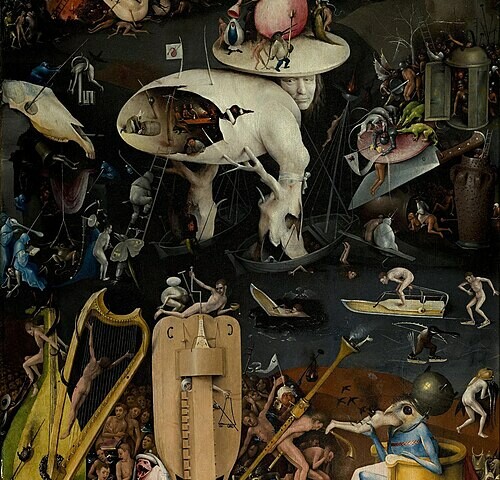
Europe’s Long Descent
(As we meditate on this day on Christ’s burial, and His descent into hell, it is fitting to ponder here with contributor Peter Marcus how the world seems to be heading there as well. The difference is that, although God cannot ‘redeem’ hell, nor those therein, He can and did redeem the world. There is[…]Continue reading→
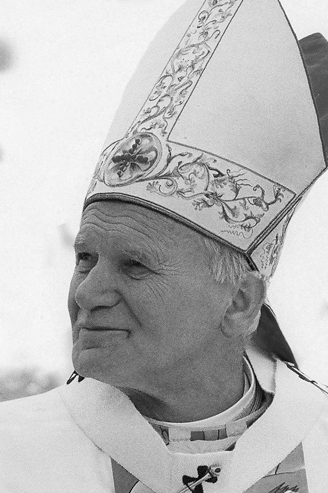
Pope Saint John Paul II’s First Good Friday Homily
ADDRESS OF HIS HOLINESS JOHN PAUL II AT THE CONCLUSION OF THE STATIONS OF THE CROSS AT THE COLOSSEUM Good Friday, 13 April 1979 When we make the Way of the Cross from one station to the next, in spirit we are always at the spot wherethis journey had its “historical” place: where it[…]Continue reading→
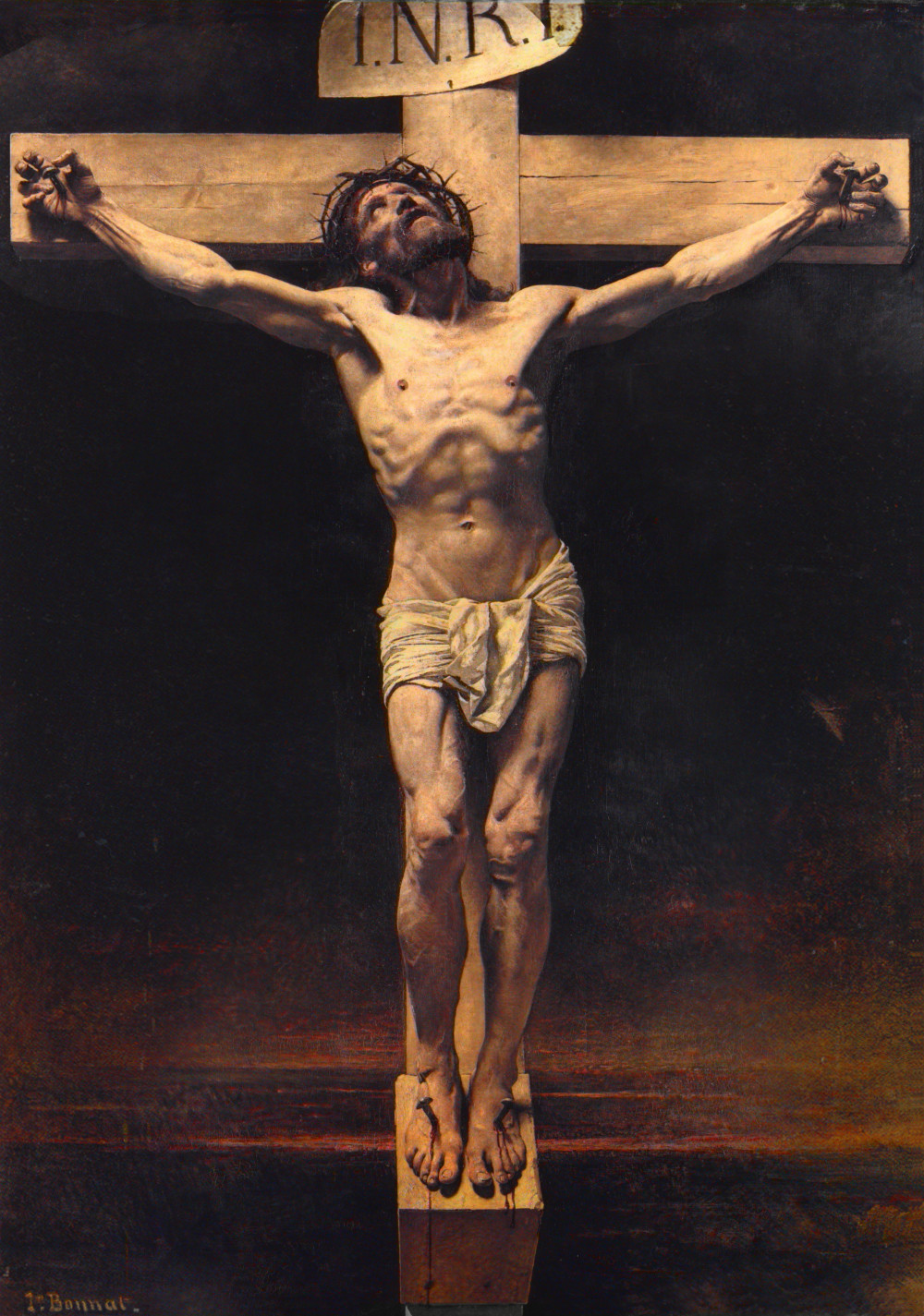
A Meditation for Good Friday: How To Undo the Effects of Sin?
Cardinal Newman, now Saint John Henry Newman, was a towering figure of nineteenth-century Catholicism who is almost universally admired. I say “almost” because not everyone likes him. I knew a priest once, Arthur Caulkins, who has become disenchanted with Newman. As an undergraduate Arthur had been enamoured of Newman, and this interest continued when he[…]Continue reading→
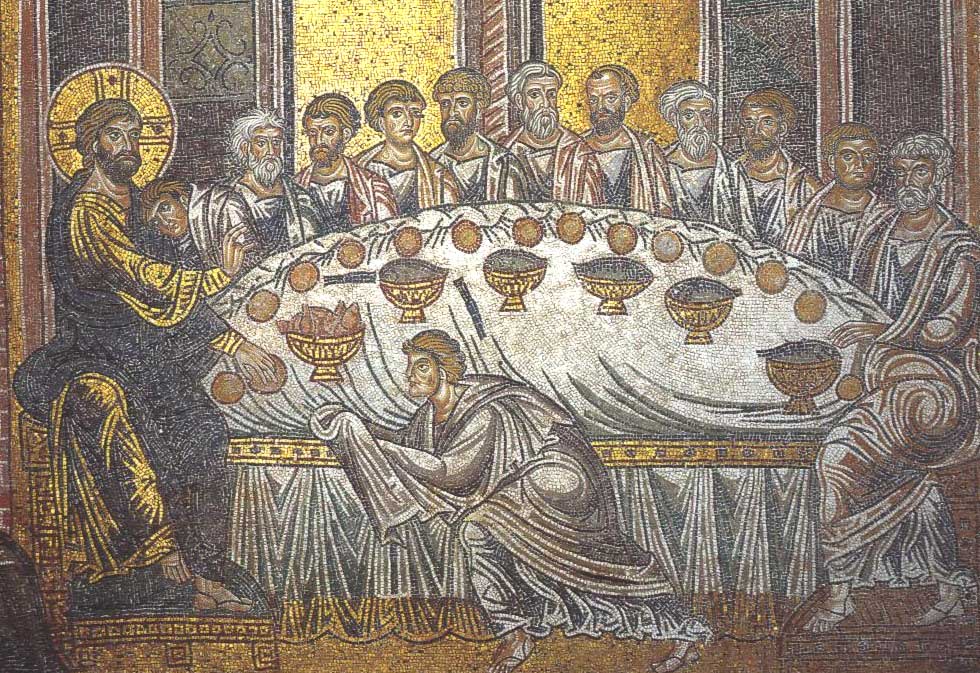
Pope Benedict’s Last Holy Thursday Homily
MASS OF THE LORD’S SUPPER HOMILY OF HIS HOLINESS BENEDICT XVI Basilica of St John Lateran Holy Thursday, 5 April 2012 Photo Gallery (Video) Dear Brothers and Sisters! Holy Thursday is not only the day of the institution of the Most Holy Eucharist, whose splendour bathes all else and in some ways draws it to[…]Continue reading→