

The Demands of the Christian Life
The Gospel of Luke combines inexpressible tenderness with an intolerable severity. Consider the contrast between the parables of the prodigal son or the good Samaritan with the harsh words in today’s Gospel: “I do not know you. . .; go away from me, you evildoers. There will be weeping and gnashing of teeth . . ..” Many equally distressing passages occur throughout the Gospels. Listen, e.g., to what befell the slave, whose debt had been forgiven by his master but who would not forgive his fellow’s debt:
And in anger his lord delivered him to the torturers, till he should pay it all.[1]
A similar text comes from the Sermon on the Mount.
Make friends quickly with your accuser . . ., lest he hand you over to the judge, and the judge to the guard, and you be put in prison; truly, I say to you, you will never get out till you have paid the last penny.[2]
There is also the passage about the timid slave who buried his master’s money?
Cast this worthless servant into the outer darkness; there men will weep and gnash their teeth.[3]
These texts continue a theme prominent in the Old Testament. Today’s first reading, from Isaiah 66, describes the glorious new Jerusalem where all the nations of the world will join the Jews in the worship of the one true God. But were you to examine verses that precede our text you would read the following:
For behold, the Lord will come in fire . . . to render his anger in fury . . .. by his sword, upon all flesh; and those slain by the Lord shall be many.[4]
One could multiply such references indefinitely, for a major theme of the Old Testament is God’s educating his people by punishing them for their infidelities; as the book of Proverbs states, “The Lord disciplines him whom he loves, and chastises every son whom he receives.”[5] “For what son is there,” the letter to the Hebrews adds, “whom the father does not discipline?”
These considerations lead us to a deeper comprehension of the Bible, Old and New Testament alike: the outlook is rigorously moral. There may be a primitive cosmology and difficulties in the historical narrative, but the voice of God, implicit in man’s conscience and explicit in divine revelation, is rigorous, unambiguous, even, one might say, relentless. The existence of a moral law independent of and superior to personal preference is, perhaps surprisingly, universal among mankind, for everyone has a conscience. Even the most brutal and tyrannous regimes, for instance, bear witness to this fact; they may brazenly imprison and even execute innocent men, but they will never admit doing so for they acknowledge that it is wrong to punish an innocent person. No, their victims are called “enemies of the state” whose activity, it is claimed, posed a threat to the common good. Similarly, proponents of abortion or gender fluidity defend their positions with argumentation that, however false it is, they would pass off as morally right.
Such is the human condition; there’s no escaping it. Man is essentially a moral animal, and as Pascal says: “You must play the game. It’s not a matter of choice; the wager has already been made.”[6] We, as Christians, take the words of Scripture to heart. Whatever they may mean for others, they certainly require me to examine my conduct with the greatest severity. The New Testament repeatedly states that salvation is a serious and demanding business: “I say unto you, that every idle word that men shall speak, they shall render an account for it in the day of judgment.” Saint Paul confirms these words in his letter to the Christians in Philippi: “Therefore, my beloved . . . work out your own salvation with fear and trembling.”[7]
It’s dangerous, for much is at stake: nothing less than access to eternal life. When you think of it, however, it is the danger that makes it attractive. Why do people climb mountains or sing opera? Because it’s dangerous: your foot might slip on some gravel, your voice might crack on that high note. Paradoxically, it’s the possibility of things going horribly wrong or gloriously right that draws people to one or the other. Well, the moral life is an exciting adventure, as risky as climbing a mountain or singing an opera. At each moment I have a momentous decision to make, for I must do the right thing, must put into effect my grace-filled good will in the service of God and my neighbour. It is difficult, but success will be achieved when I place my thoughts and actions under the direction of the Spirit of Jesus within me. Severe as its demands may seem to an outsider, the Christian way of life is food and drink to our starving, thirsting souls.
[1] Matt 18.34.
[2] Matt 5.25-26.
[3] Matt 25.30.
[4] Is 66.15-16.
[5] Prov 3.12.
[6] Blaise Pascal, Pensée 451 (Brunschvicg 3): “. . . il faut parier. Cela n’est pas volontaire, vous êtes embarqué.”
[7] Phil. 2.12.; cf. Mk 5.33; Act 16:29; 1 Cor 2.3; 2 Cor 7.16; Eph 6.5.

Saint Kateri , Canada’s Protectress
This was the title given to Saint Kateri Tekakwitha, by Pope Benedict XVI, when he canonized her on October 28th, 2012, along with six others, in Saint Peter’ Square (she had been beatified by Pope John Paul II back in 1980). With Saint Joseph as our protector, along with the Canadian martyrs, we seem to[…]Continue reading→

Remembering Father Alphonse de Valk
(Today marks the sixth anniversary of the death of Father Alphonse de Valk, C.S.B., a faithful, courageous and indefatigable Basilian priest, pro-life-and-family apostle, and the founder of Catholic Insight magazine. Here is what we wrote those on his entering into eternity five years ago, as we continue to remember him in our prayers and thoughts)[…]Continue reading→

My Name is Bernadette
April 16th is a propitious day, for besides the anniversary of Father de Valk’s death, who founded Catholic Insight in its print form decades ago, and the commemoration of the ‘two Benedicts’, mentioned in accompanying posts, today we also recall Saint Bernadette Soubirous, the young visionary to whom the Virgin Mary appeared numerous times at[…]Continue reading→

Canonizing Sister Faustina and Divine Mercy
HOMILY OF THE HOLY FATHER MASS IN ST PETER’S SQUARE FOR THE CANONIZATION OF SR MARY FAUSTINA KOWALSKA Sunday, 30 April 2000 1. “Confitemini Domino quoniam bonus, quoniam in saeculum misericordia eius”; “Give thanks to the Lord for he is good; his steadfast love endures for ever” (Ps 118: 1). So the Church sings on the Octave of[…]Continue reading→

Divine Mercy Sunday – An Echo of Every Mass
Reach out your hand and put it in my side. Do not doubt but believe’… ‘My Lord and my God!’ (Jn. 20:18)). Today is Divine Mercy Sunday, and as we celebrate the end of the Easter Octave, we contemplate the wounded side of our Saviour, the Church’s source of life. On Good Friday in the[…]Continue reading→

Saint Stanislaus of Szczepanów
We celebrate Saint Stanislaus today (+ April 11, 1079), in light of this Easter Octave, a bishop and martyr who accepted the episcopacy only at the direct order of Pope Alexander II. He proved a wise and courageous leader of his flock, put to death by his own king, Boleslaus, for rebuking the monarch’s ‘immoral[…]Continue reading→
First Holy Communion: Sermon from May 16, 1943
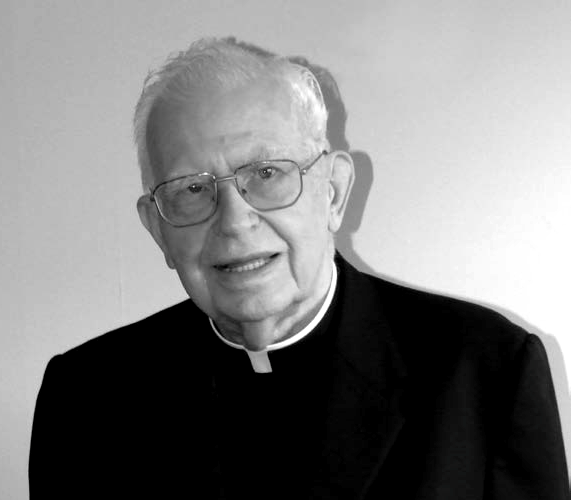
Here is a sermon from the good old days by +Rev. Msgr. Vincent Nicholas Foy (August 14, 1915 – March 13, 2017), from 1943. Readers may recall that Pope Saint Pius X, by the decree Quam Singulari in 1910, lowered the customary age of reception of Holy Communion – after the rigours of the plague[…]Continue reading→
In the Glorious Light of Easter, Alleluia!
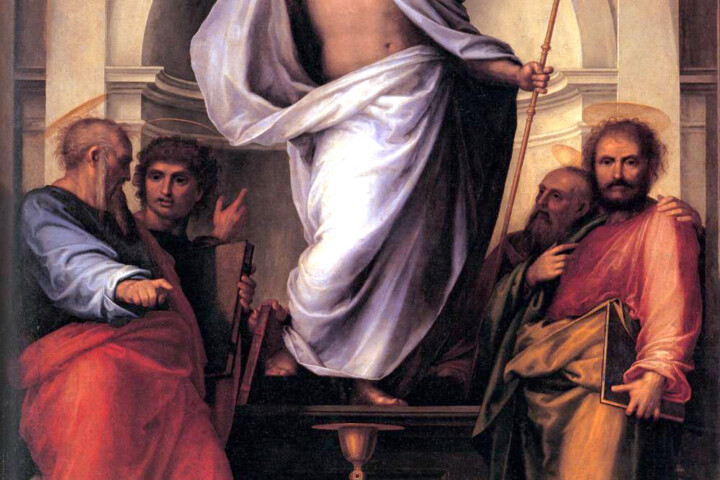
Set your minds on things that are above, not on things that are on earth, for you have died, and your life is hidden with Christ in God. When Christ who is your life is revealed, then you also will be revealed with him in glory (Col. 3:3-4). The Resurrection of Our Lord and Saviour[…]Continue reading→
An Ancient Homily for Holy Saturday
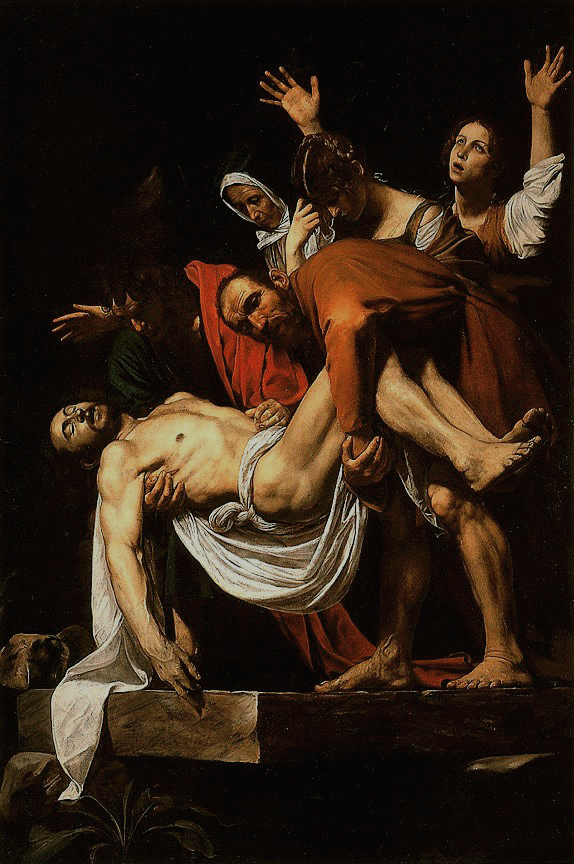
The time between Good Friday and Easter Sunday is one of waiting, in silence, as the world wonders – anticipates – what will happen, after the death of Christ. We re-live this time each year in the anamnesis of our liturgy, and in turn look forward to the glorious re-creation of all things at the[…]Continue reading→
Europe’s Long Descent
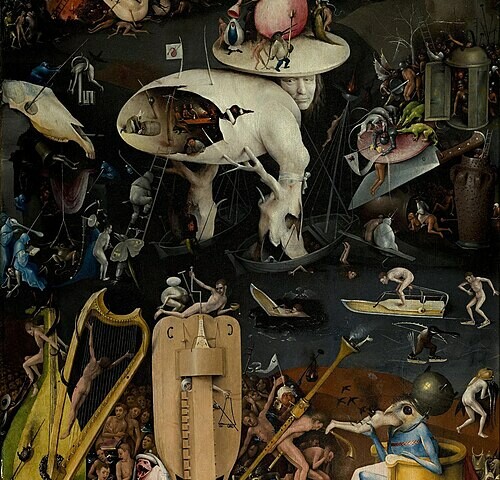
(As we meditate on this day on Christ’s burial, and His descent into hell, it is fitting to ponder here with contributor Peter Marcus how the world seems to be heading there as well. The difference is that, although God cannot ‘redeem’ hell, nor those therein, He can and did redeem the world. There is[…]Continue reading→