
The Moment of Resurrection, Expressed in Bronze
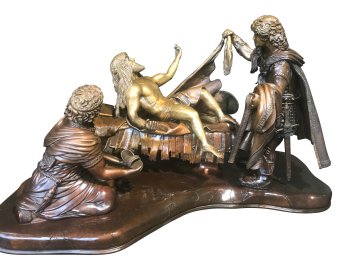
Artist Miles Tucker’s latest bronze sculpture is designed to inspire and fortify faith by depicting the precise moment of Jesus’ resurrection within the tomb three days after his crucifixion. The master work is biblically and historically accurate, with exquisite detailing, and is unique in depicting this specific moment, which is so important in the Christian Faith.
“There really haven’t been any notable artistic reproductions of Jesus’ moment of resurrection in his tomb. So, I studied scripture very carefully, because I wanted to ensure this depiction is as close as possible to what it might have been like if someone was there watching Jesus come back to life,” says Miles. He also conducted considerable scholarly research and conferred with priests, religious historians, and religious/bronze art experts.
Tucker comes from a long line of artists including his grandmother, mother, and older sister. His love for art started at age five, when he first began spending countless hours wandering art museums and galleries in Houston with his mother.
In the late 1970s, Tucker began his professional career as a fulltime artist and his art became recognized in newspapers, national publications, and national TV programs. He has created sculptures for the Grand Floridian Hotel in Disney World, as well as commissioned work for churches and celebrities. Before he started working with bronze in 2013, he was a renowned artist specializing in custom wood sculptures with clients such as Catholic churches, Michael Landon, and Walt Disney.
The Resurrection
Tucker’s latest bronze sculpture, titled the Resurrection, uses the ancient lost wax casting process, which captures exceptionally fine details in metals. The process has been used since 3000 B.C. to visually capture the most cherished stories of religions and cultures throughout history. Essentially, Tucker builds a mold around a sacrificial wax model, and after the mold investment is set, the wax is melted out and forms a cavity where the bronze flows in.
Even among sculptors using the lost wax casting process, Tucker’s bronze art is exceptionally detailed. To ensure the finest details transferred to the final product, the foundry where he does his work had to increase the temperatures at casting well beyond standard levels.
Tucker, who is known for incorporating extraordinary realism and detail that only reveals itself upon multiple viewings, points to a few of the notable nuances in his Resurrection sculpture.
“[In the tomb] there was a shroud that covered Jesus’ body, which the archangel Michael is helping to remove. He has the sword of righteousness at his side. He has wrist cuffs that display a flaming sword. On his shin guards, there are two cherubs that helped to guard the Tree of Life [in the Garden of Eden]. His belt buckle is very reminiscent of the Flood,” says Tucker.
On a more earthly level, the angel Gabriel holds Jesus’ shoe. Also, strips of linen are clearly visible on either side of Jesus’ burial platform.
As a believer, however, Tucker is clearly focused on the spiritually transcendent meaning of the resurrection. He depicts Christ at the sculpture’s center with his face turned upward to the heavens.
“One of the first things Jesus would do when he came back to life would be to acknowledge the Lord. That is why his hand reaches upward and he is looking up to his Father,” says Tucker.
He adds, “This sculpture of Jesus defeating death and returning to life in the tomb shows us that we can have everlasting life. Jesus is inviting us to be part of that everlasting life. He is teaching us that, in his sacrifice which absolves us of our sins, there is joy in living and joy after life. It is beautiful. We really need to see him like this, triumphant.”
Tucker has had the opportunity to present his most recent sculpture to several churches, and the response has been overwhelming.
“A lady said that when she walked up [to the sculpture] she felt as if she had just walked into Jesus’ tomb and couldn’t hold back her tears. She could finally see what it might have been like when Jesus came back to life. There is no telling how many people could be moved and touched by a piece like this – it could change lives,” says Tucker.
To make the Resurrection sculpture as widely available as possible, Tucker is offering it to churches, individuals, art dealers and museums with individual serial numbers. The sculptures are available in the round, three-dimensional, or in deep relief to hang on a wall or sit on a desktop.
Although Tucker’s sculpture of Christ’s resurrection in the tomb is his latest, he has long expressed his faith through his art. Another of his bronze sculptures, the Pieta, expands upon Michelangelo’s famous work of the same name, which depicts the dead body of Jesus after his crucifixion, draped across the Virgin Mary’s lap as she looks down upon his body in grief.
In contrast, Tucker’s version of the Pieta depicts several men and women who not only supported Christ in life, but also supported Mary in her anguish after his crucifixion.
“We have the crown of thorns, the nails that were driven into his hands, and the nail in his feet. But these people – men and women – have united around the sacrificial body of Christ. He is in the center, surrounded by those who love him, and each of us is one of these people,” says Tucker.
In this work of art, Tucker captures the essence of uniting our faith with the suffering faith of Christ himself. Still, the artist sought to convey the transcendent meaning of Christ’s sacrifice to believers.
“When I was sculpting [my Pieta], I wanted it to express love and joy. I like to put my hand on Jesus’ hand and think of what he went through in this moment of time for us, out of love. Hopefully, it can speak to your heart. You can imagine yourself as one of these incredible figures that loved and supported Jesus, as he does us today,” concludes Tucker.
Throughout history, some of the world’s greatest artists and artwork, such as Michelangelo’s sculpture the Pieta, have been inspired by a deep and abiding faith.
In a world that needs inspiration more than ever today, the heartfelt religious sculpture of artists like Miles Tucker may be just what the world needs – a loving invitation to experience biblical truth and salvation in all the detail and glory that artistry allows.
For more information: call (775) 447-6409; email sales@milestuckerart.com; visit www.milestuckerart.com.
A Closed, Unsustainable, Descending Loop
As a follow-up to my thoughts on Payette’s payout, here be a stark image of where are here in Canada. As the graph shows in, well, graphic terms, since 2025, the public sector has contributed to 95.5% of economic growth. The private sector – which funds the public sector, or is supposed to – has[…]Continue reading→

Remembering Father Alphonse de Valk
(Today marks the sixth anniversary of the death of Father Alphonse de Valk, C.S.B., a faithful, courageous and indefatigable Basilian priest, pro-life-and-family apostle, and the founder of Catholic Insight magazine. Here is what we wrote those on his entering into eternity five years ago, as we continue to remember him in our prayers and thoughts)[…]Continue reading→
Presidential Pardon of Weronika Krawczyk
As a good news, follow-up to our story from Poland, of the persecution of Weronika Krawczyk for her pro-life views, we heard that she has been granted a presidential pardon. One might still wonder why one needs a presidential pardon for simply holding the long-held belief that the child within the womb is a child,[…]Continue reading→
Pope Leo and a Rosary for Peace
Pope Leo XIV has asked Catholics across the world to join him in a Rosary for peace today, at 18:00 Rome time (6 pm), which would be noon from where I write (EST). If you are able, whether at that time or another, and in whatever way you pray, to join in intercession with the[…]Continue reading→
Payette’s Payout
I was glancing through some headlines, and noticed a mention of Julie Payette – engineer and astronaut and sometime the Queen’s representative in Canada – which brought back vague memories. She was appointed Governor-General by Justin Trudeau in 2017. Ms. Payette resigned in 2021, amidst claims that she created a ‘toxic work environment’, with allegations[…]Continue reading→

Saint Stanislaus of Szczepanów
We celebrate Saint Stanislaus today (+ April 11, 1079), in light of this Easter Octave, a bishop and martyr who accepted the episcopacy only at the direct order of Pope Alexander II. He proved a wise and courageous leader of his flock, put to death by his own king, Boleslaus, for rebuking the monarch’s ‘immoral[…]Continue reading→
Weronika Krawczyk and Injustice in Poland
Catholic Action in Poland has issued a formal statement appealing to the President of the Republic of Poland to pardon Weronika Krawczyk—convicted for warning other women against an abortion-performing gynaecologist. Catholic Action (AK) emphasizes that no apology is owed to a doctor who has performed numerous abortions and proposed others; furthermore, the organization considers the[…]Continue reading→
Three Easter Musical Gems: Bach, Palestrina and Byrd
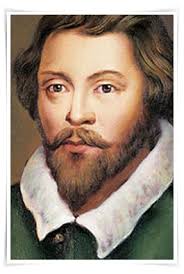
A very blessed and glorious Easter! Christus surrexit vere, alleluia! As we begin this Easter Octave with the great Solemnity of Easter, music to lift the soul would be one of Bach’s Easter cantatas, composed during his time at Leipzig in the early 1700’s, for the six Sundays of this festive season, leading up to[…]Continue reading→
Saint Isidore of Seville, the Internet and Industriousness
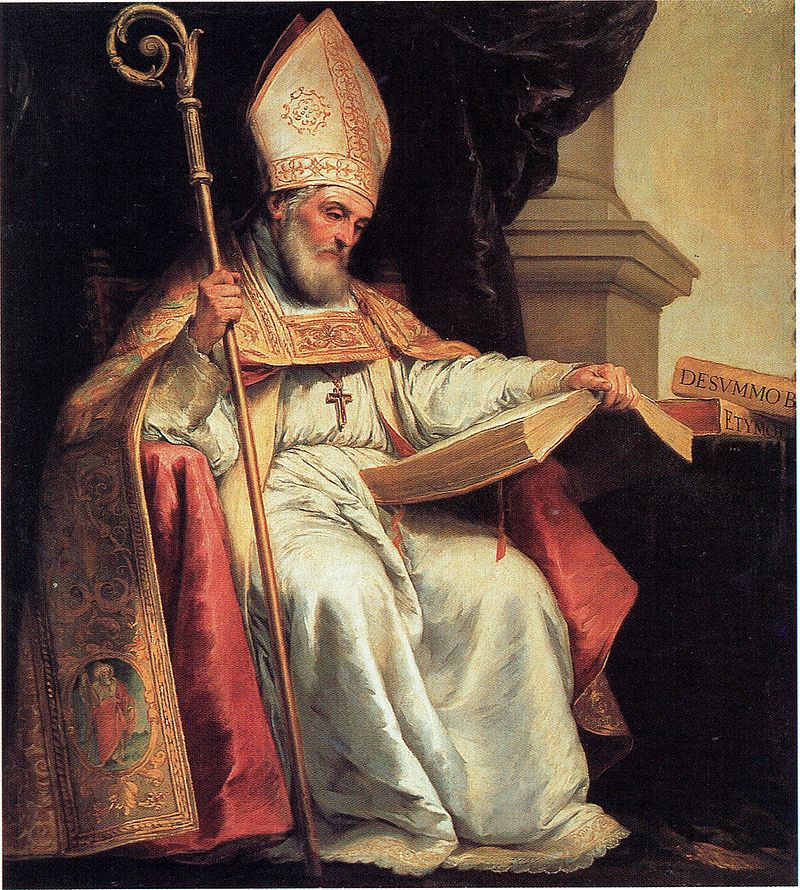
Today, April 4th, muted this year by Holy Saturday, is the commemoration of Saint Isidore of Seville (560-636) a bishop and doctor of the Church during a tumultuous age, when civilization was crumbling, coming apart at its very seams, which may sound sort of au courant. Then again, the form of this world has always[…]Continue reading→
An Ancient Homily for Holy Saturday
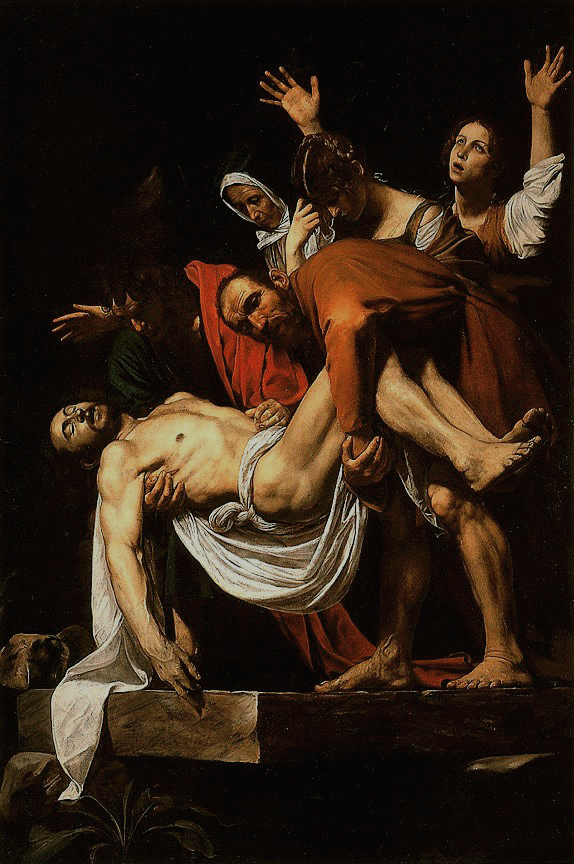
The time between Good Friday and Easter Sunday is one of waiting, in silence, as the world wonders – anticipates – what will happen, after the death of Christ. We re-live this time each year in the anamnesis of our liturgy, and in turn look forward to the glorious re-creation of all things at the[…]Continue reading→