
Sic Transit Gloria Mundi
In 1540, on this 27th day of July, Henry VIII married his fifth wife, Catherine Howard. He was 49, and aged well beyond his years, even for that era, grossly overweight, with boils, and likely syphilis. She may have been 18, a frivolous young woman, who did not long survive the marriage, being soon accused of adultery, stripped of her title as queen in 1541, and beheaded in 1542.
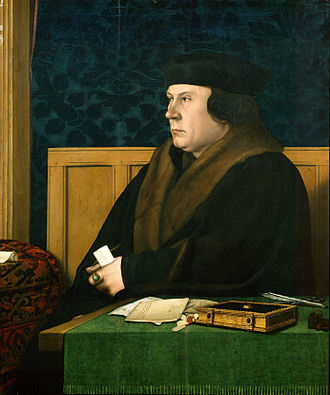
Also on this day in 1540, Henry had his former chancellor, confidant and boon companion, Thomas Cromwell, beheaded. He had a habit of that, killing his sometime intimates while adopting new ones. He married Jane Seymour, his third wife, on May 20, 1536, the very day after he had Anne Boleyn beheaded, yes, alluring Anne, for whom he started all his mess.
Cromwell had succeeded another Thomas as chancellor – More, whose death Cromwell helped arrange, but who died a saint, refusing to submit to the king’s disordered command. Not so Cromwell, an opportunist, who took full advantage of his power, dissolving every single monastery in England, having monks murdered, and enriching himself, along with many of the king’s lapdog ministers, in the process. Hence, all the ‘abbeys’ that provided the ‘manor homes’ of the compromised aristocracy of England – they were, and are, not what they once were, Jane Austen’s Mr. Darcy’s notwithstanding.
But Cromwell himself soon fell out of favour with the fickle king, after he arranged a disastrous marriage with the Protestant Anne of Cleves in January of 1540. Henry, himself at this point no poster boy, found her not attractive enough, and the marriage may never have been consummated. Anne survived, being put out on a pension, but Thomas did not. His preparation for death, such as it was, consisted of blubbering and begging the king for the mercy he so mercilessly denied others. But he did make a profession of the Catholic faith on the scaffold, perhaps for political reasons – Henry, ironically, hated heresy – but we hope there was some true repentance therein.
Henry himself would meet his own inglorious end in 1547, becoming ever-more vindictive as his death approached, perhaps a manifestation of madness brought on by his disease, exacerbating whatever spiritual maladies were within him. He apparently had ten thousand Masses said for his soul, but they only benefit if, again, there was repentance. One Mass would suffice, as would one act of contrition. We leave that to God.
In one of those coincidences of providence, on this day in 1794, Maximilien Robespierre and Antoine de Saint Just, the two instigators of the final, bloody days of the French Revolution, were themselves devoured by the beast, the Great Terror they had let loose. They played upon the fears of the populace, that France’s enemies were about to destroy their new-found freedom, equality and fraternity – such as they were. During those dark days, brothers, sisters, neighbours, friends, accused each other, to save themselves. The guillotine severed thousands of heads, blood ran deep in the Place de la Revolution, and people were murdered for the flimsiest of reasons, or no reason at all. A mere accusation of not being ‘revolutionary enough’, was itself enough. Eventually, the people had had enough, and Robespierre and Saint Just, along with a number of their fellow murderers, were themselves accused. Like the later captured Nazis, many tried to commit suicide, including Robespierre, who botched the job, like Hitler in his bunker, managing to simply shoot his jaw off, and he went under the blade moaning in agony. We may again, hope, that that last bit of suffering led him to ponder how he had made so many suffer.
Sic transit gloria mundi. Every leader, good, bad or indifferent, has their day, as do we all. We must make good with what time we have, and what we are given, and so prepare ourselves for eternity, by the grace of God.
Part of that preparation is praying for those in high places, for the mighty will be mightily judged. Thank the good God if you are simple and unknown. Amare nesciri, said Saint Philip Neri, ‘love to be unknown!’. Do the duty of the moment, and if our leaders, secular or spiritual, make that difficult, well, use that to help make us more holy. God has all our souls in the balance – what we are before Him, that we are, and nothing more. May we not be found wanting, when the end comes, as it does for us all. +

Carney’s Amoral Majority
After five defections – euphemistically described as ‘crossing the floor’ – and three by-elections, Mark Carney and his Liberals how have their coveted majority. One wonders what bowls of pottage were offered in back-room deals. In the archaic monarchical system that is the Dominion of Canada, this majority allows the newly-minted Prime Minister to rule[…]Continue reading→
A Closed, Unsustainable, Descending Loop
As a follow-up to my thoughts on Payette’s payout, here be a stark image of where are here in Canada. As the graph shows in, well, graphic terms, since 2025, the public sector has contributed to 95.5% of economic growth. The private sector – which funds the public sector, or is supposed to – has[…]Continue reading→

Remembering Father Alphonse de Valk
(Today marks the sixth anniversary of the death of Father Alphonse de Valk, C.S.B., a faithful, courageous and indefatigable Basilian priest, pro-life-and-family apostle, and the founder of Catholic Insight magazine. Here is what we wrote those on his entering into eternity five years ago, as we continue to remember him in our prayers and thoughts)[…]Continue reading→
A Tale of Two Benedicts
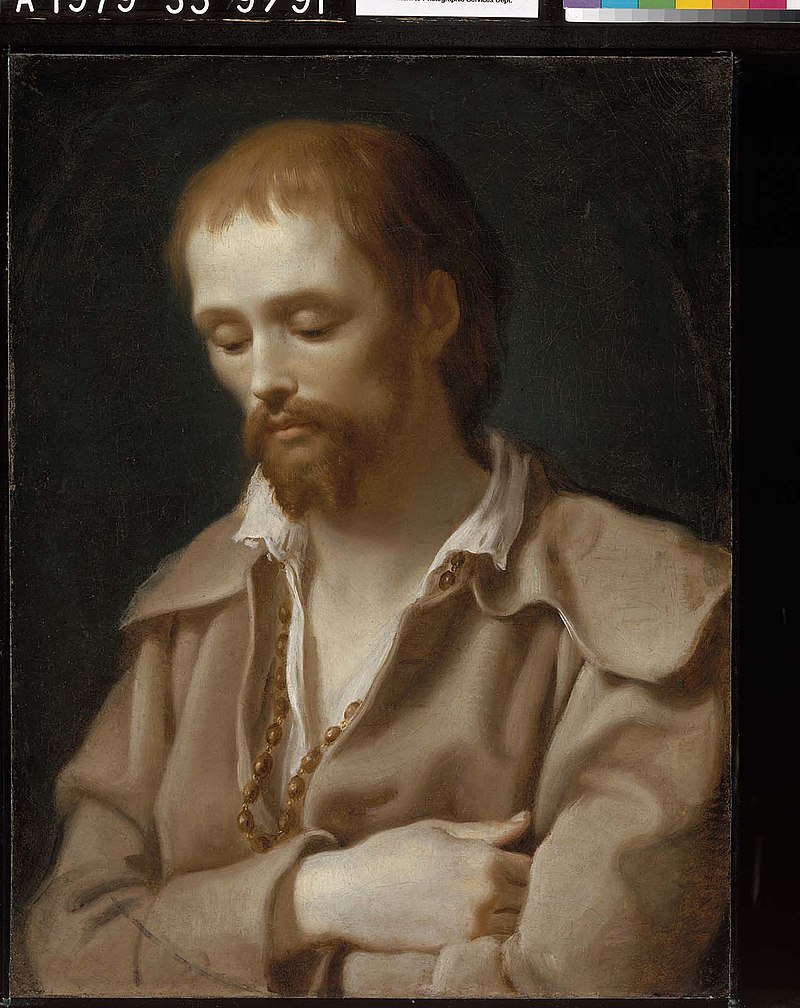
A grace-filled Holy Week to all our readers! As we await and prepare for the Resurrection about to dawn upon us, we might keep in mind two Benedicts: Pope Emeritus Benedict XVI, requiescat in pace, elected on this day in 2005; and today’s commemoration of the mystic pilgrim, Benedict Joseph Labre, who died on this[…]Continue reading→
Presidential Pardon of Weronika Krawczyk
As a good news, follow-up to our story from Poland, of the persecution of Weronika Krawczyk for her pro-life views, we heard that she has been granted a presidential pardon. One might still wonder why one needs a presidential pardon for simply holding the long-held belief that the child within the womb is a child,[…]Continue reading→
Saint Lydwina of Schiedam and Suffering Joyfully
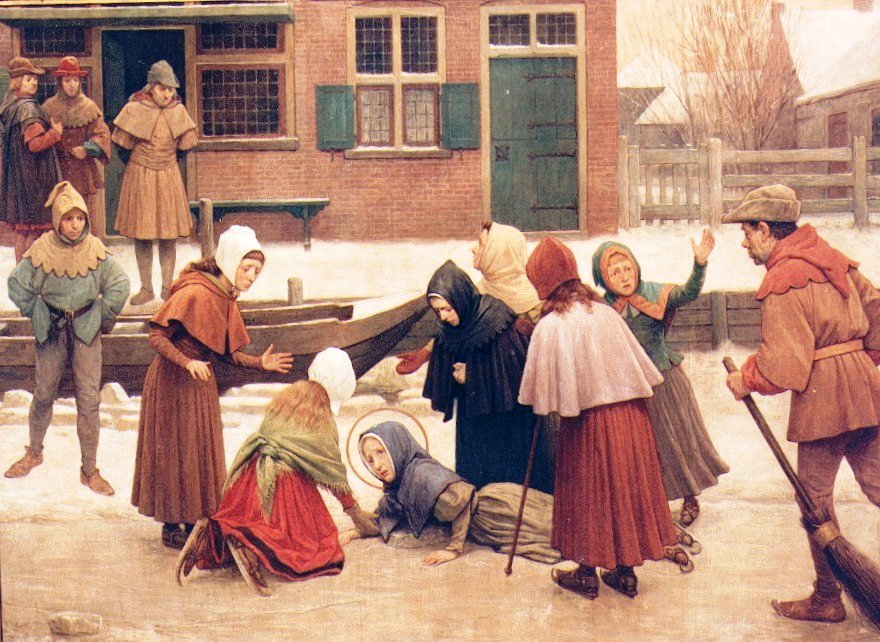
Saint Lydwina of Schiedam (1380 – 1433) was one of the countless and glorious ‘victim souls’ in the history of the Church, those whose lives are filled with suffering, often of an unimaginable intensity, but who suffer joyfully. She was a fifteen-year old Dutch girl, out skating one day, when she fell and broke one[…]Continue reading→
The Glorious Martyrdoms of Martin and Maximus
As we enter into Eastertide, we recall on this 13th of April Pope Saint Martin I (+655), one of the noblest, if most tragic, of the successors of Saint Peter. Born in Umbria, Italy, he was of noble lineage, with great intelligence combined with charity and love of the poor and the Church. While still[…]Continue reading→
Pope Leo and a Rosary for Peace
Pope Leo XIV has asked Catholics across the world to join him in a Rosary for peace today, at 18:00 Rome time (6 pm), which would be noon from where I write (EST). If you are able, whether at that time or another, and in whatever way you pray, to join in intercession with the[…]Continue reading→
Payette’s Payout
I was glancing through some headlines, and noticed a mention of Julie Payette – engineer and astronaut and sometime the Queen’s representative in Canada – which brought back vague memories. She was appointed Governor-General by Justin Trudeau in 2017. Ms. Payette resigned in 2021, amidst claims that she created a ‘toxic work environment’, with allegations[…]Continue reading→

Saint Stanislaus of Szczepanów
We celebrate Saint Stanislaus today (+ April 11, 1079), in light of this Easter Octave, a bishop and martyr who accepted the episcopacy only at the direct order of Pope Alexander II. He proved a wise and courageous leader of his flock, put to death by his own king, Boleslaus, for rebuking the monarch’s ‘immoral[…]Continue reading→