
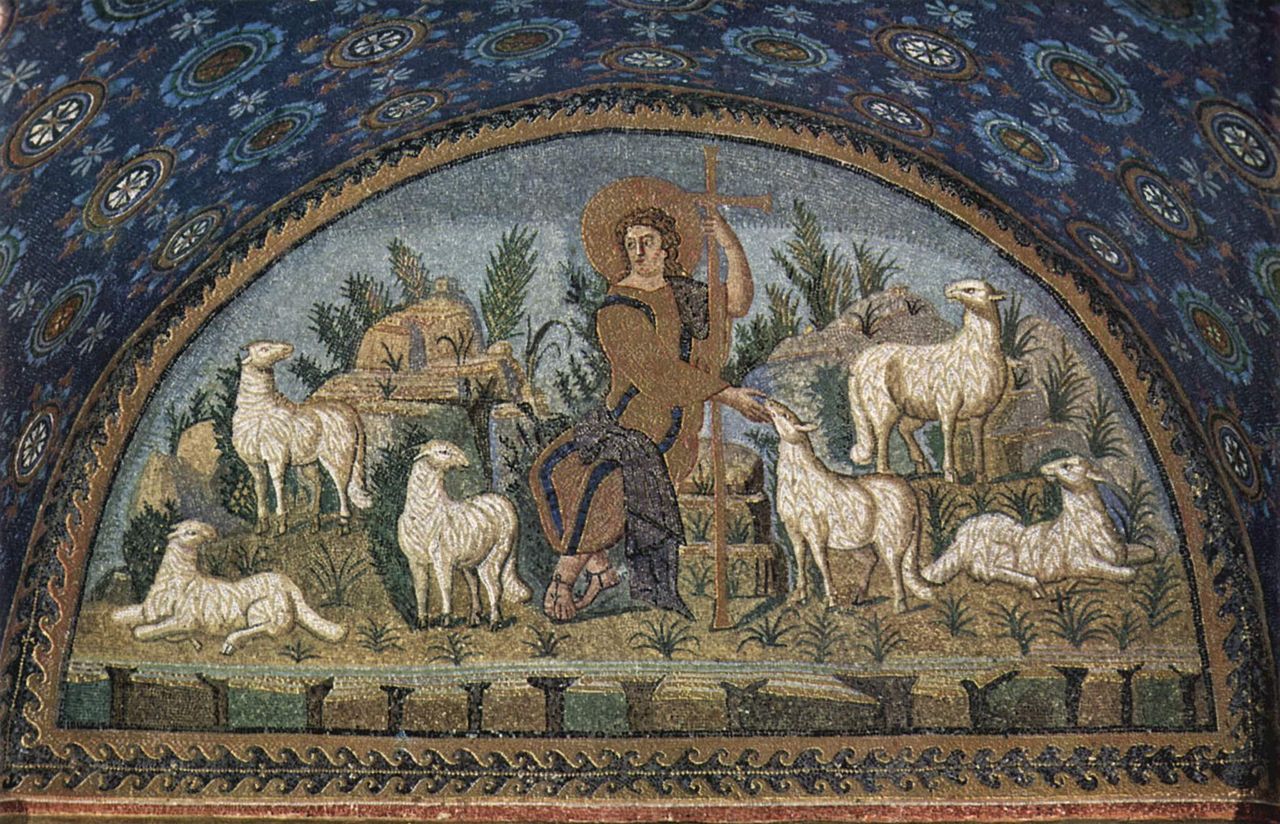
The Good Shepherd Never Leaves His Flock
Has any one of you been a shepherd? or even seen one? Do shepherds exist in contemporary North America? Nevertheless, we know instinctively that when Jesus refers to himself as the good shepherd, he is expressing his loving concern for his “flock,” i.e., his followers. You might well ask, therefore, why he did not simply say something like this: “I have a loving concern for each one of you.” The answer to this question takes us to the heart of our religion, in that it reminds us of the method of God’s revelation to his people. For the fact is that he addressed a particular person at a particular time and place; and the people so addressed were, like Abraham, shepherds, who moved from place with their herds, that could include goats and cattle as well as sheep; but no pigs—they are too unruly and, for this reason, perhaps, were declared unclean. So you see: in order to address Abraham and entrust him with the formation of the chosen people, God had to use human language and refer to experiences that Abraham knew. Thus it was that shepherds and shepherding provided the metaphors God used to reveal something about himself—“The Lord is my shepherd, I shall not want”[1]—and about the Messiah—“He was led like a lamb to the slaughter.”[2] It’s amazing how widespread is the use of this image. David, as the shepherd king, for example, became a personification of the Messiah: “I will set up over them one shepherd, my servant David, and he shall feed them: he shall feed them and be their shepherd.”[3]
I’ve been trying to come up with a contemporary parallel to the good shepherd, to identify some element of our society that could convey more readily to us today what the image of the shepherd meant to the ancient Hebrews and the early Christians. It’s not easy, for there seems to be nothing in politics or other fields that would serve the purpose. I cannot imagine praying to “Jesus, the good prime minister” or “the good MP.” Nor are sports much use in this regard. Could you imagine Jesus as “the good coach” or “the good referee”? It’s worse when we consider industry or entertainment, for I can hardly picture Jesus as chairman of the board or as foreman on the factory floor, much less as Jesus as the winner of an Oscar for acting or of a Juno for singing. It may well be, then, that there is no modern equivalent to the good shepherd; and I think I know why. Being a shepherd was a full-time occupation; he does nothing but watch over his flock, including when he is eating or when he is sleeping; for even at those times he maintains an awareness of the condition of the flock and is immediately alert to the situation should something go wrong. All the other occupations, laudable as they may be at best, are part-time. The entertainer, the MP, the businessman, they all go home and put aside pre-occupations about their work. But the shepherd is present twenty-four/seven, if I may use an anachronism in referring to a time when there were no clocks.
It is this aspect of shepherding that makes it particularly apt as an image of God’s care for his people. For God, too, is always on the job, always available to listen to our prayers and attend to our needs. The mystery of divine providence is this: that God’s attention is directed to me as intensely as if I were the only person alive now, or who ever had existed, or ever will. Jesus himself confirms this fact: “Are not two sparrows sold for a penny? And not one of them will fall to the ground without your Father’s will. Why, even the hairs of your head are all numbered.”[4] For God is totally present everywhere active in preserving creation in existence, just as the Spirit of Jesus is fully present in each and every Christian at all times and places. How rich and reassuring, then, are the words we heard a moment ago as the Gospel was read: “My sheep hear my voice. I know them, and they follow me.”[5]
[1] Ps 22/23,1.
[2] Is 53.7.
[3] Ez 34.23.
[4] Lk 12.6-7
[5] Jn 10.14.

Remembering Father Alphonse de Valk
(Today marks the sixth anniversary of the death of Father Alphonse de Valk, C.S.B., a faithful, courageous and indefatigable Basilian priest, pro-life-and-family apostle, and the founder of Catholic Insight magazine. Here is what we wrote those on his entering into eternity five years ago, as we continue to remember him in our prayers and thoughts)[…]Continue reading→

Divine Mercy Sunday – An Echo of Every Mass
Reach out your hand and put it in my side. Do not doubt but believe’… ‘My Lord and my God!’ (Jn. 20:18)). Today is Divine Mercy Sunday, and as we celebrate the end of the Easter Octave, we contemplate the wounded side of our Saviour, the Church’s source of life. On Good Friday in the[…]Continue reading→

Saint Stanislaus of Szczepanów
We celebrate Saint Stanislaus today (+ April 11, 1079), in light of this Easter Octave, a bishop and martyr who accepted the episcopacy only at the direct order of Pope Alexander II. He proved a wise and courageous leader of his flock, put to death by his own king, Boleslaus, for rebuking the monarch’s ‘immoral[…]Continue reading→
First Holy Communion: Sermon from May 16, 1943
Here is a sermon from the good old days by +Rev. Msgr. Vincent Nicholas Foy (August 14, 1915 – March 13, 2017), from 1943. Readers may recall that Pope Saint Pius X, by the decree Quam Singulari in 1910, lowered the customary age of reception of Holy Communion – after the rigours of the plague[…]Continue reading→
In the Glorious Light of Easter, Alleluia!
Set your minds on things that are above, not on things that are on earth, for you have died, and your life is hidden with Christ in God. When Christ who is your life is revealed, then you also will be revealed with him in glory (Col. 3:3-4). The Resurrection of Our Lord and Saviour[…]Continue reading→
An Ancient Homily for Holy Saturday
The time between Good Friday and Easter Sunday is one of waiting, in silence, as the world wonders – anticipates – what will happen, after the death of Christ. We re-live this time each year in the anamnesis of our liturgy, and in turn look forward to the glorious re-creation of all things at the[…]Continue reading→
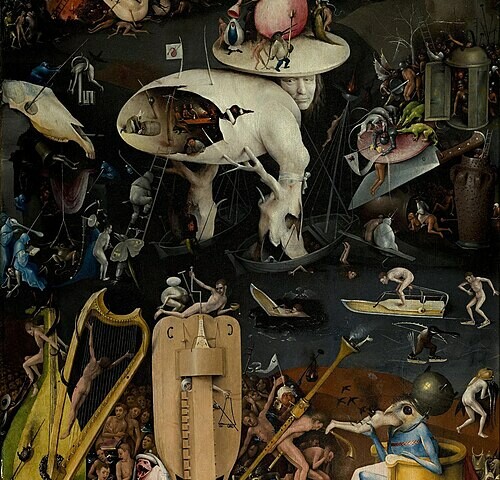
Europe’s Long Descent
(As we meditate on this day on Christ’s burial, and His descent into hell, it is fitting to ponder here with contributor Peter Marcus how the world seems to be heading there as well. The difference is that, although God cannot ‘redeem’ hell, nor those therein, He can and did redeem the world. There is[…]Continue reading→
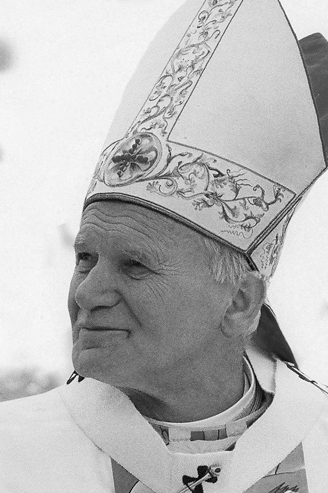
Pope Saint John Paul II’s First Good Friday Homily
ADDRESS OF HIS HOLINESS JOHN PAUL II AT THE CONCLUSION OF THE STATIONS OF THE CROSS AT THE COLOSSEUM Good Friday, 13 April 1979 When we make the Way of the Cross from one station to the next, in spirit we are always at the spot wherethis journey had its “historical” place: where it[…]Continue reading→
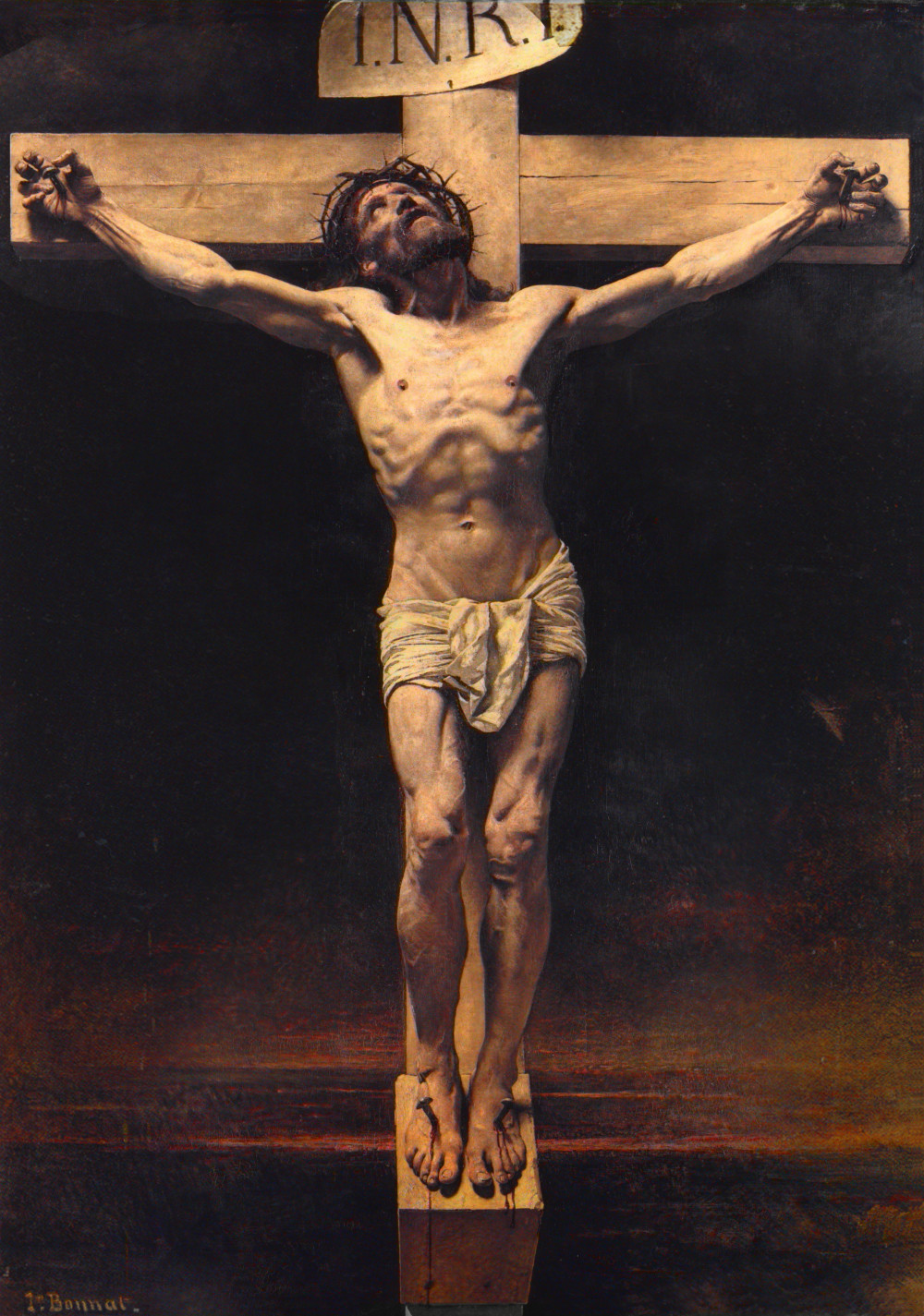
A Meditation for Good Friday: How To Undo the Effects of Sin?
Cardinal Newman, now Saint John Henry Newman, was a towering figure of nineteenth-century Catholicism who is almost universally admired. I say “almost” because not everyone likes him. I knew a priest once, Arthur Caulkins, who has become disenchanted with Newman. As an undergraduate Arthur had been enamoured of Newman, and this interest continued when he[…]Continue reading→
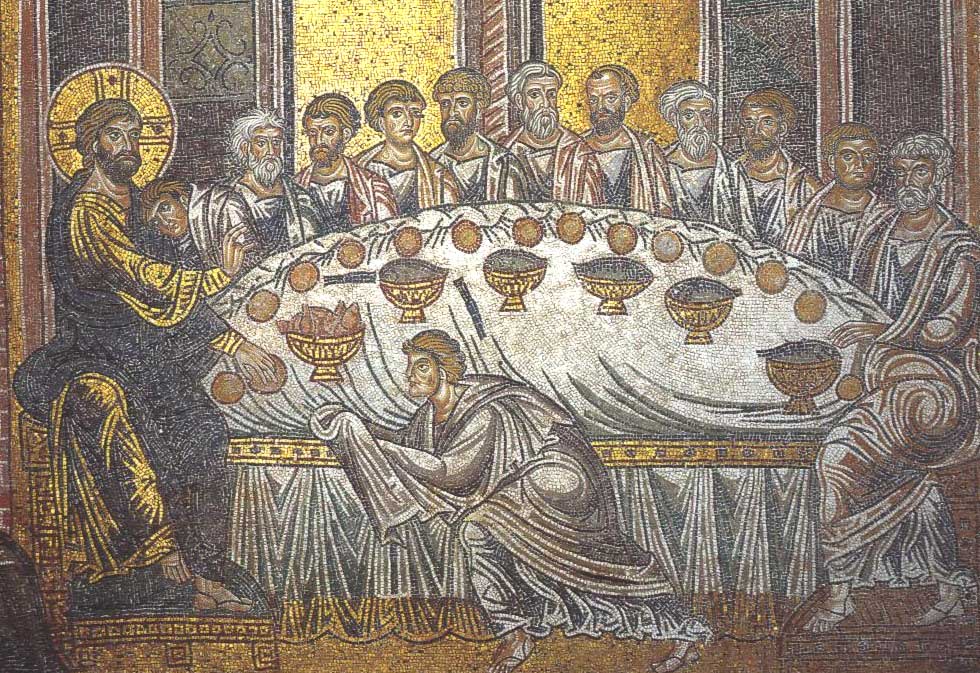
Pope Benedict’s Last Holy Thursday Homily
MASS OF THE LORD’S SUPPER HOMILY OF HIS HOLINESS BENEDICT XVI Basilica of St John Lateran Holy Thursday, 5 April 2012 Photo Gallery (Video) Dear Brothers and Sisters! Holy Thursday is not only the day of the institution of the Most Holy Eucharist, whose splendour bathes all else and in some ways draws it to[…]Continue reading→