
Verdict by Public Opinion
- The topic
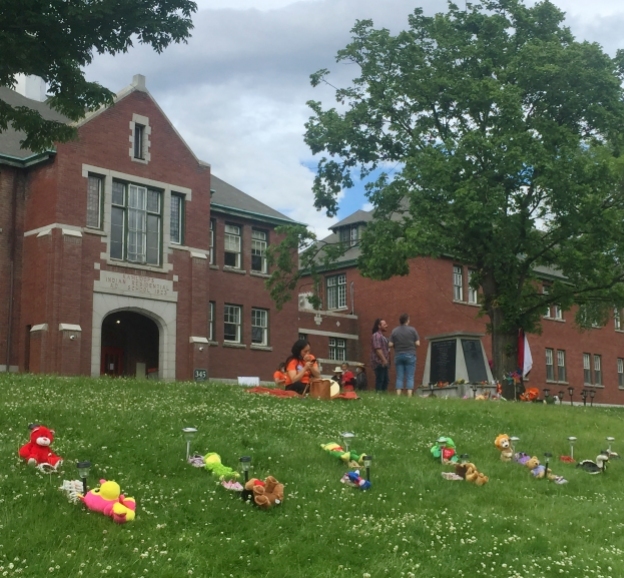
The July 5, 2021 edition of The Globe and Mail carried an article with the headline “Amid the shameful residential school revelations I cannot remain a Catholic.” The recent round of publicity about the residential schools has focused on the presence of graves on the grounds of or near those schools. There have been questions raised about whether the objects identified by ground-penetrating radar actually contain bodies. The focus of this article is, if we suppose that these are indeed graves, what can we conclude regarding what happened in residential schools? Perhaps because we have been conditioned by advertising, we sometimes reach conclusions by word and image association rather than by logic. Because graves are associated with death and death inspires horror, many have concluded that the graves are evidence of something horrible that happened in the residential schools. There have been many accusations of grievous offenses by the staff of those schools. My thesis is that, whatever you conclude from other sources, you should not take the presence of graves as evidence of wrongdoing.
The following reflections are not about whether the policy of establishing and operating the residential schools was mistaken and did harm. I believe that the policy was mistaken and did great harm. Staff of the schools, often perhaps unknowingly, did harm by following bad policy. Nor are these reflections concerned with whether individual staff members were ever guilty of serious offenses against the students. They were, particularly in the area of sexual offences, but that is not my topic here. My focus is just this: does the presence of graves in the vicinity of residential schools provide evidence that personnel in the schools knowingly and deliberately caused the death of the students who are buried in those graves?
I will try not to impute motives – whether the motives of the people who established and set the rules for the schools, or the motives of those who staffed the schools, or the motives of those who are bringing the issue before the public today. It is all too easy to pontificate about why people have acted the way they did, and if we do that we are as often as not mistaken.
Once the topic of residential schools arises in conversation people are only too ready to unload their opinions, and their feelings, in so many directions that the conversation loses focus and doesn’t lead in any useful direction. Maybe by limiting the topic we can move, step by step, towards reasonable conclusions.
- Numbers
The number of graves has shocked people. The assessment of the number of graves on the grounds of the residential school in Kamloops at present seems to be settled at the number 215. The Kamloops school was one of the larger aboriginal residential schools in Canada, reaching a high of about 500 students around 1950. The numbers of graves given for the Marieval residential school in Saskatchewan are much higher, 751 according a recent report, but this number includes an unknown number of bodies of persons who were not students in the school. The graveyard existed before the school, is located outside of the school grounds and should be considered a parish cemetery rather than a burial place only for the school. While the Kamloops grave site probably contains graves of persons who were not students in the school, the number of students buried there was probably not much below the total of 215.
A number close to 215 is high enough to cause alarm. Why did so many students die at the school? Did they die of malnutrition? or of being abused? More than one person has even accused the staff of murder. Let us consider the number in its historical context.
The Kamloops school operated for almost ninety years, from 1890 to 1978. Although mortality of school-age youth in our time is extremely low, that was not true during most of the history of the residential schools. In the case of tuberculosis, for example, in the year 1924 in all of Canada the rate of deaths from tuberculosis per 100,000 people was about 84. That is, in one year about 84 people out of 100,000 died of the disease. By 1948 it was still about 46 per hundred thousand. Regarding the years from 1977 to 2011, however, the Chief Public Health Officer’s Report on the State of Public Health in Canada states that the rate of death from tuberculosis “hovers close to zero.” Regarding tuberculosis (as well as smallpox and to a varying extent some other infectious diseases) our aboriginal population lacks the resistance that those of European origin inherit, so the rate of deaths from tuberculosis and some other diseases among first nations citizens was much higher than the numbers for the population as a whole. The death rate in the 1930s and 1940s for aboriginal people living on reservations was in excess of 700 per 100,000 people according to History of Public Health published by the Canadian Public Health Association in 2021. The lack of immunity was not the only cause of the higher rates for the indigenous population, the crowded conditions on reservations being another major factor.
Widespread use of immunization, antibiotics and other “wonder drugs” and better sanitation has led to steep declines in the number of deaths from tuberculosis, pneumonia, polio, sepsis (blood poisoning), smallpox, diphtheria, scarlet fever, influenza (other than covid19) and a number of other causes of death among young people.
Today an average of close to two deaths per year in a school the size of the Kamloops school would surprise people, but it would not have been unusual during most of the history of that school. It would have been helpful if the Report of the Truth and Reconciliation Committee had been able to compare the number of deaths in residential schools to the numbers for the public at large and for aboriginal children living on reservations.
- Location
Questions have also been raised as to why the multiple burials took place at the school rather than have the bodies returned to their homes. In the absence of documentary evidence, one can only speculate about why this was so. The practice at the time for transporting a body respectfully might involve bringing it to a train by a vehicle supplied by a funeral home, transporting it by train to the railway station nearest to the family home, then having it picked up by a vehicle supplied by another funeral home and brought to the family residence or the place of funeral and burial. When transport by rail was not practical, the body might be brought all the way by a funeral home vehicle. In any case, it would be costly, too costly for many families. An added complication was that during most of the history of the schools only relatively primitive means of refrigeration were available. In the early years of the residential schools, transportation would likely be by horse and wagon or sled. The most likely reason why deceased students were buried close to the school is that the government supplied no money for the more costly alternative.
- Unmarked graves
Most news reports about the graves include the information that they were “unmarked”. Presumably this means that there were no crosses or headstones to indicate the location of the bodies. It is highly unlikely that there were ever stone markers for the graves. More likely there would have been wooden crosses that deteriorate over time and become eyesores that are removed. One of my sisters died as an infant and was buried far from her Saskatchewan home in her grandparent’s burial plot in a parish cemetery in Nova Scotia. Many years later I was one of three family members who sought to visit our sister’s grave. It was unmarked and the attendant had some difficulty locating it. The reason given, which I have no reason to question, is that the wooden cross that originally marked the grave had deteriorated and had been discarded without being replaced. The point is that the absence of a marker, though disconcerting, does not prove conscious, willful negligence, and if there was negligence it was probably perpetrated by people long after the burial.
Occasionally indigenous Canadians have objected to pipelines or other incursions across certain territories because these were burial places. The one such burial ground that I have observed had no markers, and it never crossed my mind that this indicated any carelessness or lack of respect by the indigenous people for their buried members.
- Discovery
Reports about the graves in or near the grounds of residential schools regularly speak of the graves being “discovered”. The word “discovered” can suggest different things. When I learn that Pope Leo XIII was born in the year 1810 I can be said to have discovered that fact, even though that fact is common knowledge. When we say that Marie Curie discovered radium the term “discover” has the added significance that she was a pioneer in identifying this element. A report that police discover a stash of illegal drugs in an automobile implies that someone had hidden this stash from the authorities. When the media state that graves were discovered on the grounds of the Kamloops residential school, people may take it to mean that the graves were deliberately hidden. However, I have seen no report of evidence that this was the case.
- Conclusion
These pages are intended to defend the teachers in residential schools from serious and unfair accusations. Readers may easily assume that I am casting suspicion on a wide range of people, but only a very few are responsible. The first group consists of that limited number of persons, some aboriginal and some other sympathisers, who by word and action have raised the issue of graves on or near the grounds of residential schools. The second group consists of those persons working in the mass media who publicize the words and actions of the members of the first group. I do not presume to know the state of mind of any of these people, their motives or the degree of their responsibility for contributing to false conclusions.
One of the accomplishments of our western societies for which we should be especially grateful and proud is how we protect the innocent from false accusations. We have libel laws to protect us from false and defamatory publications. Our legal system provides elaborate safeguards in the process of determining whether someone who has been accused of a crime is actually guilty and deserves punishment. When this system fails and the innocent are punished, perhaps because they could not afford a first-rate lawyer, people recognize it as a terrible injustice. Unfortunately, those who have staffed residential schools have been subjected to a kind of trial by public opinion that has bypassed these protections.
The blackening of the reputations of the teachers in residential schools has been the prelude to demands for monetary compensation. Those who are expected to pay, mainly Catholic Church-goers, have no connection with the supposed crime other than belonging to the same Church as the supposed perpetrators. Quite apart from monetary issues, ruining another’s reputation without valid evidence is in itself not a minor offense. Finally, regarding those who feel so alarmed by the publicity surrounding the graves that they contemplate breaking their connection with the Catholic Church – to make such a life-altering decision based on an error would be tragic in the Shakespearean sense – a disaster resulting not from chance but from mistaken human choice.

Remembering Father Alphonse de Valk
(Today marks the sixth anniversary of the death of Father Alphonse de Valk, C.S.B., a faithful, courageous and indefatigable Basilian priest, pro-life-and-family apostle, and the founder of Catholic Insight magazine. Here is what we wrote those on his entering into eternity five years ago, as we continue to remember him in our prayers and thoughts)[…]Continue reading→

Divine Mercy Sunday – An Echo of Every Mass
Reach out your hand and put it in my side. Do not doubt but believe’… ‘My Lord and my God!’ (Jn. 20:18)). Today is Divine Mercy Sunday, and as we celebrate the end of the Easter Octave, we contemplate the wounded side of our Saviour, the Church’s source of life. On Good Friday in the[…]Continue reading→

Saint Stanislaus of Szczepanów
We celebrate Saint Stanislaus today (+ April 11, 1079), in light of this Easter Octave, a bishop and martyr who accepted the episcopacy only at the direct order of Pope Alexander II. He proved a wise and courageous leader of his flock, put to death by his own king, Boleslaus, for rebuking the monarch’s ‘immoral[…]Continue reading→
First Holy Communion: Sermon from May 16, 1943
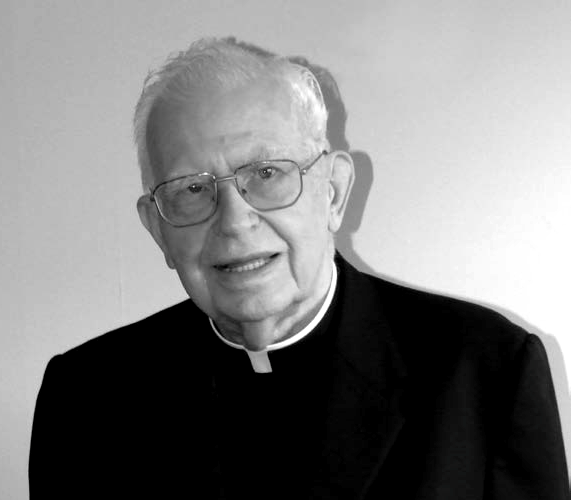
Here is a sermon from the good old days by +Rev. Msgr. Vincent Nicholas Foy (August 14, 1915 – March 13, 2017), from 1943. Readers may recall that Pope Saint Pius X, by the decree Quam Singulari in 1910, lowered the customary age of reception of Holy Communion – after the rigours of the plague[…]Continue reading→
In the Glorious Light of Easter, Alleluia!
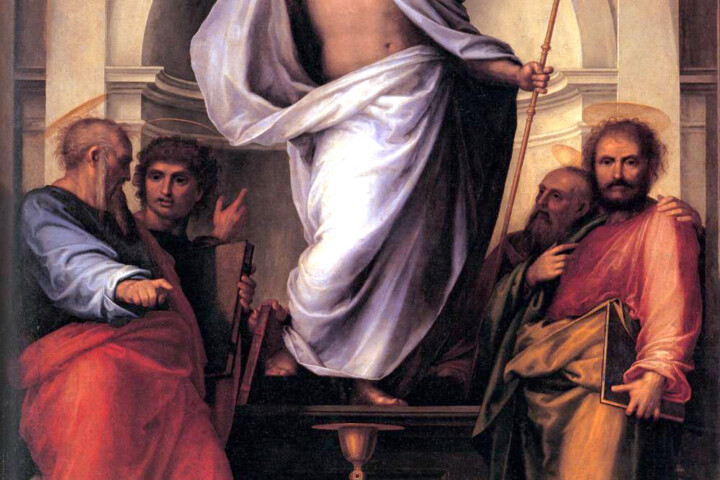
Set your minds on things that are above, not on things that are on earth, for you have died, and your life is hidden with Christ in God. When Christ who is your life is revealed, then you also will be revealed with him in glory (Col. 3:3-4). The Resurrection of Our Lord and Saviour[…]Continue reading→
An Ancient Homily for Holy Saturday
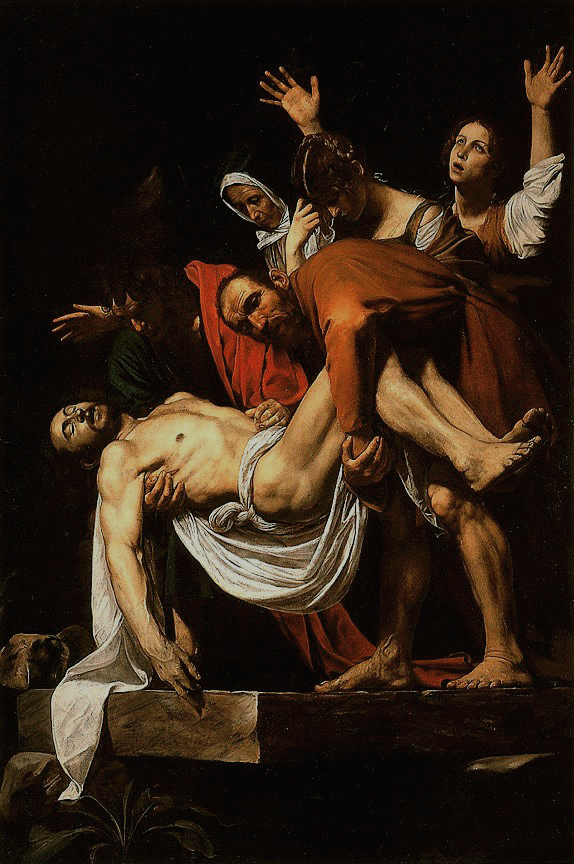
The time between Good Friday and Easter Sunday is one of waiting, in silence, as the world wonders – anticipates – what will happen, after the death of Christ. We re-live this time each year in the anamnesis of our liturgy, and in turn look forward to the glorious re-creation of all things at the[…]Continue reading→

Europe’s Long Descent
(As we meditate on this day on Christ’s burial, and His descent into hell, it is fitting to ponder here with contributor Peter Marcus how the world seems to be heading there as well. The difference is that, although God cannot ‘redeem’ hell, nor those therein, He can and did redeem the world. There is[…]Continue reading→
Pope Saint John Paul II’s First Good Friday Homily
ADDRESS OF HIS HOLINESS JOHN PAUL II AT THE CONCLUSION OF THE STATIONS OF THE CROSS AT THE COLOSSEUM Good Friday, 13 April 1979 When we make the Way of the Cross from one station to the next, in spirit we are always at the spot wherethis journey had its “historical” place: where it[…]Continue reading→
A Meditation for Good Friday: How To Undo the Effects of Sin?
Cardinal Newman, now Saint John Henry Newman, was a towering figure of nineteenth-century Catholicism who is almost universally admired. I say “almost” because not everyone likes him. I knew a priest once, Arthur Caulkins, who has become disenchanted with Newman. As an undergraduate Arthur had been enamoured of Newman, and this interest continued when he[…]Continue reading→
Pope Benedict’s Last Holy Thursday Homily
MASS OF THE LORD’S SUPPER HOMILY OF HIS HOLINESS BENEDICT XVI Basilica of St John Lateran Holy Thursday, 5 April 2012 Photo Gallery (Video) Dear Brothers and Sisters! Holy Thursday is not only the day of the institution of the Most Holy Eucharist, whose splendour bathes all else and in some ways draws it to[…]Continue reading→