
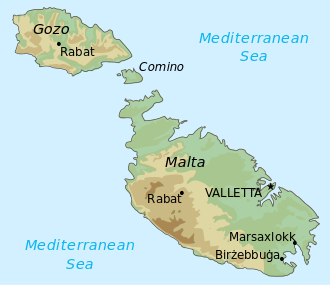
Saint Paul’s Shipwreck in Malta
February 10th is the feast of Saint Paul’s Shipwreck on our apostolic Island of Malta, qw recounted by Saint Luke. In their book Melita Illyrica and Melita Africana: The Islands of Saint Paul, two Franciscan friars Fr Noel Muscat, ofm and Fr Sandro Tomašević, ofm, argue that “modern scientific biblical studies have all interpreted Luke’s narrative as referring to Malta” (p.130).
In this very interesting book I was touched by two arguments which amply show that Luke’s Melítē is, in fact, our beloved Apostolic Island of Malta. The first argument talks about the ENE gale wind from Crete. It says: “Given the space of two millennia, with the inevitable geological and tectonic changes that might have occurred along the coast of Malta, we still have the luck of observing the meteorological phenomena that brought Paul to our shores. One thing is certainly clear, and Smith proves it, namely, that the ENE gale blowing from Crete could only have carried the ship towards Malta” (p.104).
The second argument which the authors highly suggest that Luke’s Melítē was the Island of Malta is Pauline cult in Malta. On this the authors argue: “One last theme is also important to analyse, namely, the ‘Pauline’ cult in Malta and the various places linked with the presence of the Apostle. Indeed, it is difficult, also in this regard, to arrive at any clear-cut statement when one takes into consideration that the earliest Christian places of cult and memories on the Maltese archipelago go back at the earliest to the 4th century, namely to the late Roman domination of the islands. What occurred during apostolic times is still shrouded in mystery, except for the fact that Paul did stay on Melítē for three months, and that his evangelising ministry could not possibly have been halted by the fact that Malta was pagan and Roman religion honoured emperors as gods. Therefore Paul’s visit did produce the seeds of what we can call an ‘apostolic Church’ in Malta” (p.104).
As the biblical account of Paul’s stormy voyage to Malta amply shows, Paul’s ministry was full of difficulties. The prophecy told by Jesus to Ananias was all the more true! Go, for he is a chosen instrument of mine to carry my name before the Gentiles and kings and the sons of Israel; for I will show him how much he must suffer for the sake of my name” (Acts 9:15-16). In his letters Paul mentions the many sufferings he had to endure for transmitting the Gospel. In 2 Corinthians 11:16-33 he states that he was subject to stoning, imprisonment, and was shipwrecked too. In all this Paul wanted to drive home the fact that suffering led to salvation as Jesus who, by enduring suffering, he reconciled us back with His and Our Father in heaven.
But suffering did not deter the joy of those who really believe. In his letter to the Philippians Paul said: I shall rejoice. For I know that through your prayers and the help of the Holy Spirit … this will turn out for my deliverance, … as it is my eager expectation and hope that … Christ will be honored in my body…” (Phil 1:19-21). Hence, suffering here is seen as deliverance. Moreover, in his letter to the Thessalonians Paul reminds us: Rejoice always, … for this is the will of God in Christ Jesus for you” (1 Thessalonians 5:16-18). Our union with the Father in Christ Jesus is what finally matters even if there is suffering in the way.
Paul was also concerned about discipleship. It seems that Paul purposely sidelines the word disciple in his letters. He did not want his Jewish audience to be mixed up with this word since it tends to refer to disciples in an Old Testament sense. Instead, Paul opts for other words which would simply better explain the word disciple like believers or saints. These would refer specifically to Christ’s adherents. For the Apostle of the Gentiles the word believer or steward applies to a personal relationship and connection with Christ. Those who claim that they are Christ’s followers are to serve Christ (1 Cor 4:1), disseminate the Gospel (1 Cor 1:17), bear witness (2 Cor 4:5), and to imitate Jesus Christ in his suffering (Phil 3:8).
St Paul is surely an extraordinary preacher of God’s grace! Salvation is, principally, by faith. In his letter to the Galatians Paul’s main concern is that new life through Christ is the result of his gracious gift to us. In the letter to the Romans Paul reiterates that salvation is by grace as well as by faith in Christ. Therefore, since we are justified by faith, we have peace with God through our Lord Jesus Christ. Through him we have obtained access to this grace in which we stand and we rejoice in our hope of sharing the glory of God (Rom 5:1-2).
In his preaching Paul reminded his listeners that Jesus will one day return in glory so as to give us life, mercy together with justice. In his letter to the Thessalonians he tells us: For the Lord himself will descend from heaven with a cry of command, with the archangel’s call, and with the sound of the trumpet of God. And the dead in Christ will rise first; then we who are alive, who are left, shall be caught up together with them in the clouds to meet the Lord in the air; and so, we shall always be with the Lord” (1 Thess 4:16-17).
Forgiveness is essential for us to do simply because God has already forgiveness us in Christ. The letter to the Colossians is very clear about this: Put on then, as God’s chosen ones, holy and beloved, compassion, kindness, lowliness, meekness and patience, forbearing one another and, if one has a complaint against another, forgiving each other; as the Lord has forgiven you, so you also must forgive” (Col 3:12-13).
Paul was a staunch believer of the power of the Holy Spirit in the life of the Christian. In his letter to the Corinthians Paul says: Do you not know that your body is a temple of the Holy Spirit … (1Cor 6:19). Whereas in the letters to the Romans Paul talks about the Spirit as the giver of life. If the Spirit of hi who raised Jesus from the dead dwells in you, he who raised Christ Jesus from the dead will give life to your mortal bodies also…” (Rom 8:11). A little further within the same chapter, he accentuates that it is through the Spirit that we can call God our Father: For you did not receive the spirit of slavery to fall back in to fear, but you have received the spirit of sonship. When we cry, “Abba! Father!” It is the Spirit himself bearing witness with our spirit that we are children of God (Rom 8:15-16).
Another Pauline which is very much present in his letters is certainly that of adoption. For Paul we are adopted into Christ’s family and due to our “adoption” we shall be getting an inheritance. Thanks to this adoption we are no longer slaves by free members imbued by the freedom of the Spirit. His fivefold usage of this term adoption as in Gal 4:5; Rom 8:14, 23; Romans 9:4; and Eph 1:5, shows the importance he gives it as a reference to the people of the New Covenant. In the letter to the Galatians, Paul writes: … when the time had fully come, God sent forth his Son, born of woman, born under the law, to redeem those who were under the law, so that we might receive adoption as sons (Gal 4:45).
Finally, the beauty of unity is the concluding theme one constantly meets in Paul’s letters. The Church is to be united together with Christ the head as the body is entirely one with its head. In his first letter to the Corinthians Paul tells us: For just as the body is one and has many members, and all the members of the body, though many are one body, so it is with Christ. For by one Spirit we were all baptized into one body … (1 Cor 12: 12-26).
How nice if we can include all these themes in Paul’s preaching in Malta. Although we do not know what he preached about while in Malta one thing stands out from the Lucan account in the Book of Acts: It happened that the father of Publius lay sick with fever and dysentery; and Paul visited him and prayed, and putting his hands on him healed him. And when this had taken place, the rest of the people on the island who had diseases also came and were cured (Acts 28:8-9).
But this information makes sense if one sees it in connection with the end of Marks’ Gospel which we read for February 10 Solemnity of St Paul’s Shipwreck, namely that: And he [the Risen Jesus] said to them, “Go into all the world and preach the gospel to the whole creation. He who believes and is baptized will be saved; but he who does not believe will be condemned. And these signs will accompany those who believe: in my name they will cast out demons; they will speak in new tongues; they will pick up serpents, and if they drink any deadly thing, it will not hurt them; they will lay their hands on the sick, and they will recover.” So then the Lord Jesus, after he had spoken to them, was taken up into heaven, and sat down at the right hand of God. And they went forth and preached everywhere, while the Lord worked with them and confirmed the message by the signs that attended it. Amen (Mark 16:15-20).
Thus, preaching and signs went together. So Paul, in Malta preached and worked signs. In this way he could say to us Maltese: For though you have countless guides in Christ, you do not have many fathers. For I became your father in Christ Jesus through the gospel (1 Cor 4:15).
St Paul, Patron Saint of Malta, pray for us!
A Closed, Unsustainable, Descending Loop
As a follow-up to my thoughts on Payette’s payout, here be a stark image of where are here in Canada. As the graph shows in, well, graphic terms, since 2025, the public sector has contributed to 95.5% of economic growth. The private sector – which funds the public sector, or is supposed to – has[…]Continue reading→
Presidential Pardon of Weronika Krawczyk
As a good news, follow-up to our story from Poland, of the persecution of Weronika Krawczyk for her pro-life views, we heard that she has been granted a presidential pardon. One might still wonder why one needs a presidential pardon for simply holding the long-held belief that the child within the womb is a child,[…]Continue reading→
Pope Leo and a Rosary for Peace
Pope Leo XIV has asked Catholics across the world to join him in a Rosary for peace today, at 18:00 Rome time (6 pm), which would be noon from where I write (EST). If you are able, whether at that time or another, and in whatever way you pray, to join in intercession with the[…]Continue reading→
Payette’s Payout
I was glancing through some headlines, and noticed a mention of Julie Payette – engineer and astronaut and sometime the Queen’s representative in Canada – which brought back vague memories. She was appointed Governor-General by Justin Trudeau in 2017. Ms. Payette resigned in 2021, amidst claims that she created a ‘toxic work environment’, with allegations[…]Continue reading→
Weronika Krawczyk and Injustice in Poland
Catholic Action in Poland has issued a formal statement appealing to the President of the Republic of Poland to pardon Weronika Krawczyk—convicted for warning other women against an abortion-performing gynaecologist. Catholic Action (AK) emphasizes that no apology is owed to a doctor who has performed numerous abortions and proposed others; furthermore, the organization considers the[…]Continue reading→
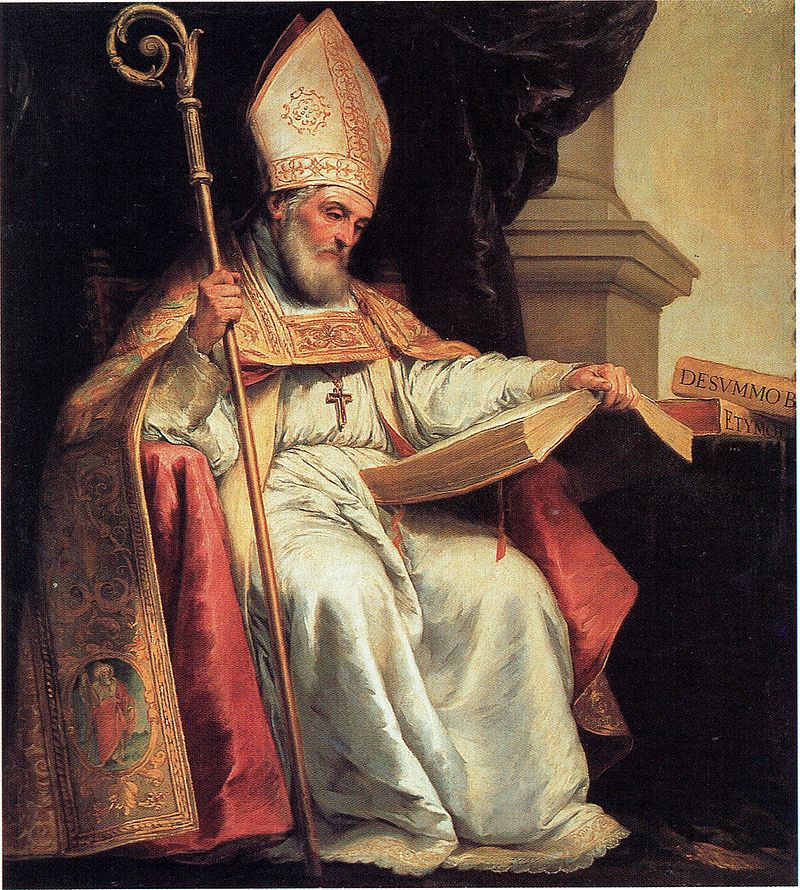
Saint Isidore of Seville, the Internet and Industriousness
Today, April 4th, muted this year by Holy Saturday, is the commemoration of Saint Isidore of Seville (560-636) a bishop and doctor of the Church during a tumultuous age, when civilization was crumbling, coming apart at its very seams, which may sound sort of au courant. Then again, the form of this world has always[…]Continue reading→
Bishop Fulton Sheen’s 58th Good Friday Reflection
Incredible, at the beginning of this reflection, that the Venerable Bishop Sheen declares that he has given nearly 58 Good Friday reflections – this, as far as I can gather, was his final one, and he seems in full vigour in mind and body. The good bishop and evangelist died in his 84th year on[…]Continue reading→
A Minimal Friar and the Death of a Great Pope
This April the second- overshadowed by Holy Thursday this year – marks the memorial of Saint Francis of Paola (1417-1507), founder of the ‘Minim’ friars, so called for their humility and poverty, who interpreted the rule of Saint Francis of Assisi in quite a literal sense: extreme poverty, trust in God, foregoing all animal and[…]Continue reading→
Woven versus Seamless Garments
The reflection on the worthy project by Magie Dominic was intriguing, and I thought I would offer a brief follow-up commentary. The garment woven out of many pieces is a poignant symbol, even a ‘sacramental’, inspired by prayer and grace. We are all united in some way, and should strive for such unity, wherever we[…]Continue reading→
Bill C-9: Prelude to Persecution?
Well, it happened, as I suppose was inevitable, at least in a secular sense (from God’ perspective, there’s always hope). Bill C-9, the ironically named ‘Combatting Hate Act’ passed the House of Commons with a 186-137 vote. Look on the good side – there’s still over a hundred sane people in parliament who believe in[…]Continue reading→