
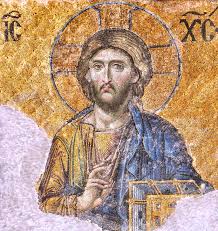
Fourth Sunday: Witnessing to the Truth
But Jesus passed through the midst of them and went on His way (Lk. 4:30). ⧾
Our Gospel reading today is a continuation of last Sunday’s Gospel. Having returned to Nazareth where He had been brought up, Our Lord encounters the opposition which is often experienced when the Gospel is first preached or preached in its fullness. It is met with skepticism and often violence though the Gospel of salvation is about freedom. This is the first meaning of the word salvation (yasa) in Hebrew. It is strange that the offer of freedom should be met with opposition but when we consider that acceptance of salvation entails the rejection of sin, and deliberate and intentional growth in godliness, we more easily understand St. John’s assessment of things: And this is the judgment, that the light has come into the world, and men loved darkness rather than light, because their deeds were evil (Jn. 3:19). Though sin always victimizes those who are sinned against, and even those who sin – though these may not see it as such, wickedness at least for a time, causes some to prosper. It must also be said that repeated sin results in the greatest of all evils – the loss of the sense of sin. And in time, a life of unrepented sin leads to the loss of faith and reason; such that people become both unbelieving and unthinking.
It was Pope Pius XII who prophetically observed in 1946: Perhaps the greatest sin in the world today is that men have begun to lose the sense of sin. What is worse is our refusal to comprehend and even to admit the impact of sin upon human nature – and hence human reason – as sin savagely wounds and seriously disturbs our nature’s proper functioning. This is why Christian morality which is based on the natural law seems so extreme and unjust to an ever increasing number of people. If we wish to understand how so many people can be indifferent and even complicit, as governments legislate the murder of the innocent through the well-known litany of sins against the dignity of human life, we need to think only of the loss of the sense of sin.
The medical dictatorship imposed on the world these last two years is also a sign, evidence as it were, that the individual person endowed with God given freedom has lost all meaning for the powerful elite that rule over us and who are engaged in the great reset. Bureaucracies and institutions that at face value exist to serve people have revealed themselves to be parasitic, intent on extending their power and privileged positions at the expense of the common man, truly the poor and dispossessed.
The origin of all this, at least in a liberal democracy like Canada, is the modern liberal democratic position that we can have a ‘right’ to what is against reason. It can be said that generally speaking our world – at least our part of it – has succeeded in convincing itself into believing that in the name of freedom and liberalism we can do whatever we want regardless. As a result, we legislate what is unnatural, unreasonable and will persecute those who are perceived to be a threat to this illusion of unbridled, absolute freedom: I and I alone will determine what is right and what is wrong for me. This attitude comes with a price and that price is now being paid by all of us, as we struggle against government overreach and infringements on our freedoms, imposed by those who have at face value repudiated any notion of objective good and evil.
What are we to do and by what power in the face of an increasingly powerful political apparatus? First of all we must make the sanctity and inviolability of life the one determining factor in our own political engagements. Then we must place our trust in the strength of Christ Our Saviour. Our Gospel text relates Our Lord’s courage and strength in the face of public opinion and hostility. They got up, drove Jesus out of the town, and led Him to the brow of the hill on which their town was built, so that they might hurl Him off the cliff. But Jesus passed through the midst of them and went on His way (Lk. 4:29-30).
By what power would He have been able to do this if not by His power as God? This incident in Our Lord’s life is a manifestation and revelation of His divinity; and it is the strength of this truth, His divinity – that is the source of our own strength in the face of error, hostility and persecution. This is the confidence of the martyrs; which in the Book of the Apocalypse is defined as the endurance (ύπομονή) of the saints, those who keep the commandments of God and the faith of Jesus (Rev. 14:12).
In every age there have been martyrs – witnesses to the truth; religious truth and moral truth. The prophets Jeremiah and Isaiah were both martyred. Our Lord will die as a witness to the truth. The list of early Church Martyrs named in the Canon of the Mass speaks to this ever-present reality. It is a reality that we can never forget. The Church’s task in relation to the world is always the same: to witness to the truth of God. Therefore, we will have no part of a worldly church, a church where, in the words of Fr. Joseph Ratzinger, spoken in 1969, priests are reduced to the role of social workers and the message of faith reduced to political views. In words that were truly prophetic, he observed: Everything will seem lost, but at the right moment, right in the most dramatic stage of the crisis, the Church will be reborn. She will be smaller, poorer, almost catacombal, but even more holy. For it will no longer be the Church of those who seek to please the world, but the Church of the faithful to God and His eternal law. Rebirth will be the work of small remains, seemingly insignificant yet indomitable, passed through a purification process. Because that’s how God works. Against evil, a small flock resists. This is the Triumph of the Immaculate Heart for which we pray daily.
Fear not, little flock, for it hath pleased your Father to give you the kingdom’ (Lk. 12:32). St Paul reminds us that all who desire to live a godly life in Christ Jesus will be persecuted, while evil men and impostors will go on from bad to worse, deceivers and deceived (2 Tim. 3:12-13). Yet, God will not be mocked; and evil never has the last word. Our task in our day is no different than the task of every Christian always and everywhere: to witness to the truth of the Gospel to deceivers and deceived always. May God keep us steadfast and humble in the knowledge of His truth. ⧾

Remembering Father Alphonse de Valk
(Today marks the sixth anniversary of the death of Father Alphonse de Valk, C.S.B., a faithful, courageous and indefatigable Basilian priest, pro-life-and-family apostle, and the founder of Catholic Insight magazine. Here is what we wrote those on his entering into eternity five years ago, as we continue to remember him in our prayers and thoughts)[…]Continue reading→

Divine Mercy Sunday – An Echo of Every Mass
Reach out your hand and put it in my side. Do not doubt but believe’… ‘My Lord and my God!’ (Jn. 20:18)). Today is Divine Mercy Sunday, and as we celebrate the end of the Easter Octave, we contemplate the wounded side of our Saviour, the Church’s source of life. On Good Friday in the[…]Continue reading→

Saint Stanislaus of Szczepanów
We celebrate Saint Stanislaus today (+ April 11, 1079), in light of this Easter Octave, a bishop and martyr who accepted the episcopacy only at the direct order of Pope Alexander II. He proved a wise and courageous leader of his flock, put to death by his own king, Boleslaus, for rebuking the monarch’s ‘immoral[…]Continue reading→
First Holy Communion: Sermon from May 16, 1943
Here is a sermon from the good old days by +Rev. Msgr. Vincent Nicholas Foy (August 14, 1915 – March 13, 2017), from 1943. Readers may recall that Pope Saint Pius X, by the decree Quam Singulari in 1910, lowered the customary age of reception of Holy Communion – after the rigours of the plague[…]Continue reading→
In the Glorious Light of Easter, Alleluia!
Set your minds on things that are above, not on things that are on earth, for you have died, and your life is hidden with Christ in God. When Christ who is your life is revealed, then you also will be revealed with him in glory (Col. 3:3-4). The Resurrection of Our Lord and Saviour[…]Continue reading→
An Ancient Homily for Holy Saturday
The time between Good Friday and Easter Sunday is one of waiting, in silence, as the world wonders – anticipates – what will happen, after the death of Christ. We re-live this time each year in the anamnesis of our liturgy, and in turn look forward to the glorious re-creation of all things at the[…]Continue reading→
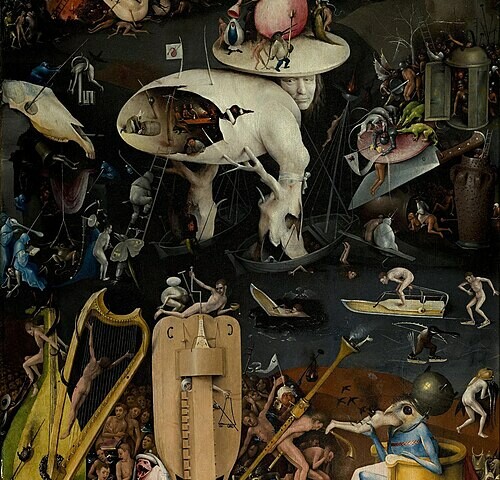
Europe’s Long Descent
(As we meditate on this day on Christ’s burial, and His descent into hell, it is fitting to ponder here with contributor Peter Marcus how the world seems to be heading there as well. The difference is that, although God cannot ‘redeem’ hell, nor those therein, He can and did redeem the world. There is[…]Continue reading→
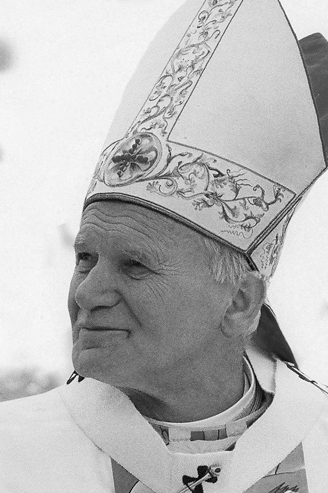
Pope Saint John Paul II’s First Good Friday Homily
ADDRESS OF HIS HOLINESS JOHN PAUL II AT THE CONCLUSION OF THE STATIONS OF THE CROSS AT THE COLOSSEUM Good Friday, 13 April 1979 When we make the Way of the Cross from one station to the next, in spirit we are always at the spot wherethis journey had its “historical” place: where it[…]Continue reading→
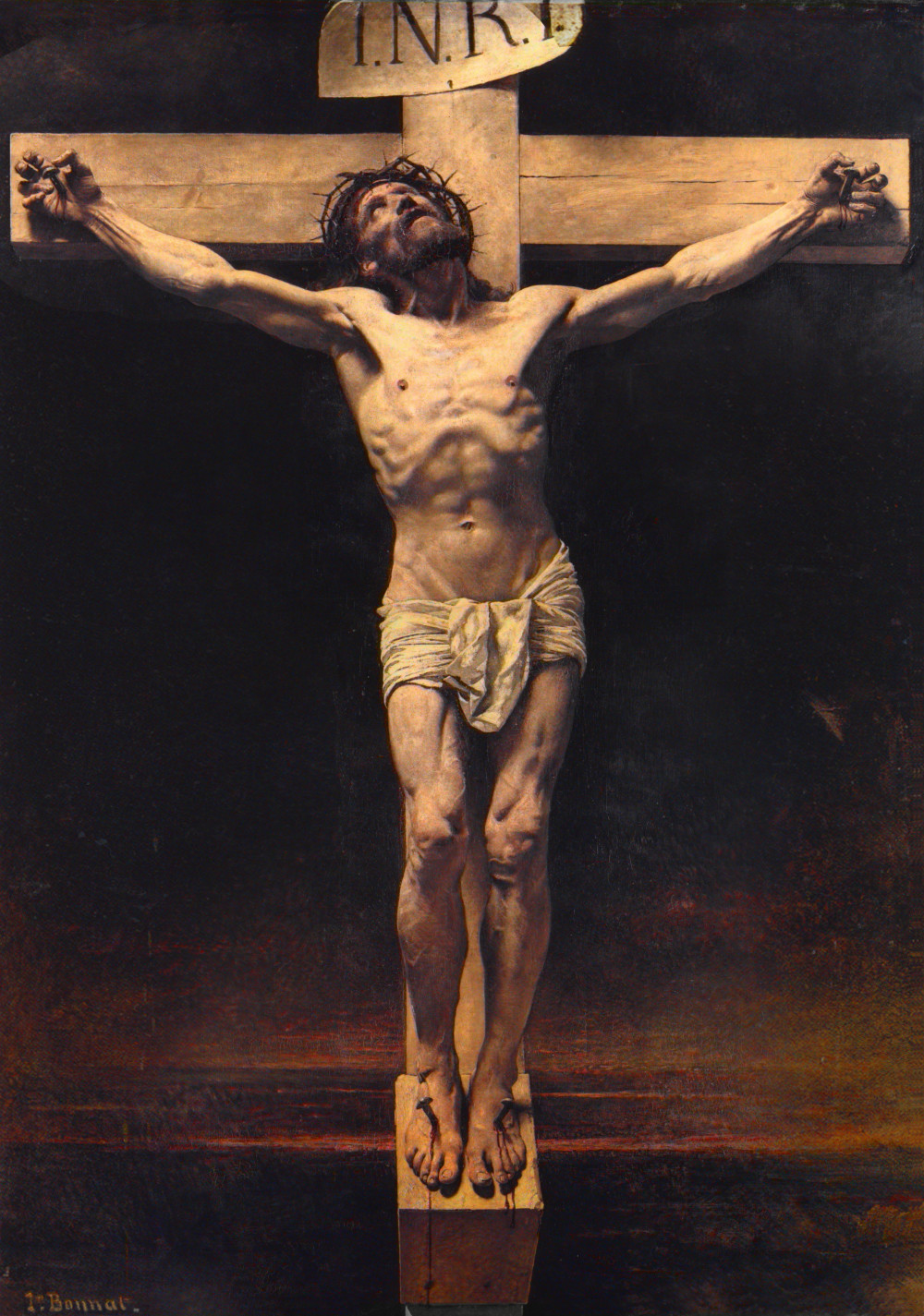
A Meditation for Good Friday: How To Undo the Effects of Sin?
Cardinal Newman, now Saint John Henry Newman, was a towering figure of nineteenth-century Catholicism who is almost universally admired. I say “almost” because not everyone likes him. I knew a priest once, Arthur Caulkins, who has become disenchanted with Newman. As an undergraduate Arthur had been enamoured of Newman, and this interest continued when he[…]Continue reading→
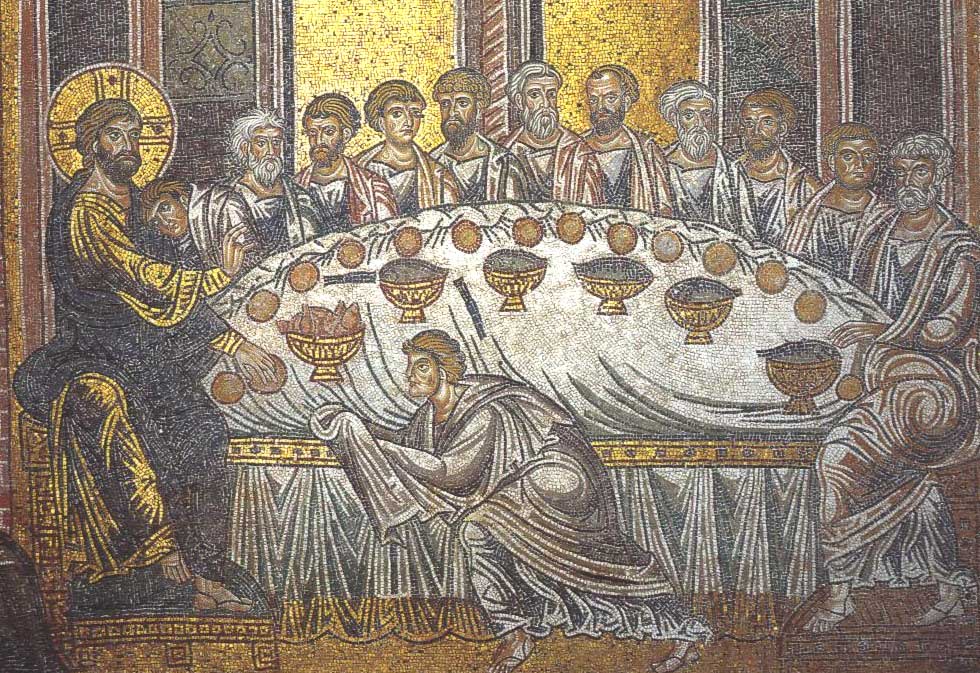
Pope Benedict’s Last Holy Thursday Homily
MASS OF THE LORD’S SUPPER HOMILY OF HIS HOLINESS BENEDICT XVI Basilica of St John Lateran Holy Thursday, 5 April 2012 Photo Gallery (Video) Dear Brothers and Sisters! Holy Thursday is not only the day of the institution of the Most Holy Eucharist, whose splendour bathes all else and in some ways draws it to[…]Continue reading→