
A Christmas and New Year’s Meditation: To the Future, with Hope
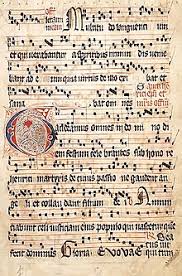
The Divine Office is the prayer book of priests. It consists of psalms, hymns and prayers that are said through the day. Some lay people use a shorter version of it, at morning and evening I mention it because the infancy Gospel of Luke contains the words of the old man, Simeon, who greeted the Christ child in the temple:
Lord, now lettest thou thy servant depart in peace, according to thy word;
for mine eyes have seen thy salvation
which thou hast prepared in the presence of all peoples,
a light for revelation to the Gentiles,
and for glory to thy people Israel.[1]
Every night, before going to bed, the priest recites these words as a preparation for sleep. It is known as the Canticle of Simeon, and it is not unlike two others that are found in chapter two of Saint Luke’s Gospel: the Canticle that Zechariah, the father of John the Baptist, proclaimed at the birth of his son, and the Magnificat, the Canticle Mary sang when she responded to the greeting of Elizabeth. Zechariah’s hymn is recited every morning in the Office and the Magnificat every evening.
All three have something in common: they look to the future. Consider Simeon’s, for instance. Jesus is described as “a light for revelation to the Gentiles and for glory to they people Israel.” Simeon, like Zechariah and the Blessed Virgin, was looking ahead to the saving work of Jesus. And today? We look back to what Christ accomplished in the past. But Simeon reminds us to look forward too, for the redemption won by Jesus has to be incorporated into our lives. You see, then, that there is a future element in the new life made available to us in baptism. In one sense everything has been accomplished by the death and resurrection of Jesus. But in another way, it has to be realized, i.e., made real in the lives each of us leads in the power that come to us through the sacraments.
Saint Luke calls our attention to another person who met Jesus when he was presented in the temple: the prophetess Anna who “did not depart from the temple, worshiping with fasting and prayer night and day.”[2] We know that every event, every person recorded in Scripture is also a prophecy, pointing, in the Old Testament, to the coming of Christ and, in the New, to the Christian era. Anna, therefore, tells us something about the Church. Are there women who devote themselves to prayer and fasting, night and day? In other words, are there women who have dedicated themselves to God in a total, uncompromising manner? Of course there are—or were—many of them, prominent everywhere in Church life. I’m thinking of the nuns who ran schools, orphanages, hospitals, such as the Sisters of Saint Joseph. Other, such as the Carmelites or Poor Clares, are purely contemplative with, like Anna, an apostolate of prayer. Their numbers are much reduced nowadays, for a variety of reasons, but the example of Anna still bears fruit in the Church There are women living in the world, with jobs and an independent way of life, who dedicate themselves to God, like Anna, in prayer and service. In Canada we have, for instance, the Company of Saint Ursula and the Contemplative Women of Saint Anne, composed of just such women.
And they all, past or present, remind us that every Christian is called upon to commit himself to the Lord by prayer and self-abnegation in order that God may be praised by our lives and our neighbours aided by our prayers and example.
[1] Lk 2.29-32.
[2] Lk 2.37.

Saint Kateri , Canada’s Protectress
This was the title given to Saint Kateri Tekakwitha, by Pope Benedict XVI, when he canonized her on October 28th, 2012, along with six others, in Saint Peter’ Square (she had been beatified by Pope John Paul II back in 1980). With Saint Joseph as our protector, along with the Canadian martyrs, we seem to[…]Continue reading→

Remembering Father Alphonse de Valk
(Today marks the sixth anniversary of the death of Father Alphonse de Valk, C.S.B., a faithful, courageous and indefatigable Basilian priest, pro-life-and-family apostle, and the founder of Catholic Insight magazine. Here is what we wrote those on his entering into eternity five years ago, as we continue to remember him in our prayers and thoughts)[…]Continue reading→

My Name is Bernadette
April 16th is a propitious day, for besides the anniversary of Father de Valk’s death, who founded Catholic Insight in its print form decades ago, and the commemoration of the ‘two Benedicts’, mentioned in accompanying posts, today we also recall Saint Bernadette Soubirous, the young visionary to whom the Virgin Mary appeared numerous times at[…]Continue reading→

Canonizing Sister Faustina and Divine Mercy
HOMILY OF THE HOLY FATHER MASS IN ST PETER’S SQUARE FOR THE CANONIZATION OF SR MARY FAUSTINA KOWALSKA Sunday, 30 April 2000 1. “Confitemini Domino quoniam bonus, quoniam in saeculum misericordia eius”; “Give thanks to the Lord for he is good; his steadfast love endures for ever” (Ps 118: 1). So the Church sings on the Octave of[…]Continue reading→

Divine Mercy Sunday – An Echo of Every Mass
Reach out your hand and put it in my side. Do not doubt but believe’… ‘My Lord and my God!’ (Jn. 20:18)). Today is Divine Mercy Sunday, and as we celebrate the end of the Easter Octave, we contemplate the wounded side of our Saviour, the Church’s source of life. On Good Friday in the[…]Continue reading→

Saint Stanislaus of Szczepanów
We celebrate Saint Stanislaus today (+ April 11, 1079), in light of this Easter Octave, a bishop and martyr who accepted the episcopacy only at the direct order of Pope Alexander II. He proved a wise and courageous leader of his flock, put to death by his own king, Boleslaus, for rebuking the monarch’s ‘immoral[…]Continue reading→
First Holy Communion: Sermon from May 16, 1943
Here is a sermon from the good old days by +Rev. Msgr. Vincent Nicholas Foy (August 14, 1915 – March 13, 2017), from 1943. Readers may recall that Pope Saint Pius X, by the decree Quam Singulari in 1910, lowered the customary age of reception of Holy Communion – after the rigours of the plague[…]Continue reading→
In the Glorious Light of Easter, Alleluia!
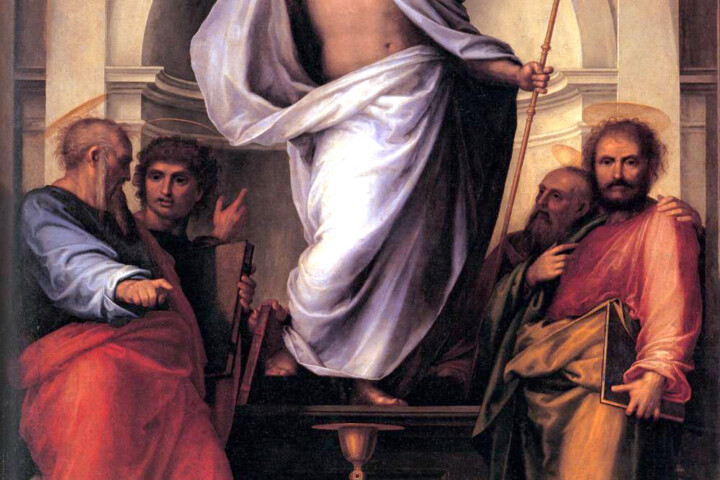
Set your minds on things that are above, not on things that are on earth, for you have died, and your life is hidden with Christ in God. When Christ who is your life is revealed, then you also will be revealed with him in glory (Col. 3:3-4). The Resurrection of Our Lord and Saviour[…]Continue reading→
An Ancient Homily for Holy Saturday
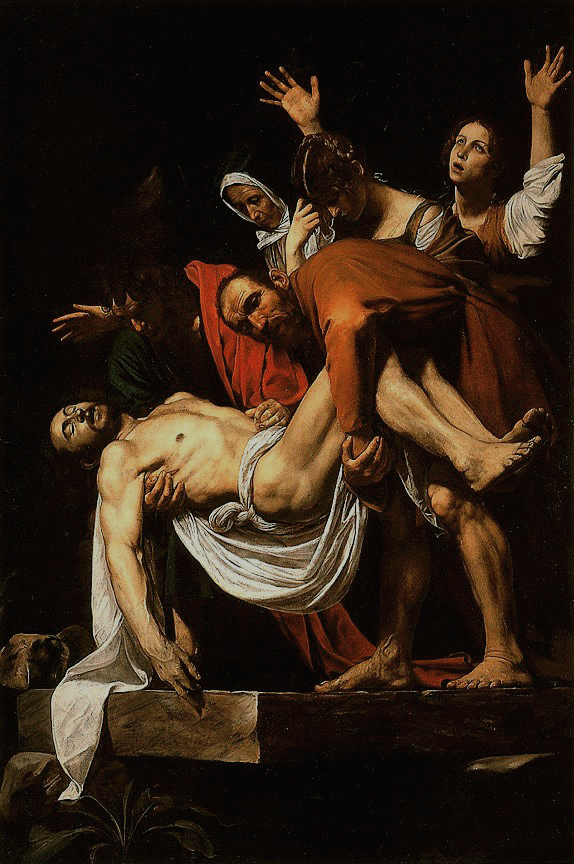
The time between Good Friday and Easter Sunday is one of waiting, in silence, as the world wonders – anticipates – what will happen, after the death of Christ. We re-live this time each year in the anamnesis of our liturgy, and in turn look forward to the glorious re-creation of all things at the[…]Continue reading→
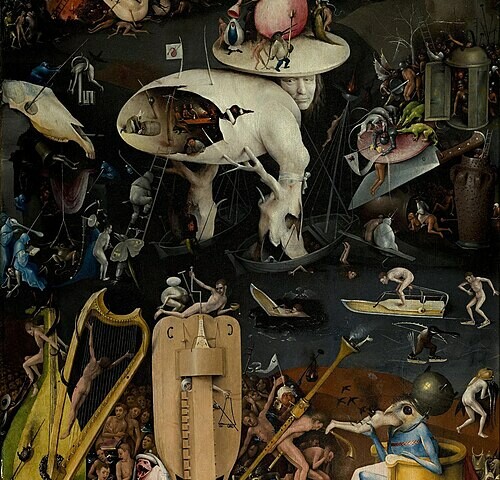
Europe’s Long Descent
(As we meditate on this day on Christ’s burial, and His descent into hell, it is fitting to ponder here with contributor Peter Marcus how the world seems to be heading there as well. The difference is that, although God cannot ‘redeem’ hell, nor those therein, He can and did redeem the world. There is[…]Continue reading→