
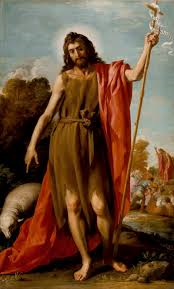
Second Sunday of Advent: The Baptist, Newman and Preparing for the Lord
Prepare the way of the Lord, make his paths straight (Lk. 3:4). ⧾
The Gospel of the Mass on this second Sunday of Advent introduces us to John the Baptist, the voice of one crying out in the wilderness, ‘Prepare the way of the Lord; make his paths straight’. John the Baptist is one of the three Advent figures who during this time of preparation for Christmas guide us towards our encounter with the living God in Christ. John, who calls us to repentance, echoes the sentiments of Isaiah, whose prophecies express the longing of ancient Israel for the Messiah, and humanity’s longing for salvation. This longing is fulfilled in Our Lady, the Blessed Virgin Mary, the chosen Daughter of Israel, and the Mother of the Messiah.
This is why God became man; that we might be delivered from the slavery of sin and death, the cruelty of paganism, and the slow death of a life without purpose and meaning. Human life, not simply in the different functions that people undertake, but in its very essence, is purposeful. In the words of a prayer composed by St. John Henry Newman, God has created me to do Him some definite service. He has committed some work to me which He has not committed to another. I have my mission. I may never know it in this life, but I shall be told it in the next. In each one of us God has begun a good work and in heeding the Baptist’s call to repentance and vigilance we endeavour to grow in our knowledge of God and in our devotion to Him; that we might become mature in our faith, and that our spiritual life may grow and deepen to become a life of deep devotion. This is the work of a lifetime.
The call to repentance is as much a call to truth as it a call to faith in Christ Jesus, the Saviour. But to all who received him, who believed in his name, he gave power to become children of God; who were born, not of blood nor of the will of the flesh nor of the will of man, but of God (Jn. 1:12-13). Our faith in the Son of God enables us to be born of God. Of all of us, disciples of Jesus Christ, it can be said that our true ‘genealogy’ is faith in Jesus, who gives us a new origin, who brings us to birth ‘from God’ (Jesus of Nazareth, the Infancy Narratives, p. 13). At the level of our being, the essence of who we are (our ontology), the Mystery of the Incarnation enables us to live in an altogether new manner. Once we come to faith, everything changes because we change. As St. Paul declares, If anyone is in Christ, he is a new creation; the old has passed away, behold the new has come (2 Cor. 5:17).
In heeding the call to repentance and faith in Christ Jesus Our Saviour, we dispose ourselves to new possibilities; to growth in knowledge and love, in truth and in mercy. To repent is to have an unconditional readiness to change in order to be transformed in Christ (Dietrich Von Hildebrand). This is the true and complete meaning of repentance. When we begin to appreciate what this really means we begin also to understand the uniqueness, the beauty and the need for Christianity for the true faith reveals the true God and enables man to live with the clarity that our faith alone provides.
Our culture is gripped by a willful misunderstanding of human nature; one that denies the need for repentance at all. As a result, over time we have lost the ability to appreciate its absolute necessity at both the natural or human level and at the supernatural level. This has also resulted in a general climate of doctrinal and moral disorientation within the Church. Repentance is the first step on the road of discipleship that leads to an altogether different manner of being and living, of thinking and acting. Our humble submission to God in Christ bestows on us a dignity that simply requires of us that we live in the awareness of this dignity. As our understanding of this dignity deepens we come to an ever greater understanding of our need for continuous conversion and for a life of virtue. More than ever, in the face of this doctrinal and moral disorientation, our faithful witness is needed. So we must pray for perseverance; that we might remain steadfast in the truth of Christ Our Lord.
Our Lord teaches us by His words and example an altogether new way of living. We must learn from Him to be humble and gentle of heart, in the conviction that He has a specific work for each one of us. We must appropriate His identity as Son of the Father and through the grace of daily repentance deepen our awareness of our dignity as children of God. St. John Henry Newman gives voice to this conviction: He has not created me for naught. I shall do good; I shall do His work. I shall be an angel of peace, a preacher of truth in my own place, while not intending it if I do but keep His commandments. Therefore, I will trust Him, whatever I am; I can never be thrown away. If I am in sickness, my sickness may serve Him, in perplexity, my perplexity may serve Him. If I am in sorrow, my sorrow may serve Him. He does nothing in vain. He knows what He is about. He may take away my friends. He may throw me among strangers. He may make me feel desolate, make my spirits sink, hide my future from me. Still, He knows what He is about. This radical faith and trust in God’s love and purpose for each one of us is the strength of the saints, the consolation of sinners, and the confidence of both.
Everything we do in this life, the good we do, and even the suffering we endure; everything is at the service of the work that God has begun in us and given to us. It may be said that through the mysteries of our own earthly life, because of our faith in Christ Jesus, we become more mature and devout; and so the work of salvation continues; and in and through us the offer of salvation is extended to others. In this manner all of us too can prepare the way of the Lord and make his paths straight. ⧾

Remembering Father Alphonse de Valk
(Today marks the sixth anniversary of the death of Father Alphonse de Valk, C.S.B., a faithful, courageous and indefatigable Basilian priest, pro-life-and-family apostle, and the founder of Catholic Insight magazine. Here is what we wrote those on his entering into eternity five years ago, as we continue to remember him in our prayers and thoughts)[…]Continue reading→

Divine Mercy Sunday – An Echo of Every Mass
Reach out your hand and put it in my side. Do not doubt but believe’… ‘My Lord and my God!’ (Jn. 20:18)). Today is Divine Mercy Sunday, and as we celebrate the end of the Easter Octave, we contemplate the wounded side of our Saviour, the Church’s source of life. On Good Friday in the[…]Continue reading→

Saint Stanislaus of Szczepanów
We celebrate Saint Stanislaus today (+ April 11, 1079), in light of this Easter Octave, a bishop and martyr who accepted the episcopacy only at the direct order of Pope Alexander II. He proved a wise and courageous leader of his flock, put to death by his own king, Boleslaus, for rebuking the monarch’s ‘immoral[…]Continue reading→
First Holy Communion: Sermon from May 16, 1943
Here is a sermon from the good old days by +Rev. Msgr. Vincent Nicholas Foy (August 14, 1915 – March 13, 2017), from 1943. Readers may recall that Pope Saint Pius X, by the decree Quam Singulari in 1910, lowered the customary age of reception of Holy Communion – after the rigours of the plague[…]Continue reading→
In the Glorious Light of Easter, Alleluia!
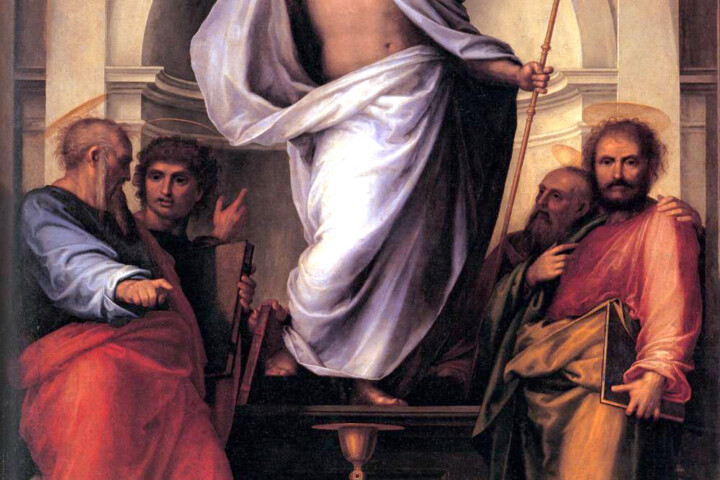
Set your minds on things that are above, not on things that are on earth, for you have died, and your life is hidden with Christ in God. When Christ who is your life is revealed, then you also will be revealed with him in glory (Col. 3:3-4). The Resurrection of Our Lord and Saviour[…]Continue reading→
An Ancient Homily for Holy Saturday
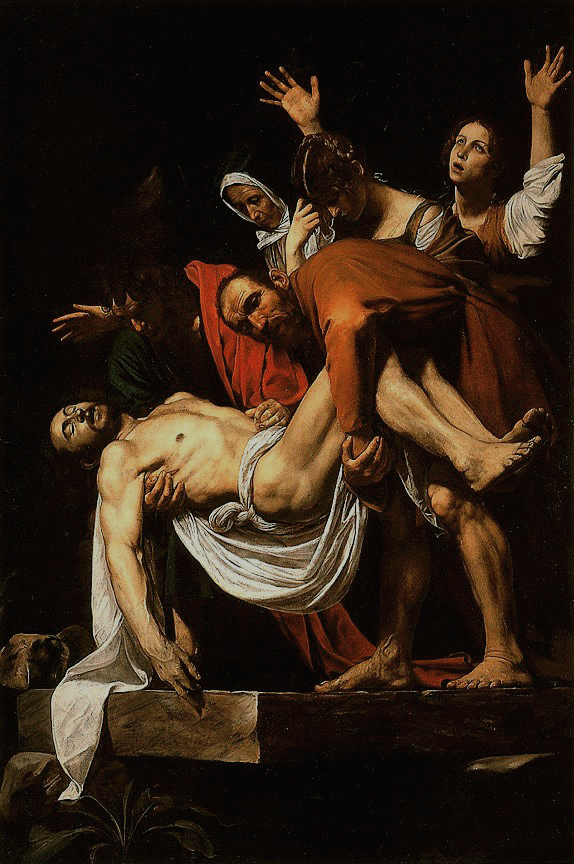
The time between Good Friday and Easter Sunday is one of waiting, in silence, as the world wonders – anticipates – what will happen, after the death of Christ. We re-live this time each year in the anamnesis of our liturgy, and in turn look forward to the glorious re-creation of all things at the[…]Continue reading→
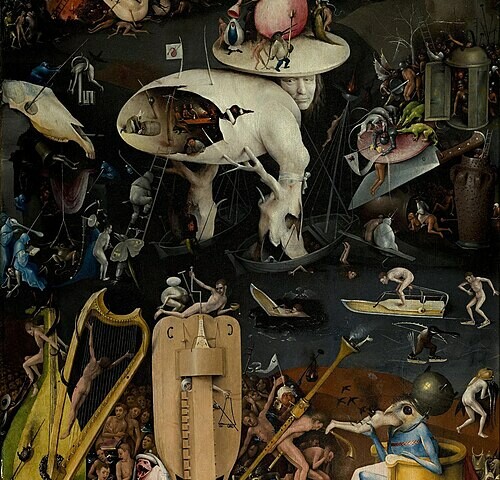
Europe’s Long Descent
(As we meditate on this day on Christ’s burial, and His descent into hell, it is fitting to ponder here with contributor Peter Marcus how the world seems to be heading there as well. The difference is that, although God cannot ‘redeem’ hell, nor those therein, He can and did redeem the world. There is[…]Continue reading→
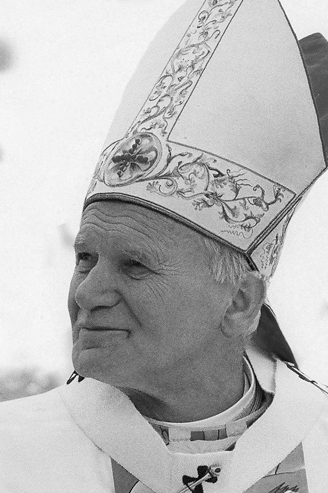
Pope Saint John Paul II’s First Good Friday Homily
ADDRESS OF HIS HOLINESS JOHN PAUL II AT THE CONCLUSION OF THE STATIONS OF THE CROSS AT THE COLOSSEUM Good Friday, 13 April 1979 When we make the Way of the Cross from one station to the next, in spirit we are always at the spot wherethis journey had its “historical” place: where it[…]Continue reading→
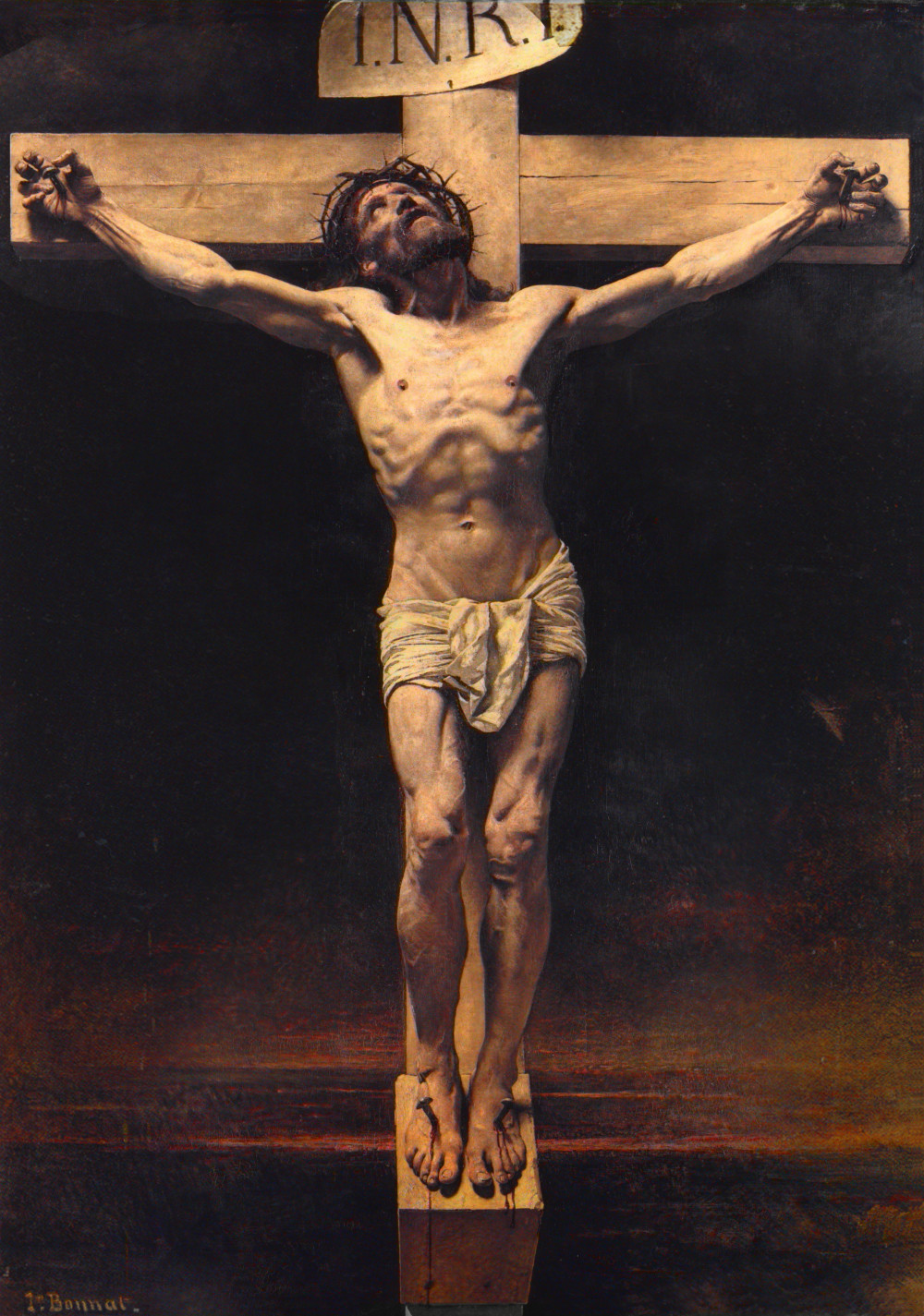
A Meditation for Good Friday: How To Undo the Effects of Sin?
Cardinal Newman, now Saint John Henry Newman, was a towering figure of nineteenth-century Catholicism who is almost universally admired. I say “almost” because not everyone likes him. I knew a priest once, Arthur Caulkins, who has become disenchanted with Newman. As an undergraduate Arthur had been enamoured of Newman, and this interest continued when he[…]Continue reading→
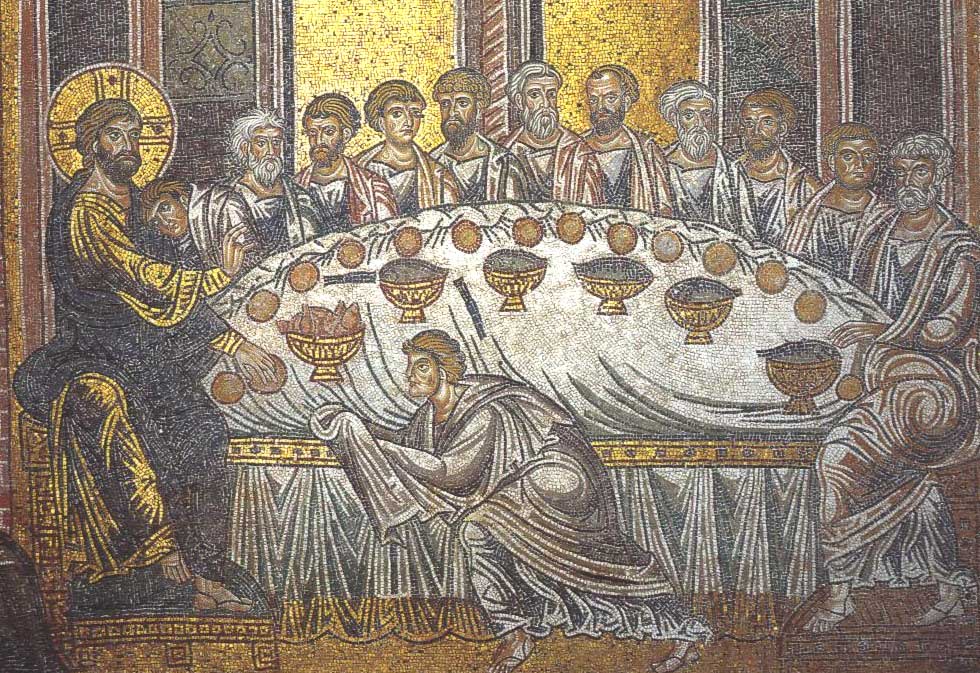
Pope Benedict’s Last Holy Thursday Homily
MASS OF THE LORD’S SUPPER HOMILY OF HIS HOLINESS BENEDICT XVI Basilica of St John Lateran Holy Thursday, 5 April 2012 Photo Gallery (Video) Dear Brothers and Sisters! Holy Thursday is not only the day of the institution of the Most Holy Eucharist, whose splendour bathes all else and in some ways draws it to[…]Continue reading→