
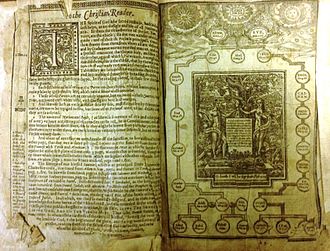
What King James Has to Say about the Lectionary
The current lectionary at Mass in Canada has been in use for nearly thirty years now; it was introduced in 1992. At that time the bishops choose the New Revised Standard Version (NRSV)[1] over the Bible of Jerusalem. The difference between them was nicely described by the office of the Canadian Conference of Catholic Bishops at the time. In the latter, they said, “the meaning of an entire sentence or phrase is conveyed as a unit” while the former is “as literal as possible, and free as necessary.” Preferring the approach of the NRSV, I was glad it had been approved for liturgical use. Nevertheless, I remember that even then I didn’t want a new text for the readings at Mass. I felt like those fifth-century Catholics in Tripoli who shouted their disapproval when they heard the reader describe the marvellous plant that sheltered the prophet Jonah as an ivy rather than the traditional gourd. It’s just that I had been subjected to many different versions of Scripture. When I was young, everyone used the Douai-Rheims translation, but at the seminary it was the Knox version, followed by Kleist-Lilly, the Confraternity and, later, two editions of the Bible of Jerusalem. For personal use, I still prefer the Revised Standard Version, but I also refer to the Latin Vulgate and the Greek text. When I was teaching, students would quote from various versions: The Good News Bible, the New English Bible, the New American Bible (which is used in the American lectionary) and so on. It’s no wonder that I stammer when I try to quote Scripture from memory. Consequently, while I accept in principle the need for new, more accurate translations and the CCCB’s choice of the NRSV, I am also conscious of some drawbacks to such changes.
The first drawback is my personal experience writ large. A community, like an individual, needs a text of Scripture which, by constant repetition, will enter the conscious and subconscious memory of a people. Consider the King James version. A woman once said to a friend of mine, “I’m glad we use the original version of the Bible in our church.” His academic mind raced ahead, trying to imagine what she could mean: Greek? Hebrew? the Septuagint? the Masoretic Text? She answered his puzzled look by saying, “The King James Version.” And she had a point. The wording of that text is indelibly etched on the religious consciousness of English-speaking Protestants. It has done for them what a Bible should, in prayers, in hymns, in art, in preaching, in literature. Of course, there are inaccuracies in translation which may require correction or even updating. All I ask is that one recognize that there is loss as well as gain in the alteration. An instance of what I refer to is provided by a series of changes in the divine office. In 1945 Pope Pius XII promulgated a new Latin translation of the Psalms. It may have been more accurate than the Vulgate it replaced, but it was also clear proof that Latin is a dead language. But now the Vulgate Psalms, slightly amended, have been restored in the Breviary. When one considers the significance of the official prayer of the Church the Vulgate is eminently appropriate, for it represents the very words that have informed the spiritual life of the Western Church for 1,500 years. What could be more suitable for a traditional prayer than its traditional wording?
Secondly, there are simply too many translations of the Bible in circulation, each with its particular . . . bias would not be too strong a term. Inevitably, then, the religious convictions of the biblical translator will influence his choice of words. Consider the word episcopos of 1 Timothy[2] which appears in English as “bishop” (NRSV), “church leader” (New English Bible), “overseer” (New International Version), “president” (Jerusalem Bible), “presiding elder” (New Jerusalem Bible). Could not a reader easily conclude that our bishops are not in a line of succession with the episcopoi of the apostolic Church? That possibility should not arise for Catholics, as we base our faith and Tradition as well as Scripture, but an allegiance to Tradition implies that we want a Bible that has been used down the centuries as the basis for personal piety and official teaching.
Consider again the woman mentioned above with regard to the King James version. The point is that her experience of Scripture is more akin to what the Bible was in the early Church than that of a textual critic trying to re-establish an academically respectable Greek or Hebrew text as a basis for translation. The fruit of his endeavours will be a text which has been well described by the biblical scholar M. M. Parvis: “When we reconstruct the ‘original’ text, we are not reconstructing but rather we are constructing something that never before existed in heaven or on earth.”[3] In early Christianity, however, the distinguishing mark of inspired writing was precisely its long-standing use in the liturgy of a local Church. There were other elements in the canonization process which led to the collection of writings we call the New Testament —apostolicity, for one—but, as with the Old Testament, the fundamental criterion was use in public worship. Which text, then, better represents God’s word to his people: a text never before heard or one which has been used in public worship for generations? To ask the same question more pointedly, does the King James version, prayed with down the centuries, not have a greater claim to represent God’s word for a faithful Protestant than the NRSV which no Christian had ever seen before it was published in 1989?[4] Could one not go further and ask if the notion of inspiration should not be extended to include the translators of Scripture, of those texts a least destined for use in the Church’s liturgy? After all, the canonization—a work of the entire Church over a long period of time—was under the guidance of the Holy Spirit as a continuation of his activity in producing the inspired text. Similarly, could we perhaps regard the interpretation, and that includes the translation, of the text as an ongoing ecclesiastical charism which places a particular version of the Bible on the lectern at Mass?
Such considerations leave me in two minds about our current lectionary. I find myself in a theological cleft stick, having accounted for my disinclination for a new translation by defending the possibility that the Church today could well exercise its charism of interpretation by producing just such a version. That our bishops have approved the NRSV removes the immediate difficulty, since they enunciate for us the mind of the whole Church. Their endorsement of the NRSV is sufficient to set it before the community of faith. But the ultimate confirmation of this version as God’s word must await its bearing fruit among the people of God.
[1] A significant feature of the NRSV was its use of inclusive language, which replaces “man” with “mortal” and “he,” “him” and so forth with gender-neutral words such as “they” or “all,” etc.
[2] 1 Tim 3.2: “Now a bishop must be above reproach, married only once, temperate, sensible, respectable, hospitable, an apt teacher . . ..”
[3] M.M. Parvis, “The Goals of New Testament Textual Studies” (Studia Evangelica, VI: Berlin, 1973), 397.
[4] The King James Bible has its defenders as a translation as well as a cultural monument. Cf. Gerald Hammond, “English Translations of the Bible,” The Literary Guide to the Bible, edited by Robert Alter and Frank Kermode (Harvard University Press, Cambridge [MA], 1987), pp. 647-66.

Remembering Father Alphonse de Valk
(Today marks the sixth anniversary of the death of Father Alphonse de Valk, C.S.B., a faithful, courageous and indefatigable Basilian priest, pro-life-and-family apostle, and the founder of Catholic Insight magazine. Here is what we wrote those on his entering into eternity five years ago, as we continue to remember him in our prayers and thoughts)[…]Continue reading→

Divine Mercy Sunday – An Echo of Every Mass
Reach out your hand and put it in my side. Do not doubt but believe’… ‘My Lord and my God!’ (Jn. 20:18)). Today is Divine Mercy Sunday, and as we celebrate the end of the Easter Octave, we contemplate the wounded side of our Saviour, the Church’s source of life. On Good Friday in the[…]Continue reading→

Saint Stanislaus of Szczepanów
We celebrate Saint Stanislaus today (+ April 11, 1079), in light of this Easter Octave, a bishop and martyr who accepted the episcopacy only at the direct order of Pope Alexander II. He proved a wise and courageous leader of his flock, put to death by his own king, Boleslaus, for rebuking the monarch’s ‘immoral[…]Continue reading→
First Holy Communion: Sermon from May 16, 1943
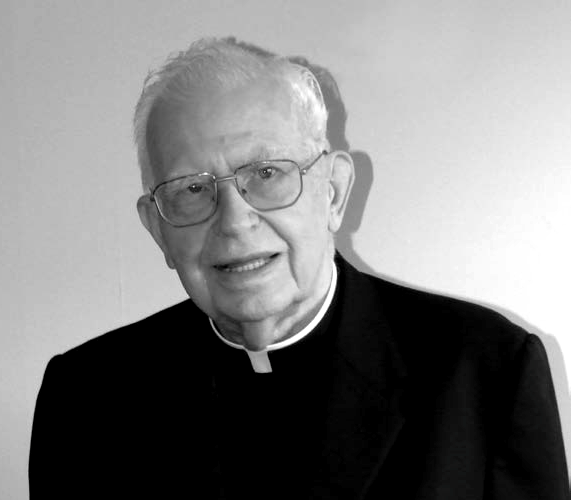
Here is a sermon from the good old days by +Rev. Msgr. Vincent Nicholas Foy (August 14, 1915 – March 13, 2017), from 1943. Readers may recall that Pope Saint Pius X, by the decree Quam Singulari in 1910, lowered the customary age of reception of Holy Communion – after the rigours of the plague[…]Continue reading→
In the Glorious Light of Easter, Alleluia!
Set your minds on things that are above, not on things that are on earth, for you have died, and your life is hidden with Christ in God. When Christ who is your life is revealed, then you also will be revealed with him in glory (Col. 3:3-4). The Resurrection of Our Lord and Saviour[…]Continue reading→
An Ancient Homily for Holy Saturday
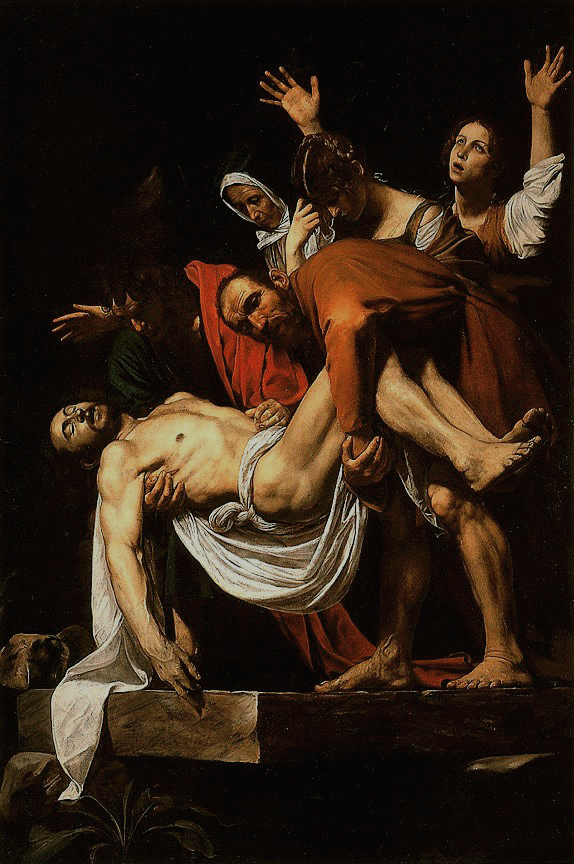
The time between Good Friday and Easter Sunday is one of waiting, in silence, as the world wonders – anticipates – what will happen, after the death of Christ. We re-live this time each year in the anamnesis of our liturgy, and in turn look forward to the glorious re-creation of all things at the[…]Continue reading→
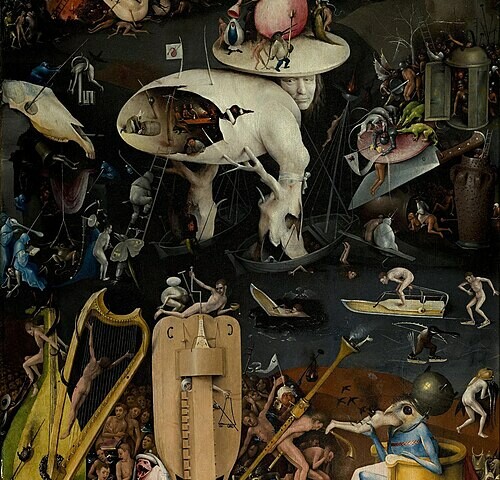
Europe’s Long Descent
(As we meditate on this day on Christ’s burial, and His descent into hell, it is fitting to ponder here with contributor Peter Marcus how the world seems to be heading there as well. The difference is that, although God cannot ‘redeem’ hell, nor those therein, He can and did redeem the world. There is[…]Continue reading→
Pope Saint John Paul II’s First Good Friday Homily
ADDRESS OF HIS HOLINESS JOHN PAUL II AT THE CONCLUSION OF THE STATIONS OF THE CROSS AT THE COLOSSEUM Good Friday, 13 April 1979 When we make the Way of the Cross from one station to the next, in spirit we are always at the spot wherethis journey had its “historical” place: where it[…]Continue reading→
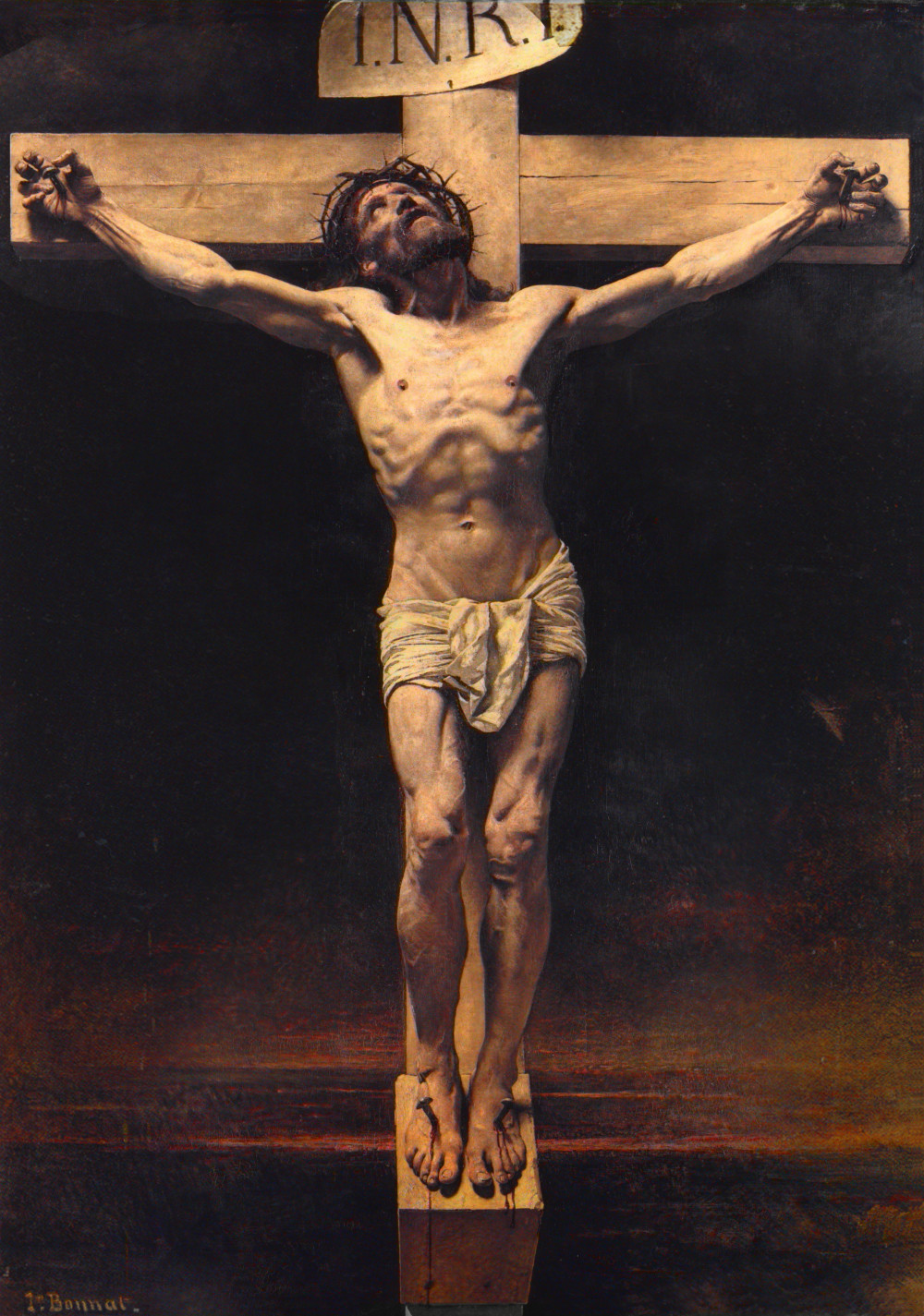
A Meditation for Good Friday: How To Undo the Effects of Sin?
Cardinal Newman, now Saint John Henry Newman, was a towering figure of nineteenth-century Catholicism who is almost universally admired. I say “almost” because not everyone likes him. I knew a priest once, Arthur Caulkins, who has become disenchanted with Newman. As an undergraduate Arthur had been enamoured of Newman, and this interest continued when he[…]Continue reading→
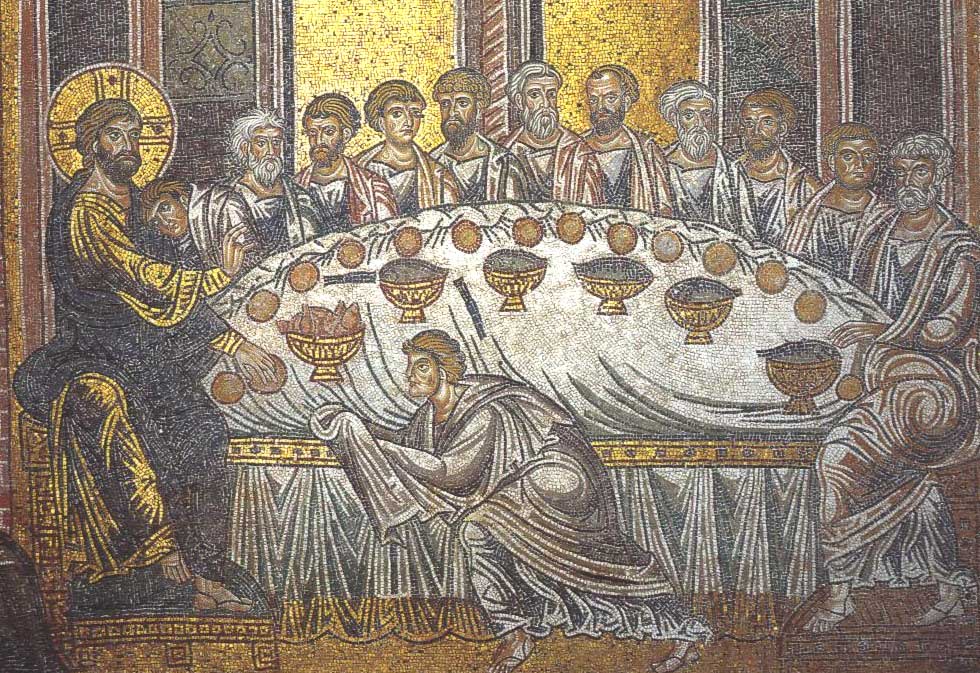
Pope Benedict’s Last Holy Thursday Homily
MASS OF THE LORD’S SUPPER HOMILY OF HIS HOLINESS BENEDICT XVI Basilica of St John Lateran Holy Thursday, 5 April 2012 Photo Gallery (Video) Dear Brothers and Sisters! Holy Thursday is not only the day of the institution of the Most Holy Eucharist, whose splendour bathes all else and in some ways draws it to[…]Continue reading→