
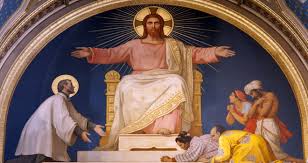
Solemnity of Christ the King
‘For this I was born, and for this I came into the world, to testify to the truth. Everyone who belongs to the truth listens to my voice’ (Jn. 18:37).
Today we mark the end of the liturgical year by celebrating the great Feast of Christ the Universal King; and though we contemplate Christ our King bound before Pilate, we who listen to His voice recognise that the truth spoken by Him is far stronger than any human or earthly power; and it alone can set us free (Cf. Jn. 8:32). That He should bear witness to the truth is the very reason why Our Lord came into the world. Though our Gospel text does not include it, Pilate asked Our Lord a very important question: ‘What is truth?’ (Jn. 18:38). In doing so, he gave voice to a fundamental human desire; for we are ordered for truth. Our nature yearns to know what is true. We want to know the nature of things; both what they are and ultimately why they are.
And yet, generally speaking, at least in our part of the world we have become rather slothful or reluctant to seek to understand what and why we are. What is our purpose? In the created order there is nothing without purpose. This is no less true for us; but unlike the rest of the created order, we humans are unique in the sense that we ourselves are responsible for what we shall be and ultimately become. Instinct alone does not guide us to a proper appreciation of what we are because we bear in our nature the wound of original sin. For this reason God has restored all things in His Beloved Son, the King of the universe who came into the world to reveal and to witness to the truth; the truth about God and the truth about man and of our ultimate destiny in God (Cf. Col. 1:15-18).
‘What is truth?’ In other words, ‘What is most real?’ There are many who say that this question cannot be given an answer; and this has resulted in what Pope Benedict astutely defined as the dictatorship of relativism which does not recognise anything as certain or true and has as its highest goal one’s ego and one’s own desires. As a result, so much of life is chaotic and unpredictable for so many people today; and in some segments of society completely now devoid of God’s truth life is brutal. ‘What is truth?’ The answer, quite simply, is God; the divinely revealed reality of God manifested in the words and the Person of Jesus Christ, the faithful witness, the firstborn of the dead, and the ruler of the kings of the earth (Rev. 1:5). He is truth. Without this truth man is ignorant and deceived; and at best we have a partial understanding of reality and of ourselves. In a world such as ours where even objective scientific truths such as the humanity of the unborn child are blatantly denied, it is all the more necessary for us to commit ourselves to living by the light of God’s truth; because anything other than this leads to chaos and tyranny. The last two years or so have given us a taste of what it means to live not by truth but by lies and we have also experienced a medical dictatorship that has impacted every aspect of life, bar none. Our lives have been upended by a global narrative imposed by the powerful of this world. Solve et coagula. Destroy and build up again. The great reset. Build back better. A new order is being imposed in which people are separated and segregated, included or excluded on the basis of submission to a medical procedure of doubtful efficacy and which of its very nature requires free, personal assent or choice. Our civil liberties are increasingly threatened and it would seem that the Church, Christ’s Mystical Body on earth is like Our Lord before Pilate, similarly bound before earthly powers. Some have rightly observed that the Church is experiencing her own passion.
So we must ask, what is our task at this time? First and foremost, in our dealings with others we must refuse to accept these categories of division and we must respect freedom of conscience. In so doing we are upholding a fundamental truth about human nature and human freedom, free will. History clearly shows that where men and women have welcomed and accepted the kingdom and kingship of Christ, life has flourished to the benefit of all in a kingdom of truth and life, and kingdom of holiness and grace, a kingdom of justice, love and peace (Preface for the Solemnity of Christ the King, The Roman Missal). This is the kingdom that we must work to establish.
The Feast of Christ the King was established by Pope Pius XI in 1925, almost one hundred years ago; in a time when godless revolutionary movements and godless ideologies were being brutally imposed throughout the world, ideologies that also separated and segregated human beings and ultimately exterminated them. Whether they deny the sovereignty of God or the very existence of God, the rulers of this world are ultimately always conquered by the power of God. Christus vincit, Christus regnat! Christus imperat! Christ conquers, Christ reigns, Christ commands. This is the refrain of an ancient hymn known as the Royal Praises (Laudes Regiae). In the Blessed Sacrament of the Altar we encounter Christ our King, Christ Our Eucharistic King and in the union brought about by the reception of the Eucharist, we invite Our Lord to rule over us from within.
In his treatise On the Kingship of Jesus, St. John Eudes says: The Son of God wills to give us a share in his mysteries and somehow to extend them to us. He wills to continue them in us and in his universal Church. This is brought about first through the graces he has resolved to impart to us and then through the works he wishes to accomplish in us through these mysteries. He further explains: So it is that the mysteries of Christ will not be completed until the end of time, becausehe has arranged that the completion of his mysteries in us and in the Church will only be achieved at the end of time. If it pleases God that we should be given a share in the mystery of Our Lord’s Passion in these our days, may He bestow on us the grace of perseverance in the truth; the truth about God and the truth about man and of our ultimate destiny in God (Cf. Col. 1:15-18). In Christ then, we too can say, ‘For this I was born, and for this I came into the world, to testify to the truth.’ ⧾

Remembering Father Alphonse de Valk
(Today marks the sixth anniversary of the death of Father Alphonse de Valk, C.S.B., a faithful, courageous and indefatigable Basilian priest, pro-life-and-family apostle, and the founder of Catholic Insight magazine. Here is what we wrote those on his entering into eternity five years ago, as we continue to remember him in our prayers and thoughts)[…]Continue reading→

Divine Mercy Sunday – An Echo of Every Mass
Reach out your hand and put it in my side. Do not doubt but believe’… ‘My Lord and my God!’ (Jn. 20:18)). Today is Divine Mercy Sunday, and as we celebrate the end of the Easter Octave, we contemplate the wounded side of our Saviour, the Church’s source of life. On Good Friday in the[…]Continue reading→

Saint Stanislaus of Szczepanów
We celebrate Saint Stanislaus today (+ April 11, 1079), in light of this Easter Octave, a bishop and martyr who accepted the episcopacy only at the direct order of Pope Alexander II. He proved a wise and courageous leader of his flock, put to death by his own king, Boleslaus, for rebuking the monarch’s ‘immoral[…]Continue reading→

First Holy Communion: Sermon from May 16, 1943
Here is a sermon from the good old days by +Rev. Msgr. Vincent Nicholas Foy (August 14, 1915 – March 13, 2017), from 1943. Readers may recall that Pope Saint Pius X, by the decree Quam Singulari in 1910, lowered the customary age of reception of Holy Communion – after the rigours of the plague[…]Continue reading→

In the Glorious Light of Easter, Alleluia!
Set your minds on things that are above, not on things that are on earth, for you have died, and your life is hidden with Christ in God. When Christ who is your life is revealed, then you also will be revealed with him in glory (Col. 3:3-4). The Resurrection of Our Lord and Saviour[…]Continue reading→

An Ancient Homily for Holy Saturday
The time between Good Friday and Easter Sunday is one of waiting, in silence, as the world wonders – anticipates – what will happen, after the death of Christ. We re-live this time each year in the anamnesis of our liturgy, and in turn look forward to the glorious re-creation of all things at the[…]Continue reading→

Europe’s Long Descent
(As we meditate on this day on Christ’s burial, and His descent into hell, it is fitting to ponder here with contributor Peter Marcus how the world seems to be heading there as well. The difference is that, although God cannot ‘redeem’ hell, nor those therein, He can and did redeem the world. There is[…]Continue reading→
Pope Saint John Paul II’s First Good Friday Homily
ADDRESS OF HIS HOLINESS JOHN PAUL II AT THE CONCLUSION OF THE STATIONS OF THE CROSS AT THE COLOSSEUM Good Friday, 13 April 1979 When we make the Way of the Cross from one station to the next, in spirit we are always at the spot wherethis journey had its “historical” place: where it[…]Continue reading→
A Meditation for Good Friday: How To Undo the Effects of Sin?
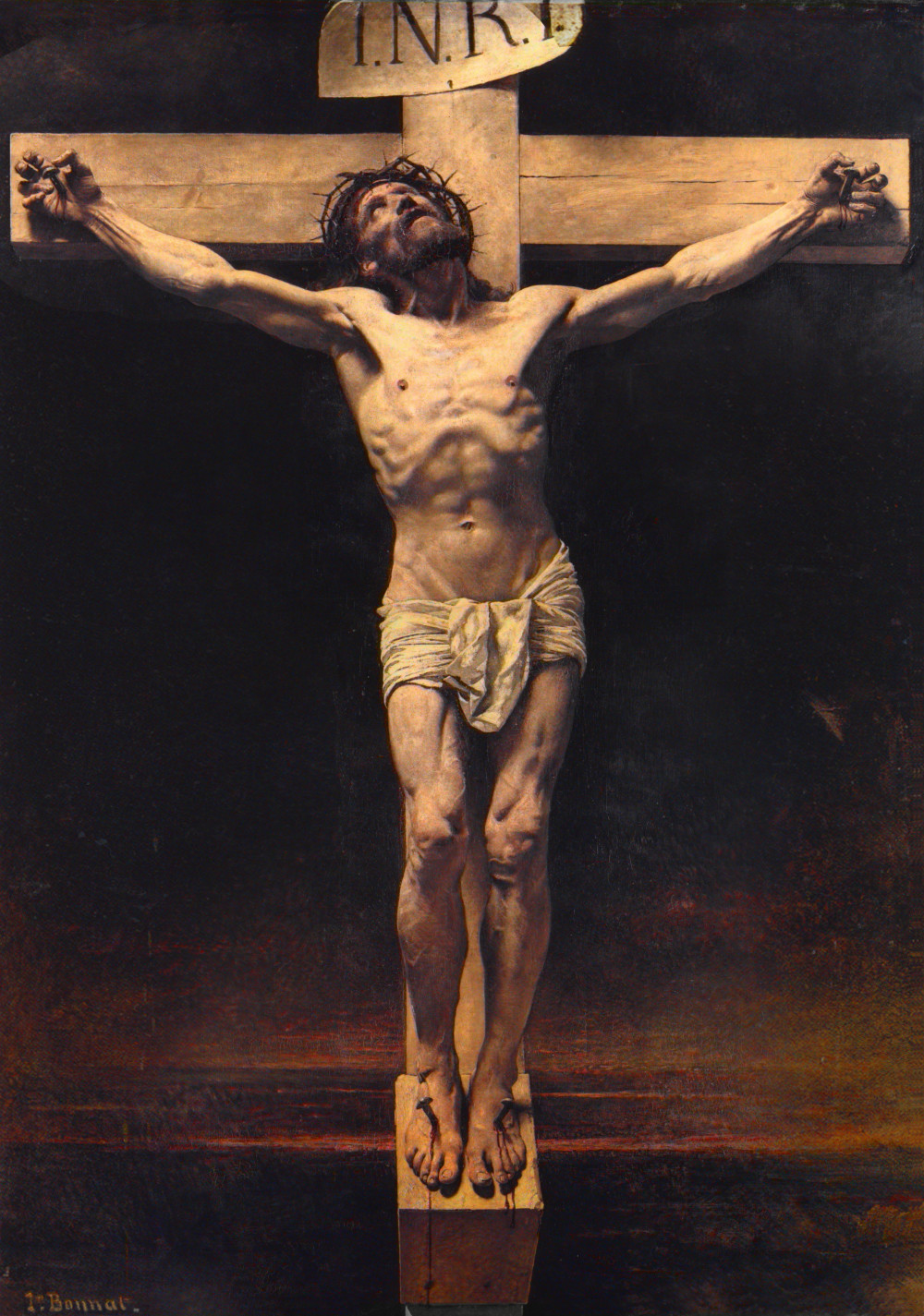
Cardinal Newman, now Saint John Henry Newman, was a towering figure of nineteenth-century Catholicism who is almost universally admired. I say “almost” because not everyone likes him. I knew a priest once, Arthur Caulkins, who has become disenchanted with Newman. As an undergraduate Arthur had been enamoured of Newman, and this interest continued when he[…]Continue reading→
Pope Benedict’s Last Holy Thursday Homily
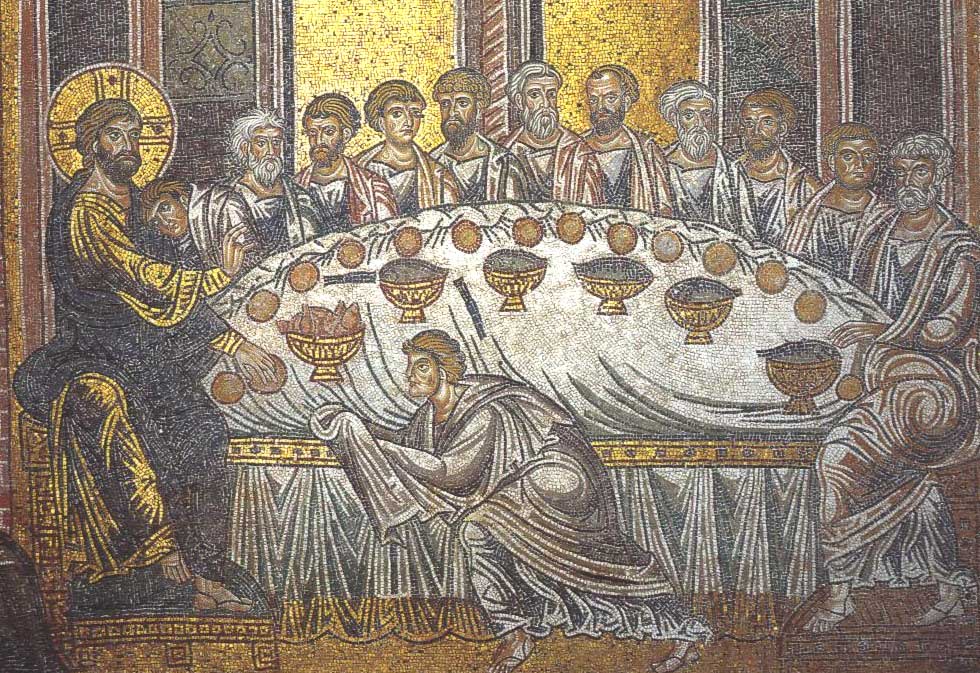
MASS OF THE LORD’S SUPPER HOMILY OF HIS HOLINESS BENEDICT XVI Basilica of St John Lateran Holy Thursday, 5 April 2012 Photo Gallery (Video) Dear Brothers and Sisters! Holy Thursday is not only the day of the institution of the Most Holy Eucharist, whose splendour bathes all else and in some ways draws it to[…]Continue reading→