
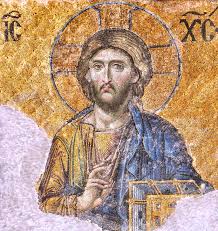
Loving God With All Our Heart
‘Hear, O Israel: the Lord our God, the Lord is one’ (Mk. 12:29). ⧾
The Gospel of the Mass today contains what we Christians call the Great Commandment: ‘You shall love the Lord your God with all your heart, and with all your soul and with all your mind, and with all your strength. You shall love your neighbour as yourself.’ These words are a direct quote from the Book of Deuteronomy, the first reading. They are part of what was in Our Lord’s time and still is for Jews today the principal Jewish confession of faith in one God. It is called the Shema and it is an affirmation of exclusive devotion to God. Observant Jews recite it as part of their morning and evening prayers. The text of this profession of faith, the Shema, is also fixed to the right hand doorpost of a Jewish home in what is called a mezuzah; a visible sign of their faith.
To this absolute affirmation of the truth of God and of our duties towards Him, Our Lord adds another command: ‘You shall love your neighbour as yourself.’ In so doing Our Lord gives us a proper and complete understanding of both God and the human person created in God’s likeness. This is the biblical understanding of the human person that has given rise to all that is good in cultures that have risen out of Christendom. We who hold to this understanding of the human person are now in the minority and, to a great extent, the culture war that engages us is a struggle between those who are endeavouring to hold fast to this biblical belief, and the majority who at face value, no longer believe this. Among these sadly, are those who appear to have a form of godliness but deny its power (Cf. 2 Tim. 3:5). God will not be mocked!
The attacks on Christianity that have become all too common, whether physically, philosophically or historically, that is to say in the revisionism of history especially as it concerns Christian missionary efforts, these are all attempts to delegitimize Christianity itself or at the very least to deny the great benefits that Christian culture has bestowed on mankind.Nevertheless, there are intellectuals who though they do not share our faith, recognise the benefits of Christian civilization and who therefore define themselves and cultural Christians. For such people we must pray; that they may come to acknowledge the Author of all that is good, God Incarnate, Our Lord and Saviour Jesus Christ.
The Great Commandment brings together theology and anthropology; God and man, faith and love. The Gospels clearly illustrate that in the course of His ministry Our Lord broadened the concept of neighbour to include not only those who share our faith in Him, but everyone. We are all familiar with the parable of the Good Samaritan which begins with a question: ‘And who is my neighbour?’ (Lk. 10:29). Later, the Apostle John would write in his first epistle: If anyone says, ‘I love God,’ and hates his brother, he is a liar; for he who does not love his brother whom he has seen, cannot love God whom he has not seen. And this commandment we have from him, that he who loves God should love his brother also (1 Jn. 4:20-21). The fact that the Catholic Church reflects the cultural and racial diversity of the human race is a sure sign of a measure of success in the fulfilment of this command. The Catholic Church is the united nations under the Kingship of Jesus Christ.
The visible expression of this Kingship is the crucifix. This is our confession of faith, our Shema. Each time we gaze upon the Crucified Saviour whether in church, in our own homes where the crucifix should have a prominent place, or from our rosaries, we recall the words spoken by Jesus in relation to a fallen humanity: ‘Greater love has no man than this; that a man lay down his life for his friends. You are my friends if you do what I command you’ (Jn. 15: 13-14). A crucifix always presents us with a challenge. One cannot remain indifferent to the Crucified Christ. The central truth of Christian Faith and life is the Mystery of the Incarnation: the truth that for us men and for our salvation the Son of God became man and that He suffered and died on the Cross. At the pinnacle of the created order there is humanity created in the image and likeness of God and man is destined to share God’s life not in some indefinite, indeterminate manner but in and through Christ Our Lord, who alone reveals the full truth about God and man, about our nature and destiny. This is why the Church takes sin very seriously because sin is always also an affront also to the dignity of man; a spiritual leprosy of sorts that can only be healed by the truth and the grace of God who admonishes and corrects us gently. So the sacred author declares in the Book of Wisdom: You spare all things because all things are yours, Lord, lover of life, You whose imperishable spirit is in all. Little by little, therefore, you correct those who offend, You admonish and remind them of how they have sinned, so that they may abstain from evil and trust in You, Lord (Wis. 12:1-2).
Little by little we arrive at these truths and we come to understand the greatness of God and the glory that He wills to share with us. So with the Psalmist we marvel and ask: What is man that thou art mindful of him, and the son of man that thou dost care for him? Yet thou hast made him little less than God, and dost crown him with glory and honour (Ps. 8:4-5). The surest way to arrive at this truth is the affirmation that the Mass is Calvary; and that on the Altar the Mystery of the Redemptive Incarnation is sacramentally re-presented for us so that we might be one with the living God and in Him be one with all of humanity. Perhaps this explains why there such an attack being waged on the Mass and why so many no longer believe these truths that have such bearing on how we live our lives. When at last we begin to understand that the celebration of the Holy Sacrifice of the Mass is the sacramental re-presentation of the crucifixion, we begin to understand who we are, what we are and why we are. The Mass teaches us how it is that we can love the Lord our God with all our heart, and with all our soul and with all our mind, and with all our strength; and love our neighbour as our very self: through our willingness to imitate the sacrificial, self-giving love of Our Saviour. This is the spiritual maturity of which saints are made. This is the Mystery upon which the saints modeled their lives and it is no less the pattern of our own lives. In His mercy, may God confirm us in the strength of this faith; and may our faithful witness especially in the experience of persecution that we now face both from within and without, be a source of consolation and inspiration especially for those who may be wavering. ⧾

Saint Kateri , Canada’s Protectress
This was the title given to Saint Kateri Tekakwitha, by Pope Benedict XVI, when he canonized her on October 28th, 2012, along with six others, in Saint Peter’ Square (she had been beatified by Pope John Paul II back in 1980). With Saint Joseph as our protector, along with the Canadian martyrs, we seem to[…]Continue reading→

Remembering Father Alphonse de Valk
(Today marks the sixth anniversary of the death of Father Alphonse de Valk, C.S.B., a faithful, courageous and indefatigable Basilian priest, pro-life-and-family apostle, and the founder of Catholic Insight magazine. Here is what we wrote those on his entering into eternity five years ago, as we continue to remember him in our prayers and thoughts)[…]Continue reading→

My Name is Bernadette
April 16th is a propitious day, for besides the anniversary of Father de Valk’s death, who founded Catholic Insight in its print form decades ago, and the commemoration of the ‘two Benedicts’, mentioned in accompanying posts, today we also recall Saint Bernadette Soubirous, the young visionary to whom the Virgin Mary appeared numerous times at[…]Continue reading→
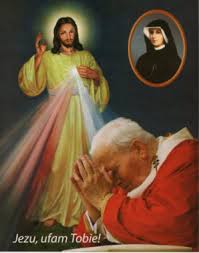
Canonizing Sister Faustina and Divine Mercy
HOMILY OF THE HOLY FATHER MASS IN ST PETER’S SQUARE FOR THE CANONIZATION OF SR MARY FAUSTINA KOWALSKA Sunday, 30 April 2000 1. “Confitemini Domino quoniam bonus, quoniam in saeculum misericordia eius”; “Give thanks to the Lord for he is good; his steadfast love endures for ever” (Ps 118: 1). So the Church sings on the Octave of[…]Continue reading→

Divine Mercy Sunday – An Echo of Every Mass
Reach out your hand and put it in my side. Do not doubt but believe’… ‘My Lord and my God!’ (Jn. 20:18)). Today is Divine Mercy Sunday, and as we celebrate the end of the Easter Octave, we contemplate the wounded side of our Saviour, the Church’s source of life. On Good Friday in the[…]Continue reading→

Saint Stanislaus of Szczepanów
We celebrate Saint Stanislaus today (+ April 11, 1079), in light of this Easter Octave, a bishop and martyr who accepted the episcopacy only at the direct order of Pope Alexander II. He proved a wise and courageous leader of his flock, put to death by his own king, Boleslaus, for rebuking the monarch’s ‘immoral[…]Continue reading→

First Holy Communion: Sermon from May 16, 1943
Here is a sermon from the good old days by +Rev. Msgr. Vincent Nicholas Foy (August 14, 1915 – March 13, 2017), from 1943. Readers may recall that Pope Saint Pius X, by the decree Quam Singulari in 1910, lowered the customary age of reception of Holy Communion – after the rigours of the plague[…]Continue reading→
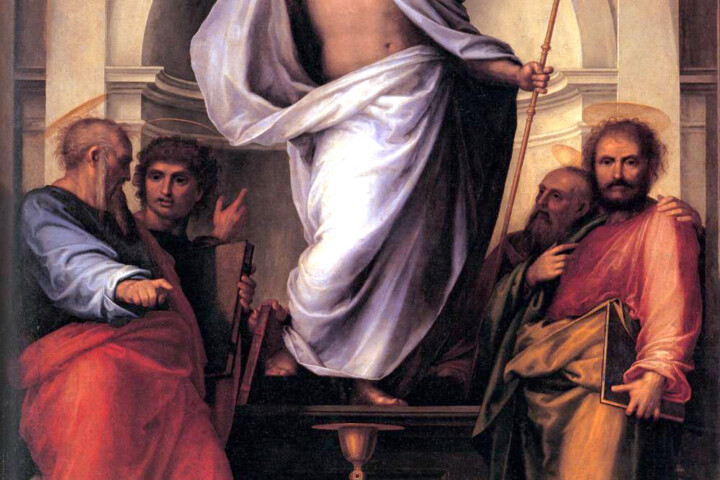
In the Glorious Light of Easter, Alleluia!
Set your minds on things that are above, not on things that are on earth, for you have died, and your life is hidden with Christ in God. When Christ who is your life is revealed, then you also will be revealed with him in glory (Col. 3:3-4). The Resurrection of Our Lord and Saviour[…]Continue reading→
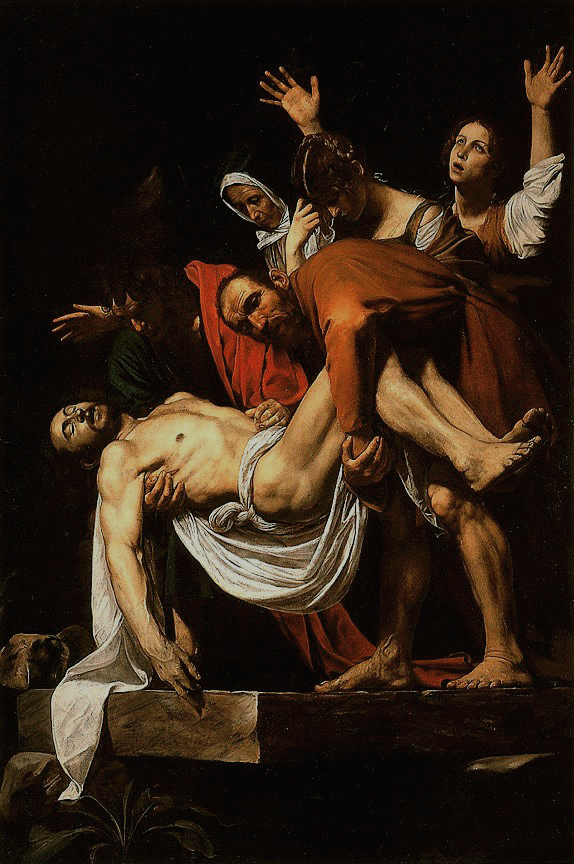
An Ancient Homily for Holy Saturday
The time between Good Friday and Easter Sunday is one of waiting, in silence, as the world wonders – anticipates – what will happen, after the death of Christ. We re-live this time each year in the anamnesis of our liturgy, and in turn look forward to the glorious re-creation of all things at the[…]Continue reading→
Europe’s Long Descent
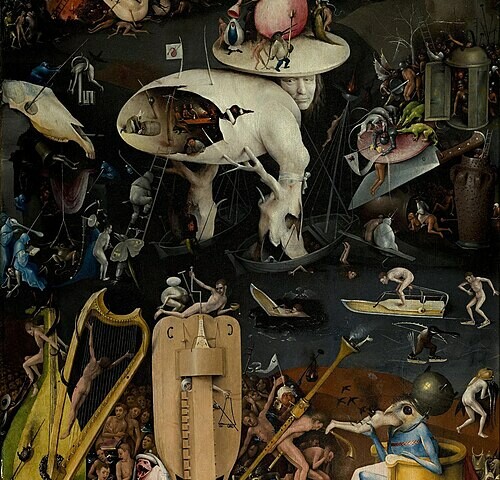
(As we meditate on this day on Christ’s burial, and His descent into hell, it is fitting to ponder here with contributor Peter Marcus how the world seems to be heading there as well. The difference is that, although God cannot ‘redeem’ hell, nor those therein, He can and did redeem the world. There is[…]Continue reading→