
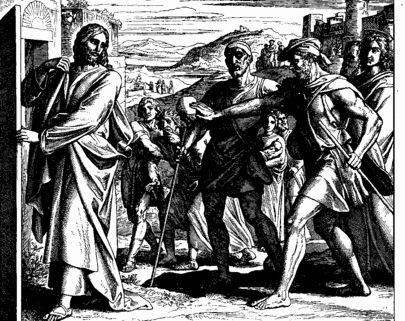
Seeing By Humility
‘Son of David, have mercy on me’ (Mk. 10:47). ⧾
The request made by Bartimaeus in his encounter with Our Lord reveals two things: the blind man’s faith in Our Lord’s power to heal him, and the fact that at one time this man had been able to see, but on account of an unspecified reason he had lost his sight. ‘My teacher, let me see again’. Having regained his sight Bartimaeus followed Jesus on the way. This last detail is more significant than it appears for the way is one of the earliest terms used in the New Testament to describe the Christian faith. All of us are familiar with Our Lord’s declaration: I am the way, the truth and the life. Christian life, simply expressed is life in Christ by the power and presence of the Holy Spirit. The goal and purpose of our life is to become as Christ-like as possible; to grow in Our Lord’s likeness and to reflect His glory.
We well know that it is quite possible in life to lose one’s way; to be blinded by other things which, while good and even necessary, can never become the greatest good in our lives or the thing to which we give the greatest importance. It is also possible for any number of reasons, to lose one’s way; and consequently, to become blind to truth, to goodness and to beauty. For this reason, the prayer or request of Bartimaeus is easily one that we can make our very own not only if we have lost our way but also as we walk with Our Lord along the path of devout humility.
Who of us here has not failed at times to see what may be very evident to others? It is possible at times to be blinded by one’s prejudice or by any number of factors that might prevent us from boldly stepping out in faith or from making our needs known to Our Lord. There is both simplicity and boldness to the dialogue between Bartimaeus and Our Lord and the result is immediate for the evangelist tells us that immediately the man regained his sight and followed Jesus on the way. The simplicity and boldness of Bartimaeus is something that we can imitate in our own relationship with God by simply taking God at His word: Ask and you shall receive; seek and you will find, knock and the door will opened to you (Mt. 7:7).
The saints have much to teach us about simplicity and boldness in prayer because they teach us to approach Our Lord with confidence and always to ask that we might see; that we might be freed from whatever may be keeping us from discerning the presence and the saving power of God at work in our midst. It could be that Bartimaeus, precisely because he could not see with his natural vision was open to perceiving that he was in the presence of more than just an ordinary Teacher. It is possible as it pertains to us, that as we journey in faith we may have lost our ability to perceive the presence of God at work in and among us; or that we have been so influenced by neo-Arianism of our times that we no longer approach Our Lord in the conviction that He is truly God Incarnate, the Word made flesh. This is one of the great errors of our times; that most Catholics now possess a deficient understanding of who Jesus truly is. This is the sad consequence of decades of deficient catechesis and of bad preaching, that is of preaching devoid of any doctrine. Christ Our Saviour is God and we approach Him as such.
So we too must ask always: ‘Master, that I may see.’ God reveals Himself to the humble and to the gentle of heart. St. Augustine, one of the greatest teachers of the Church, whose own conversion to the truth of Christ was brought about by the humility of our Saviour, observed: The Christ preached by the Church is not a Christ rich in earthly treasure or Christ covered with gold, but Christ crucified. When this Christ was first preached to the few who believed He was mocked by the multitudes. Nevertheless, by the power of the Cross the blind saw, the lame walked, the lepers were cleansed so that all might come to know that even among the powers of this world, there is nothing more powerful than the humility of God.
Our Lord continues to be among us in the humility of His Eucharistic presence. We can only fully encounter Him and receive His healing grace if we also approach Him with profound humility. ‘Master, that I may see.’ This humble and bold request implies a humble approach not only to our worship but also to life generally speaking. This is one of the ways in which Christian life is essentially different; for Christians, true Christians, are distinguished by their humility of soul. May our reverent worship of Our Lord in the Eucharistic Sacrifice make us both humble and bold in our prayer; that we may see Him in the suffering and the needy, and confidently proclaim Him to those who do not yet know Him. ⧾

Remembering Father Alphonse de Valk
(Today marks the sixth anniversary of the death of Father Alphonse de Valk, C.S.B., a faithful, courageous and indefatigable Basilian priest, pro-life-and-family apostle, and the founder of Catholic Insight magazine. Here is what we wrote those on his entering into eternity five years ago, as we continue to remember him in our prayers and thoughts)[…]Continue reading→

Divine Mercy Sunday – An Echo of Every Mass
Reach out your hand and put it in my side. Do not doubt but believe’… ‘My Lord and my God!’ (Jn. 20:18)). Today is Divine Mercy Sunday, and as we celebrate the end of the Easter Octave, we contemplate the wounded side of our Saviour, the Church’s source of life. On Good Friday in the[…]Continue reading→

Saint Stanislaus of Szczepanów
We celebrate Saint Stanislaus today (+ April 11, 1079), in light of this Easter Octave, a bishop and martyr who accepted the episcopacy only at the direct order of Pope Alexander II. He proved a wise and courageous leader of his flock, put to death by his own king, Boleslaus, for rebuking the monarch’s ‘immoral[…]Continue reading→
First Holy Communion: Sermon from May 16, 1943
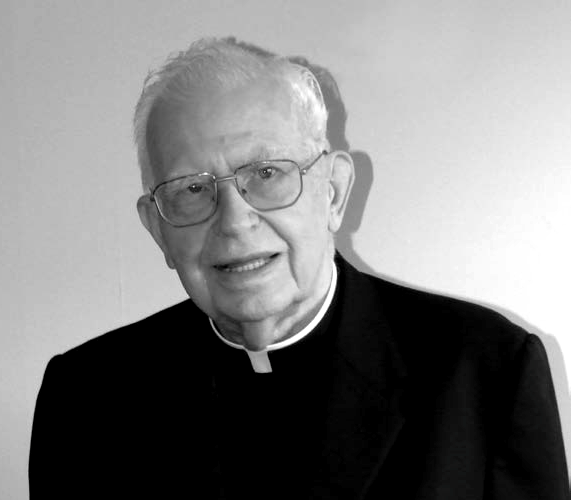
Here is a sermon from the good old days by +Rev. Msgr. Vincent Nicholas Foy (August 14, 1915 – March 13, 2017), from 1943. Readers may recall that Pope Saint Pius X, by the decree Quam Singulari in 1910, lowered the customary age of reception of Holy Communion – after the rigours of the plague[…]Continue reading→
In the Glorious Light of Easter, Alleluia!
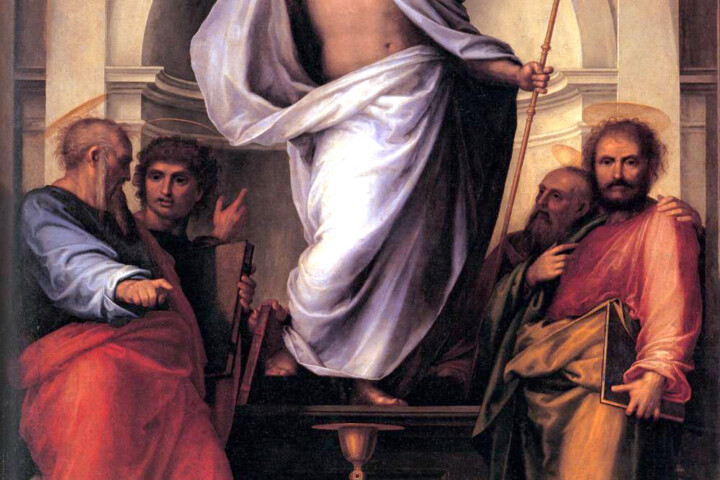
Set your minds on things that are above, not on things that are on earth, for you have died, and your life is hidden with Christ in God. When Christ who is your life is revealed, then you also will be revealed with him in glory (Col. 3:3-4). The Resurrection of Our Lord and Saviour[…]Continue reading→
An Ancient Homily for Holy Saturday
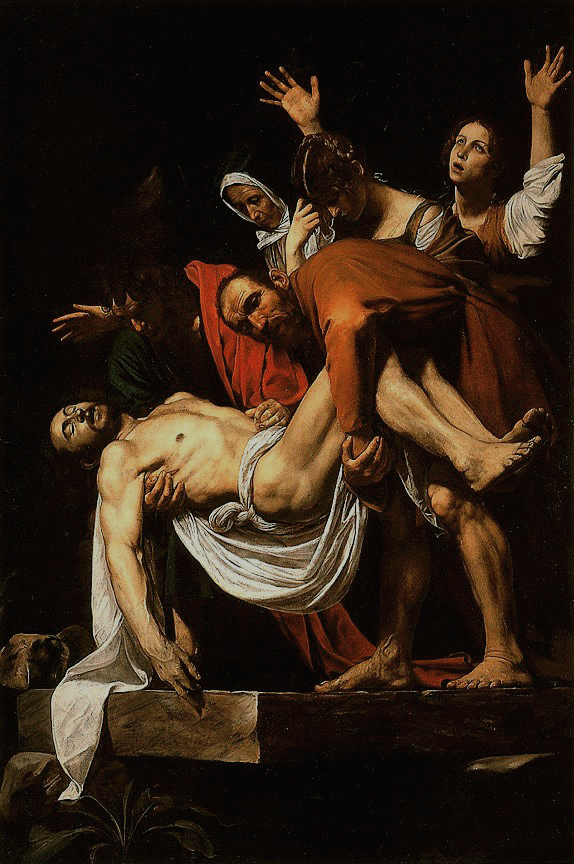
The time between Good Friday and Easter Sunday is one of waiting, in silence, as the world wonders – anticipates – what will happen, after the death of Christ. We re-live this time each year in the anamnesis of our liturgy, and in turn look forward to the glorious re-creation of all things at the[…]Continue reading→
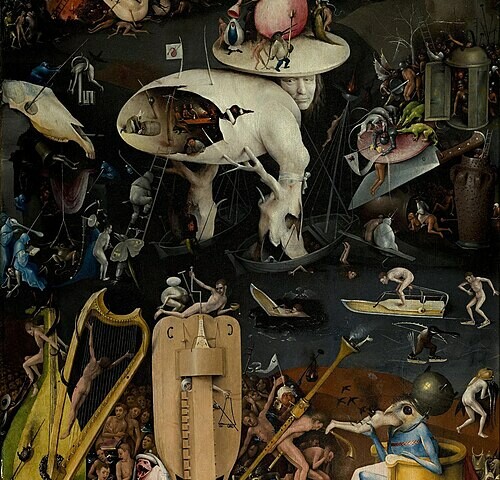
Europe’s Long Descent
(As we meditate on this day on Christ’s burial, and His descent into hell, it is fitting to ponder here with contributor Peter Marcus how the world seems to be heading there as well. The difference is that, although God cannot ‘redeem’ hell, nor those therein, He can and did redeem the world. There is[…]Continue reading→
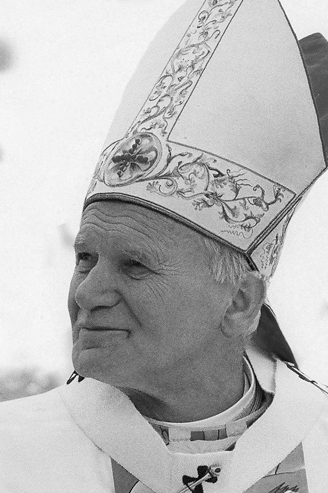
Pope Saint John Paul II’s First Good Friday Homily
ADDRESS OF HIS HOLINESS JOHN PAUL II AT THE CONCLUSION OF THE STATIONS OF THE CROSS AT THE COLOSSEUM Good Friday, 13 April 1979 When we make the Way of the Cross from one station to the next, in spirit we are always at the spot wherethis journey had its “historical” place: where it[…]Continue reading→
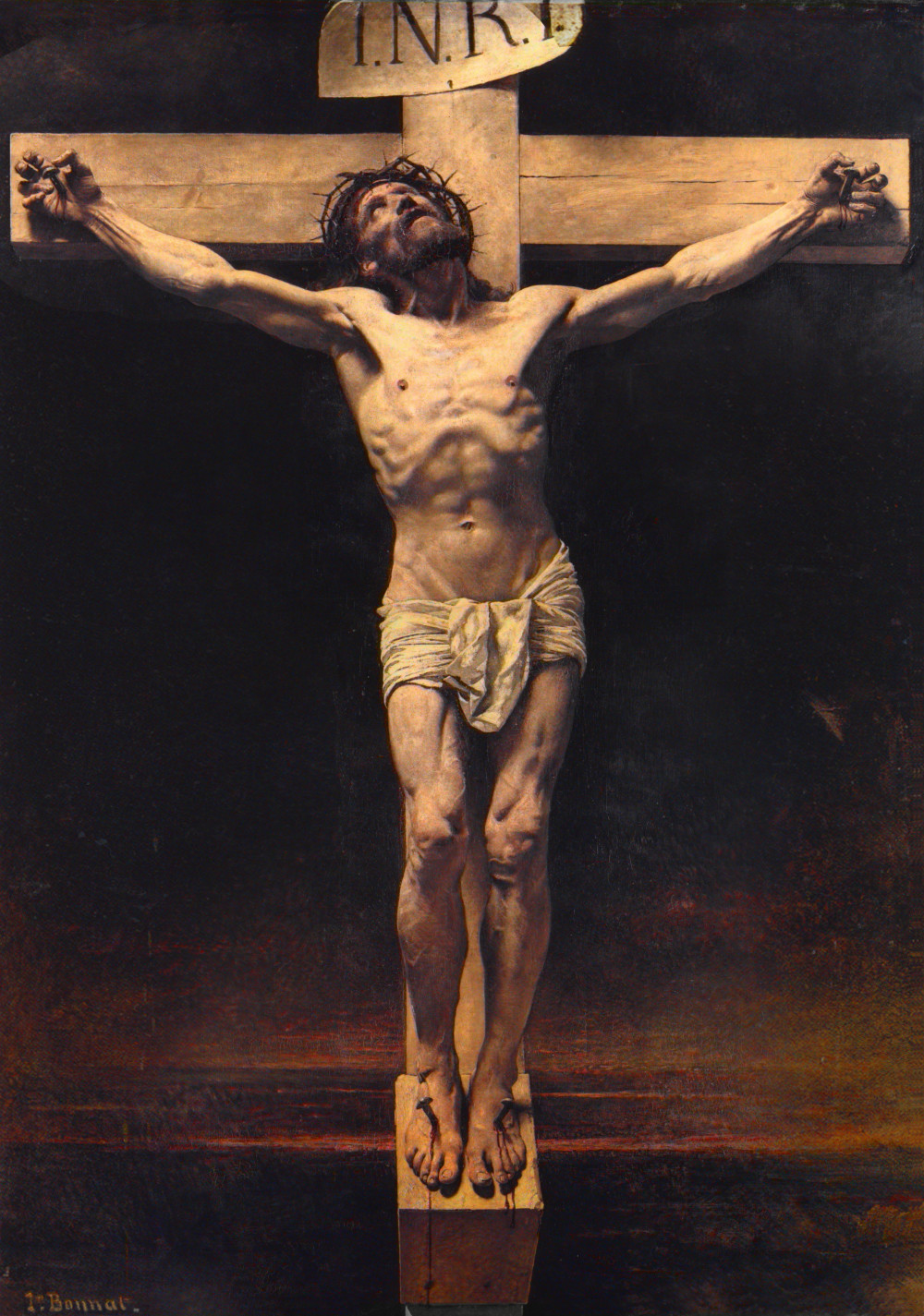
A Meditation for Good Friday: How To Undo the Effects of Sin?
Cardinal Newman, now Saint John Henry Newman, was a towering figure of nineteenth-century Catholicism who is almost universally admired. I say “almost” because not everyone likes him. I knew a priest once, Arthur Caulkins, who has become disenchanted with Newman. As an undergraduate Arthur had been enamoured of Newman, and this interest continued when he[…]Continue reading→
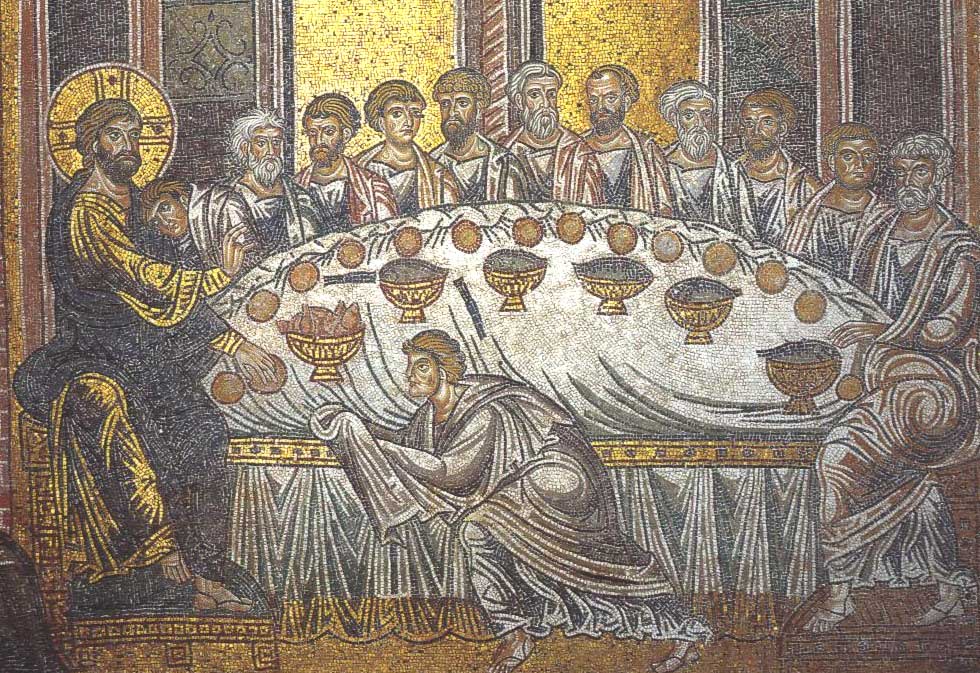
Pope Benedict’s Last Holy Thursday Homily
MASS OF THE LORD’S SUPPER HOMILY OF HIS HOLINESS BENEDICT XVI Basilica of St John Lateran Holy Thursday, 5 April 2012 Photo Gallery (Video) Dear Brothers and Sisters! Holy Thursday is not only the day of the institution of the Most Holy Eucharist, whose splendour bathes all else and in some ways draws it to[…]Continue reading→