
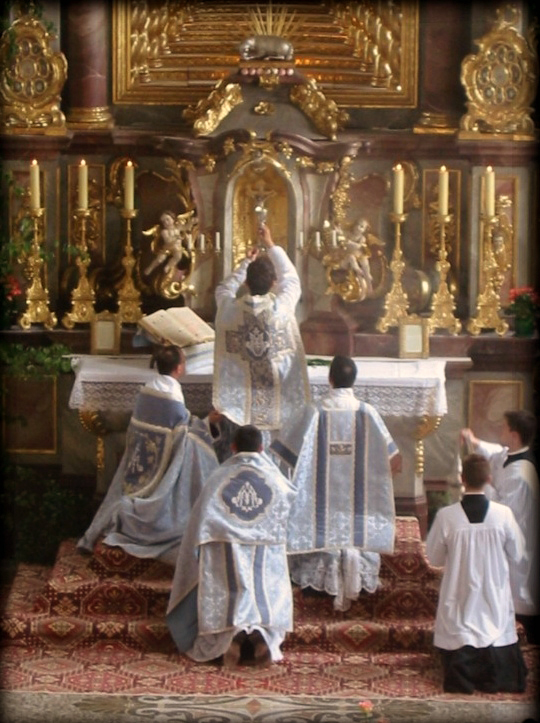
The Holy Eucharist and the Life of Charity
For the Son of Man came not to be served but to serve, and to give his life as a ransom for many’ (Mk. 10:45). ⧾
Taken as a unified whole, the lessons of the Mass today contain all that we need to know to understand how the Son of God saves us and how we participate in the gift of salvation. When we look at the saving mission of Our Lord, we see that it is at once universal and intimately personal in scope. He has redeemed the whole world; but as Saviour the offer of salvation is personal for He offers it to each one of us individually. How we respond determines how we participate in this saving work. Will my response be fervent or will it be at best nominal? All of us are very familiar with the word economy. As we grow up, it becomes an important reality that determines so much of what we do or don’t do. The word itself literally means house management; so when we speak of a divine economy at work we do well to think of how each one of us manages the great treasure that is the gift of salvation. The parable of the talents comes to mind. Successful management of this treasure can produce great benefits to ourselves obviously, and to others. We participate in this divine economy in what we call the communion of saints, all of the faithful united in Christ; in Heaven, on earth and in Purgatory.
As we approach the end of the liturgical year we are reminded that just as there is an earthly year with its seasons, an earthly nature with its creatures, its fruits, and its peculiar properties, so also there exists an economy of a higher order for the restoration of our fallen race. It has innumerable graces and means of salvation all linked together in the course of the spiritual year which also has its different seasons. Each year, each day, each hour, ripens these fruits for our eternal salvation. As we grow and our faith deepens and matures we come to a deeper understanding of this economy of divine grace and we endeavour to participate in it as fully as we can. The means by which this spiritual growth and transformation is brought about is our full, conscious and active (Sacrosanctum Concilium, 14) participation in this divine economy. This is the grace of the liturgical year observed in all its beauty and formative depth.
The central truth of the Christian Faith and life is the Mystery of the Redemptive Incarnation: the truth that for us men and for our salvation the Son of God became man and that He suffered and died on the Cross. We understand this to mean that God is not distant and inaccessible but one with His creation though distinct from it. At the pinnacle of the created order there is humanity created in the image and likeness of God and destined to share God’s life not in some indefinite, indeterminate manner but in and through Christ Our Lord, who alone reveals the full truth about man, about our nature and destiny. Both God’s revelation and the understanding of ourselves bring us before the Mystery of the Most Holy Trinity. At the very heart of this revelation is the truth that the human person is a relational being; created in the image and likeness the one, true and living God, a Trinity of Divine Persons.
In the Eucharistic Sacrifice offered by Christ the High Priest through the ministry of priests at the Altar, this relational union with humanity and among humans is perpetuated through the ages and celebrated as communion. Our participation in this Sacrifice is not that of spectators. Our full, conscious and active participation expressed principally by our conscious and prayerful union with Christ the High Priest, enables us to understand that it is not simply Jesus who offers Himself to the Father. We also are offered with Him. When we begin truly to understand that the Mass is Calvary then we begin also to appreciate that we too are offered to the Father in union with Our Lord. Our spiritual worship is the uniting of our lives especially our own sacrifices to the Eucharistic Sacrifice. Only then do we become the true worshippers that Our Lord spoke of: But the hour is coming, and now is, when the true worshippers will worship the Father in spirit and truth, for such the Father seeks to worship him (Jn. 4:23). The union of Christ Our Lord with humanity both in the sharing of our human nature and in the sacrifice of the Redemption is fully revealed to us in the Eucharistic Sacrifice that defines the manner in which authentic Christian life must be lived. This is why the celebration of the liturgy, specifically the Holy Sacrifice of the Mass, is essential for an authentic Christian life which is always a Eucharistic life. As we grow older we know how absolutely essential sacrifice is to a meaningful and purposeful life. This is the reality that we must endeavour to communicate to our children and young people as effectively as possible because only in Christ do all things find their meaning and purpose, especially our sufferings and sacrifices.
As we grow spiritually and enter more deeply into the Mystery of Christ we come to realise that the spiritual journey that each one of us undertakes is never a solitary journey for we all walk along one path. The more we grow in our knowledge of God in Christ, the greater our commitment becomes to the needs of others, both materially and spiritually. Practically speaking, this means that our faith in Christ manifests itself in a personal commitment to conform our own life to the pattern of His life; for through Him and in Him we have communion with God and with all of humanity.
The vitality of the Church in any age, including ours, is ultimately determined by the intensity of our Eucharistic life. Last Sunday, in Rome the Synod on Synodality began. It is officially known as Synod 2021-2021: For a Synodal Church. The process involves an expansion of an established institution known as the Synod of Bishops. This means that bishops around the world will consult with everyone from monks and nuns to parishioners on how the Church can learn to become more synodal in its governance. May everyone who participates in this unprecedented undertaking heed Our Lord’s words contained in our Gospel reading today: ‘You know that among the Gentiles those whom they recognise as their rulers lord it over them. But it is not so among you; whoever wishes to become great among you must be your servant, and whoever wishes to be first among you must be slave of all. For the Son of Man came not to be served but to serve and to give his life as a ransom for many.’ This is a lesson that we learn anew at every celebration of the Holy Sacrifice of the Mass. Let us pray therefore that throughout the world Catholics, especially those who no longer attend Holy Mass with any regularity may rediscover the necessity and the beauty of the Mass as the indispensable aid to authentic Christian life. ⧾

Remembering Father Alphonse de Valk
(Today marks the sixth anniversary of the death of Father Alphonse de Valk, C.S.B., a faithful, courageous and indefatigable Basilian priest, pro-life-and-family apostle, and the founder of Catholic Insight magazine. Here is what we wrote those on his entering into eternity five years ago, as we continue to remember him in our prayers and thoughts)[…]Continue reading→
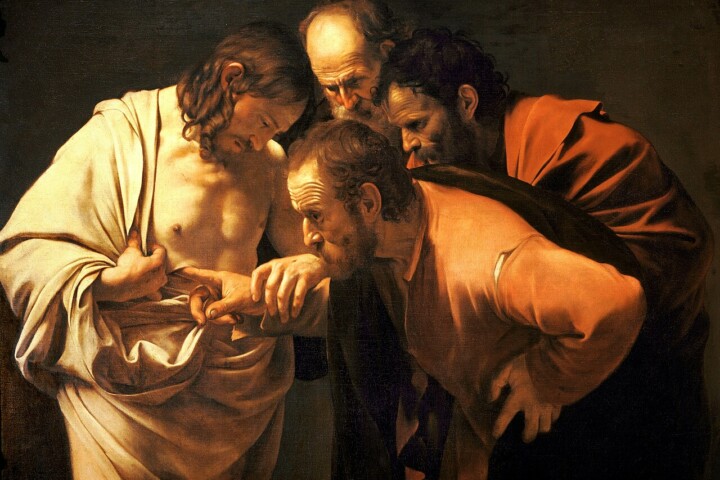
Divine Mercy Sunday – An Echo of Every Mass
Reach out your hand and put it in my side. Do not doubt but believe’… ‘My Lord and my God!’ (Jn. 20:18)). Today is Divine Mercy Sunday, and as we celebrate the end of the Easter Octave, we contemplate the wounded side of our Saviour, the Church’s source of life. On Good Friday in the[…]Continue reading→

Saint Stanislaus of Szczepanów
We celebrate Saint Stanislaus today (+ April 11, 1079), in light of this Easter Octave, a bishop and martyr who accepted the episcopacy only at the direct order of Pope Alexander II. He proved a wise and courageous leader of his flock, put to death by his own king, Boleslaus, for rebuking the monarch’s ‘immoral[…]Continue reading→
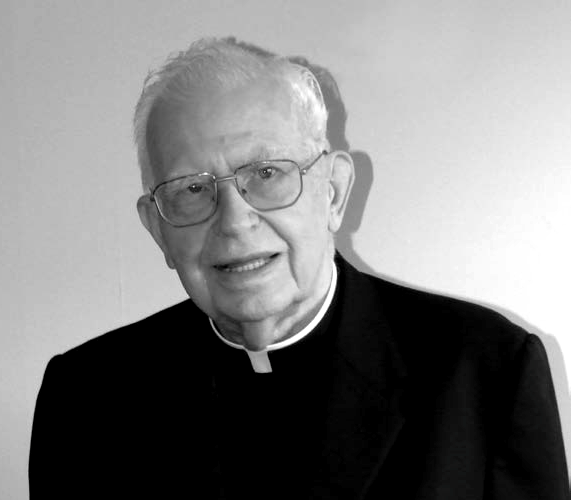
First Holy Communion: Sermon from May 16, 1943
Here is a sermon from the good old days by +Rev. Msgr. Vincent Nicholas Foy (August 14, 1915 – March 13, 2017), from 1943. Readers may recall that Pope Saint Pius X, by the decree Quam Singulari in 1910, lowered the customary age of reception of Holy Communion – after the rigours of the plague[…]Continue reading→
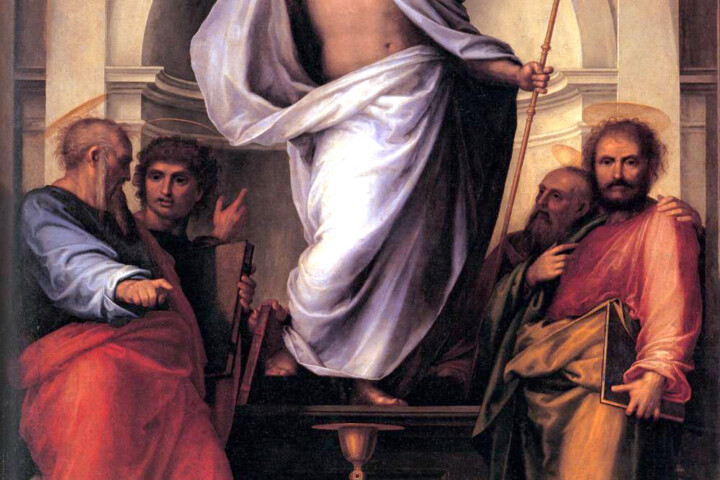
In the Glorious Light of Easter, Alleluia!
Set your minds on things that are above, not on things that are on earth, for you have died, and your life is hidden with Christ in God. When Christ who is your life is revealed, then you also will be revealed with him in glory (Col. 3:3-4). The Resurrection of Our Lord and Saviour[…]Continue reading→
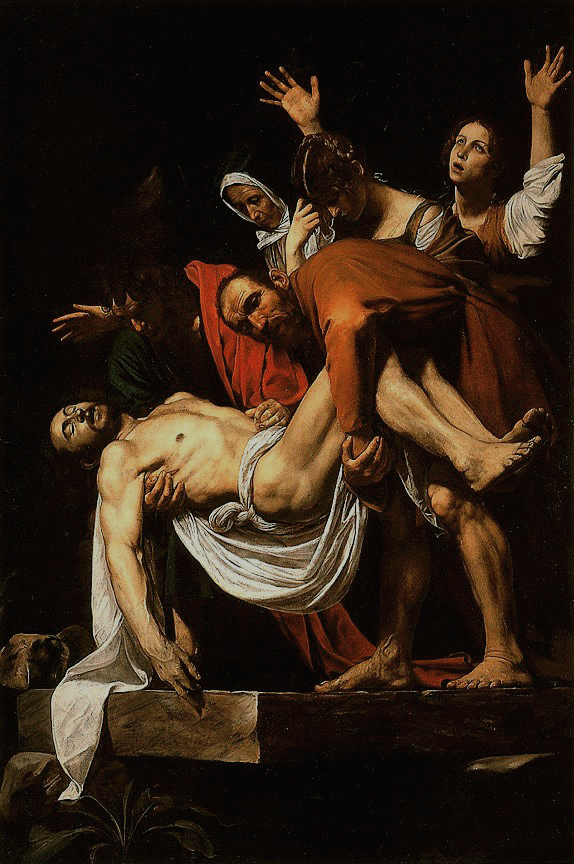
An Ancient Homily for Holy Saturday
The time between Good Friday and Easter Sunday is one of waiting, in silence, as the world wonders – anticipates – what will happen, after the death of Christ. We re-live this time each year in the anamnesis of our liturgy, and in turn look forward to the glorious re-creation of all things at the[…]Continue reading→
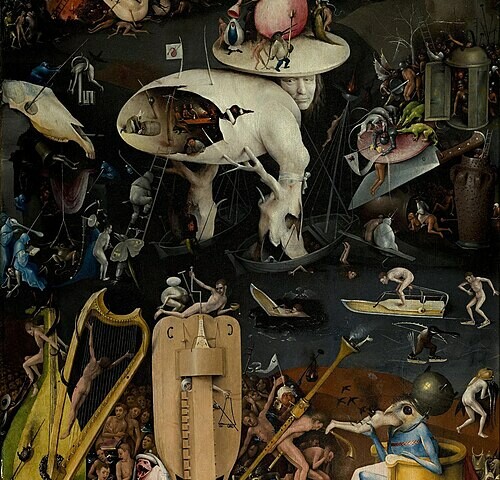
Europe’s Long Descent
(As we meditate on this day on Christ’s burial, and His descent into hell, it is fitting to ponder here with contributor Peter Marcus how the world seems to be heading there as well. The difference is that, although God cannot ‘redeem’ hell, nor those therein, He can and did redeem the world. There is[…]Continue reading→
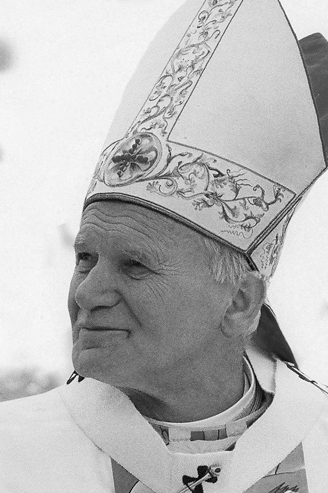
Pope Saint John Paul II’s First Good Friday Homily
ADDRESS OF HIS HOLINESS JOHN PAUL II AT THE CONCLUSION OF THE STATIONS OF THE CROSS AT THE COLOSSEUM Good Friday, 13 April 1979 When we make the Way of the Cross from one station to the next, in spirit we are always at the spot wherethis journey had its “historical” place: where it[…]Continue reading→
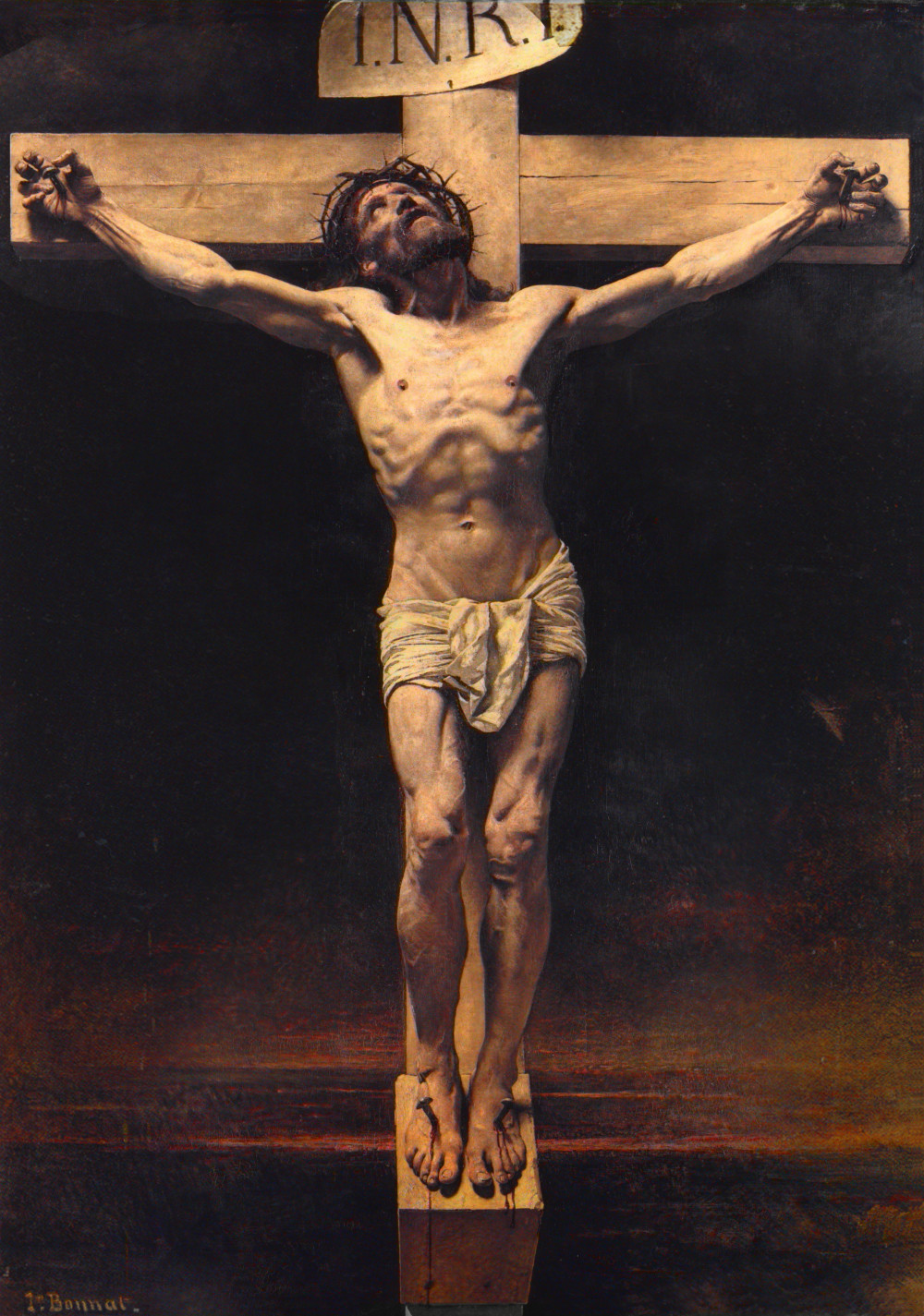
A Meditation for Good Friday: How To Undo the Effects of Sin?
Cardinal Newman, now Saint John Henry Newman, was a towering figure of nineteenth-century Catholicism who is almost universally admired. I say “almost” because not everyone likes him. I knew a priest once, Arthur Caulkins, who has become disenchanted with Newman. As an undergraduate Arthur had been enamoured of Newman, and this interest continued when he[…]Continue reading→
Pope Benedict’s Last Holy Thursday Homily
MASS OF THE LORD’S SUPPER HOMILY OF HIS HOLINESS BENEDICT XVI Basilica of St John Lateran Holy Thursday, 5 April 2012 Photo Gallery (Video) Dear Brothers and Sisters! Holy Thursday is not only the day of the institution of the Most Holy Eucharist, whose splendour bathes all else and in some ways draws it to[…]Continue reading→