
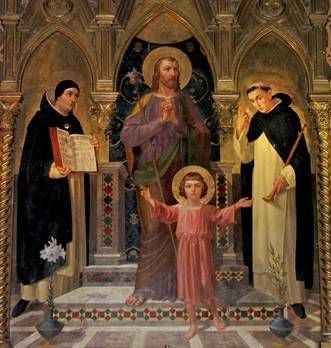
A True Thomistic Versus an Oddly Ockhamist Josephology
In one of the most recent and popular books on Saint Joseph called Consecration to Saint Joseph: The Wonders of Our Spiritual Father, Father Donald Calloway touches on the subject of the titles applied to the fatherhood of Saint Joseph.[1] He lists the various titles for the great Patriarch — legal, putative, spiritual, virginal, and foster father — and notes that each of these titles associated with Saint Joseph “are all legitimate ways of describing St. Joseph’s fatherhood.”[2] Father Calloway is indeed correct about this; for Saint Joseph was considered by all to be the father of Christ[3] — including under the authority of Jewish Law[4] — and it is true that Joseph fathered Christ virginally,[5] thus making his fatherhood to be spiritual indeed.[6]
However, Catholics must be careful of falling into the trap of restricting Saint Joseph’s paternity to merely a nominal one through the use of the titles of “putative” or “legal father,” lest they fall into the trap that William of Ockham and his followers called the “nominalists” fell into. William of Ockham was one of the scholastics known for founding — whether he knew it or not — the false doctrine of nominalism — and hence why he earned the name “[t]he Venerable Inceptor.”[7] Nominalism is the epistemological position that one is only able to know the terms or names given to things in reality, and not the actual thing itself — that is, its essence or nature.[8] It is contradistinguished from the other epistemological position of Saint Thomas Aquinas called realism, which correctly maintains that one is actually able to know a thing’s essence or nature — which is to know what a thing is — and not merely its name.[9] To make things worse, Ockham in actuality held to a more extreme form of nominalism known as conceptualism, which states that the essences or natures of things are real, but that they are somehow real only in the mind, with no foundation for the veracity of the thing in reality.[10] Thus, since in both nominalism and conceptualism one cannot actually understand the thing in reality and one is merely left with the concept, idea, term, or name of the thing, both doctrines entail falsehood and subjectivity one way or another. On the other hand, Thomistic Realism entails both truth and objectivity; for since truth according to Thomas is defined as “the equation of thought and thing”[11] or “the conformity of intellect and thing,”[12] then the concepts, ideas, terms, or names of things must actually equate with, conform to, or match up with the thing that is known in reality.
How does one go about knowing the essence or nature of a thing? What is the epistemological process by which one goes on to know truly what a thing is in reality? Saint Thomas Aquinas has a metaphysical principle called “the Principle of Operation,” which can be used as an epistemological principle to arrive at the knowledge of the essences or natures of things when it is inverted.[13] This principle can be stated in a few ways, but essentially all of these variants of the principle state that “the nature of a thing determines how it acts or behaves.”[14] When this metaphysical principle is inverted from the ontological order into the cognitive order as an epistemological principle, we get a variant of the principle which states that the “actions [of a thing] reveal the essence [of a thing],” and a corollary which says that “the acts are like the nature.”[15] The point here is that, since the nature or essence of a thing is the source or principle for its action,[16] this means that the essence or nature of a thing determines the actions that the thing is able to perform, which in turn means that “the acts” or actions of something are “like the nature,” and thus the “actions reveal the essence” — the actions are the gateway to knowing the essence or nature of a thing.
Now depending on the scholastic philosophical position one takes — be it the Ockhamist positions of Nominalism or Conceptualism or Thomistic Realism — one will get a very different science of Saint Joseph, or “Josephology.” For since “putative” comes from the Latin adjective putativus which means “supposed,” which in turn is derived from the Latin verb putare which means “to consider, hold, believe, think,” calling Joseph merely the “putative father of Jesus Christ” can give way to a nominalist or conceptualist view of Saint Joseph’s paternity, which sees Saint Joseph’s fatherhood as one that is only believed nominally or merely considered in the mind, one that is generally held to be the case, a paternity that exists only nominally in the eyes and in the minds of the public. Merely knowing Joseph as the “legal father of Christ” also has an Ockhamist ring to it; for according to this title Joseph’s fatherhood as written on the documents and in the minds of the legal authorities, Saint Joseph is considered the father of Jesus Christ, but only for the purposes of filling out the census and such like things. Thus, if one merely qualifies Saint Joseph’s paternity by limiting it merely with the titles of “putative” or “legal father of Jesus,” then the premises for one’s syllogism ultimately take him to the conclusion of a mere false, subjective, and nominal fatherhood for Saint Joseph — to an Ockhamist Josephology.
However, if Saint Joseph really did perform paternal actions, if he really did act in a fatherly manner towards Christ, if the image of God the Father showed evidence of performing the actions of a father, therefore — since Thomas’ Principle of Operation holds — does this not mean that Saint Joseph truly possesses the essence of paternity? That he really is the father of Jesus Christ? The Universal Doctor certainly thinks so — enough to stake his doctorate in Theology on it, in fact. For in his Commentary on the Sentences of Peter Lombard — the Theology textbook used in Medieval times which all Theology students were required to write a commentary on to obtain their Doctorate in Sacred Theology — Saint Thomas Aquinas explains what is known as the “miraculous ‘moral bond’”[17] between Jesus and Joseph which ensures the veracity of Saint Joseph’s paternity.[18] He explains that since Jesus was conceived inside the marriage of Mary and Joseph, and since Saint Joseph really did raise, shelter, nourish, and educate Christ, exercising “all the duties of fatherhood”[19] towards Him, Saint Joseph therefore truly possessed the essence of paternity — Saint Joseph truly was, is, and always will be the father of Christ.[20]
As such, in treating of the paternity of Saint Joseph, Thomas was wise to evade this Ockhamist Josephology in the third part of his great Summa Theologiae, question twenty-eight, article one.[21] In the reply to the first objection, Thomas gives two ways in which Saint Joseph is called the father of Christ; the “putative” or “legal” father of Christ, and next the “virginal,” “spiritual,” or “real” father of Christ.[22] After presenting the former position from Saint Bede, he finishes with the latter position presented by Saint Augustine wherein the Doctor of Grace maintains the true, virginal fatherhood of Saint Joseph.[23] If Thomas would have merely presented the former position, he would have been writing an Ockhamist Josephology even before William of Ockham stepped onto the scholastic scene; but being the great philosopher and theologian that he is, Saint Thomas Aquinas also presented Augustine’s position, and maintained the stance he took years ago when he began his brand of Josephology as a young theologian, completing near the end of his life the first Thomistic Josephology by maintaining the real, virginal, and spiritual fatherhood of Saint Joseph.
Hence, a merely nominal paternity — a merely putative or legal fatherhood — would be proper to Saint Joseph if he merely appeared in public as the father of Christ but in reality slept at home on the couch and let Mary do all the work raising and educating “their” son. But Saint Joseph did not merely appear as the father of Christ or was not merely considered the father of Christ in the eyes and minds of the public and of the authorities; rather, Joseph actually named,[24] raised and educated his Son, Jesus; he provided food, drink, shelter, and love for Christ; Joseph showed the Son of Man how to be a pure and holy man; the image of God the Father showed the Son of God what fatherhood is — what His Heavenly Father is like.
So — as Catholics — what shall we do? Who shall we side with? Shall we side with a merely nominal fatherhood for Saint Joseph — an Ockhamist Josephology — by calling the Light of Patriarchs merely the “putative” or “legal” father of Jesus Christ, thus siding with William of Ockham and the tradition of Scholasticism which put an end to that great age of erudition[25] and which began “the synthesis of all heresies” that we know as Modernism?[26] Or shall we side with a real fatherhood for Saint Joseph — a Thomistic Josephology — by calling the Vicar of God the Father[27] the “virginal” or “spiritual” father of the Son of God, or even simply the “father” of the Son of God, thus siding with the great Saint Thomas Aquinas and the tradition of Scholasticism in which this great age of truth found its peak and summation in,[28] and which gave us a great bulwark and antidote to fight Modernism with?[29]
I — for one — shall side with the man whom Pope Leo XIII hails as “the prince of theologians,”[30] with the man whom is held up by numerous Popes down throughout the ages as the model and bulwark for Catholic philosophy and theology,[31] and with the man who first wrote consistently about the virtues and privileges of Saint Joseph — that is to say, the man with whom Josephology had its inception — if I want to truly give Joseph his due and do justice to his paternity. I shall commit myself to a Thomistic Josephology, and be disciple of Saint Thomas Aquinas, so that I might recognize the real and true fatherhood of Saint Joseph, as the Angelic Doctor did. For it is impossible to avoid a false and deceptive paternity for Saint Joseph and to arrive at a true and real fatherhood for “the shadow of God the Father”[32] except through Thomism. In other words, there is no other way to an authentic Josephology other than through the mind of Saint Thomas Aquinas — other than through a Thomistic Josephology.
Ite ad Joseph et Ite ad Thomam![33]
Go to Joseph and Go to Thomas!
[1] Donald H. Calloway, MIC, Consecration to St. Joseph: The Wonders of Our Spiritual Father (Stockbridge: Marian Press, 2020), 37.
[2] Ibid.
[3] Matthew 13:55; Luke 2:33, Luke 2:48 and Luke 4:22; John 1:45.
[4] Scott Hahn, Joy to the World: How Christ’s Coming Changed Everything (and Still Does) (New York: Image, 2014), 69.
[5] Saint Thomas Aquinas, Summa Theologiae, trans. Fr. Laurence Shapcote, O.P., ed. John Mortensen and Enrique Alarcon (Lander: The Aquinas Institute for the Study of Sacred Doctrine, 2012), III, q. 28, a. 1, ad 1, https://aquinas.cc/la/en/~ST.I, emphasis added: “Vel, sicut Augustinus dicit, in libro de bono coniugali, eo modo pater Christi dicitur Ioseph quo et vir Mariae intelligitur, sine commixtione carnis, ipsa copulatione coniugii, multo videlicet coniunctius quam si esset aliunde adoptatus. Neque enim propterea non erat appellandus Ioseph pater Christi quia non eum concumbendo genuerat, quandoquidem pater esset etiam ei quem, non ex sua coniuge procreatum, aliunde adoptasset.”
[6] Hahn, Joy to the World, 70.
[7] Arthur Hyman, James J. Walsh, and Thomas Williams, ed., Philosophy in the Middle Ages: The Christian, Islamic, and Jewish Traditions, 3rd ed. (Indianapolis/Cambridge: Hackett Publishing Company, 2010), 605.
[8] Edward Feser, The Last Superstition: A Refutation of the New Atheism (South Bend: St. Augustine’s Press, 2008), 41.
[9] Ibid.
[10] Ibid, 41-42 and 168.
[11] Saint Thomas Aquinas, Summa Contra Gentiles, trans. Fr. Laurence Shapcote, O.P. (Green Bay: Aquinas Institute Inc., 2018), I, c. 59, https://aquinas.cc/la/en/~SCG1.C59: “Cum enim veritas intellectus sit adaequatio intellectus et rei.” See also Aquinas, Summa Theologiae, I, q. 16, a. 1, co: “Quod autem dicitur quod veritas est adaequatio rei et intellectus,” and ibid, a. 2, obj. 2: “veritas est adaequatio rei et intellectus.” See also Saint Thomas Aquinas, Commentary on the Gospel of John Chapters 19-21, trans. Fr. Fabian R. Larcher, O.P., ed. The Aquinas Institute (Lander: The Aquinas Institute for the Study of Sacred Doctrine, 2013), C. 14, L. 2, n. 1869, https://aquinas.cc/la/en/~Ioan.C14.L2: “Nihil enim aliud est veritas quam adaequatio rei ad intellectum.”
[12] Aquinas, Summa Theologiae, I, q. 16, a. 2, co: “Et propter hoc per conformitatem intellectus et rei veritas definitur.”
[13] Fr. Chad Ripperger, FSSP, Ph.D., The Metaphysics of Evolution: Evolutionary Theory in Light of First Principles (Norderstedt: Books on Demand), 34-35 and 43.
[14] Ibid, 43. Some of the Latin ways of formulating the principle are “agere sequitur esse” or “operatio sequitur esse.” For Saint Thomas Aquinas’ original formulation of the Principle of Operation, see Aquinas, Summa Theologiae, I, q. 89, a. 1, co., where he writes that the “modus operandi uniuscuiusque rei sequitur modum essendi ipsius.”
[15] Ripperger, The Metaphysics of Evolution, 43, emphasis added.
[16]Aristotle, Physics, trans. R.P. Hardie and R. K. Gaye, in The Basic Works of Aristotle, ed. by Richard McKeon (New York: Modern Library, 2001), II.1, 193b1-5 (238); see also the definition of “Nature” in Fr. Chad Ripperger, F.S.S.P., Ph.D., An Initial Dictionary of Scholastic Terms and Principles, comp. Fr. Chad Ripperger, F.S.S.P., Ph.D., 2001, https://web.archive.org/web/20011204111408/http://www.alltel.net/~cr25211/Dictionary.htm.
[17] Mark I. Miravalle, STD, Meet Your Spiritual Father: A Brief Introduction to St. Joseph (Lighthouse Catholic Media and Marian Press, 2015), 57.
[18] Saint Thomas Aquinas, Commentary on the Sentences, trans. Beth Mortensen, STD, ed. and annot. Michael Bolin, PHD, Jeremy Holmes, PHD, and Peter Kwasniewski, PHD (Aquinas Institute for the Study of Sacred Doctrine), IV, d. 30, q. 2, a. 2, ad 4, https://aquinas.cc/la/en/~Sent.IV.D30.Q2.A2.
[19] Hahn, Joy to the World, 69.
[20] Aquinas, Commentary on the Sentences, IV, d. 30, q. 2, a. 2, ad 4; see also Calloway, Consecration to St. Joseph, 38.
[21] Aquinas, Summa Theologiae, III, q. 28, a. 1, ad 1: “Vel, sicut Augustinus dicit, in libro de bono coniugali, eo modo pater Christi dicitur Ioseph quo et vir Mariae intelligitur, sine commixtione carnis, ipsa copulatione coniugii, multo videlicet coniunctius quam si esset aliunde adoptatus. Neque enim propterea non erat appellandus Ioseph pater Christi quia non eum concumbendo genuerat, quandoquidem pater esset etiam ei quem, non ex sua coniuge procreatum, aliunde adoptasset.”
[22] Ibid.
[23] Ibid.
[24] Hahn, Joy to the World, 69.
[25] Feser, The Last Superstition, 167.
[26] Pope St. Pius X, Pascendi Dominici Gregis, Libreria Editrice Vaticana, September 8, 1907, 39, https://www.vatican.va/content/pius-x/en/encyclicals/documents/hf_p-x_enc_19070908_pascendi-dominici-gregis.html: “[O]mnium haereseon conlectum.”
[27] Pere Binet, S.J., The Divine Favors Granted to St. Joseph, trans. M. C. E. from the edition of the Rev. Fr. Jennesseaux, S.J. (Charlotte: TAN Books, 1983), 71-72.
[28] Feser, The Last Superstition, 167.
[29] Pope St. Pius X, Pascendi Dominici Gregis, 45-46.
[30] Pope Leo XIII, Providentissimus Deus, Libreria Editrice Vaticana, November 18, 1893, 16, https://www.vatican.va/content/leo-xiii/en/encyclicals/documents/hf_l-xiii_enc_18111893_providentissimus-deus.html: “[T]heologorum principem.”
[31] Ibid., 7 and 16; see also Pope St. Pius X, Pascendi Dominici Gregis, 45-46; see also Pope Leo XIII, Aeterni Patris, Libreria Editrice Vaticana, August 4, 1879, 16-31 and 33, https://www.vatican.va/content/leo-xiii/en/encyclicals/documents/hf_l-xiii_enc_04081879_aeterni-patris.html; see also Venerable Pope Pius XII, Humani Generis, Libreria Editrice Vaticana, August 12, 1950, 31, https://www.vatican.va/content/pius-xii/en/encyclicals/documents/hf_p-xii_enc_12081950_humani-generis.html; see also Pope Saint John Paul II, Fides et Ratio, Libreria Editrice Vaticana, September 14, 1998, 4, 57, 60-61, https://www.vatican.va/content/john-paul-ii/en/encyclicals/documents/hf_jp-ii_enc_14091998_fides-et-ratio.html.
[32] “St. Joseph: Patron of the Triumph of Mary’s Immaculate Heart,” YouTube, September 20, 2015, https://www.youtube.com/watch?v=eu-DVXd7PtU; see also Pope Francis, Patris Corde, Libreria Editrice Vaticana, December 8, 2020, 7, http://www.vatican.va/content/francesco/en/apost_letters/documents/papa-francesco-lettera-ap_20201208_patris-corde.html: “[U]mbra Patris Caelestis.” See also Calloway, Consecration to St. Joseph, 18: “Saint Joseph is the shadow of the Heavenly Father. He was the image and reflection of the Father for Jesus.”
[33] Pius IX, Studiorum Ducem, Libreria Editrice Vaticana, June 29, 1923, https://www.vatican.va/content/pius-xi/la/encyclicals/documents/hf_p-xi_enc_19230629_studiorum-ducem.html, translation into English is mine: “Quemadmodum igitur olim Aegyptiis in summa annonae caritate dictum est Ite ad Ioseph, a quo sibi ad alendum corpus frumenti suppeditaretur copia, ita iis, quotquot nulle sunt in desiderio veritatis, Ite ad Thomam Nos dicimus, ut ab eo sanae doctrinae pabulum, quo affluit, in sempiternam suorum animorum vitam petant. [Therefore just as in supreme deficiency of grain it was once said to the Egyptians Go to Joseph, from whom abundance of grain could be fully supplied for itself for sustaining the body, so to those in desire of truth no matter however many they are We say Go to Thomas, that they may ask from him the nourishment of sound doctrine, from whom [sound doctrine] flows for eternal life of their own souls.]”

Remembering Father Alphonse de Valk
(Today marks the sixth anniversary of the death of Father Alphonse de Valk, C.S.B., a faithful, courageous and indefatigable Basilian priest, pro-life-and-family apostle, and the founder of Catholic Insight magazine. Here is what we wrote those on his entering into eternity five years ago, as we continue to remember him in our prayers and thoughts)[…]Continue reading→

Divine Mercy Sunday – An Echo of Every Mass
Reach out your hand and put it in my side. Do not doubt but believe’… ‘My Lord and my God!’ (Jn. 20:18)). Today is Divine Mercy Sunday, and as we celebrate the end of the Easter Octave, we contemplate the wounded side of our Saviour, the Church’s source of life. On Good Friday in the[…]Continue reading→

Saint Stanislaus of Szczepanów
We celebrate Saint Stanislaus today (+ April 11, 1079), in light of this Easter Octave, a bishop and martyr who accepted the episcopacy only at the direct order of Pope Alexander II. He proved a wise and courageous leader of his flock, put to death by his own king, Boleslaus, for rebuking the monarch’s ‘immoral[…]Continue reading→

First Holy Communion: Sermon from May 16, 1943
Here is a sermon from the good old days by +Rev. Msgr. Vincent Nicholas Foy (August 14, 1915 – March 13, 2017), from 1943. Readers may recall that Pope Saint Pius X, by the decree Quam Singulari in 1910, lowered the customary age of reception of Holy Communion – after the rigours of the plague[…]Continue reading→

In the Glorious Light of Easter, Alleluia!
Set your minds on things that are above, not on things that are on earth, for you have died, and your life is hidden with Christ in God. When Christ who is your life is revealed, then you also will be revealed with him in glory (Col. 3:3-4). The Resurrection of Our Lord and Saviour[…]Continue reading→

An Ancient Homily for Holy Saturday
The time between Good Friday and Easter Sunday is one of waiting, in silence, as the world wonders – anticipates – what will happen, after the death of Christ. We re-live this time each year in the anamnesis of our liturgy, and in turn look forward to the glorious re-creation of all things at the[…]Continue reading→

Europe’s Long Descent
(As we meditate on this day on Christ’s burial, and His descent into hell, it is fitting to ponder here with contributor Peter Marcus how the world seems to be heading there as well. The difference is that, although God cannot ‘redeem’ hell, nor those therein, He can and did redeem the world. There is[…]Continue reading→
Pope Saint John Paul II’s First Good Friday Homily
ADDRESS OF HIS HOLINESS JOHN PAUL II AT THE CONCLUSION OF THE STATIONS OF THE CROSS AT THE COLOSSEUM Good Friday, 13 April 1979 When we make the Way of the Cross from one station to the next, in spirit we are always at the spot wherethis journey had its “historical” place: where it[…]Continue reading→
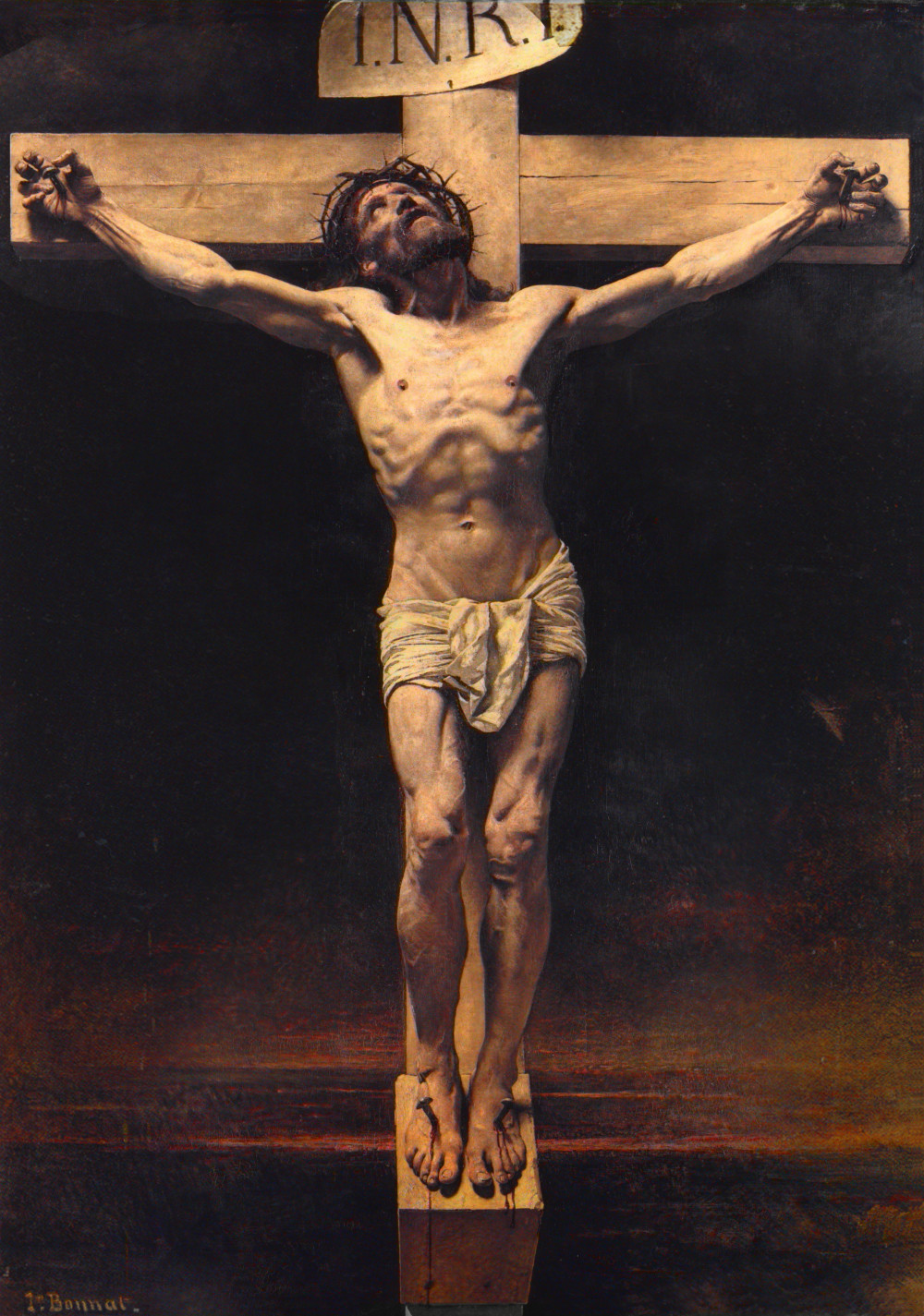
A Meditation for Good Friday: How To Undo the Effects of Sin?
Cardinal Newman, now Saint John Henry Newman, was a towering figure of nineteenth-century Catholicism who is almost universally admired. I say “almost” because not everyone likes him. I knew a priest once, Arthur Caulkins, who has become disenchanted with Newman. As an undergraduate Arthur had been enamoured of Newman, and this interest continued when he[…]Continue reading→
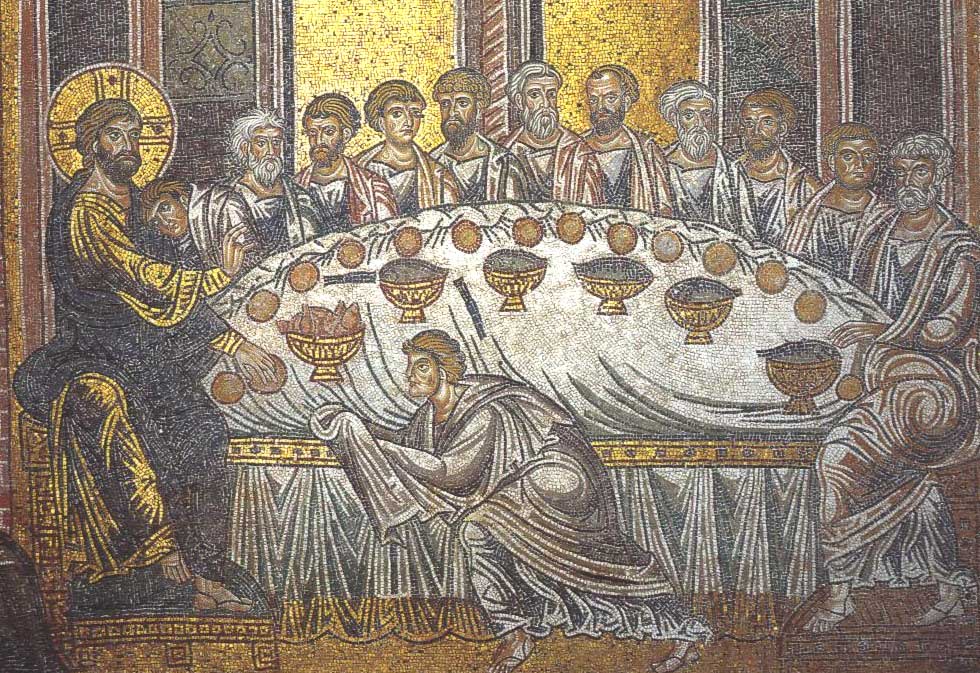
Pope Benedict’s Last Holy Thursday Homily
MASS OF THE LORD’S SUPPER HOMILY OF HIS HOLINESS BENEDICT XVI Basilica of St John Lateran Holy Thursday, 5 April 2012 Photo Gallery (Video) Dear Brothers and Sisters! Holy Thursday is not only the day of the institution of the Most Holy Eucharist, whose splendour bathes all else and in some ways draws it to[…]Continue reading→