
The Meaning of Man and a True Anthropology: Twenty Seventh Sunday
The Lord God formed man from the dust of the ground, and breathed into his nostrils the breath of life. (Gen. 2:7).
Our first reading from the Book Genesis on this Sunday directs our attention to the very beginning of our existence; man and woman created in God’s image and likeness to share God’s own life. The Lord God formed man from the dust of the ground, and breathed into his nostrils the breath of life (Gn. 2:7). We are embodied spirits, and our individual souls are the breath of life given to us by God. This text expresses our anthropology, our understanding of who we are, of who and what the human person is. Anthropology: we are familiar with this word because it is central to our understanding of ourselves. Anthropologies give rise to sociologies that define groupings of people; societies, cultures, nations; and in the world today there are effectively two diametrically opposed views of the world waging war against each other. These two world views are based on two different views of man or anthropologies: one is respectful of the inherent dignity of the human person created by God in His image; the other sees the human person as the product of evolution, part of a collective and for this reason expendable in every way. This war is waged on many different fronts: first and foremost in the world of ideas but also politically, economically, and morally. One could analyse all that has happened to the world in the last two years from this perspective and rightly conclude that those who maintain a biblically based understanding of the human person are on the defensive against those who have as their stated goal the reduction of the human population of the earth, because for them we have no meaning. Ideas have consequences and so do words. What we say about the human person as a starting point determines everything else after that.
During his pontificate, Pope Benedict observed that one of the achievements of the twentieth century was the near total eradication of racism. Critical race theory has all but destroyed this achievement and under this banner Marxist ideologues incite many – especially our young people – to hatred of culture and homeland. What is more, the pandemic of fear has caused many Catholics to forget (if they even knew it – such is the state of religious knowledge) our understanding the true nature of the human person and our ultimate destiny in God. The times are such that if we wish to live with any degree of meaningful purpose, we must be crystal clear that what is most important is the salvation of our souls. Doctrinal confusion begets moral disorder, and vice versa. Our soul is eternal and how we live our lives here on earth determines our eternal destiny. When we live with a view to Heaven our lives are ordered to our ultimate destiny; and as we walk down the path of God’s commandments we learn to use wisely the things of earth and to love the things of Heaven.
More than ever, especially because there is such disorder, confusion, coercion and instability, we must make every effort to maintain our priorities and principles. It is God who saves us, not a “vaccine,” not a booster shot and definitely not the government! St Paul asks: Wretched man that I am! Who will deliver me from this body of death? (Rom. 7:24) He answers: But thanks be to God who gives us the victory through Our Lord Jesus Christ! (1 Cor. 15:57). The Lord Jesus Christ, the Lord of the Sabbath, He is our Saviour and the Victor whom we encounter and listen to, especially on Sunday, the day that celebrates His victory over sin, death and all the dark powers of this world. Especially as we continue to experience the disruptions of our times, we need all the more to assert the importance of Sunday, the Lord’s Day as the focal point of our family life. ‘This day is holy to our Lord. Do not grieve, for the joy of the Lord is your strength.’ (Neh. 8:10). In the certainty of this strength, let us also take to heart St. Benedict’s counsel that nothing is to be preferred to the Work of God, that is, His worship (Prologue, The Rule of St. Benedict). Why is this so important? Quite simply, because in our worship we are given to understand all at once both our origin in God and our ultimate destiny in Him. When we are united to God, we are also united with one another because all human beings have their origin in Him.
Deepening this communion, strengthening it, is at the heart of the Church’s life. From all the nations of the earth God has called us to the glory of being now called a chosen race, a royal priesthood, a holy nation (Preface I of the Sundays in Ordinary Time, The Roman Missal). We are not meaningless nor without purpose. This is the message that we must communicate through the witness of our lives. Through the Prophet Isaiah the LORD God says: ‘Bring My sons from afar, and my daughters from the ends of the earth – everyone called by My name and created for My glory, whom I have indeed formed and made’ (43:7).
In our worship, when duly and reverently exercised, we are reminded of our glorious destiny. The times are such however, that we have been exhorted to establish domestic altars in view of what may come. If possible, whatever the size of our home, let us set aside a place or even just a focal point for our family prayer. There are ways of creating such a point of reference through the use of a crucifix, an icon or a statue. Should a room be available, a table or cabinet, a hutch can serve as point of focus; decorated with blessed candles and when available, fresh flowers as a fragrant offering: a domestic oratory for the domestic church; just as in the very beginnings of the Christian era and as in times of persecution.
The diabolical disorientation of our times has had a horrible impact on society and the Church no less. The remedy to any social problem begins with the self and by extension with the family, the basic unit of society. By force of circumstance, every Catholic family must now endeavour to become an effective school for the Lord’s service wherein the lessons of virtue and sacrifice are taught, lived and celebrated. The ancient Christian axiom must now become a lived reality in the intimacy of the home: lex orandi, lex credendi lex vivendi. There is a definite reciprocity between worship and life. In the absence of public worship and in the limited worship permitted with its restrictions and sanitary impositions rendering it almost unworthy of God, it would seem that Providence has ordained that at least for a time, individuals and families endeavour to live a devout life hidden with Christ in God (Col. 3:3). Such a hidden life is always the reality of one’s own personal spiritual life. However, now it would seem, this hidden life it is fast becoming the life of the Church, the underground Church, the ecclesia abscondita with her deposit of faith (depositum fidei) that still seeks to worship the Father in spirit and in truth (Jn. 4:24). Fortified and sanctified by the grace of God, may we do battle under the Lord Christ, the true King, so that the Triumph of the Immaculate Heart of Mary may be hastened, the Church and the Mass be restored and the Social Kingship of the Sacred Heart of Jesus be firmly established.

Remembering Father Alphonse de Valk
(Today marks the sixth anniversary of the death of Father Alphonse de Valk, C.S.B., a faithful, courageous and indefatigable Basilian priest, pro-life-and-family apostle, and the founder of Catholic Insight magazine. Here is what we wrote those on his entering into eternity five years ago, as we continue to remember him in our prayers and thoughts)[…]Continue reading→

Divine Mercy Sunday – An Echo of Every Mass
Reach out your hand and put it in my side. Do not doubt but believe’… ‘My Lord and my God!’ (Jn. 20:18)). Today is Divine Mercy Sunday, and as we celebrate the end of the Easter Octave, we contemplate the wounded side of our Saviour, the Church’s source of life. On Good Friday in the[…]Continue reading→

Saint Stanislaus of Szczepanów
We celebrate Saint Stanislaus today (+ April 11, 1079), in light of this Easter Octave, a bishop and martyr who accepted the episcopacy only at the direct order of Pope Alexander II. He proved a wise and courageous leader of his flock, put to death by his own king, Boleslaus, for rebuking the monarch’s ‘immoral[…]Continue reading→

First Holy Communion: Sermon from May 16, 1943
Here is a sermon from the good old days by +Rev. Msgr. Vincent Nicholas Foy (August 14, 1915 – March 13, 2017), from 1943. Readers may recall that Pope Saint Pius X, by the decree Quam Singulari in 1910, lowered the customary age of reception of Holy Communion – after the rigours of the plague[…]Continue reading→

In the Glorious Light of Easter, Alleluia!
Set your minds on things that are above, not on things that are on earth, for you have died, and your life is hidden with Christ in God. When Christ who is your life is revealed, then you also will be revealed with him in glory (Col. 3:3-4). The Resurrection of Our Lord and Saviour[…]Continue reading→

An Ancient Homily for Holy Saturday
The time between Good Friday and Easter Sunday is one of waiting, in silence, as the world wonders – anticipates – what will happen, after the death of Christ. We re-live this time each year in the anamnesis of our liturgy, and in turn look forward to the glorious re-creation of all things at the[…]Continue reading→

Europe’s Long Descent
(As we meditate on this day on Christ’s burial, and His descent into hell, it is fitting to ponder here with contributor Peter Marcus how the world seems to be heading there as well. The difference is that, although God cannot ‘redeem’ hell, nor those therein, He can and did redeem the world. There is[…]Continue reading→
Pope Saint John Paul II’s First Good Friday Homily
ADDRESS OF HIS HOLINESS JOHN PAUL II AT THE CONCLUSION OF THE STATIONS OF THE CROSS AT THE COLOSSEUM Good Friday, 13 April 1979 When we make the Way of the Cross from one station to the next, in spirit we are always at the spot wherethis journey had its “historical” place: where it[…]Continue reading→
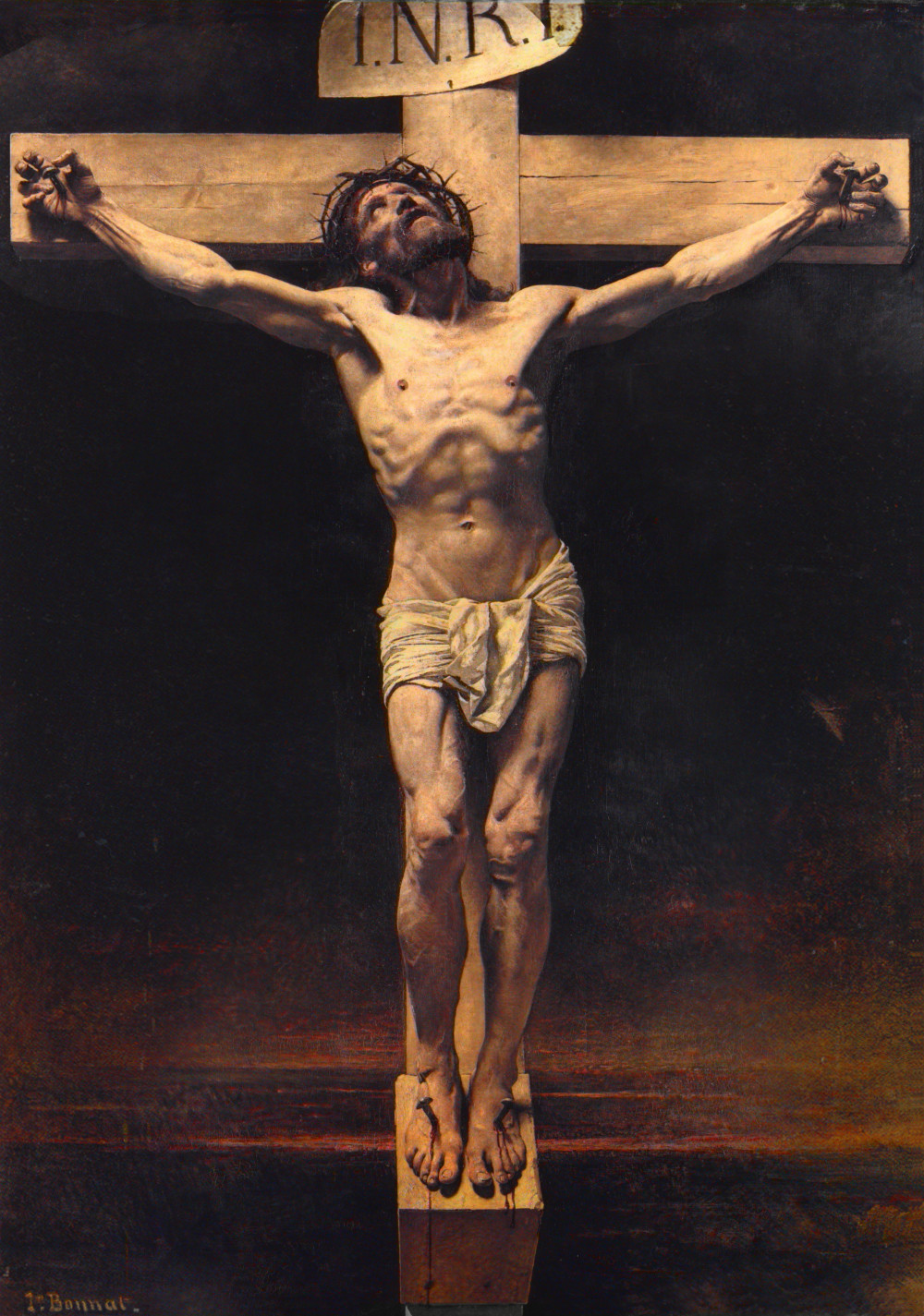
A Meditation for Good Friday: How To Undo the Effects of Sin?
Cardinal Newman, now Saint John Henry Newman, was a towering figure of nineteenth-century Catholicism who is almost universally admired. I say “almost” because not everyone likes him. I knew a priest once, Arthur Caulkins, who has become disenchanted with Newman. As an undergraduate Arthur had been enamoured of Newman, and this interest continued when he[…]Continue reading→
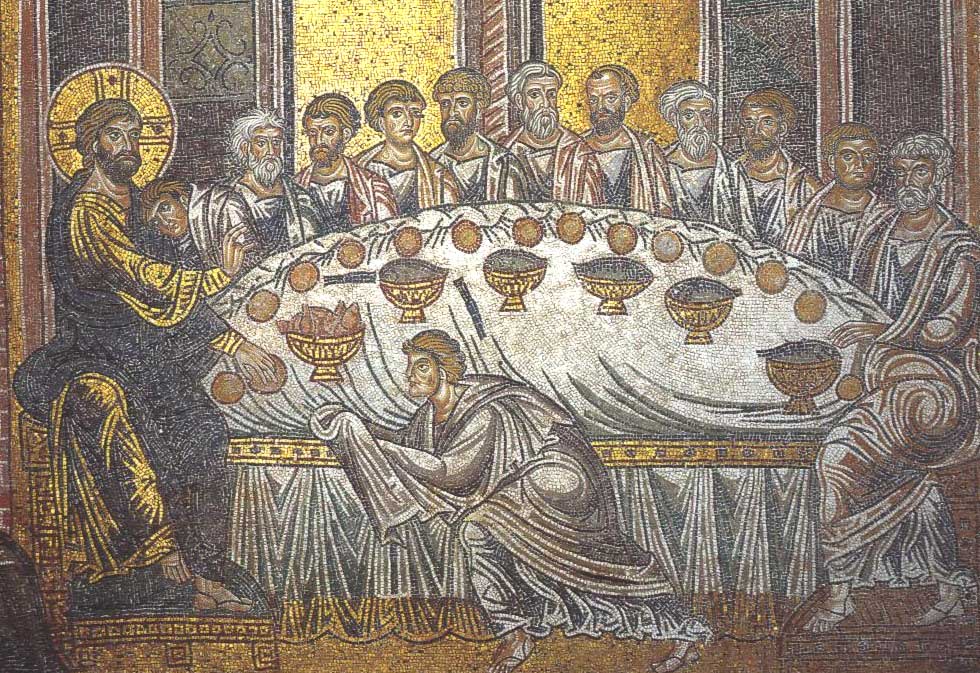
Pope Benedict’s Last Holy Thursday Homily
MASS OF THE LORD’S SUPPER HOMILY OF HIS HOLINESS BENEDICT XVI Basilica of St John Lateran Holy Thursday, 5 April 2012 Photo Gallery (Video) Dear Brothers and Sisters! Holy Thursday is not only the day of the institution of the Most Holy Eucharist, whose splendour bathes all else and in some ways draws it to[…]Continue reading→