
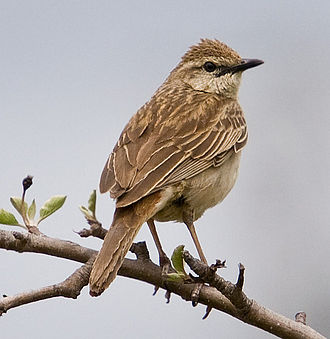
Philomela – A Poem
“Philomela”
A lark sings through the hellish gloom;
Calls out to her Author.
Praising, loving, she cries her tune,
Piercing my ears to bother.
A lonely cry, muffled and sweet,
Echoes through dark and rain,
Rises to join the thronging fleet
Of souls which do proclaim.
I hear “my Lord” loved and outspread;
My heart grasps to align.
‘ithout wit, this bird of voice has bled
Its faith and kindled mine.
Authorial note:
There are a few ways to read this poem. It is an awkward task for me, a student of literature, to try to unpack my own work, so I will briefly explain a few contexts that can add additional layers but will leave it primarily up to the reader to apply them. In a spirit of the New Critics, however, it can be read without these extra contexts.
Philomela. The name, “Philomela,” means “lover of song” in Latin and was translated from the Greek “Φιλομήλη” by Ovid in his collection of Greek mythology, Metamorphoses. In brief, the myth of Philomela is the story of a girl who is raped and has her tongue cut out by her brother-in-law, Tereus. After she reveals to her sister what has happened by illustrating it in a tapestry, Tereus becomes enraged, and she is turned into a nightingale by the gods. This story has become a showpiece of feminist literary criticism and a demonstration of the “silencing” of women throughout history.
The nightingale and the lark. The female nightingale is mute, and it is only the male counterpart that sings. Traditionally, in English poetry, it only sings at the end of the day or as darkness descends. In contrast, the lark is a bird of the morning and sings as the sun comes up and light illumines the darkness of night. This explains Juliet’s words in Romeo and Juliet, when she says to her new husband, Romeo, “Wilt thou be gone? it is not yet near day: / It was the nightingale, and not the lark, / That pierced the fearful hollow of thine ear” (3.5).
The nightingale as narrator. I will try not to belabour the point, but I wrote the poem with the narrator as the nightingale “Philomela.”
For a little more information about the aspects described, see below:
For a more descriptive account of the myth of Philomela, visit https://www.greekmythology.com/Myths/Mortals/Philomela/philomela.html or Book 6 of Metamorphoses.
See https://web.colby.edu/ovid-censorship/censorship-in-ovids-myths/philomela-ovid-silencing-censorship/ for a feminist take on the myth of Philomela.
See https://www.jstor.org/stable/40624200 for a description of the symbolic use of the lark and the nightingale in English poetry.

Saint Kateri , Canada’s Protectress
This was the title given to Saint Kateri Tekakwitha, by Pope Benedict XVI, when he canonized her on October 28th, 2012, along with six others, in Saint Peter’ Square (she had been beatified by Pope John Paul II back in 1980). With Saint Joseph as our protector, along with the Canadian martyrs, we seem to[…]Continue reading→

Remembering Father Alphonse de Valk
(Today marks the sixth anniversary of the death of Father Alphonse de Valk, C.S.B., a faithful, courageous and indefatigable Basilian priest, pro-life-and-family apostle, and the founder of Catholic Insight magazine. Here is what we wrote those on his entering into eternity five years ago, as we continue to remember him in our prayers and thoughts)[…]Continue reading→

My Name is Bernadette
April 16th is a propitious day, for besides the anniversary of Father de Valk’s death, who founded Catholic Insight in its print form decades ago, and the commemoration of the ‘two Benedicts’, mentioned in accompanying posts, today we also recall Saint Bernadette Soubirous, the young visionary to whom the Virgin Mary appeared numerous times at[…]Continue reading→

Canonizing Sister Faustina and Divine Mercy
HOMILY OF THE HOLY FATHER MASS IN ST PETER’S SQUARE FOR THE CANONIZATION OF SR MARY FAUSTINA KOWALSKA Sunday, 30 April 2000 1. “Confitemini Domino quoniam bonus, quoniam in saeculum misericordia eius”; “Give thanks to the Lord for he is good; his steadfast love endures for ever” (Ps 118: 1). So the Church sings on the Octave of[…]Continue reading→

Divine Mercy Sunday – An Echo of Every Mass
Reach out your hand and put it in my side. Do not doubt but believe’… ‘My Lord and my God!’ (Jn. 20:18)). Today is Divine Mercy Sunday, and as we celebrate the end of the Easter Octave, we contemplate the wounded side of our Saviour, the Church’s source of life. On Good Friday in the[…]Continue reading→

Saint Stanislaus of Szczepanów
We celebrate Saint Stanislaus today (+ April 11, 1079), in light of this Easter Octave, a bishop and martyr who accepted the episcopacy only at the direct order of Pope Alexander II. He proved a wise and courageous leader of his flock, put to death by his own king, Boleslaus, for rebuking the monarch’s ‘immoral[…]Continue reading→

First Holy Communion: Sermon from May 16, 1943
Here is a sermon from the good old days by +Rev. Msgr. Vincent Nicholas Foy (August 14, 1915 – March 13, 2017), from 1943. Readers may recall that Pope Saint Pius X, by the decree Quam Singulari in 1910, lowered the customary age of reception of Holy Communion – after the rigours of the plague[…]Continue reading→
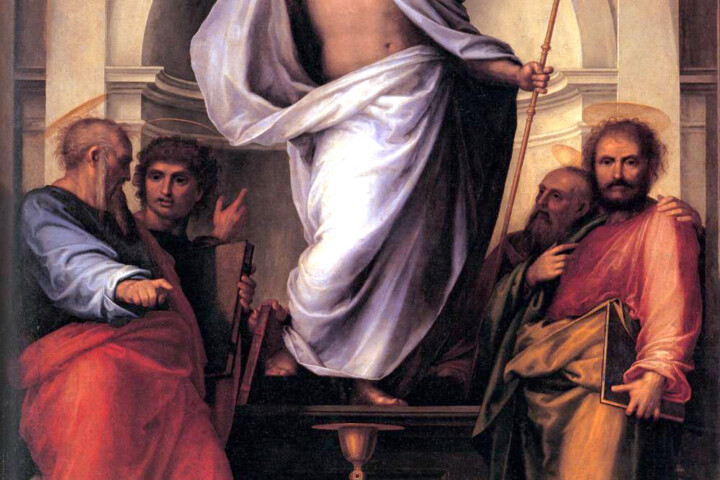
In the Glorious Light of Easter, Alleluia!
Set your minds on things that are above, not on things that are on earth, for you have died, and your life is hidden with Christ in God. When Christ who is your life is revealed, then you also will be revealed with him in glory (Col. 3:3-4). The Resurrection of Our Lord and Saviour[…]Continue reading→
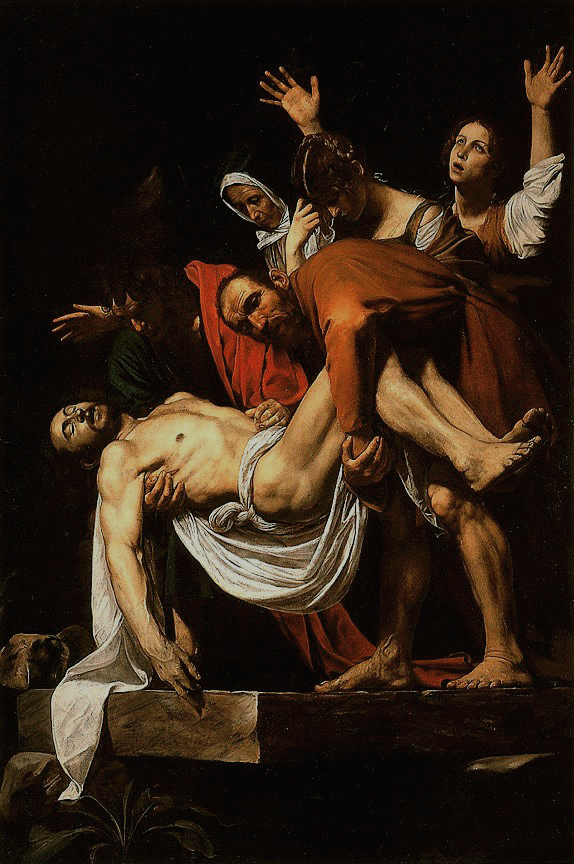
An Ancient Homily for Holy Saturday
The time between Good Friday and Easter Sunday is one of waiting, in silence, as the world wonders – anticipates – what will happen, after the death of Christ. We re-live this time each year in the anamnesis of our liturgy, and in turn look forward to the glorious re-creation of all things at the[…]Continue reading→
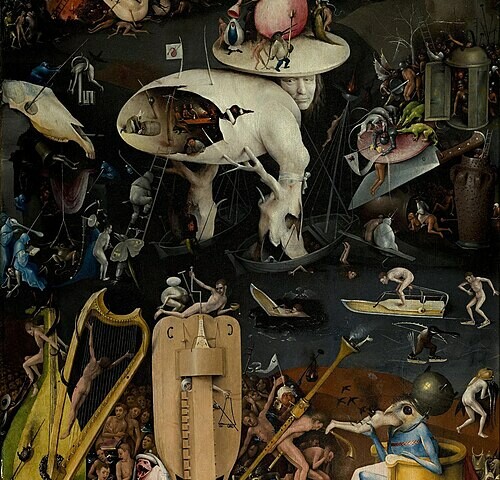
Europe’s Long Descent
(As we meditate on this day on Christ’s burial, and His descent into hell, it is fitting to ponder here with contributor Peter Marcus how the world seems to be heading there as well. The difference is that, although God cannot ‘redeem’ hell, nor those therein, He can and did redeem the world. There is[…]Continue reading→