
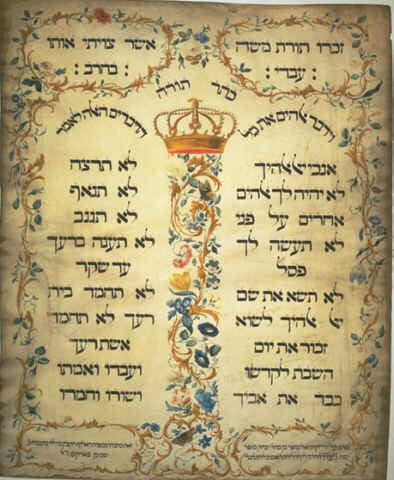
Listing to Heaven
For from within, out of the heart of man, come evil intentions: fornication, theft, murder, adultery, avarice, wickedness, deceit, licentiousness, envy, slander, pride, folly. All these evil things come from within, and they defile a man.
Mark 7.21-23
Have you ever noticed that the Bible contains many lists of things? There are ten commandments, ten plagues of Egypt; then we have the seven days of creation and the seven gifts of the Spirit, corresponding to the seven petitions of the Lord’s prayer and also to the eight beatitudes. The twelve foundations stones of the heavenly Jerusalem are named for the twelve Apostles, who are themselves successors to the twelve patriarchs who fathered the twelve tribes of Israel.
Today’s readings from Scripture contain two lists, one in the responsorial psalm and another in the Gospel. That the latter list is particularly worthy of note in that it comes from the lips of Jesus himself. On examination, you can see that it is not a random conglomeration, but a carefully constructed sequence. For instance, the first six identify crimes done in secret, which the perpetrator want to hide from public view—fornication, theft, murder, adultery, avarice, wickedness—while the second group consists of public actions that attract attention— deceit, licentiousness, envy, slander, pride, folly. One fruitful approach is to compare what Jesus said with the Ten Commandments. The emphasis on morality points to the fact that the commandments cannot all be included; in fact, there are no references to the first four, which describe our obligations to God and our families.
I am the Lord your God; you shall not have strange gods before me.
Thou shalt not take the name of the Lord in vain.
Keep holy the Sabbath day.
Honour your father and your mother.
Then comes the fifth commandment —“Thou shalt not kill”— and Jesus cites murder as coming from the human heart. Commandments six and nine—“Thou shalt not commit adultery” and “Thou shalt not covet thy neighbour’s wife”—are paralleled in Jesus’s list by fornication and adultery. “Theft” points to the seventh commandment—“Thou shalt not steal”—and “deceit” and “slander” to number eight: “Thou shalt not bear false witness.” Finally, “envy” is forbidden by the tenth commandment, “Thou shalt not covet thy neighbour’s goods.” Our Lord then summarizes the lot under the general rubric of “licentiousness,” and he identifies their source in pride, by which one is ill-disposed towards one’s neighbour. The fearful outcome of such behaviour is simply “folly,” which is the characteristic of the pitiful man who is dominated by his passions. These are all, ultimately, forms of sensuality, and so may be said to rise from the heart of fallen man to the extent that he surrenders to his base desires.
Why, do you suppose, Jesus made no reference to the first four commandments? For surely, to sin against God and to attack the integrity of the family are great evils. It would seem that our Lord in this passage is calling attention to man’s baser instincts, whereas the duties to God and to our parents arise from the noblest elements of human nature. The knowledge of God inspires the believer with reverence, just as an appreciation of the family elicits the highest sentiments of love and duty. As well, we should note that his audience was Jewish, not pagan, so that the concept of God had not been debased by the often-immoral myths that disfigure the popular religions of ancient Greece and Rome. For the Jews, irreverence towards God and his demands had been the source of the tragedies that we find frequently described in the pages of the Old Testament.
As always, the contemplation of the sordid behaviour of which we humans are capable should excite in us a sense of gratitude for the gift of redemption and a re-commitment to the beauty of the virtuous life. The former came to mankind by the death and resurrection of Jesus, and the latter is the work of the Holy Spirit who continues across the centuries what Jesus accomplished on Calvary.

Remembering Father Alphonse de Valk
(Today marks the sixth anniversary of the death of Father Alphonse de Valk, C.S.B., a faithful, courageous and indefatigable Basilian priest, pro-life-and-family apostle, and the founder of Catholic Insight magazine. Here is what we wrote those on his entering into eternity five years ago, as we continue to remember him in our prayers and thoughts)[…]Continue reading→

Divine Mercy Sunday – An Echo of Every Mass
Reach out your hand and put it in my side. Do not doubt but believe’… ‘My Lord and my God!’ (Jn. 20:18)). Today is Divine Mercy Sunday, and as we celebrate the end of the Easter Octave, we contemplate the wounded side of our Saviour, the Church’s source of life. On Good Friday in the[…]Continue reading→

Saint Stanislaus of Szczepanów
We celebrate Saint Stanislaus today (+ April 11, 1079), in light of this Easter Octave, a bishop and martyr who accepted the episcopacy only at the direct order of Pope Alexander II. He proved a wise and courageous leader of his flock, put to death by his own king, Boleslaus, for rebuking the monarch’s ‘immoral[…]Continue reading→

First Holy Communion: Sermon from May 16, 1943
Here is a sermon from the good old days by +Rev. Msgr. Vincent Nicholas Foy (August 14, 1915 – March 13, 2017), from 1943. Readers may recall that Pope Saint Pius X, by the decree Quam Singulari in 1910, lowered the customary age of reception of Holy Communion – after the rigours of the plague[…]Continue reading→

In the Glorious Light of Easter, Alleluia!
Set your minds on things that are above, not on things that are on earth, for you have died, and your life is hidden with Christ in God. When Christ who is your life is revealed, then you also will be revealed with him in glory (Col. 3:3-4). The Resurrection of Our Lord and Saviour[…]Continue reading→

An Ancient Homily for Holy Saturday
The time between Good Friday and Easter Sunday is one of waiting, in silence, as the world wonders – anticipates – what will happen, after the death of Christ. We re-live this time each year in the anamnesis of our liturgy, and in turn look forward to the glorious re-creation of all things at the[…]Continue reading→

Europe’s Long Descent
(As we meditate on this day on Christ’s burial, and His descent into hell, it is fitting to ponder here with contributor Peter Marcus how the world seems to be heading there as well. The difference is that, although God cannot ‘redeem’ hell, nor those therein, He can and did redeem the world. There is[…]Continue reading→
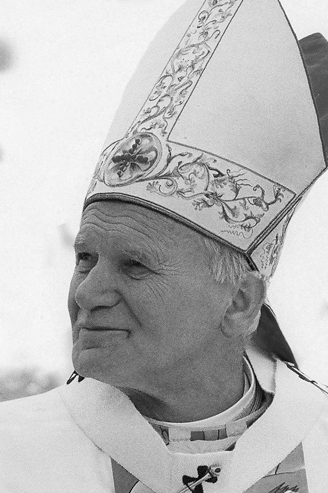
Pope Saint John Paul II’s First Good Friday Homily
ADDRESS OF HIS HOLINESS JOHN PAUL II AT THE CONCLUSION OF THE STATIONS OF THE CROSS AT THE COLOSSEUM Good Friday, 13 April 1979 When we make the Way of the Cross from one station to the next, in spirit we are always at the spot wherethis journey had its “historical” place: where it[…]Continue reading→
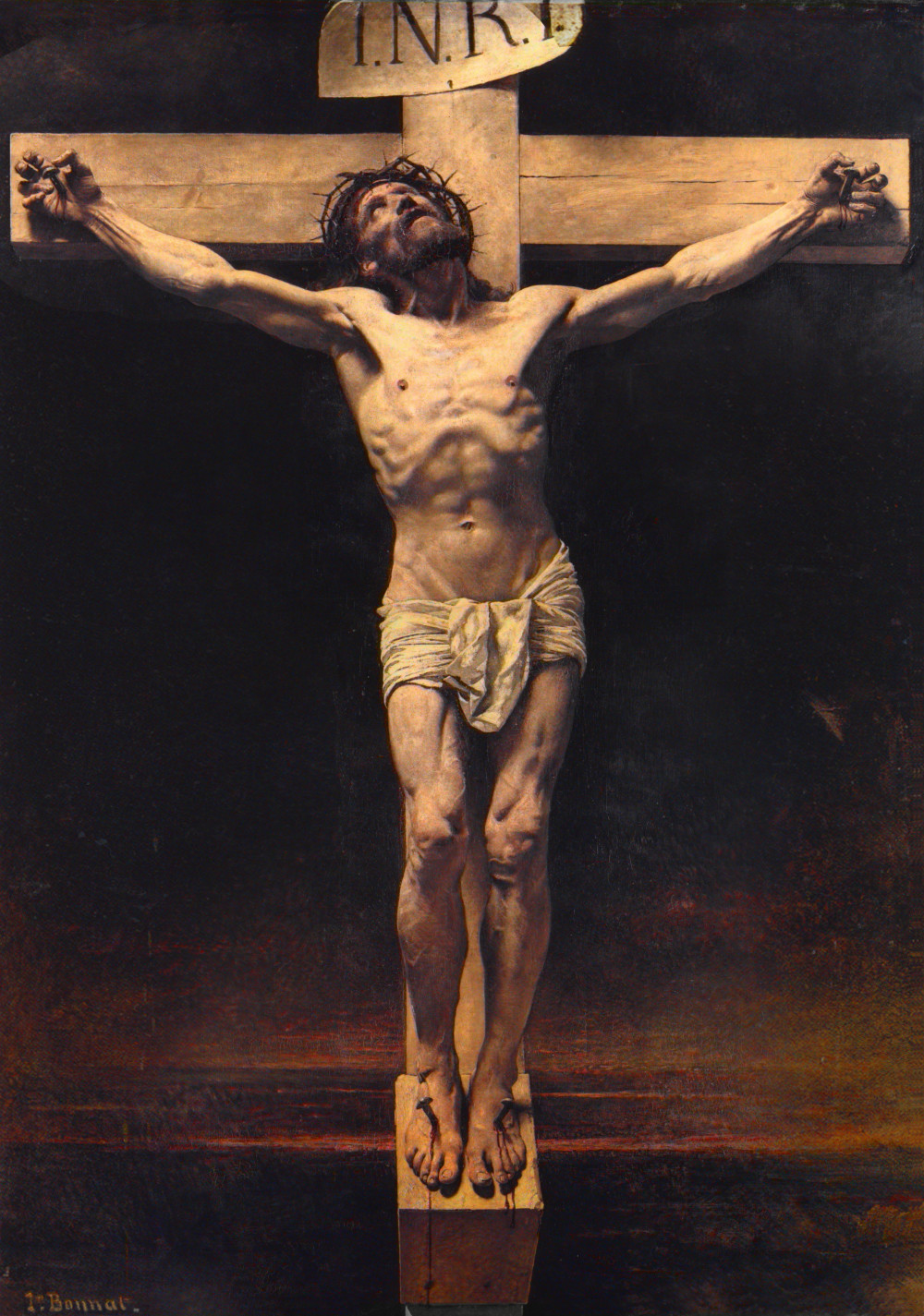
A Meditation for Good Friday: How To Undo the Effects of Sin?
Cardinal Newman, now Saint John Henry Newman, was a towering figure of nineteenth-century Catholicism who is almost universally admired. I say “almost” because not everyone likes him. I knew a priest once, Arthur Caulkins, who has become disenchanted with Newman. As an undergraduate Arthur had been enamoured of Newman, and this interest continued when he[…]Continue reading→
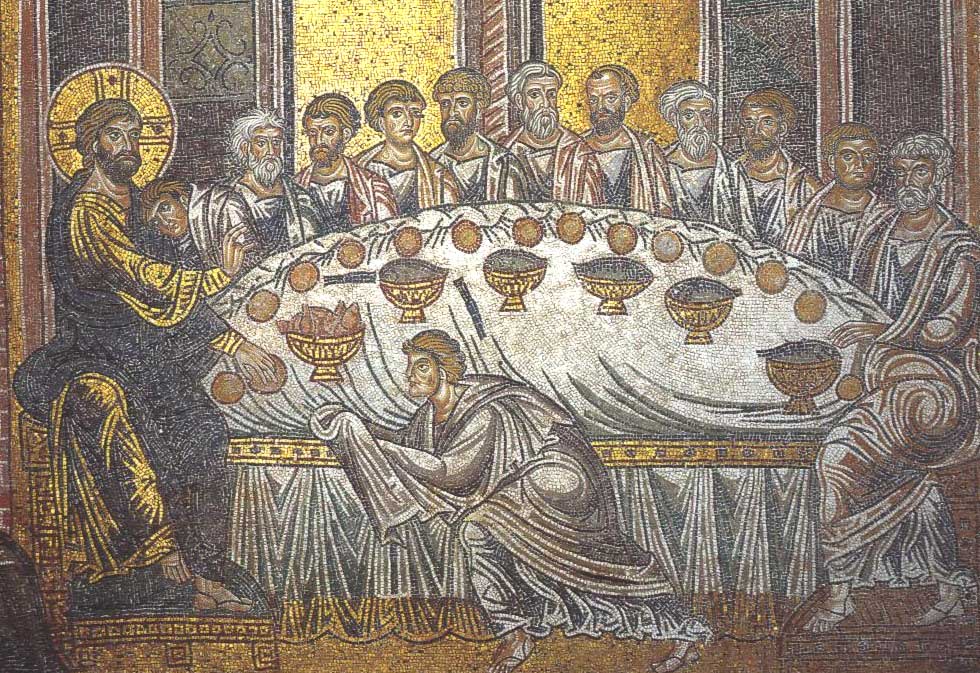
Pope Benedict’s Last Holy Thursday Homily
MASS OF THE LORD’S SUPPER HOMILY OF HIS HOLINESS BENEDICT XVI Basilica of St John Lateran Holy Thursday, 5 April 2012 Photo Gallery (Video) Dear Brothers and Sisters! Holy Thursday is not only the day of the institution of the Most Holy Eucharist, whose splendour bathes all else and in some ways draws it to[…]Continue reading→