
Twelfth Sunday: Living the Truth Without Compromise
Who is this that darkens counsel by words without knowledge? (Job. 38:1).
We do well to consider the meaning of this question, posed by God in the dialogue with Job. The Book of Job is a reflection or dialogue on the problem of evil and the suffering of the just in this world. As such, this book addresses the question of human suffering, specifically, the suffering of the just and the innocent. It gives voice to a question often asked: Why do the wicked prosper? The book does not offer a theoretical solution to this question but it does assert a truth that we affirm each Sunday in the recitation of the Creed: I believe in one God, the Father almighty, maker of heaven and earth, of all things visible and invisible. From nature and from revelation we can know something about God and His ways, but ultimately, much is mysterious and we face the problem of evil in the knowledge of God and of His infinite goodness. Faith with complete trust in God is the only way to bridge the gap between our temporal world and the eternal life of God.
Our Saviour Jesus Christ provides us with the complete answer to the problem raised by Job. He teaches us to call God Our Father. He also revealed very clearly that the human person is immortal and that after this life there are two possibilities: the wicked who reject God’s love will be damned in hell for all eternity; while those who love God in return, and who do His will in this life will attain eternal life in the loving embrace of the most Holy Trinity. The basis for the judgment that will determine our eternal destiny is not an arbitrary judgment, but one based on the truth and the law; both the eternal law and the natural law.
Our human laws are based on concepts like justice and truth. When laws do not express these truths they are unjust and we are not bound to follow them. In fact, we have a duty to oppose them. Objections to laws and truths however, are only valid when informed by reason. This is why not every opinion is necessarily valid. While it may be true that everyone is entitled to his own opinion, we are not entitled to our own facts. In a sane world facts are based on truth. Who is this that darkens counsel by words without knowledge? (Job. 38:1). The question posed by God may help us to understand the necessity for clarity especially as we engage a culture that is manifestly hostile to the Christian faith and quite simply mad, since it increasingly denies empirical truth itself. We inhabit a culture that has replaced evidence with narrative; where facts and truth are ignored and even proscribed. What is most shocking is that institutions of higher learning and even governments have adopted this outlook. Examples abound; nevertheless, to give but one, in some women’s sports, biological males who ‘identify as female’ dominate the field. When opinions are not informed by truth, they are indeed words without knowledge; quite simply, falsehoods, lies. An example of a word without knowledge is the term ‘transgender woman’. Such a person is a male; and the objective reality of his biological makeup corresponds to the word used to describe him – man. We believe in objective truth. Knowledge, true knowledge, corresponds to reality, to what is real.
You may ask why this is important. Simply stated, we cannot possibly hope to deal with any problem or issue without the firm foundation of objective truth. In two generations. our culture has modified itself in radically unexpected ways. Ours has become a culture in which meaning and fact are deliberately deconstructed. We have redefined and altered the meaning of human sexuality, the marriage act, marriage, gender, life, death. God’s truth however, abides forever; and we cannot live by lies, at least not indefinitely without experiencing serious damage. Two generations is about forty years. It is very significant that within this time span Our Lady, as she has often done in history, came from Heaven to warn us of the error of our ways. Beginning in 1981 until 1989 the Blessed Virgin Mary, Our Lady of Kibeho as she is now known, appeared to three young women in Rwanda in Africa. Why Rwanda? Our Lady said, I came to Rwanda because here I still find humble hearts.
Three young women received these apparitions. Their names are Alphonsine, Nathalie and Marie Claire. The messages stressed the need for redemptive suffering and unceasing prayer for a world caught up in evil and perched on the brink of the abyss. In one apparition, Our Lady said to Marie Claire, People of our time have emptied each thing of its true meaning. He who commits a fault does not recognize that he did wrong. What a succinct summary of what some term ‘post-modernism’. When things are deprived of their true meaning, then counsels are indeed darkened by meaningless words and concepts, and lies are told and retold, and counsel is darkened by words without knowledge.
People of our time have emptied each thing of its true meaning. He who commits a fault does not recognize that he did wrong. This is how Marie Claire responded to Our Lady’s words: We are weak, without strength. Give us the strength to recognize our faults and to ask forgiveness for them. There is only one way to recognize our faults. We must confess our sins and admit our errors. We have allowed ourselves to be seduced by the lies of the world. We must believe again in what is self-evidently true: that the nature of things cannot be artificially altered. If we do this then we will be truly humble because humility is truth; and if we are humble, we will in turn be gentle and merciful. We must adhere with all our strength to the word of truth that God has revealed to us and we must speak that word with all boldness, because our salvation and that of the world depends on it. Only God knows the anguish that is suffered by those deceived and victimized by erroneous and deceptive opinions. These are among the poor sinners that Our Lady commended to our prayers in her apparitions at Fatima.
In a world and increasingly in a Church that replaces evidence with narrative, we must endeavour to be all the more attentive and faithful to the truth that has been revealed to us. God cannot deceive nor be deceived. Therefore, we are confident and unafraid for we are certain that our Heavenly Father never deprives of guidance those He has set firm on the foundation of His truth and His love (Cf. Collect, Twelfth Sunday in Ordinary Time, The Roman Missal). Our counsels are His own counsels and because the Father’s word is truth we are sanctified by the truth (Cf. Jn. 17:17).

Saint Kateri , Canada’s Protectress
This was the title given to Saint Kateri Tekakwitha, by Pope Benedict XVI, when he canonized her on October 28th, 2012, along with six others, in Saint Peter’ Square (she had been beatified by Pope John Paul II back in 1980). With Saint Joseph as our protector, along with the Canadian martyrs, we seem to[…]Continue reading→

Remembering Father Alphonse de Valk
(Today marks the sixth anniversary of the death of Father Alphonse de Valk, C.S.B., a faithful, courageous and indefatigable Basilian priest, pro-life-and-family apostle, and the founder of Catholic Insight magazine. Here is what we wrote those on his entering into eternity five years ago, as we continue to remember him in our prayers and thoughts)[…]Continue reading→

My Name is Bernadette
April 16th is a propitious day, for besides the anniversary of Father de Valk’s death, who founded Catholic Insight in its print form decades ago, and the commemoration of the ‘two Benedicts’, mentioned in accompanying posts, today we also recall Saint Bernadette Soubirous, the young visionary to whom the Virgin Mary appeared numerous times at[…]Continue reading→
Canonizing Sister Faustina and Divine Mercy
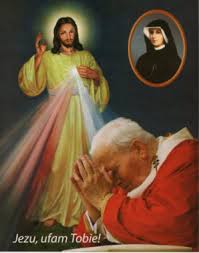
HOMILY OF THE HOLY FATHER MASS IN ST PETER’S SQUARE FOR THE CANONIZATION OF SR MARY FAUSTINA KOWALSKA Sunday, 30 April 2000 1. “Confitemini Domino quoniam bonus, quoniam in saeculum misericordia eius”; “Give thanks to the Lord for he is good; his steadfast love endures for ever” (Ps 118: 1). So the Church sings on the Octave of[…]Continue reading→

Divine Mercy Sunday – An Echo of Every Mass
Reach out your hand and put it in my side. Do not doubt but believe’… ‘My Lord and my God!’ (Jn. 20:18)). Today is Divine Mercy Sunday, and as we celebrate the end of the Easter Octave, we contemplate the wounded side of our Saviour, the Church’s source of life. On Good Friday in the[…]Continue reading→

Saint Stanislaus of Szczepanów
We celebrate Saint Stanislaus today (+ April 11, 1079), in light of this Easter Octave, a bishop and martyr who accepted the episcopacy only at the direct order of Pope Alexander II. He proved a wise and courageous leader of his flock, put to death by his own king, Boleslaus, for rebuking the monarch’s ‘immoral[…]Continue reading→
First Holy Communion: Sermon from May 16, 1943
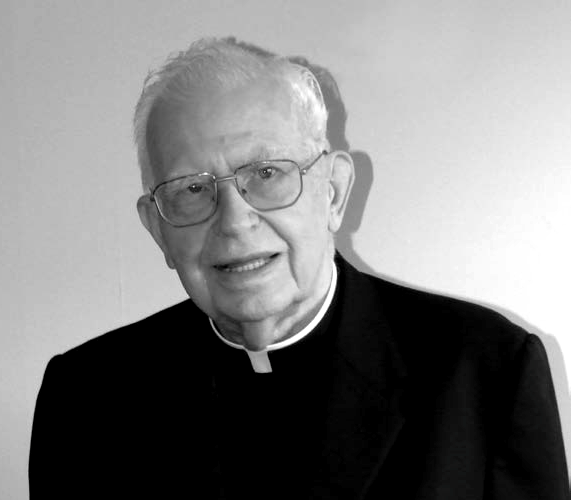
Here is a sermon from the good old days by +Rev. Msgr. Vincent Nicholas Foy (August 14, 1915 – March 13, 2017), from 1943. Readers may recall that Pope Saint Pius X, by the decree Quam Singulari in 1910, lowered the customary age of reception of Holy Communion – after the rigours of the plague[…]Continue reading→

In the Glorious Light of Easter, Alleluia!
Set your minds on things that are above, not on things that are on earth, for you have died, and your life is hidden with Christ in God. When Christ who is your life is revealed, then you also will be revealed with him in glory (Col. 3:3-4). The Resurrection of Our Lord and Saviour[…]Continue reading→

An Ancient Homily for Holy Saturday
The time between Good Friday and Easter Sunday is one of waiting, in silence, as the world wonders – anticipates – what will happen, after the death of Christ. We re-live this time each year in the anamnesis of our liturgy, and in turn look forward to the glorious re-creation of all things at the[…]Continue reading→
Europe’s Long Descent
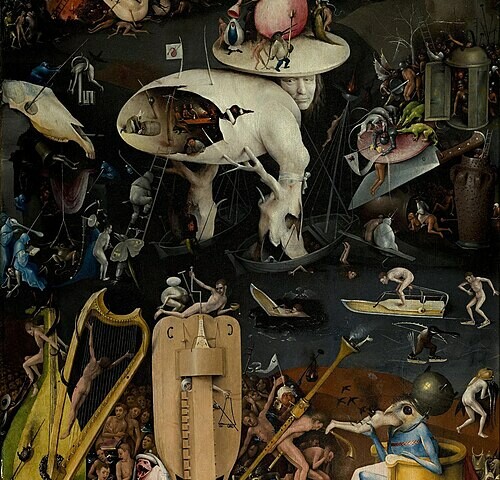
(As we meditate on this day on Christ’s burial, and His descent into hell, it is fitting to ponder here with contributor Peter Marcus how the world seems to be heading there as well. The difference is that, although God cannot ‘redeem’ hell, nor those therein, He can and did redeem the world. There is[…]Continue reading→