
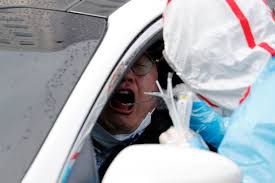
Pandemic and the PCR Test: Questionable Reliability
(Eshan Dias’ explanation of the process of testing for Covid-19 uses some scientific terminology, but well worth a read for understanding how the PCR test works – or doesn’t, as the case may be – and the disproportionate response that has upended the world. We will follow up soon with a sequel on the vaccine)
Introduction
An epidemic affects a high proportion of a population at the same time, and with respect to disease it means an outbreak that spreads quickly and regionally affects a disproportionate number of people. Pandemics are epidemics that spread across wide geographical areas such as nations and continents. It should be a matter of interest to us that according to information prevailing and incessant regarding the pandemic we are said to be in the middle of, the proportion of, shall we say patients – as routinely identified via PCR tests, who show no symptoms of the CoViD-19 greatly outweigh those that do.
Preamble
Let us first understand what we are talking about. Coronaviruses are a family Coronaviridae of viruses that can cause the common cold, SARS (attributed to SARS-CoV) and MERS (attributed to MERS-CoV) – the latter two being qualified as severe acute and middle east respectively. The respiratory malady we refer to as the common cold can also be caused by other virus types including rhinoviruses, influenza viruses, adenoviruses and several others, often in combination, with about 200 causal viral variants identified thus far, and many causative agents not yet identified.
Whereas for what is called the common cold there is no clear link between pathogen and disease, the beta-coronavirus named SARS-CoV-2, whatever its origins, is specified as the cause of the coronavirus disease 2019 or CoViD-19, common symptoms of which are fever, cough, fatigue and many others such as shortness of breath, muscle ache, runny nose and nausea to name a few – symptoms similar to those of the common cold, influenza and other febrile diseases and to allergy response. The virus usually spreads via respiratory droplets released from a carrier individual, hence the muzzles we wear while the dogs stare at us pondering at the turning of tables. So, SARS-CoV-2 is our virus and CoViD-19 is the associated series of clinical symptoms, called the disease.
Detection
What about the testing to find out whether the symptoms you have can be attributed to SARS-CoV-2? There are three pertinent types of tests. One is the nucleic acid amplification via polymerase chain reaction (PCR) test which is used today with the claim that it diagnoses the disease. That is, one is given to understand that it says whether you – even when asymptomatic, are infected and thereby contagious. The other two are the antigen and the antibody tests. Let us understand.
Antibodies, also known as immunoglobulins, are proteins produced by the B-lymphocytes in the immune system to latch on to foreign substances and to consequently remove them from the body, thereby protecting from the potent harm that the foreign substance could have caused. Such foreign substances as recognised by the antibodies are called antigens, which could be toxins or components of pathogens such as the spike glycoproteins of the coronavirus that help it to enter the host. Detection of the specific antibodies in serum does indicate that the specific antigen has entered the body but since the production of antibodies may occur days or weeks after the antigen has entered and may continue its presence for a significant period after the antigen no longer poses a threat, it does not indicate that you are at that moment likely to develop disease or to infect others. It is not diagnostic by that understanding but will be useful for assessing durability of vaccine response or of naturally acquired immunity.
Antigens then are substances capable of eliciting an immune response. The antigen test – which is familiar to us as the rapid test that provides a result in 15 minutes, detects the aforementioned surface protein fragments specific to the virus. While other factors such as the test kit source and competency of swabber and tester does matter, these tests provide a positive result usually when there is high or near-peak viral load. By this point the symptoms may have begun to appear, and the individual is most contagious. It is fast, cheap and fairly simple, but could be considered as a test for infectiousness than one for infection.
PCR
The polymerase chain reaction is used to replicate a segment of DNA so that quantity sufficient for detection and analysis is produced. SARS-CoV-2 virus has single-stranded RNA as its genetic material. Reverse transcription (RT) converts RNA into DNA. In each cycle of replication, the quantity of the gene sequence of interest is doubled so that after 40 replication cycles, a single sequence of nucleic acid would have multiplied a trillion times, that is a million of millions. The technique was developed by Dr Kary Mullis in the eighties and he received the Nobel prize for chemistry in 1993 on account of its vast applications in genetics, microbiology, forensic science and medicine. Even Hollywood used PCR on fossilised DNA to revive and populate the Jurassic Park!
But how is the technique connected to the disease? The protocol published in January 2020 by the WHO for public health laboratories to use in the detection of SARS-CoV-2, is based on real time RT-PCR. A paper describing this methodology, now referred to as the Corman-Drosten paper, was subsequently submitted to the journal Eurosurveillance. It was published within 24 hours of submission, raising questions regarding the peer-review process, and two of the authors were members of the editorial board of the same journal. The protocol was consequently used in ~70% of tests globally and by a hundred governments and called the gold standard for CoViD-19 testing. We know it as the PCR test which if it turns out positive makes you a patient, understood to be infected and contagious – and all that follows, such as the isolation and deprivation from liturgy and sacraments.
The PCR test as conducted as per WHO guidelines is binary qualitative in that it returns a positive or negative result after the pre-decided number of replication cycles have been performed. The number of cycles is known as the positivity threshold or cycle threshold (cT) and is the determinant of sensitivity. The Corman-Drosten protocol does not define the threshold but appears to suggest the use of 45 replications. Independent analyses of PCR test results against the inoculation and culture of the same samples showed that for 35 replication cycles, less than 3% produced positive cultures. That is, for a cT of 35, 97% of PCR test results that came out positive were in fact false positives. On this basis, 97% of “covid cases” were not infested with SARS-CoV-2. For cT values above 35, the data approaches the asymptote and indicates 100% false positives. Most lab reports do not indicate the cT used in their test but 30-45 is usual.
In November 2020, a group of scientists formally pointed out flaws in the Corman-Drosten protocol. Apart from not defining the cT, there were factors such as atypically high concentrations of primer (replication initiators) that cause increased unspecific binding and product amplification, substantial variability and error in test process design that could lead, inter alia, to other coronaviruses being detected or for residual fragments of viral RNA to be sufficient to indicate the presence of the whole virus. Such residuals may quite well be indications of a battle won by the immune system against last week’s common cold. Also, the genetic code considered for development of the test protocol was based on theoretical or in silico sequences supplied by a Chinese laboratory since the authors at that time did not have access to infectious or inactivated SARS-CoV-2 or its isolated genomic RNA.
In January 2021, reportedly one hour after the Biden inauguration, the WHO issued a notice urging caution in the interpretation of PCR test results, stating that their protocol is merely an aid for diagnosis, and that assay specifics and clinical observations need to be considered. Since it followed that it was no longer the gold standard for diagnosis, a person who tested positive on a flawed PCR protocol conducted with a meaninglessly high cT would not thereby be classified as infected or having the disease. Since then, the CoVid numbers have substantially reduced, at least in the USA.
Conclusion
There is the virus, and its mutations. It causes illness, and complications and even death when other diseases pre-exist. Precautions need to be taken to protect from infection, especially among those with weaker immune systems such as the elderly. Action needs to be pursued to eradicate the pathogen and even to prevent others being developed. And yet, the world has completed a revolution around the sun since the WHO declared the CoVid-19 to be a pandemic in March 2020. The world has undergone a revolution as a consequence of this declaration – and is still reeling from it. The question is, however, whether the pandemic was indeed a pandemic after all.
Corman-Drosten paper – https://www.eurosurveillance.org/content/10.2807/1560-7917.ES.2020.25.3.2000045
WHO adoption – Protocol V2 (who.int)
WHO original – Diagnostic testing for SARS-CoV-2 (who.int)
WHO change – WHO Information Notice for IVD Users 2020/05

Saint Kateri , Canada’s Protectress
This was the title given to Saint Kateri Tekakwitha, by Pope Benedict XVI, when he canonized her on October 28th, 2012, along with six others, in Saint Peter’ Square (she had been beatified by Pope John Paul II back in 1980). With Saint Joseph as our protector, along with the Canadian martyrs, we seem to[…]Continue reading→

Remembering Father Alphonse de Valk
(Today marks the sixth anniversary of the death of Father Alphonse de Valk, C.S.B., a faithful, courageous and indefatigable Basilian priest, pro-life-and-family apostle, and the founder of Catholic Insight magazine. Here is what we wrote those on his entering into eternity five years ago, as we continue to remember him in our prayers and thoughts)[…]Continue reading→

My Name is Bernadette
April 16th is a propitious day, for besides the anniversary of Father de Valk’s death, who founded Catholic Insight in its print form decades ago, and the commemoration of the ‘two Benedicts’, mentioned in accompanying posts, today we also recall Saint Bernadette Soubirous, the young visionary to whom the Virgin Mary appeared numerous times at[…]Continue reading→

Canonizing Sister Faustina and Divine Mercy
HOMILY OF THE HOLY FATHER MASS IN ST PETER’S SQUARE FOR THE CANONIZATION OF SR MARY FAUSTINA KOWALSKA Sunday, 30 April 2000 1. “Confitemini Domino quoniam bonus, quoniam in saeculum misericordia eius”; “Give thanks to the Lord for he is good; his steadfast love endures for ever” (Ps 118: 1). So the Church sings on the Octave of[…]Continue reading→

Divine Mercy Sunday – An Echo of Every Mass
Reach out your hand and put it in my side. Do not doubt but believe’… ‘My Lord and my God!’ (Jn. 20:18)). Today is Divine Mercy Sunday, and as we celebrate the end of the Easter Octave, we contemplate the wounded side of our Saviour, the Church’s source of life. On Good Friday in the[…]Continue reading→

Saint Stanislaus of Szczepanów
We celebrate Saint Stanislaus today (+ April 11, 1079), in light of this Easter Octave, a bishop and martyr who accepted the episcopacy only at the direct order of Pope Alexander II. He proved a wise and courageous leader of his flock, put to death by his own king, Boleslaus, for rebuking the monarch’s ‘immoral[…]Continue reading→
First Holy Communion: Sermon from May 16, 1943
Here is a sermon from the good old days by +Rev. Msgr. Vincent Nicholas Foy (August 14, 1915 – March 13, 2017), from 1943. Readers may recall that Pope Saint Pius X, by the decree Quam Singulari in 1910, lowered the customary age of reception of Holy Communion – after the rigours of the plague[…]Continue reading→

In the Glorious Light of Easter, Alleluia!
Set your minds on things that are above, not on things that are on earth, for you have died, and your life is hidden with Christ in God. When Christ who is your life is revealed, then you also will be revealed with him in glory (Col. 3:3-4). The Resurrection of Our Lord and Saviour[…]Continue reading→

An Ancient Homily for Holy Saturday
The time between Good Friday and Easter Sunday is one of waiting, in silence, as the world wonders – anticipates – what will happen, after the death of Christ. We re-live this time each year in the anamnesis of our liturgy, and in turn look forward to the glorious re-creation of all things at the[…]Continue reading→

Europe’s Long Descent
(As we meditate on this day on Christ’s burial, and His descent into hell, it is fitting to ponder here with contributor Peter Marcus how the world seems to be heading there as well. The difference is that, although God cannot ‘redeem’ hell, nor those therein, He can and did redeem the world. There is[…]Continue reading→