
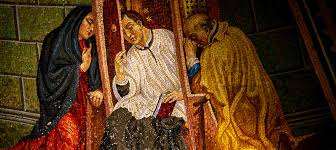
The Vital and Abiding Need for Confession
Peace be with you; as the Father has sent Me, I also send you.” And when He had said this, He breathed on them and said to them, “Receive the Holy Spirit. If you forgive the sins of any, their sins have been forgiven them; if you retain the sins of any, they have been retained. (John 20:21-23)
Why do I have to receive the sacrament of Confession after committing a mortal sin before I can receive the Eucharist?
When in a state of mortal sin, the sin corrupts the purity of our soul and prevents us from receiving the grace that the Eucharist brings to us by consuming the Body and Blood of Christ. When we receive Jesus we have to have our whole hearts, whole minds, and whole souls available to him; but grave sin on our conscience and within our hearts acts as a barrier that does not allow the light of Christ to penetrate through, and then we cannot share that light with others. Only the sacrament of Confession can tear down that barrier and enable us to receive the grace promised to us by the Eucharist.
When we are baptized we receive sanctifying grace as Christians, and mortal sin takes away the grace that can only be restored by the Sacrament of Confession. If we are no longer in a state of sanctifying grace due to mortal sin, how can we then receive more grace from the Eucharist? It would not make sense that we can receive the grace promised to us in the Eucharist if our relationship with Christ and with the Church needs to be reconciled. The confessional is the place where we can receive healing for our hearts, minds, and souls.
Why can’t God just forgive me?
I recall from a homily once the priest explaining how we as human beings by our very nature need to be able to free ourselves from the heavy burdens we hold deep down in our hearts, and how we desire to obtain forgiveness. The priest told us a story about how a congregation of Protestants would give to their pastor their sins written on pieces of paper as a way of letting go of their sins, and after his death they released the pieces of paper into the sea. Another example of the desire for forgiveness is when our Jewish brothers and sisters on Rosh Hashanah throw pieces of bread into the water to represent the letting go of their sins from the past year, and leading up to Yom Kippur – the ‘Day of Atonement’ – they ask others for forgiveness of their sins. Jesus understood the need that we have, to receive the powerful sense of freedom by talking out loud to someone else about what is burdening us. I know in my own experience simply by talking to someone a friend or family member – about challenging or difficult experiences, I always feel so much better.
The Sacrament of Reconciliation enables us to not only speak of our transgressions, but to receive forgiveness from our loving and merciful God. After leaving the confessional I always feel this amazing sense of knowing that I now can start anew, and have a fresh start in working to keep strong my relationship with Christ because now I can truly let go of my sins.
Once we leave the confessional the sacrament truly sets us free from our sins, and we should try our best to let them go so that we can embrace and accept the grace given to us by the sacrament. Jesus gave the authority to the disciples to forgive sins by the power of the Holy Spirit. When we receive absolution our hearts and minds are no longer held captive by our sins and we receive the grace to reconcile our relationship with both God and our Church; the Mystical Body of Christ.
The Sacrament of Penance, out of all of the sacraments, is the most under-utilized sacrament of the Church. In this day and age, the culture tells us that we can do whatever we want in the world and not have to worry about the consequences. It has become more common in Catholic circles to hear how God loves us, and because He loves us we are all going to heaven despite our sins because of Him being a merciful Father. God does love us, that is true, but He loves us so much that He desires for us to change, and He does not want to leave us where we are in our lives. In His mercy God gives us the Sacrament of Confession so that we can be forgiven for our sins, and grow in holiness striving towards our ultimate goal of being in union with Him.
Why did God banish Adam and Eve from the Garden of Eden? Within the Garden of Eden was the Tree of Life, and God did not want our first parents to eat from the tree. If humanity had access to the Tree of Life then we would live in sin for all of eternity. God does not want us to live in a state of perpetual sin. His desire for us is to spend forever in heaven with Him a state of eternal bliss. The Sacrament of Confession gives us the opportunity to rid ourselves of sin, so that we can accept His invitation to one day see Him Face-to-face in Paradise.
There are many Catholics, especially young adult Catholics, who do not believe in the Sacrament of Confession, and feel that they can confess their sins directly to God, especially with more and more sexual abuse cases being made public. I have heard time and time again, “Why should I confess my sins to a Catholic priest who is himself a sinner?” The truth is that the efficacy of the sacrament is not affected by the state of the soul of the priest. The priest is not the primary minister of the sacrament; the primary minister of the sacrament is Christ Himself. The sacraments act “ex opere operato,” which means that the sacraments infallibly confer the grace that they signify. The Catechism of the Catholic Church states:
From the moment that a sacrament is celebrated in accordance with the intention of the church, the power of Christ and his Spirit acts in and through it, independently of the personal holiness of the minister (No. 1128)
During the beginning of the Coronavirus pandemic I came to truly appreciate the gift of this precious sacrament. For several months I could not receive Confession, along with my fellow Catholic brothers and sisters, and it was truly painful, and a very different kind of suffering. But it was our suffering that helped to bring us together. I longed to be able to receive absolution as I had been accustomed to receiving the sacrament every two weeks. It is true that we are only required to confess mortal sins, but confessing venial sins helps us to have a well formed conscience, become stronger in our fight against temptations from the evil one, and permits us to be healed by Christ. Regular confession of venial sins brings me consolation, and ease of mind, and not having the sacrament available to receive, and not knowing when it would be reinstated during the Covid-19 pandemic brought me much angst.
When we commit sin, especially grave sin, we affect the entire Body of Christ, and we affect all of our brothers and sisters in Christ by weakening our relationship together as the “One, Holy, Catholic, and Apostolic Church”. When mortal sin severs our relationship with God and the Church it is only by the Sacrament of Confession that we can restore sanctifying grace, and continue on our path towards holiness.

Saint Kateri , Canada’s Protectress
This was the title given to Saint Kateri Tekakwitha, by Pope Benedict XVI, when he canonized her on October 28th, 2012, along with six others, in Saint Peter’ Square (she had been beatified by Pope John Paul II back in 1980). With Saint Joseph as our protector, along with the Canadian martyrs, we seem to[…]Continue reading→

Remembering Father Alphonse de Valk
(Today marks the sixth anniversary of the death of Father Alphonse de Valk, C.S.B., a faithful, courageous and indefatigable Basilian priest, pro-life-and-family apostle, and the founder of Catholic Insight magazine. Here is what we wrote those on his entering into eternity five years ago, as we continue to remember him in our prayers and thoughts)[…]Continue reading→

My Name is Bernadette
April 16th is a propitious day, for besides the anniversary of Father de Valk’s death, who founded Catholic Insight in its print form decades ago, and the commemoration of the ‘two Benedicts’, mentioned in accompanying posts, today we also recall Saint Bernadette Soubirous, the young visionary to whom the Virgin Mary appeared numerous times at[…]Continue reading→

Canonizing Sister Faustina and Divine Mercy
HOMILY OF THE HOLY FATHER MASS IN ST PETER’S SQUARE FOR THE CANONIZATION OF SR MARY FAUSTINA KOWALSKA Sunday, 30 April 2000 1. “Confitemini Domino quoniam bonus, quoniam in saeculum misericordia eius”; “Give thanks to the Lord for he is good; his steadfast love endures for ever” (Ps 118: 1). So the Church sings on the Octave of[…]Continue reading→

Divine Mercy Sunday – An Echo of Every Mass
Reach out your hand and put it in my side. Do not doubt but believe’… ‘My Lord and my God!’ (Jn. 20:18)). Today is Divine Mercy Sunday, and as we celebrate the end of the Easter Octave, we contemplate the wounded side of our Saviour, the Church’s source of life. On Good Friday in the[…]Continue reading→

Saint Stanislaus of Szczepanów
We celebrate Saint Stanislaus today (+ April 11, 1079), in light of this Easter Octave, a bishop and martyr who accepted the episcopacy only at the direct order of Pope Alexander II. He proved a wise and courageous leader of his flock, put to death by his own king, Boleslaus, for rebuking the monarch’s ‘immoral[…]Continue reading→
First Holy Communion: Sermon from May 16, 1943
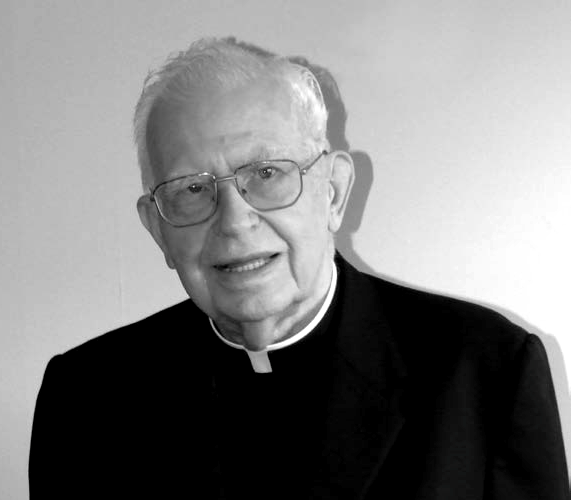
Here is a sermon from the good old days by +Rev. Msgr. Vincent Nicholas Foy (August 14, 1915 – March 13, 2017), from 1943. Readers may recall that Pope Saint Pius X, by the decree Quam Singulari in 1910, lowered the customary age of reception of Holy Communion – after the rigours of the plague[…]Continue reading→
In the Glorious Light of Easter, Alleluia!
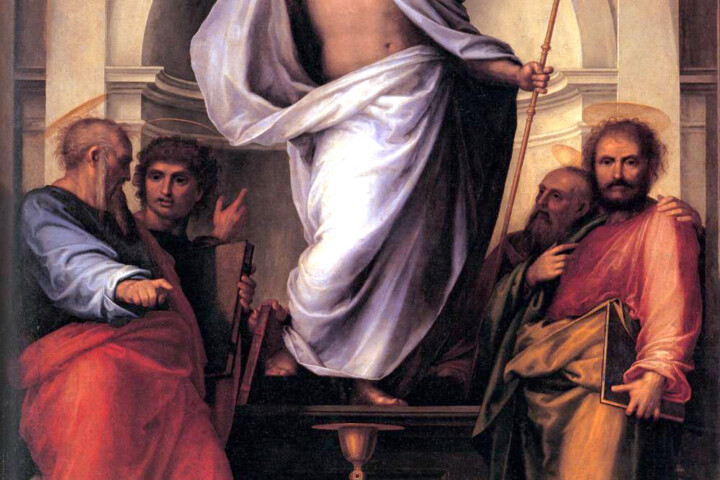
Set your minds on things that are above, not on things that are on earth, for you have died, and your life is hidden with Christ in God. When Christ who is your life is revealed, then you also will be revealed with him in glory (Col. 3:3-4). The Resurrection of Our Lord and Saviour[…]Continue reading→
An Ancient Homily for Holy Saturday
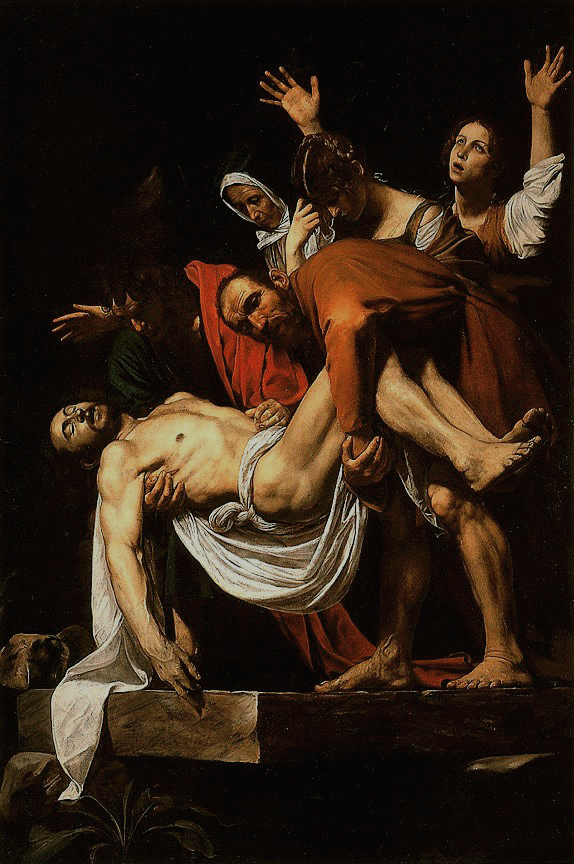
The time between Good Friday and Easter Sunday is one of waiting, in silence, as the world wonders – anticipates – what will happen, after the death of Christ. We re-live this time each year in the anamnesis of our liturgy, and in turn look forward to the glorious re-creation of all things at the[…]Continue reading→
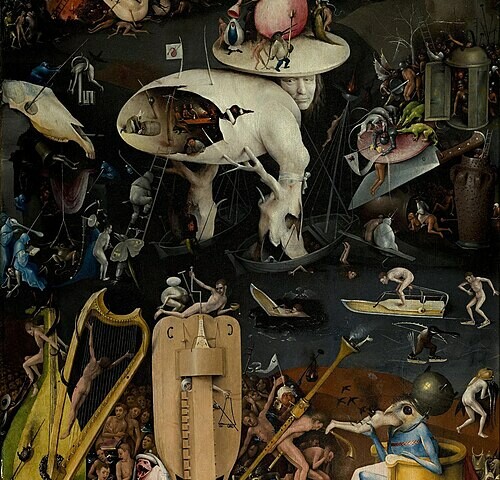
Europe’s Long Descent
(As we meditate on this day on Christ’s burial, and His descent into hell, it is fitting to ponder here with contributor Peter Marcus how the world seems to be heading there as well. The difference is that, although God cannot ‘redeem’ hell, nor those therein, He can and did redeem the world. There is[…]Continue reading→