
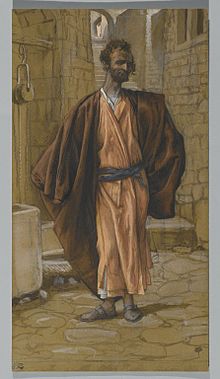
Spy Wednesday and the Rending of the Veil
It was now about the sixth hour, and there was darkness over the whole land until the ninth hour, while the sun’s light failed; and the curtain of the temple was torn in two (Lk. 23:44). ⧾
In the traditional form of the Mass, the Passion narratives of all four gospels are read in the course of Holy Week. On Palm Sunday the Passion according to St Matthew is read and on Tuesday and Wednesday of Holy Week the accounts of St Mark and St Luke respectively. On Good Friday St. John’s Passion is read. The Passion narratives are the climax of each of the four gospels. Scholars have observed that it may be said of the gospels that they are Passion narratives with a long introduction. The Masses of these last days of Lent are lengthened by these readings but the spiritual benefit of hearing and reading these accounts and meditating on their content is immeasurable.
The gospels of Matthew, Mark and Luke are referred to as synoptic gospels because they include many of the same stories, often in a similar sequence. They stand in contrast to the gospel of John, whose content may be described more thematic in its presentation. The synoptic gospels include in their narratives a detail not recorded by St John; namely, the tearing of the Temple veil at the time of Our Lord’s death on the Cross (Cf. Mt. 27:51; Mk. 15:38; Lk.23:44). This veil was 45 feet in length and four inches thick. It served as the barrier to the Holy of Holies, where God’s presence rested and where the Ark of the Covenant was kept. Its rending from top to bottom was clearly an act of God but the connection between Our Lord’s death and the torn veil is not just about God’s power, it reveals who Jesus truly is and what He has done for us through His Sacrifice as the sacred author of the Epistle to the Hebrews explains: We have such a high priest, one who is seated at the right hand of the throne of the Majesty in heaven, a minister in the sanctuary of the true tent, which is set up not by man but by the Lord (Heb. 8:1-2). It also may serve as a symbol of the victory of truth. ‘For nothing is hid that shall not be made manifest, nor anything secret that shall not be known and come to light’ (Lk. 8:17). God is in charge, and He will not be mocked.
The rending of the Temple veil conveys a deeper truth that can be accessed only if we leave the elementary doctrine of Christ and go on to maturity (Heb. 6:1). The veil was rent because we have access to God through Christ Our Saviour. As we read in the Epistle to the Hebrews, Therefore, brethren, since we have confidence to enter the sanctuary by the blood of Jesus, by the new and living way which he opened for us through the curtain, that is, through his flesh, and since we have a great priest over the house of God, let us draw near with true heart in full assurance of faith, with our hearts sprinkled clean from an evil conscience and our bodies washed with pure water. Let is hold fast the confession of our hope without wavering, for he who promised is faithful, and let us consider how to stir up one another to love and good works (Heb. 10:19-24). These words should especially encourage us as we observe Holy Week this year in such unusual and unprecedented circumstances.
As noted, in his account of the Passion St John does nor record the rending of the Temple veil; rather, he dwells on another detail that invites us to contemplate Christ Our Saviour as the living Temple of the living God. ‘Destroy this temple and in three days I will raise it up’ (Jn. 2:19). The reading of the Passion of Our Lord according to St. John on Good Friday is a climax of the liturgy of Lent; and the piercing of Our Lord’s side is the climax of the Gospel of St. John. The Cross is the goal to which the gospel of John, as well as the other gospels, steadily move. The Passion narratives, with their own specific references and emphases illustrate the principle of sacramentality that is at the heart of our Catholic faith. We proceed from the visible to the invisible, from the sign to the thing signified, from the sacraments to the mysteries (Catechism of the Catholic Church, 1075); and to God Himself. We should always approach the mysteries of our faith and even what is mysterious in our life of faith with humility and docility of mind and heart. Things are not always immediately evident. Some truths are veiled in mystery and are only accessible through faith and the struggle that faith often entails.
St Paul says that we walk by faith, not by sight (2 Cor. 5:7). How true this was for the disciples of Our Lord as they witnessed and took part in His sacred Passion. The same may be said of us as we now witness and endure the passion of the Church, Christ’s Mystical Body on earth. The suspension of the public celebration of Mass and Sacraments, and the shuttering of our churches is like a huge veil enveloping the Church as a whole. A veil however is always a sign of the great mysteries. Hidden behind or under the veil is something precious and worth pondering. We speak of Divine Revelation because in the Scriptures God draws back the veil and makes Himself known. The word itself, revelation, conveys this meaning. In our worship, veils are also used and they too invite us to perceive a deeper reality. On Good Friday, the Crucifix is ritually unveiled and those who look with faith perceive God Himself. With few exceptions, the symbolic significance of veiling is little understood and this may explain why our disorientation is so pervasive. We have been deprived by an impoverished liturgy of the means to access the veiled and hidden meaning of so much of reality and of the events that take place in life. At one time all tabernacles were veiled, and the chalice veil was always used at Mass. Although liturgical law mandates the use of the chalice veil; like many laws today, this one is also routinely ignored. It is no secret that roughly fifty years ago a dismantling of sorts was unleashed on the Church and to our great impoverishment our approach to the sacred liturgy became at best, functional. As a result, our churches have come to resemble meeting halls rather than the threshold of Heaven. More tragically however, deprived of our liturgical heritage and tradition, generations of Catholics have been unschooled in the mysteries of the faith that enable only those with faith to perceive the hidden ways of God and His Providence at work even through the violent folly of a rebellious and self-destructive humanity.
The veiled altar is the edge of Heaven, the point of contact with Heaven. The living God descends upon it. The veiled tabernacle is the Holy of Holies, and the living God abides in it. Whenever we see a veil in the sacred liturgy, we should pause and ponder for what is hidden under the veil is something precious and worthy of our consideration. What lies beyond it is an invisible reality, accessible through faith and above all, humility. We are always servants of the mysteries of the faith; not their masters. The priest who ascends the Altar steps to offer the Sacrifice of the Mass is most especially a servant of these mysteries and perhaps no prayer expresses this more beautifully than the Aufer a nobis; the prayer the priest prays silently as he climbs the steps to the Altar: Take away from us our iniquities, we beseech Thee, O Lord, that we may be worthy to enter with pure minds into the Holy of Holies; through Christ Our Lord. Amen.
Some have observed that the events we are now experiencing are apocalyptic. If we consider the etymology of this word, (apocalypsis, uncovering) we must not despair but rather, be confident that the Lord of history, the living one (Rev. 1:18) is uncovering the plots of those who make war on the Lamb; and the Lamb will conquer them, for He is Lord of lords and King of kings, and those with him are called and chosen and faithful (Rev. 17:14). God is in charge and those who trust in Him will not be put to shame.
On this last day of Lent as we prepare to observe the Paschal Triduum in circumstances that prevent the faithful from even entering our churches, we must access the sacred realities conveyed by the liturgy not visibly but invisibly, in mystery. Let us nevertheless express true reverence for the Lord’s Passion by gathering in our homes and reading the lessons and prayers in our missals, by our fasting and our penance. The significance of all that is taking place by God’s permissive will is not yet clear to us but this does not mean that it is without meaning or purpose. God is in charge, just as God Himself was in charge in His sacred Passion: ‘For this reason the Father loves me, because I lay down my life, that I may take it again. No one takes it from me, but I lay it down of my own accord. I have power to lay it down, and I have power to take it aging: this charge I have received from my Father’ (Jn.10: 17-18).
The reading of all four accounts of the Lord’s Passion is a consoling grace and source of particular strength during this time of uncertainty and confusion for so many everywhere. In His Sacred Passion Our Saviour has given us an example of humility for the human race to follow. He teaches us to submit to the Cross and to trust in the Father’s love for a sinful humanity. The Church, Christ’s mystical body on earth is now experiencing the desolation and humiliation of her own passion. Our suffering is great and many are desolate; but we know and firmly believe that just as God highly exalted Jesus, and gave Him the name that is above every name, in God’s time the Church will once again be exalted and unequivocally and fearlessly proclaim salvation for those who confess that Jesus Christ is Lord, to the glory of God the Father (Phil. 2:11).
We must pray and trust that an act of God, just like the tearing of the Temple veil will bring an end to the current crisis in the Church; that the Church may be restored and that in all things God may be glorified. Adveniat Regnum Christi per Immaculatum Cor Beatae Mariae Virginis.
May God Our Father hasten the Triumph of Our Lady’s Immaculate Heart. ⧾
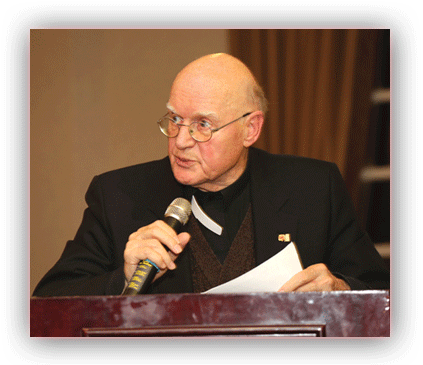
Remembering Father Alphonse de Valk
(Today marks the sixth anniversary of the death of Father Alphonse de Valk, C.S.B., a faithful, courageous and indefatigable Basilian priest, pro-life-and-family apostle, and the founder of Catholic Insight magazine. Here is what we wrote those on his entering into eternity five years ago, as we continue to remember him in our prayers and thoughts)[…]Continue reading→
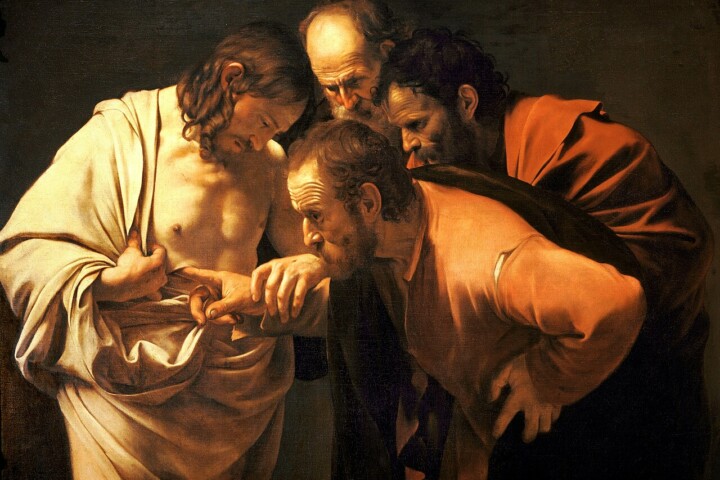
Divine Mercy Sunday – An Echo of Every Mass
Reach out your hand and put it in my side. Do not doubt but believe’… ‘My Lord and my God!’ (Jn. 20:18)). Today is Divine Mercy Sunday, and as we celebrate the end of the Easter Octave, we contemplate the wounded side of our Saviour, the Church’s source of life. On Good Friday in the[…]Continue reading→

Saint Stanislaus of Szczepanów
We celebrate Saint Stanislaus today (+ April 11, 1079), in light of this Easter Octave, a bishop and martyr who accepted the episcopacy only at the direct order of Pope Alexander II. He proved a wise and courageous leader of his flock, put to death by his own king, Boleslaus, for rebuking the monarch’s ‘immoral[…]Continue reading→
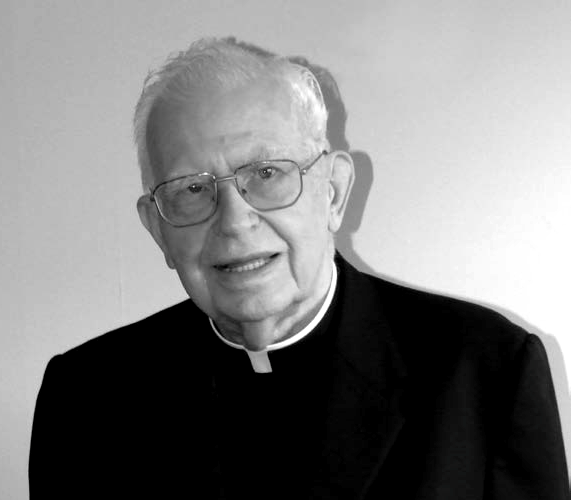
First Holy Communion: Sermon from May 16, 1943
Here is a sermon from the good old days by +Rev. Msgr. Vincent Nicholas Foy (August 14, 1915 – March 13, 2017), from 1943. Readers may recall that Pope Saint Pius X, by the decree Quam Singulari in 1910, lowered the customary age of reception of Holy Communion – after the rigours of the plague[…]Continue reading→
In the Glorious Light of Easter, Alleluia!
Set your minds on things that are above, not on things that are on earth, for you have died, and your life is hidden with Christ in God. When Christ who is your life is revealed, then you also will be revealed with him in glory (Col. 3:3-4). The Resurrection of Our Lord and Saviour[…]Continue reading→
An Ancient Homily for Holy Saturday
The time between Good Friday and Easter Sunday is one of waiting, in silence, as the world wonders – anticipates – what will happen, after the death of Christ. We re-live this time each year in the anamnesis of our liturgy, and in turn look forward to the glorious re-creation of all things at the[…]Continue reading→
Europe’s Long Descent
(As we meditate on this day on Christ’s burial, and His descent into hell, it is fitting to ponder here with contributor Peter Marcus how the world seems to be heading there as well. The difference is that, although God cannot ‘redeem’ hell, nor those therein, He can and did redeem the world. There is[…]Continue reading→
Pope Saint John Paul II’s First Good Friday Homily
ADDRESS OF HIS HOLINESS JOHN PAUL II AT THE CONCLUSION OF THE STATIONS OF THE CROSS AT THE COLOSSEUM Good Friday, 13 April 1979 When we make the Way of the Cross from one station to the next, in spirit we are always at the spot wherethis journey had its “historical” place: where it[…]Continue reading→
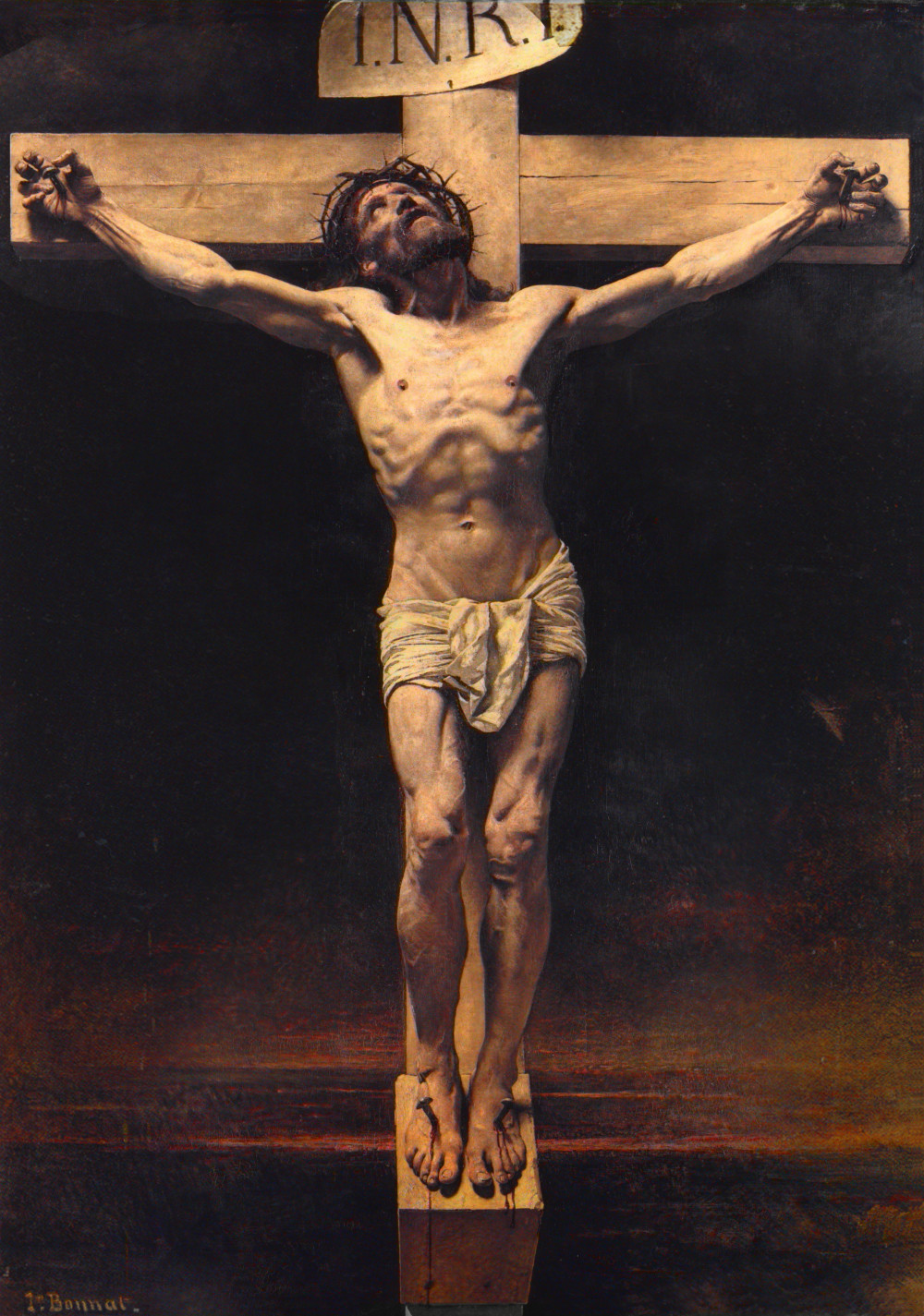
A Meditation for Good Friday: How To Undo the Effects of Sin?
Cardinal Newman, now Saint John Henry Newman, was a towering figure of nineteenth-century Catholicism who is almost universally admired. I say “almost” because not everyone likes him. I knew a priest once, Arthur Caulkins, who has become disenchanted with Newman. As an undergraduate Arthur had been enamoured of Newman, and this interest continued when he[…]Continue reading→
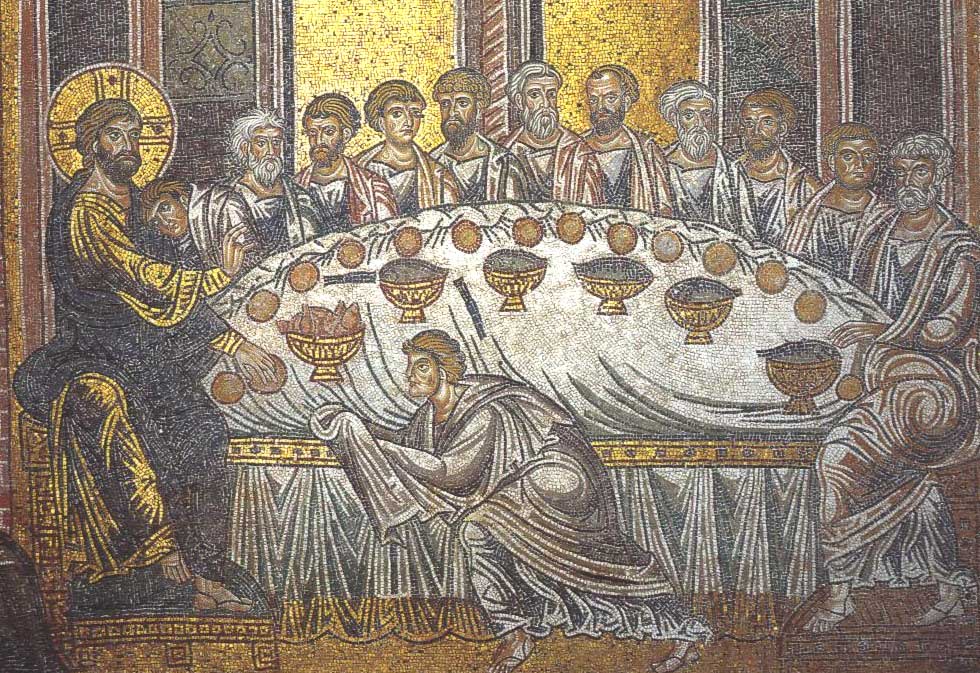
Pope Benedict’s Last Holy Thursday Homily
MASS OF THE LORD’S SUPPER HOMILY OF HIS HOLINESS BENEDICT XVI Basilica of St John Lateran Holy Thursday, 5 April 2012 Photo Gallery (Video) Dear Brothers and Sisters! Holy Thursday is not only the day of the institution of the Most Holy Eucharist, whose splendour bathes all else and in some ways draws it to[…]Continue reading→